Baby’s First Foods: Do’s And Don’ts, Essential Guide
Essential do's and don'ts for introducing solid foods to your baby safely and nutritiously around 6 months.
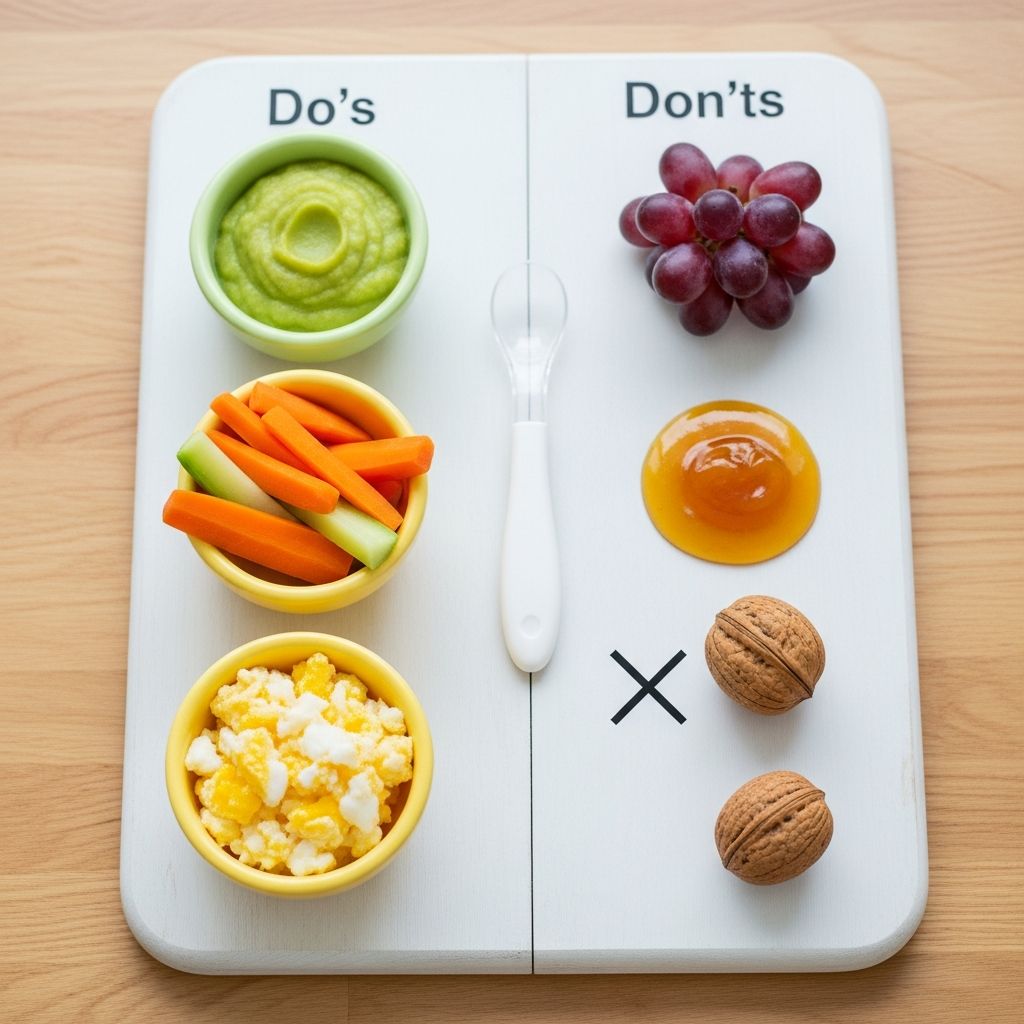
Do’s and Don’ts for Baby’s First Foods
Introducing solid foods to your baby is an exciting milestone that supports growth, development, and lifelong healthy eating habits. While every infant is unique, most experts recommend starting around 6 months when babies show signs of readiness, such as sitting up with support, good head control, and interest in food. This guide outlines essential do’s and don’ts, drawing from authoritative pediatric and nutrition recommendations to help parents navigate this phase safely.
Know the Signs of Readiness
Before offering solids, ensure your baby is developmentally ready. Look for these key signs: ability to sit with minimal support, hold their head steady, reach for and grasp objects, and show interest in watching others eat. Babies typically reach these milestones between 4-6 months, but introducing solids before 4 months is not recommended as their digestive systems are not mature enough. Delaying until around 6 months aligns with guidelines from the CDC and AAP, reducing risks like allergies and obesity later in life.
- Sitting upright: Baby can hold head steady without bobbing.
- Coordination: Good control of hands and mouth to move food effectively.
- Interest: Leans toward spoon or opens mouth when food approaches.
- Loss of tongue-thrust reflex: No longer pushes food out with tongue.
Consult your pediatrician if unsure; premature introduction can lead to choking or digestive issues.
Start Simple with Single-Ingredient Foods
Begin with smooth, pureed single-ingredient foods to monitor for allergies. Start with 1-2 teaspoons, gradually increasing to 1-2 tablespoons over days. Offer one new food every 3-5 days to identify potential reactions like rashes or vomiting. Iron-fortified infant cereals (oats, barley, or multigrain—not just rice to avoid arsenic exposure) are ideal first foods due to babies’ depleting iron stores after 6 months.
- Iron-rich cereals: Mix 3-5 tbsp single-grain with breast milk or formula; make soupy at first.
- Vegetables: Pureed carrots, sweet potatoes, peas, or squash—1-2 tbsp strained, 1-2 times daily.
- Fruits: Mashed bananas, pears, applesauce, or avocados—introduce after veggies for variety.
No evidence suggests starting with vegetables prevents fruit preference; variety matters most.
Follow Age-Appropriate Feeding Guides
Tailor portions and textures to your baby’s age for optimal nutrition. Breast milk or formula remains primary until 12 months, with solids complementing intake.
4-8 Months Feeding Guide
| Food Type | 4-6 Months | 6-7 Months | 7-8 Months |
|---|---|---|---|
| Breast Milk/Formula | 5-6 feedings, 28-32 oz/day | 4-5 feedings, 30-32 oz/day | 3-5 feedings, 30-32 oz/day |
| Cereal | 3-5 tbsp iron-fortified, single-grain | 3-5 tbsp iron-fortified | 5-8 tbsp single-grain |
| Fruits/Veggies | – | 1-2 tbsp pureed | 2-3 tbsp strained/mashed |
| Other | – | Arrowroot cookies, toast | Crackers, plain yogurt |
Source: Adapted from Nationwide Children’s and Stanford guidelines.
9-12 Months Feeding Guide
| Food Type | 9 Months | 10-12 Months |
|---|---|---|
| Breast Milk/Formula | 3-5 feedings, 30-32 oz/day | 3-4 feedings, 24-30 oz/day |
| Cereal | 5-8 tbsp any variety | 5-8 tbsp |
| Proteins | – | 2-3 tbsp finely chopped meats, fish, cheese |
| Grains | 1/4-1/2 cup mashed potatoes, pasta | 1/4-1/2 cup with dry cereals |
| Finger Foods | Cookies, toast, yogurt, green beans | Add cottage cheese, pudding, ice cream |
By 12 months, transition to table foods with self-feeding using spoon and cup.
Offer Variety from All Food Groups
Provide a rainbow of nutrients: fruits (bananas, strawberries), veggies (avocados, spinach), whole grains (oatmeal, pasta), proteins (pureed meats, peanut butter after allergy check), and dairy (yogurt, cheese after 8 months). Iron and zinc from meats or fortified cereals prevent deficiencies. Healthy fats from avocados or oils support brain development.
- Expose to flavors repeatedly—babies may need 10-15 tries to accept new foods.
- Include textures: purees to lumps (6-8 months), finger foods (8-12 months).
Prevent Choking Hazards
Choking is a top risk; always supervise, seat baby upright, and avoid hard/small foods. Puree or mash initially.
- Do: Offer soft finger foods like ripe banana strips, cooked veggies, or small pasta pieces.
- Don’t: Give popcorn, nuts, grapes, hot dogs, raw carrots, or hard candies under 12 months.
- Cut cylindrical foods lengthwise; learn infant CPR.
Introduce Allergenic Foods Thoughtfully
Offer potential allergens (peanut butter, eggs, fish, dairy) around 6 months if no eczema risk, in small amounts at home when baby is healthy. Early introduction may reduce allergy risk per recent guidelines. Wait 3-5 days between new foods; consult pediatrician for family allergy history.
Healthy Preparation Tips
Homemade is best: steam/cook until soft, puree smooth. Avoid salt, sugar, honey (botulism risk under 12 months), and unpasteurized items.
- Wash/peel produce; remove seeds/pits.
- No canned foods with added salt/sugar.
- Thicken gradually; use breast milk/formula for familiarity.
Juice: Avoid under 1 year; limit to 4 oz diluted 100% pasteurized after. Cow’s milk: After 12 months only.
Respond to Messes and Self-Feeding
Expect messes—they aid motor skills. Use bibs, high chairs; offer pre-loaded spoons for practice. Praise efforts to build positive associations.
Frequently Asked Questions (FAQs)
Q: When should I start solid foods?
A: Around 6 months when baby shows readiness signs like sitting up and interest in food. Not before 4 months.
Q: What if my baby refuses solids?
A: Be patient; offer repeatedly without pressure. Stick to milk/formula; consult doctor if prolonged refusal.
Q: Can I give water with solids?
A: Small amounts in a cup after 6 months; prioritize milk/formula. Avoid excessive liquids.
Q: How do I know if it’s an allergy?
A: Watch for hives, swelling, vomiting, or breathing issues within hours. Stop food and seek medical help.
Q: Is rice cereal still recommended first?
A: Variety like oats/barley preferred to minimize arsenic; iron-fortified cereals are key.
Building Lifelong Healthy Habits
Model eating, involve baby in meals, and keep routines consistent. By 12 months, aim for family foods with modifications. Regular pediatric check-ups ensure growth milestones. This approach fosters nutrition security and enjoyment of diverse foods.
References
- Feeding Guide for the First Year — Nationwide Children’s Hospital. 2023. https://www.nationwidechildrens.org/conditions/health-library/feeding-guide-for-the-first-year
- When, What, and How to Introduce Solid Foods — Centers for Disease Control and Prevention (CDC). 2025-01-15. https://www.cdc.gov/infant-toddler-nutrition/foods-and-drinks/when-what-and-how-to-introduce-solid-foods.html
- Build a Healthy Eating Routine for Your Baby (Birth to Age 2) — Office of Disease Prevention and Health Promotion (ODPHP). 2021-12. https://odphp.health.gov/sites/default/files/2021-12/DGA_FactSheet_Babies_508cFinal.pdf
- Feeding Guide for the First Year — Stanford Medicine Children’s Health. 2024. https://www.stanfordchildrens.org/en/topic/default%3Fid=feeding-guide-for-the-first-year-90-P02209
- Ages 0-2 Feeding Recommendations — Healthy Eating Research. 2024. https://healthyeatingresearch.org/tips-for-families/ages-0-2-feeding-recommendations/
- Starting Solid Foods — American Academy of Pediatrics (AAP) HealthyChildren.org. 2025. https://www.healthychildren.org/English/ages-stages/baby/feeding-nutrition/Pages/Starting-Solid-Foods.aspx
- Infant Food and Feeding — American Academy of Pediatrics (AAP). 2024. https://www.aap.org/en/patient-care/healthy-active-living-for-families/infant-food-and-feeding/
Similar Articles


Read full bio of Sneha Tete