Double-Knee Torso Rotation: Heart-Healthy Movement
Master the double-knee torso rotation for improved cardiovascular health and core strength.
Double-Knee Torso Rotation: A Heart-Healthy Movement of the Month
The double-knee torso rotation is a compound stretching and strengthening exercise that targets multiple muscle groups while promoting cardiovascular health and flexibility. This dynamic movement engages your core, chest, hips, and back simultaneously, making it an efficient addition to any fitness routine. Whether you’re looking to improve your heart health, enhance your flexibility, or strengthen your core, the double-knee torso rotation offers numerous benefits for people of all fitness levels.
As a movement that combines stretching and dynamic rotation, the double-knee torso rotation has become increasingly popular in fitness circles and is recommended by health professionals as part of a comprehensive exercise program. The exercise is particularly valuable for those seeking to maintain cardiovascular fitness while improving their range of motion and muscular strength.
Understanding the Double-Knee Torso Rotation
The double-knee torso rotation is classified as a compound stretch, meaning it targets more than one joint or muscle group simultaneously. This exercise primarily stretches the back, chest, hips, and outer thighs while also engaging core stabilizer muscles. The movement pattern mimics natural body mechanics, making it accessible for most individuals regardless of age or fitness background.
Unlike static stretches that hold a single position, the double-knee torso rotation is a dynamic movement that allows your body to move through multiple planes of motion. This dynamic quality makes it particularly effective for improving functional mobility and cardiovascular circulation.
Proper Form and Technique
Starting Position
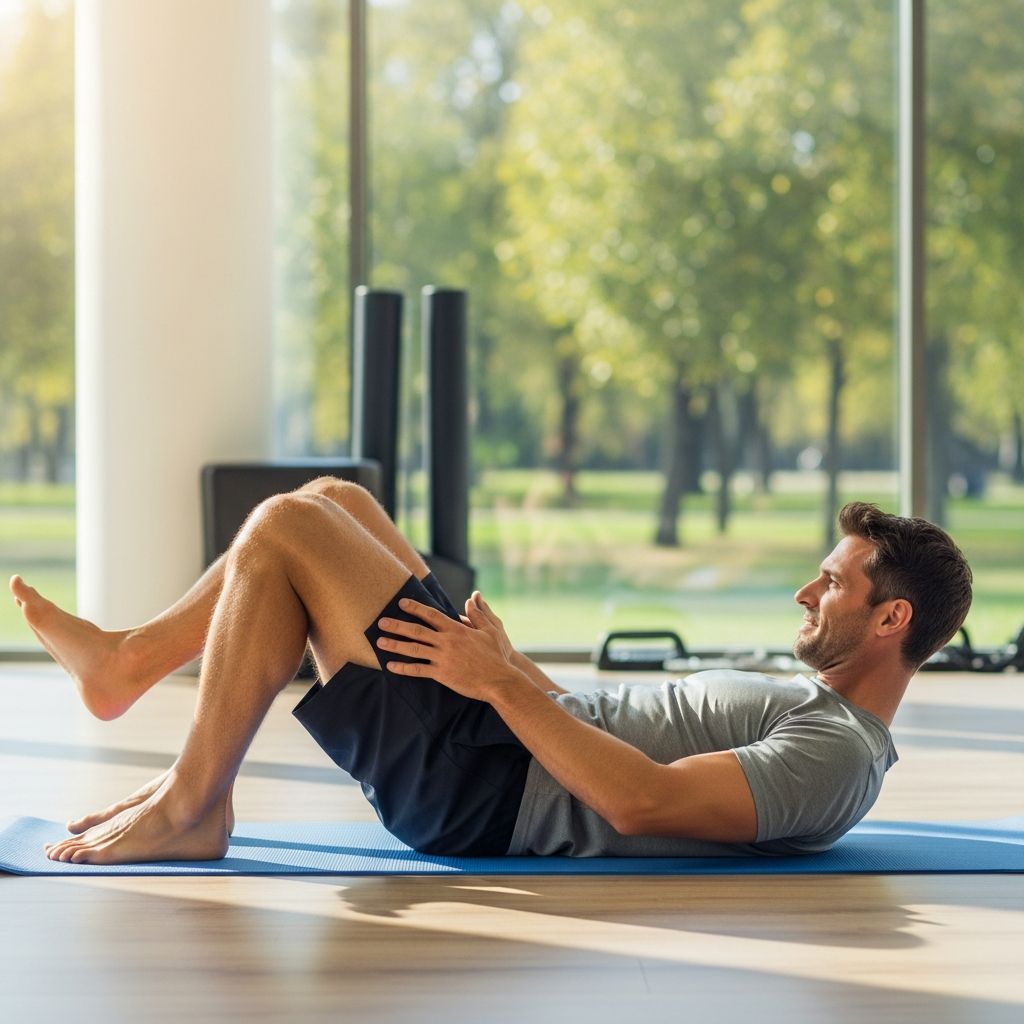
To begin the double-knee torso rotation, lie flat on your back on a yoga mat or padded surface. Bend both knees and place your feet together flat on the floor, positioned hip-width apart. Your arms should extend outward at shoulder level, forming a T-shape with your body. This position establishes a stable foundation for the movement to follow.
Movement Execution
Once in the starting position, tighten your abdominal muscles to engage your core. This core engagement is crucial for maintaining proper form and maximizing the exercise’s effectiveness. Lift both knees toward your chest while keeping your feet together on the floor. The movement should be controlled and deliberate, not rushed.
Next, lower your knees to one side of your body, keeping them together as they move. As your knees descend to the floor on one side, simultaneously turn your head in the opposite direction. For example, if your knees lower to the right, your head should turn to look toward the left. Keep your shoulders relaxed and pressed firmly into the floor throughout this movement.
Hold this rotated position for 10 to 30 seconds, feeling the stretch across your chest, torso, and outer thigh. You should experience mild tension rather than pain in the stretched muscles. After holding, gently return your knees to the center position above your chest before repeating the movement on the opposite side.
Key Form Tips and Technique Pointers
Proper form is essential for maximizing benefits and preventing injury during the double-knee torso rotation. Consider these important guidelines:
- Stretch only to the point of mild tension, never to the point of pain
- Keep your shoulders relaxed and pressed into the floor throughout the movement
- Maintain a neutral spine by avoiding excessive arching or flattening of your lower back
- Breathe comfortably and consistently throughout the exercise
- Move slowly and deliberately rather than using momentum or bouncing
- Keep your feet together and your core engaged to maximize effectiveness
- Remain as still as possible while holding the stretch position
- Ensure both knees lower to the same level on each side
Repetition and Duration Guidelines
For optimal results, perform the double-knee torso rotation 2 to 4 times on each side, holding each repetition for 10 to 30 seconds. For advanced practitioners seeking maximum benefits, holding each stretch for 60 seconds through multiple shorter holds (such as 3 repetitions of 20 seconds) provides superior flexibility gains.
Beginners should start with the minimum duration and repetition count, gradually increasing as they become more comfortable with the movement. Consistency matters more than intensity; performing this exercise three to four times per week will yield better results than sporadic intense sessions.
Muscles Stretched and Strengthened
The double-knee torso rotation is remarkably efficient because it simultaneously stretches and engages multiple muscle groups:
- Back muscles: The latissimus dorsi and erector spinae receive a gentle stretch, promoting spinal flexibility
- Chest muscles: The pectoralis major and minor are stretched as you rotate your torso
- Hip flexors: The iliopsoas and rectus femoris are gently lengthened
- Outer thighs: The tensor fasciae latae and gluteus medius are stretched
- Core muscles: Your abdominal muscles and transverse abdominis are engaged to stabilize your spine
- Oblique muscles: The internal and external obliques work to control the rotational movement
Benefits for Cardiovascular Health
As part of a comprehensive heart health program, the double-knee torso rotation offers several cardiovascular benefits. The dynamic nature of this exercise promotes increased blood circulation throughout your body. The rotational component enhances your heart’s ability to pump oxygen-rich blood to all tissues, improving cardiovascular efficiency over time.
Regular practice of this movement helps maintain healthy blood pressure levels and supports overall cardiovascular function. When combined with aerobic activities and strength training, the double-knee torso rotation contributes to a well-rounded fitness program that supports heart health.
Core Strength and Stability Enhancement
The abdominal and core engagement required during this exercise strengthens the muscles that support your spine and maintain proper posture. A strong core is foundational for cardiovascular fitness, as it improves your ability to perform other heart-healthy exercises with proper form. The core stabilization demanded by this movement also reduces injury risk during other physical activities.
Flexibility and Range of Motion Improvements
Regular performance of the double-knee torso rotation significantly improves your rotational flexibility and overall range of motion. This enhanced mobility translates to improved functional ability in daily activities, such as turning to look over your shoulder, reaching across your body, and maintaining balanced posture. Greater flexibility also reduces muscle tension and stiffness throughout your back and torso.
Variations for Different Fitness Levels
Beginner Modification
If you find the full movement challenging, start with a simpler version. Instead of lifting your knees toward your chest, keep your feet on the floor and simply rotate your knees from side to side in a controlled manner. This modified version reduces the intensity while maintaining the rotational benefits.
Intermediate Progression
Once comfortable with the basic movement, increase the duration of each hold or add additional repetitions. You can also increase the range of motion by allowing your knees to descend further toward the floor on each side, provided you maintain proper form and experience only mild tension.
Advanced Variation
For advanced practitioners, try the single-knee torso rotation by alternating which knee you lift and rotate. This variation increases the challenge to your core stabilizers and provides a more intense stretch. Alternatively, you can add a brief pause at the center position, increasing the time under tension for your core muscles.
When to Perform This Exercise
The double-knee torso rotation works well as part of your warm-up routine before more vigorous exercise, as it increases blood flow and mobility. It’s equally effective as a cool-down stretch after cardiovascular or strength training. For flexibility-focused sessions, perform this movement when your muscles are warm and pliable, ideally after 5 to 10 minutes of light aerobic activity.
This exercise can be performed 3 to 5 days per week as part of your regular routine. On rest days or lighter activity days, it serves as an excellent active recovery movement that promotes circulation without excessive exertion.
Safety Considerations and Precautions
While the double-knee torso rotation is generally safe, certain individuals should exercise caution or consult healthcare providers before performing this movement. Those with acute lower back pain, recent spine surgery, or serious spinal conditions should get clearance from a healthcare professional before beginning.
Never bounce or force your knees further than your current range allows. The stretch should feel mild and comfortable, never painful. If you experience sharp pain, dizziness, or unusual sensations during the exercise, stop immediately and consult a healthcare provider.
Pregnant individuals should check with their healthcare provider, as the rotational component may need modification. Those with certain hip or shoulder injuries may need to adjust the arm position or knee movement to accommodate their limitations.
Integrating Into Your Fitness Routine
The double-knee torso rotation pairs well with other flexibility and core-strengthening exercises. Consider combining it with movements like knee-to-chest stretches, downward dog, and bird dog exercises for a comprehensive core and flexibility session. For cardiovascular focus, perform this movement as part of a dynamic warm-up before walking, cycling, swimming, or other aerobic activities.
A sample routine might include 5 to 10 minutes of light aerobic activity followed by 2 to 4 repetitions of the double-knee torso rotation on each side, combined with other stretches and mobility movements totaling 10 to 15 minutes.
Tracking Your Progress
Monitor improvements in your flexibility by noting how far your knees can descend toward the floor over time. Keep a simple log noting the duration you can comfortably hold the stretch and any changes in your overall mobility. Many people notice improved posture and reduced back tension within 2 to 3 weeks of consistent practice.
Frequently Asked Questions
Q: How often should I perform the double-knee torso rotation?
A: For best results, perform this exercise 3 to 5 times per week. You can do it daily if desired, as it’s a low-impact movement that promotes recovery and flexibility.
Q: Can I perform this exercise if I have back pain?
A: If you have chronic back pain, consult your healthcare provider or physical therapist before beginning. Mild back tension may improve with this exercise, but acute or severe pain requires professional evaluation first.
Q: How long does it take to see flexibility improvements?
A: Most people notice improved flexibility and reduced muscle tension within 2 to 3 weeks of consistent practice, with greater improvements evident after 4 to 6 weeks.
Q: What’s the difference between this exercise and similar rotational movements?
A: The double-knee torso rotation simultaneously targets multiple muscle groups through compound stretching, making it more efficient than single-plane movements. It also promotes spinal rotation while maintaining core engagement.
Q: Can older adults safely perform this exercise?
A: Yes, this exercise is excellent for older adults. The modified version with feet remaining on the floor is particularly suitable for those with mobility limitations, making it accessible across all age groups.
Q: Should I feel soreness after performing this exercise?
A: You should feel mild tension during the stretch, but not pain or soreness. Soreness the following day may indicate you stretched too intensely; reduce your range of motion or duration on subsequent sessions.
References
- Exercising for Older Adults: 9 Best Dynamic Stretches — WebMD. 2024. https://www.webmd.com/healthy-aging/9-best-dynamic-stretches-for-older-adults
- Stretching Exercises To Help Stay Active and Independent — Texas AgriLife Extension. 2016. https://taylor.agrilife.org/files/2016/12/Stretching-Exercises.pdf
- Mindful Stretching Guide — University of California Berkeley Health Services. https://uhs.berkeley.edu/sites/default/files/wellness-mindfulstretchingguide.pdf
Similar Articles







Read full bio of Sneha Tete