Dowling-Degos Disease Pathology: 5 Histopathological Hallmarks
Comprehensive pathology overview of Dowling-Degos disease, a rare genodermatosis with reticulate hyperpigmentation in flexural areas.
Dowling-Degos disease (DDD) is a rare autosomal dominant genodermatosis characterized by progressive reticulate hyperpigmentation primarily in flexural areas. This condition typically manifests in adulthood with a lacy pattern of brown to black macules in sites such as the axillae, groin, neck, and inframammary folds, without significant symptoms like pruritus or pain.
Introduction
Dowling-Degos disease, first described by Dowling and Degos in the 1950s, represents a pigmentary disorder within the spectrum of reticulate pigmentation genodermatoses. It is inherited in an autosomal dominant manner with variable penetrance and expressivity, showing a female predominance. Lesions are not congenital and onset varies from childhood to mid-adulthood, often progressing slowly over time. The precise prevalence remains unknown due to underreporting, but it is considered rare.
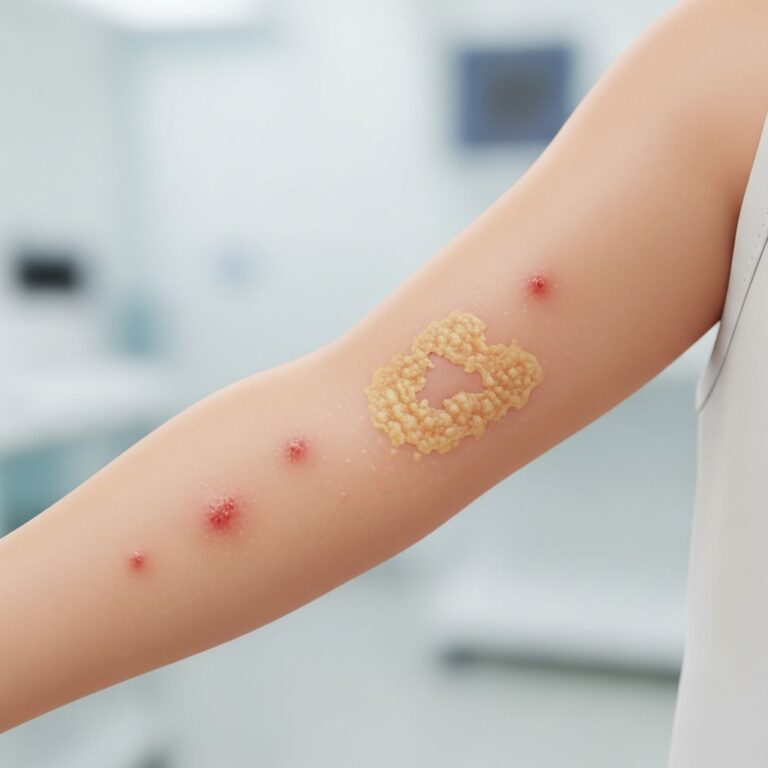
Clinically, DDD presents with symmetrical, reticulated hyperpigmented macules that coalesce into a net-like pattern. These are most prominent in intertriginous areas but can extend to the trunk, neck, and extremities. Associated features may include comedone-like lesions, perioral pits, and epidermal cysts, though these are less consistent.
Clinical Features
The hallmark of DDD is the development of small, round to oval, dark brown to black macules arranged in a reticulate pattern. These lesions favor flexural sites including:
- Axillae
- Inguinal regions
- Inframammary folds
- Posterior neck
- Intergluteal cleft
- Less commonly: face, trunk, and acral areas
Lesions are asymptomatic in most cases, lacking pruritus, pain, or scaling. Onset is typically post-pubertal, with progression over decades. Women are affected more frequently, possibly due to hormonal influences on pigmentation.
Additional findings reported in subsets of patients include:
- Comedone-like hyperkeratotic papules on the face, neck, or trunk
- Perioral pitted scars or pits
- Pilar (trichilemmal) cysts, especially on the scalp
- Rare hypopigmented macules
- Atrophic scars around the mouth
These variant features distinguish classic DDD from related conditions like Galli-Galli disease. Triggers such as UV exposure, friction, or sweating may exacerbate lesions.
Histopathology
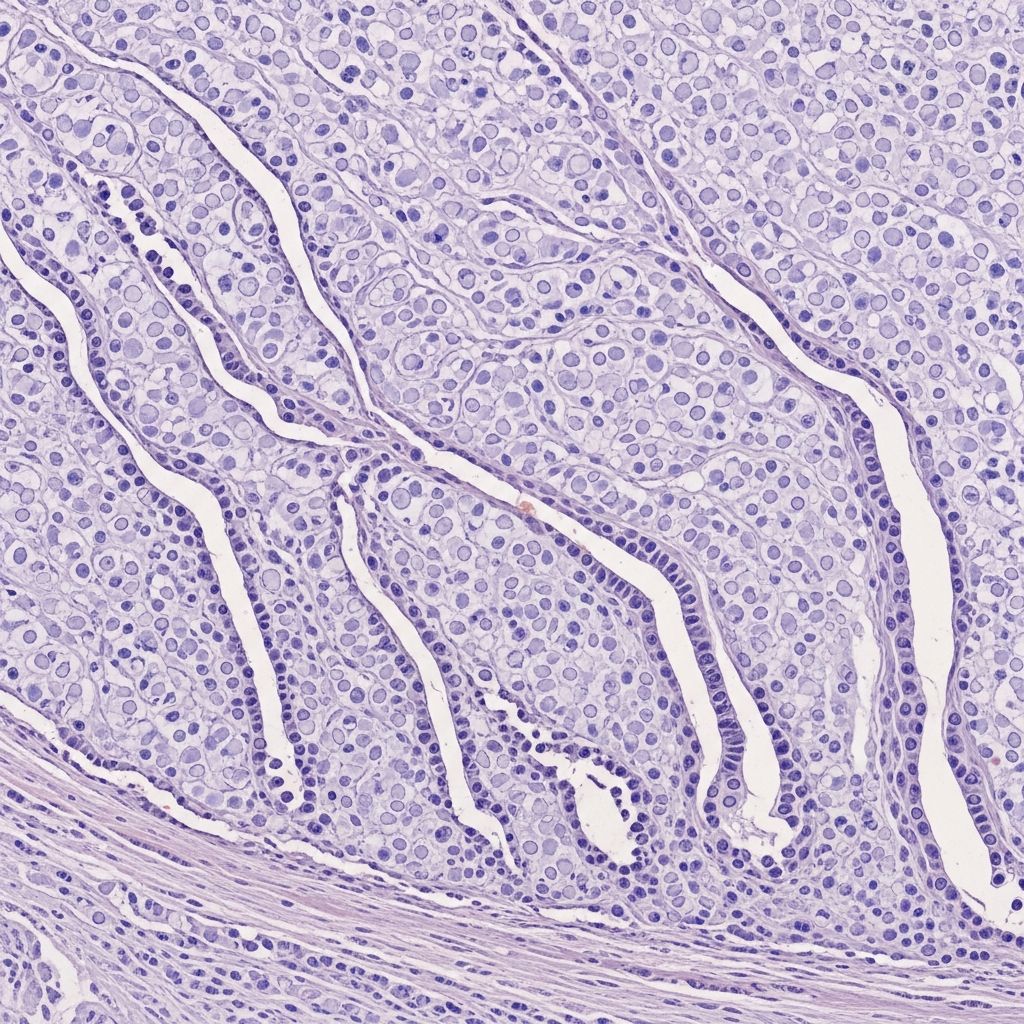
Histopathological examination is crucial for diagnosis, revealing characteristic epidermal changes. Punch biopsies from lesional skin demonstrate:
- Prolonged rete ridges with filiform, branching, and anastomosing downgrowths into the dermis (“antennae-like” or “digitate” rete ridges)
- Basal layer hyperpigmentation along elongated rete ridges
- Thin epidermal strands connecting rete ridges
- Mild acanthosis and papillomatosis
- Basket-weave orthokeratosis
- Follicular infundibular involvement in some cases
In the dermis, subtle findings include pigment incontinence with melanophages, mild perivascular lymphocytic infiltrate, and occasional keratin cysts (horn microcysts). Suprabasal acantholysis is absent in classic DDD but present in Galli-Galli variant.
Special stains like Masson-Fontana highlight increased basal melanin, while H&E suffices for architectural changes. Electron microscopy may show abnormal melanosome transfer, but is rarely needed.
Related Stories



| Feature | Description | Frequency |
|---|---|---|
| Filiform rete ridges | Branching, anastomosing downgrowths | Diagnostic (nearly 100%) |
| Basal hyperpigmentation | Intense along rete ridges | Common (>90%) |
| Pigment incontinence | Melanophages in papillary dermis | Frequent (70-80%) |
| Horn microcysts | Epidermal keratin cysts | Occasional (30-50%) |
| Perivascular infiltrate | Mild mononuclear cells | Mild (50%) |
This table summarizes key histopathological hallmarks, with filiform rete ridges being pathognomonic.
Genetics and Pathogenesis
DDD exhibits genetic heterogeneity with mutations in several genes disrupting pigmentation pathways:
- KRT5 (keratin 5 gene, 12q13): Classic DDD; mutations cause keratin filament abnormalities affecting keratinocyte adhesion and pigmentation.
- POFUT1 and POGLUT1 (Notch pathway modifiers): Impair O-fucosylation/glucosylation of Notch receptors, disrupting signaling in melanocytes and keratinocytes.
- PSENEN (presenilin enhancer): Rare; affects gamma-secretase complex in Notch processing.
Pathogenesis involves dysregulated Notch signaling, leading to aberrant epidermal differentiation, prolonged cell survival, and melanin accumulation in basal keratinocytes. Keratin 5 mutations may directly alter rete ridge architecture. Inheritance is autosomal dominant with incomplete penetrance (up to 50% non-penetrance in some families).
No consistent genotype-phenotype correlations exist, though KRT5 variants associate with more widespread involvement.
Diagnosis
Diagnosis relies on clinicopathologic correlation. Key diagnostic criteria include:
- Clinical: Reticulate flexural hyperpigmentation, progressive, post-pubertal onset.
- Histology: Filiform rete ridges with basal hyperpigmentation.
- Family history: Positive in ~75% (variable expressivity).
Genetic testing confirms in atypical cases but is not routine due to availability.
Differential Diagnosis
DDD overlaps with other reticulate pigmentary disorders:
| Condition | Key Distinguishing Features |
|---|---|
| Galli-Galli disease | DDD variant + suprabasal acantholysis, erosions |
| Reticulate acropigmentation of Kitamura | Acral onset, palmar pits, atrophy |
| Haber syndrome | Facial erythema/telangiectasia, photosensitivity |
| Acanthosis nigricans | Velvety plaques, insulin resistance |
| Confluent and reticulate papillomatosis | Truncal, responds to antibacterials |
| Neurofibromatosis type 1 | Café-au-lait macules, tumors |
Histology differentiates most effectively.
Treatment
No curative therapy exists; management is cosmetic:
- Topical agents: Retinoids, hydroquinone, azelaic acid – variable response.
- Laser therapy: Fractional Er:YAG, Q-switched Nd:YAG, CO2 – good for axillary lesions (e.g., 2 sessions improved appearance).
- Other: Dermabrasion, cryotherapy – limited data; risk of scarring.
Treatment selection depends on site, extent, and patient preference. Sunscreen prevents exacerbation. Genetic counseling for families.
Frequently Asked Questions (FAQs)
Q: Is Dowling-Degos disease contagious?
A: No, it is a genetic condition inherited autosomally dominantly, not infectious.
Q: Does DDD cause itching or pain?
A: Typically asymptomatic, though friction/UV may irritate.
Q: Can laser treatment cure DDD?
A: Lasers improve cosmesis but do not cure; recurrence possible.
Q: At what age does DDD start?
A: Usually late childhood/adolescence to adulthood; variable.
Q: Is genetic testing necessary for diagnosis?
A: Not routine; clinicopathology suffices, but useful in atypical cases.
Prognosis
DDD is benign with no systemic associations or malignancy risk. Progression stabilizes after decades; cosmetic distress is primary impact. Lifespan unaffected.
References
- Dowling-Degos Disease: A Case Report — Eur Arch Med Res. 2022. https://eurarchmedres.org/article/EAMR-97759/pdf
- Dowling-Degos disease — Orphanet. 2023-10-01. https://www.orpha.net/en/disease/detail/79145
- Dowling-Degos Disease (DDD) — MalaCards. 2024. https://www.malacards.org/card/dowling_degos_disease
- Dowling-Degos disease — MedlinePlus Genetics (NIH). 2023-05-01. https://medlineplus.gov/genetics/condition/dowling-degos-disease/
- Dowling-degos disease — Cosmoderma. 2022. https://cosmoderma.org/dowling-degos-disease/
- Dowling-Degos Disease — StatPearls (NCBI). 2023-07-17. https://www.ncbi.nlm.nih.gov/books/NBK531470/
Similar Articles








Read full bio of medha deb