Drip Bar: Should You Get an IV on Demand?
Exploring the hype behind IV drip bars and whether on-demand vitamin infusions are worth the cost.
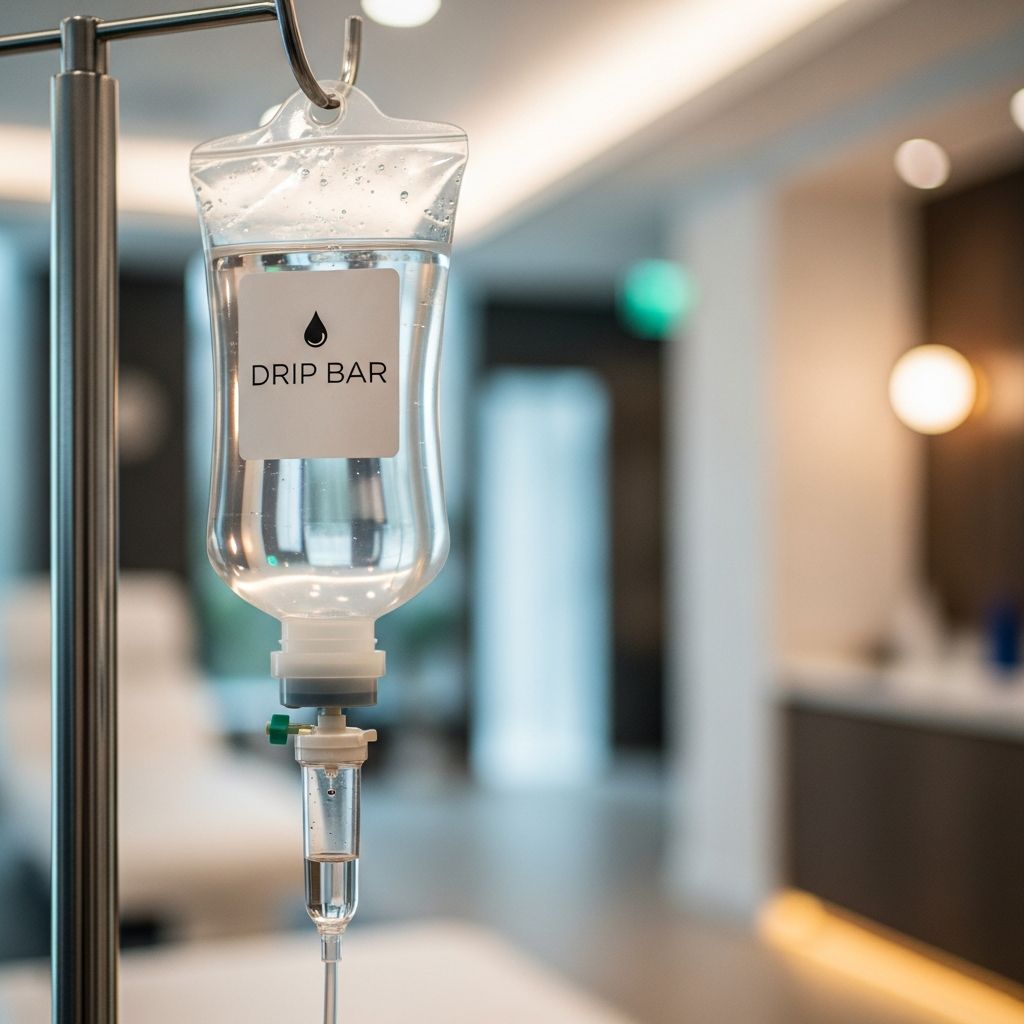
Over the past several years, a new wellness trend has swept across major cities: IV lounges and drip bars. These establishments promise customers rapid rehydration, enhanced immunity, increased energy, anti-aging benefits, and relief from hangovers and fatigue through intravenous vitamin infusions. Unlike the IV drips administered in hospitals for medical emergencies or serious health conditions, these on-demand treatments market themselves as wellness enhancements for otherwise healthy individuals. But do these trendy treatments live up to their promises, or are they simply an expensive way to spend your money? This article examines what drip bars offer, the science behind their claims, potential risks, and expert opinions to help you make an informed decision.
What Exactly Is IV Therapy?
Intravenous therapy involves delivering fluids, vitamins, minerals, and other nutrients directly into the bloodstream through a needle inserted into a vein. In traditional medical settings, IV therapy is essential for patients who are severely dehydrated, nutrient deficient, or suffering from serious infections. Hospitals and clinics use IV drips as a lifesaving intervention when patients cannot consume fluids or medications orally.
The commercial IV drip bar concept, however, applies this medical intervention to healthy individuals seeking wellness benefits. These establishments offer what are often called “Myers’ Cocktails”—named after a pioneering physician—which consist of various combinations of IV fluids, vitamins, electrolytes, and minerals mixed into custom formulations. Customers can receive these treatments at dedicated lounges, spas, or increasingly, in their own homes through mobile IV services.
The Marketing Claims Behind Drip Bars
Drip bar websites and promotional materials make an extensive array of health claims about their services. These establishments advertise IV therapy as a remedy for:
- Vitamin and micronutrient deficiencies
- Hangovers and alcohol-related fatigue
- General fatigue and low energy
- Jet lag and travel-related exhaustion
- Weakened immune function
- Aging and wrinkled skin
- Weight loss and metabolism support
- Athletic recovery and physical performance
- Sexual dysfunction and libido concerns
- Poor hair, skin, and nail health
- Detoxification needs
Each drip formulation typically has its own marketing name and comes with specific promises of beneficial effects. Celebrity endorsements have added credibility to these claims, with notable figures including Jane Fonda, Lily Tomlin, Adele, Chrissy Teigen, and John Legend reportedly incorporating IV therapy into their wellness routines.
The Science: What the Evidence Actually Shows
While the marketing promises are compelling, the scientific evidence supporting these claims remains limited. Robert H. Shmerling, M.D., a senior faculty editor of Harvard Health Publishing who has researched IV therapy, offers a straightforward assessment: “When it comes to these IVs on demand, the short answer is, ‘Buyer beware.’ They are expensive and not clearly helpful in any scientific, proven way.”
The central argument made by drip bar proponents is that IV therapy bypasses the digestive system to deliver hydration, nutrients, and minerals directly into the bloodstream, thereby increasing absorption rates compared to oral consumption. While this is technically true, experts argue that faster delivery doesn’t necessarily translate into actual health benefits. As Dr. Shmerling explains, “While it’s true that an IV can hydrate you faster than drinking fluids, that doesn’t necessarily translate into any kind of health benefit.”
Related Stories



For most healthy individuals whose digestive systems function normally, drinking water and consuming a balanced diet provides adequate hydration and nutrition. IV therapy becomes medically justified only when patients are too ill, elderly, or unable to maintain their body’s fluid and nutrient needs through conventional means—in which case, they should be receiving treatment in a medical facility under professional supervision.
In 2018, the Federal Trade Commission took action against iV Bars, a drip clinic chain operating in Texas and Colorado, for making unsubstantiated claims that IV cocktails could treat serious diseases including cancer, multiple sclerosis, and diabetes while producing rapid, long-lasting results. This enforcement action highlights the gap between marketing claims and scientific evidence.
Examining the Proposed Benefits
Rapid Hydration and Nutrient Delivery
One legitimate advantage of IV therapy is its speed of nutrient delivery compared to oral intake. For individuals suffering from severe dehydration, chronic fatigue, or recovery from intense physical exertion, IV hydration can restore fluid and electrolyte balance quickly. However, experts question whether this speed provides meaningful benefits for people without serious medical conditions or digestive disorders.
Personalized Treatment Options
Drip bars market their ability to customize infusions to meet individual health requirements, addressing specific concerns like energy levels or immune support. While personalization sounds appealing, the lack of FDA regulation means there are no standardized protocols for these customizations or evidence supporting their targeted effectiveness.
Convenience of Home Administration
The emergence of at-home IV therapy services offers the convenience of receiving treatments without leaving your residence. While this convenience appeals to busy individuals, it raises additional safety concerns about administration in non-clinical settings.
Cost Considerations
IV drip infusions represent a significant financial investment for most consumers. Treatments typically start between $150 and $200, but can escalate to $350 to $800 or more, depending on the specific ingredients and formulations selected. These costs vary by location and facility, with many drip bars charging upwards of $200 per treatment.
Notably, most health insurance plans do not cover these elective treatments, meaning customers must pay out-of-pocket for each infusion. For individuals seeking regular treatments, the cumulative costs can quickly become substantial. This high price point raises questions about whether the unproven benefits justify the expense.
Understanding the Risks and Complications
Despite the wellness-focused marketing and spa-like atmospheres of many drip bars, IV therapy remains an invasive medical procedure with potential complications. Even when trained medical professionals staff these establishments, complications can still occur.
IV infiltrations and extravasations—where fluid leaks into surrounding tissue rather than flowing directly into the vein—represent common complications that can cause localized pain, swelling, and tissue damage. Infection at the injection site, thrombophlebitis (inflammation of the vein), allergic reactions to infused substances, and electrolyte imbalances also pose risks.
Additionally, the elderly may face particular vulnerabilities to adverse effects from IV treatments, and experts emphasize that this population should avoid on-demand IV therapy unless specifically prescribed by their physician. The combination of potential side effects and lack of proven benefits makes routine use in healthy older adults especially problematic.
Regulatory Status and Safety Concerns
An important consideration often overlooked in drip bar marketing is the lack of FDA regulation and approval for these treatments. Unlike pharmaceutical interventions that undergo rigorous testing and regulatory review, commercial IV vitamin therapies operate in a largely unregulated space. This regulatory gap means:
- No standardized formulations or quality control requirements
- Limited oversight of staff qualifications and training
- Minimal verification of claimed benefits before marketing
- Few consequences for false or misleading health claims beyond occasional FTC enforcement
The lack of regulation creates an environment where profit incentives may outweigh genuine health considerations. As one medical expert noted, “While patient empowerment is generally a good thing, IV fluids on demand may not be the best example. Some of these services are much more about making money for those providing the service than delivering a product that’s good for your health.”
Expert Opinions and Professional Consensus
Medical experts and health organizations largely advise caution regarding on-demand IV therapy. The consensus among physicians is clear: IV treatment should be reserved for medically necessary situations rather than pursued as an elective wellness measure.
One prominent physician offered this perspective: “I’m not aware of any specific population, including older adults, for whom there is evidence that ‘on demand’ IV treatment is warranted rather than eating and drinking or seeking medical evaluation.” Another expert was more blunt in their assessment, stating, “The whole thing is really nonsense. It’s just catering to people’s sense that they’re taking their health into their own hands.”
The general medical recommendation is straightforward: if your digestive system functions normally, use it. Consuming adequate fluids and maintaining a balanced diet represents a far less invasive and substantially less expensive approach to nutrition and hydration than paying for optional IV treatments with questionable effectiveness.
Comparing Vitamin IV Therapy: Pros and Cons
| Aspect | Pros | Cons |
|---|---|---|
| Nutrient Absorption | Direct bloodstream delivery bypasses digestive system; faster absorption | No proven health benefit from faster absorption in healthy individuals |
| Personalization | Can customize formulations to individual needs | No standardized protocols or evidence supporting targeted effectiveness |
| Convenience | Available at home or boutique lounges without clinic visits | Unregulated administration settings may lack proper safety protocols |
| Speed | Rapid rehydration compared to drinking fluids | Speed doesn’t translate to meaningful health advantages for healthy people |
| Cost | Typically one treatment covers multiple claimed benefits | $150-$800+ per session; not covered by insurance; cumulative costs substantial |
| Medical Oversight | Often administered by trained healthcare professionals | Lack of FDA regulation; no standardized qualifications or oversight |
| Safety | Professional administration reduces some risks | Infiltration, infection, thrombophlebitis, and other IV complications still possible |
| Evidence Base | Celebrities and testimonials provide social proof | Little scientific evidence supports marketing claims; FTC has taken enforcement action |
When IV Therapy Is Medically Appropriate
While IV therapy on demand is questionable for healthy individuals, it remains an essential medical intervention in appropriate clinical contexts. IV therapy is warranted and potentially lifesaving for patients who are:
- Severely dehydrated and unable to drink fluids
- Suffering from serious infections or sepsis
- Experiencing severe nutrient deficiencies
- Unable to consume food or fluids due to illness, surgery, or digestive disorders
- Elderly or immunocompromised and requiring additional medical support
In these situations, IV therapy should be prescribed and administered by qualified medical professionals in appropriate clinical settings, not at wellness boutiques.
Frequently Asked Questions
Q: What is a Myers’ Cocktail?
A: A Myers’ Cocktail is a combination of IV fluids containing vitamins and electrolytes, named after the physician who developed the formulation. This particular combination has become famous in drip bars and is often used as a standard offering at many establishments.
Q: Are drip bars staffed by qualified medical professionals?
A: Many drip bars employ trained medical professionals such as nurses or phlebotomists. However, the lack of regulation means there are no standardized requirements for staff qualifications across different establishments.
Q: Does health insurance cover IV drip bar treatments?
A: No, treatments at commercial drip bars are typically not covered by health insurance, as they are considered elective wellness services rather than medically necessary interventions.
Q: Can IV therapy help with hangovers?
A: While drip bars heavily market IV therapy for hangover relief, there is little medical evidence supporting this claim. Drinking water and resting typically address hangover symptoms without the expense and risks of IV treatment.
Q: Are there risks associated with IV therapy at drip bars?
A: Yes, potential complications include vein infiltration, infection, thrombophlebitis, allergic reactions, and electrolyte imbalances. These risks persist even in professionally staffed establishments.
Q: How often do people use drip bar services?
A: Usage patterns vary, but some individuals receive treatments regularly, leading to substantial cumulative costs over time.
The Bottom Line
IV drip bars represent an interesting intersection of healthcare innovation and marketing hype. While the establishments offer a convenient and luxurious experience with personalized nutrient formulations, the scientific evidence supporting their health benefits remains limited. For healthy individuals whose digestive systems function properly, conventional methods of hydration and nutrition are safer, more cost-effective, and equally supported by medical science.
The combination of high costs, unproven benefits, potential complications, lack of FDA regulation, and professional skepticism suggests caution when considering on-demand IV therapy. Before investing in these treatments, consult with your healthcare provider about whether your specific health situation might justify this invasive and expensive intervention. For most people, the answer will be that improved diet, adequate hydration, and medical care when needed represent a more prudent approach to wellness than visiting a drip bar.
References
- Does IV Vitamin Therapy Actually Work? — AARP. Accessed December 2024. https://www.aarp.org/health/drugs-supplements/iv-vitamin-therapy/
- IV Therapy as a Wellness Trend — ivWatch. August 25, 2021. https://www.ivwatch.com/2021/08/25/iv-therapy-as-a-wellness-trend/
- Health Professionals’ Perspectives on Commercially Available Intravenous Nutrient Therapies — National Institutes of Health, PubMed Central. 2024. https://pmc.ncbi.nlm.nih.gov/articles/PMC10855962/
- Benefits of At-Home IV Hydration — Pharmko. Accessed December 2024. https://www.pharmko.com/blog/benefits-of-at-home-iv-hydration
- Is IV Vitamin Therapy Worth It? — Fortune Well. May 6, 2023. https://fortune.com/well/2023/05/06/iv-therapy-benefits-risks/
- Why Would Someone Need a Drip? Reasons for IV Therapy — DHGate Smart. Accessed December 2024. https://smart.dhgate.com/why-would-someone-need-a-drip-reasons-for-iv-therapy/
Similar Articles








Read full bio of Sneha Tete