Driving And Diabetes: UK Rules, Hypoglycemia Safety Tips
Essential guidance for people with diabetes on safe driving rules, managing hypos, and legal requirements in the UK and beyond.
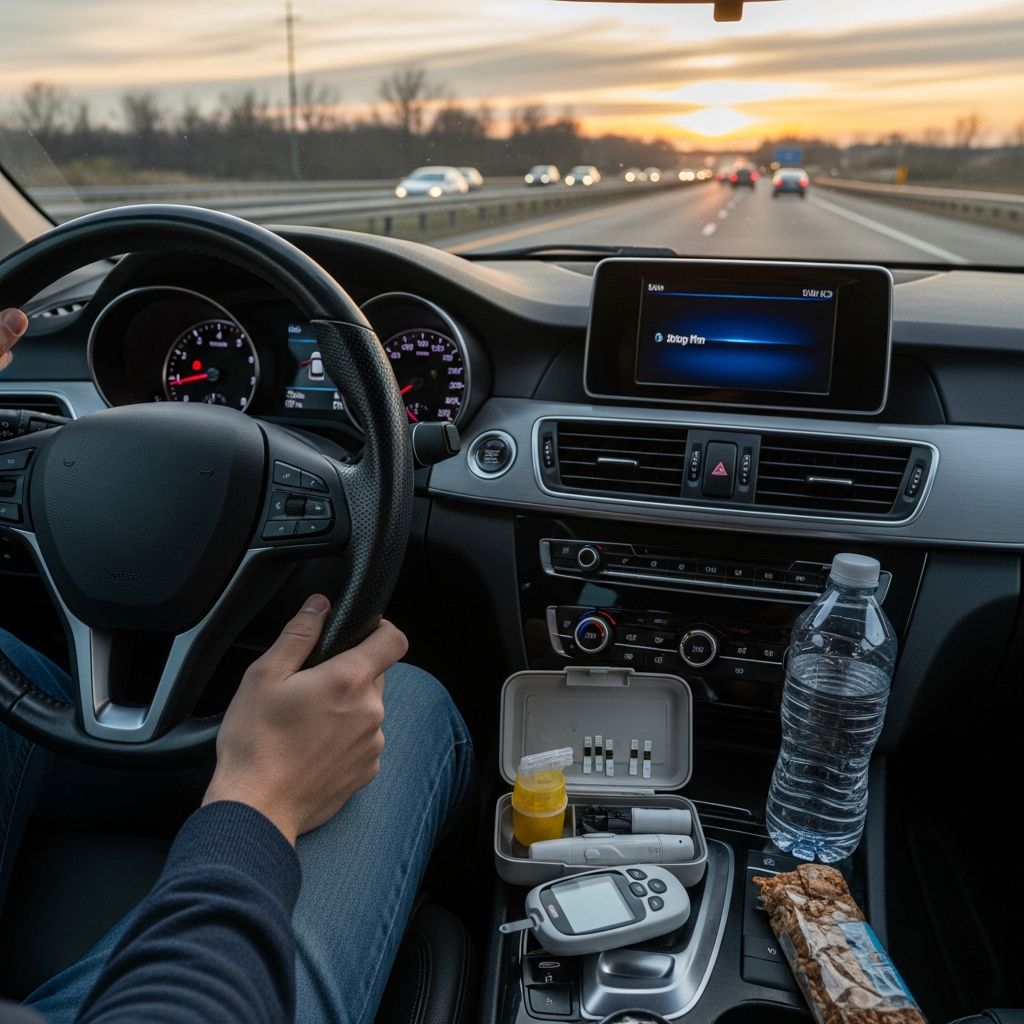
People with diabetes who drive need to be aware of specific rules and risks, particularly related to hypoglycaemia (hypos). This article outlines UK legal requirements, health considerations, and practical advice for safe driving.
Who can drive with diabetes?
The vast majority of people with diabetes can drive safely, provided they manage their condition effectively. Driving regulations depend on the type of diabetes and treatment:
- Type 2 diabetes treated with tablets or diet: No need to inform the DVLA. You can drive cars or motorcycles (Group 1) without restrictions.
- Diabetes treated with insulin: Must notify the DVLA. Eligible for Group 1 (cars, motorcycles, small automatic vehicles) if you meet strict criteria.
- Commercial driving (lorries, buses – Group 2): Stricter rules apply; insulin-treated drivers face significant barriers.
A diagnosis of diabetes alone does not affect driving fitness. Key concerns are factors like severe hypoglycaemia, which can impair judgment and reaction times similar to alcohol intoxication.
Hypoglycaemia (hypos) and driving
**Hypoglycaemia** is the biggest risk for drivers with diabetes, especially those on insulin. Hypos cause drowsiness, dizziness, confusion, and slowed reactions, making driving dangerous.
- Symptoms include shakiness, sweating, hunger, blurred vision, and confusion.
- Severe hypos can lead to loss of consciousness, increasing crash risk.
Studies show drivers with type 1 diabetes have higher collision rates linked to hypos, particularly with impaired awareness or recent severe events. Moderate hypoglycaemia impairs driving performance comparably to legal alcohol limits.
Impaired awareness of hypoglycaemia
If you have impaired hypo awareness (cannot feel symptoms of low blood sugar), you cannot drive if treated with insulin. You must stop driving and inform the DVLA immediately.
Impaired awareness affects up to 25% of insulin users and heightens driving risks. Retraining through blood glucose awareness programs can sometimes restore eligibility.
Rules if treated with insulin
All insulin-treated drivers must:
- Notify the DVLA using form DL4 (available online or via Post Office).
- Monitor blood glucose at least twice daily, including before driving and every 2 hours on long journeys.
- Never drive if blood glucose is below 5 mmol/L (90 mg/dL).
- Carry a hypo treatment kit (glucose tablets, snacks) in the vehicle.
- Have immediate hypo treatment available.
DVLA reviews your fitness annually. Failure to notify is an offence with fines up to £1,000.
Blood glucose testing requirements
| Situation | Testing Frequency |
|---|---|
| Short drives (<2 hours) | Check within 30-90 minutes before driving |
| Long drives (>2 hours) | Check every 2 hours + before driving |
| Symptoms of hypo | Stop immediately, test, and treat |
| Continuous Glucose Monitor (CGM) users | Confirm with fingerprick test before driving |
Healthcare professionals recommend checking glucose 30-90 minutes before driving for insulin users.
When to tell the DVLA
You must notify DVLA if you:
- Start insulin treatment.
- Develop impaired hypo awareness.
- Have severe hypo requiring assistance (more than once in 12 months disqualifies Group 1 driving).
- Experience 2+ severe hypos within 12 months.
- Have vision problems meeting DVLA standards.
- Develop serious diabetes complications (nephropathy, retinopathy).
Related Stories



Notify within 10 days of change. Use GOV.UK diabetes and driving page for forms.
Group 2 licences (lorries, buses, large vehicles)
Insulin-treated diabetes usually disqualifies you from Group 2 licences. Exceptions are rare and require:
- Stable control for 12+ months.
- No severe hypos for 5+ years.
- Specialist assessment (endocrinologist certification).
- CGM use with confirmed fingerprick tests.
Commercial drivers face federal-style regulations requiring specialist certification and documented hypo-free driving.
Diabetes complications affecting driving
Beyond hypos, complications impact safety:
- Retinopathy/vision loss: Must meet DVLA visual acuity standards (read number plate at 20m).
- Peripheral neuropathy: Loss of foot sensation affects pedal control.
- Hyperglycaemia: Can cause blurred vision, fatigue.
| Risk Factor | Impact on Driving | Healthcare Assessment |
|---|---|---|
| Severe/recurrent hypos | High crash risk | Review frequency, education, management changes |
| Impaired hypo awareness | Cannot detect lows | Driving ban until resolved |
| Visual impairment | Reduced acuity | Eye exam, DVLA vision test |
| Foot neuropathy | Altered pedal feel | Neurological assessment |
Healthcare professional responsibilities
Doctors play a key role in assessing driving fitness.
- Assess risks: Hypo history, awareness, complications.
- Educate: Safe driving practices, glucose targets.
- Report if needed: Mandatory in some states/countries for high-risk cases (professional judgment required).
Education reduces risks: Blood glucose awareness training cuts collisions by improving hypo recognition.
Insurance
Disclose diabetes to insurers. Non-disclosure can void policies. Specialist insurers offer diabetes policies; premiums depend on control and hypo history.
Practical tips for safe driving
- Check blood glucose before every journey and treat if <5 mmol/L.
- Carry fast-acting carbs (glucose tabs, Lucozade) and longer-acting snacks.
- Plan routes with rest stops for long drives.
- Use CGM alarms but confirm with fingerprick.
- Never ignore hypo symptoms – pull over safely immediately.
- Inform passengers/family about hypo management.
- Avoid driving alone if hypo-prone.
52% of type 1 drivers report hypo-related mishaps yearly; regular testing prevents most.
International differences
UK rules align with EU standards but differ globally:
- USA: State-specific; insulin drivers often need medical clearance.
- Australia: Similar to UK; annual doctor review for insulin users.
- Commercial: Strict federal rules worldwide.
Frequently Asked Questions (FAQs)
Can I drive if my blood sugar is low?
No. Never drive if below 5 mmol/L (90 mg/dL). Stop, treat hypo, recheck after 15 minutes.
Do I need to tell my employer about diabetes?
Not legally, but recommended for safety-critical jobs (HGV, emergency services). Disclosure protects you.
What if I have a hypo while driving?
1. Pull over safely at first opportunity.
2. Turn off engine, remove keys.
3. Treat hypo immediately.
4. Recheck glucose after 15 mins.
5. Call for help if severe.
How often should I test before driving?
Insulin users: 30-90 mins before and every 2 hours on long trips. CGM users confirm with fingerprick.
Can CGM replace fingerprick testing?
No for DVLA – fingerprick confirmation required before driving.
Key statistics
- Drivers with type 1 diabetes: 2x collision rate vs non-diabetics.
- 48% type 1 drivers hypo-free while driving.
- 25% insulin drivers unaware driving unsafe below 3.9 mmol/L.
- 15% type 1 drivers had moving violations past 2 years.
References
- Diabetes and Driving: A Statement of the American Diabetes Association — Diabetes Care (American Diabetes Association). 2024-11-01. https://diabetesjournals.org/care/article/47/11/1889/157262/Diabetes-and-Driving-A-Statement-of-the-American
- Diabetes and Driving Safety: Science, Ethics, Legality & Practice — NIH (PMC). 2013-04-22. https://pmc.ncbi.nlm.nih.gov/articles/PMC3652323/
- Driving with Diabetes — Johns Hopkins Diabetes Guide. 2024. https://www.hopkinsguides.com/hopkins/view/Johns_Hopkins_Diabetes_Guide/547043/all/Driving_with_Diabetes
- Diabetes and Driving: A Statement of the American Diabetes Association — Endocrinology Advisor. 2024. https://www.endocrinologyadvisor.com/pri/diabetes-and-driving-a-statement-of-the-american-diabetes-association/
- What Doctors Need to Teach Their Patients with Diabetes About Driving — Consultant360. 2023. https://www.consultant360.com/articles/what-do-doctors-need-teach-their-patients-diabetes-about-driving-their-vehicles
- Driving and Diabetes — Patient.info. 2024. https://patient.info/diabetes/driving-and-diabetes
Similar Articles








Read full bio of medha deb