Drooling In Parkinson’s Disease: Causes And Management Tips
Explore the causes, impacts, and effective strategies for managing drooling, a common yet challenging symptom in Parkinson's disease patients.
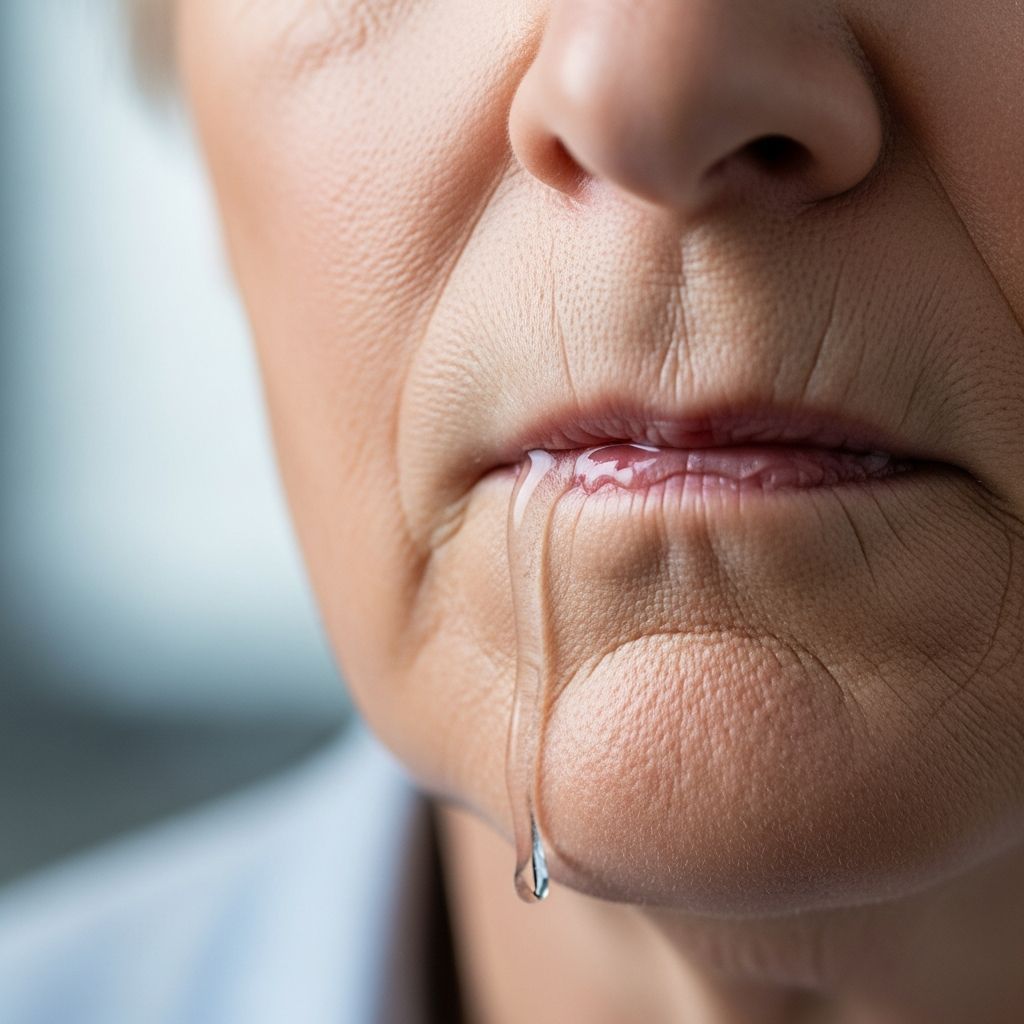
Drooling, medically termed sialorrhea, affects a significant number of individuals with Parkinson’s disease (PD), leading to excess saliva accumulation and spillage from the mouth. This symptom arises primarily from impaired swallowing and reduced saliva clearance rather than overproduction, impacting daily comfort and social interactions.
The Mechanisms Behind Drooling in PD
In Parkinson’s disease, drooling stems from disruptions in the brain’s dopaminergic pathways, which regulate both movement and autonomic functions like saliva handling. Contrary to common belief, patients with PD often produce less saliva than healthy individuals, as confirmed by sialometry studies comparing PD patients to controls. The core issue lies in infrequent swallowing and poor oral containment of saliva.
Dopamine deficiency in the nigrostriatal pathway contributes significantly. Animal studies demonstrate that dopamine modulates salivary secretion via central and peripheral receptors; lesions in areas like the globus pallidus or striatum reduce saliva flow. In humans, this manifests as reduced striatal dopamine transporter (DAT) availability, observable via DaTSCAN imaging in drooling PD patients.
Swallowing impairments, or dysphagia, play a pivotal role. The oropharyngeal phase of swallowing is compromised, with delays in tongue pressure, prolonged transit times, and lingual tremors hindering saliva propulsion. Hypomimia—reduced facial expression—exacerbates this by impairing lip closure, allowing saliva to escape.
Daytime vs. Nighttime Patterns
Diurnal drooling (while awake) occurs in approximately 28% of PD patients, typically emerging later in disease progression, around 3 years after initial saliva accumulation complaints. Nocturnal drooling, often noticed as a wet pillow, precedes daytime issues and affects up to 71% when including milder saliva problems. These patterns correlate with “off” medication states, where motor symptoms worsen.
Prevalence and Progression in Parkinson’s Patients
Drooling prevalence varies by study but is consistently high. Up to 80% of PD patients experience some degree of sialorrhea, with severe cases (saliva on clothes or floor) rarer at about 4%. It associates with longer disease duration (10 years vs. 7 in non-droolers) and higher Hoehn & Yahr stages.
- Early-stage PD: Rare, as symptoms build gradually.
- Mid-to-late stage: Common, linked to advancing motor fluctuations and bradykinesia.
- Gender differences: More prevalent in males, tied to facial akinesia.
Progression follows a sequence: saliva accumulation → nocturnal loss → diurnal dribbling, aligning with MDS-UPDRS saliva subscale assessments.
Links to Other PD Symptoms
Drooling rarely occurs in isolation; it clusters with motor and non-motor symptoms, signaling higher disease burden.
| Symptom Category | Associated Features | Evidence |
|---|---|---|
| Motor | Motor fluctuations, bradykinesia, hypomimia, lingual tremor, involuntary mouth opening | |
| Non-Motor | Cognitive impairment, sleep disorders, autonomic dysfunction (constipation, orthostatic hypotension), divided attention deficits | |
| Autonomic | Swallowing complaints, gastrointestinal issues via vagus nerve involvement |
Related Stories



Cognitive factors worsen drooling; tasks requiring divided attention reduce swallowing vigilance. Sleep disturbances amplify morning motor symptoms, indirectly promoting drooling. Dysautonomia, stemming from alpha-synuclein spread via the vagus nerve, links drooling to gut and cardiovascular issues.
Daily Life Impacts and Social Challenges
Beyond physical discomfort, drooling erodes quality of life. Patients report embarrassment, stained clothing, skin irritation around the mouth, and restricted social engagement. In professional settings, it can lead to self-consciousness during conversations or meetings.
Caregivers face added burdens, including frequent clothing changes and hygiene assistance. Nocturnal drooling disrupts sleep for both patient and partner, compounding fatigue in PD management.
- Social stigma: Avoidance of eating in public.
- Hygiene issues: Risk of perioral dermatitis.
- Nutritional concerns: Linked to broader dysphagia affecting meal intake.
Diagnostic Approaches for Drooling
Clinicians assess drooling via validated tools like the ROMP-saliva questionnaire and MDS-UPDRS Part I (non-motor) subscale. Objective measures include sialometry for saliva flow and videofluoroscopy for swallowing dynamics. DaTSCAN helps correlate with dopaminergic deficits.
Differential diagnosis rules out hypersalivation from medications or infections, confirming PD-specific reduced clearance.
Treatment and Management Options
Management targets clearance improvement over production reduction, given hyposalivation in PD.
Non-Pharmacological Interventions
- Behavioral therapies: Frequent conscious swallowing, chin tuck maneuvers, and speech therapy to strengthen oropharyngeal muscles.
- Physical cues: Sugarless gum or citrus lozenges to stimulate swallowing without excess saliva.
- Posture training: Upright positioning during meals; avoid head anteflexion.
- Botulinum toxin injections: Into salivary glands (e.g., parotid/submandibular) for 3-6 months relief; effective in refractory cases.
Pharmacological Treatments
Anticholinergics like glycopyrrolate or scopolamine patches reduce saliva flow but risk side effects (dry mouth, constipation). Dopamine agonists may indirectly aid via motor improvement.
| Treatment Type | Examples | Pros | Cons |
|---|---|---|---|
| Behavioral | Swallowing exercises, cues | Non-invasive, no side effects | Requires compliance |
| Injections | Botulinum toxin | Targeted, long-lasting | Invasive, temporary |
| Medications | Glycopyrrolate | Systemic relief | Cognitive/autonomic side effects |
Advanced and Emerging Therapies
Neuromodulation like deep brain stimulation (DBS) may alleviate drooling in advanced PD by improving motor control. Ongoing research explores alpha-synuclein targeting to halt progression.
Practical Tips for Patients and Caregivers
- Keep tissues or absorbent cloths handy.
- Wipe mouth discreetly with upward strokes to avoid skin creases.
- Use lip balm to aid closure and prevent chapping.
- Schedule speech therapy regularly.
- Monitor for aspiration risk; consult ENT if worsening.
Frequently Asked Questions (FAQs)
Is drooling a sign of late-stage Parkinson’s?
Not necessarily; it often appears mid-stage but varies by individual.
Does drooling mean I’m producing too much saliva?
No, PD patients typically produce less; the problem is swallowing less frequently.
Can diet help manage drooling?
Yes, avoid thick liquids that impair swallowing; opt for thin consistencies and stay hydrated.
Are there home remedies?
Chewing gum stimulates swallowing; upright sleep positions reduce nocturnal drooling.
When should I see a specialist?
If drooling impacts eating, speech, or causes frequent choking—aspiration risk warrants urgent evaluation.
Living Well with Drooling in PD
Though challenging, proactive strategies empower PD patients to minimize drooling’s impact. Collaborate with neurologists, speech pathologists, and therapists for tailored plans. Support groups offer shared experiences, reducing isolation.
Early intervention preserves dignity and function, enhancing overall well-being amid PD’s complexities.
References
- Pathophysiology and Symptomatology of Drooling in Parkinson’s Disease — Cannas A, et al. PMC. 2022-03-15. https://pmc.ncbi.nlm.nih.gov/articles/PMC8951596/
- Diurnal and nocturnal drooling in Parkinson’s disease — van Wanrooij LLM, et al. PMC. 2011-12-20. https://pmc.ncbi.nlm.nih.gov/articles/PMC3251785/
- Overview of Sialorrhea in Parkinson’s Disease — Rana AQ, MD. YouTube (Parkinson’s Foundation video). 2023. https://www.youtube.com/watch?v=25_ReAGxZaE
- Understanding Drooling in Parkinson’s Disease — American Parkinson Disease Association. 2024. https://www.apdaparkinson.org/downloads/understanding-drooling-in-parkinsons-disease/
- Managing drooling when you have Parkinson’s — Parkinson’s UK. 2023-05-10. https://www.parkinsons.org.uk/magazine/experts/managing-drooling-when-you-have-parkinsons
Similar Articles








Read full bio of Sneha Tete