Drug Hypersensitivity Syndrome: Guide To Diagnosis & Treatment
Understanding drug hypersensitivity syndrome: severe reactions involving rash, fever, and organ damage from common medications.

Drug hypersensitivity syndrome (DHS), also known as drug reaction with eosinophilia and systemic symptoms (DRESS) or drug-induced hypersensitivity syndrome (DIHS), represents a severe, idiosyncratic adverse reaction to medications. It is characterized by a clinical triad of fever, rash, and internal organ involvement, distinguishing it from simpler drug eruptions. This potentially life-threatening condition typically emerges 2-8 weeks after drug initiation, affecting multiple systems including skin, liver, kidneys, and hematologic parameters.
What is the cause of drug hypersensitivity syndrome?
The precise pathogenesis of DHS remains incompletely understood but involves a complex interplay of metabolic, immunologic, and genetic factors. Drugs or their metabolites act as haptens, binding to proteins and triggering a T-cell mediated immune response, often classified as type IVb hypersensitivity involving eosinophils. Common triggers include aromatic anticonvulsants (e.g., carbamazepine, phenytoin, phenobarbital), allopurinol, sulfonamides, and certain antibiotics. A prolonged latency period of 2-6 weeks is typical, longer than immediate IgE-mediated reactions.
Reactivation of human herpesviruses (HHV-6, HHV-7, EBV) plays a key role in many cases, expanding the immune response and contributing to systemic involvement. Genetic predispositions, such as HLA alleles (e.g., HLA-B*58:01 for allopurinol), increase susceptibility in certain populations. Unlike anaphylaxis, DHS is not IgE-mediated but driven by cytotoxic T-cells and regulatory T-cell dysfunction.
Who gets drug hypersensitivity syndrome?
DHS affects individuals of all ages but is more common in adults, with no strong gender predilection reported. Incidence is rare, estimated at 1 in 1,000 to 1 in 10,000 exposures to high-risk drugs like carbamazepine. Those with underlying autoimmune diseases, HIV, or genetic predispositions (e.g., Asian populations with specific HLA types) are at higher risk. It can occur in any patient initiating culprit medications, particularly in polypharmacy settings or epilepsy treatment.
What are the clinical features of drug hypersensitivity syndrome?
The hallmark triad includes:
- Fever: Often the earliest sign, exceeding 38°C, preceding rash by days.
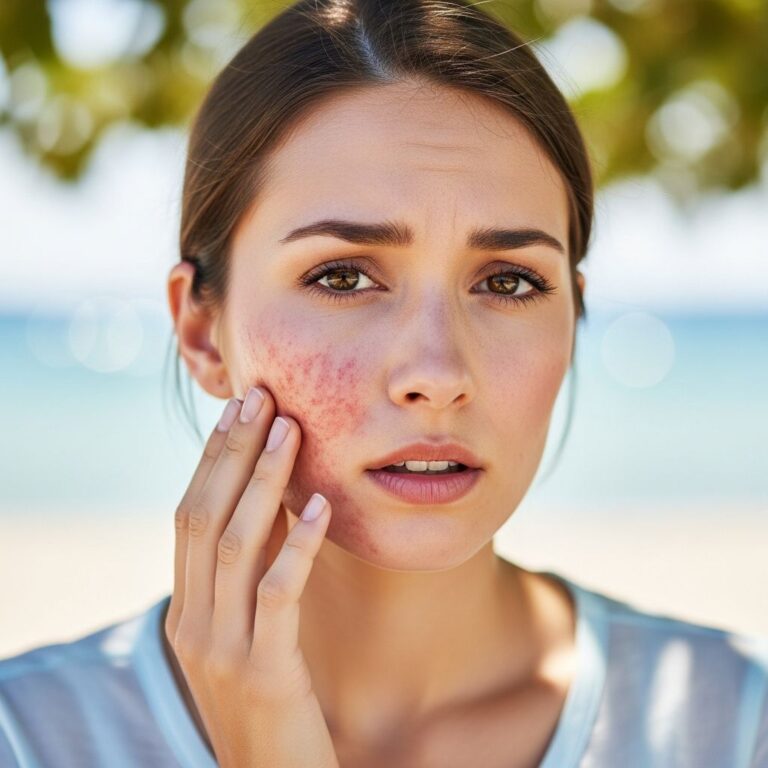
- Rash: Morbilliform (measles-like) exanthem starting on the face and upper trunk, progressing to generalized involvement. May evolve to erythroderma, exfoliative dermatitis, or purpura. Facial edema is common.
- Internal organ involvement: Hepatitis (most frequent, >70% cases), nephritis, pneumonitis, myocarditis, or thyroiditis. Symptoms appear 1-8 weeks post-exposure.
Additional features encompass lymphadenopathy, pharyngitis, and mucosal involvement (less severe than SJS/TEN). Laboratory findings reveal eosinophilia (>700/μL), atypical lymphocytes, elevated liver enzymes, and sometimes leukocytosis.
Severity Classification
| Syndrome | Key Characteristics |
|---|---|
| Drug Rash with Eosinophilia and Systemic Symptoms (DRESS/DHS) | Fever, exanthema, eosinophilia, atypical lymphocytes, lymphadenopathy, hepatitis |
| Maculopapular Exanthemas | Widespread red macular or papular eruptions |
| Erythema Multiforme Minor | Localized target lesions on extremities, heal in <7 days |
| Stevens-Johnson Syndrome (SJS) | <10% body surface detachment, mucosal involvement |
| Toxic Epidermal Necrolysis (TEN) | >30% body surface detachment, high mortality |
How is drug hypersensitivity syndrome diagnosed?
Diagnosis relies on clinical scoring systems like RegiSCAR, incorporating fever (>38°C), lymphadenopathy, eosinophilia (>10% or >700/μL), atypical lymphocytes (>5%), skin rash, organ involvement (≥2 sites), and resolution time (>2 weeks). A score ≥5 indicates definite DRESS. Differential diagnoses include infections (e.g., viral exanthems), autoimmune diseases, and malignancies.
Skin biopsy shows interface dermatitis, perivascular lymphocytic infiltrate with eosinophils, and keratinocyte necrosis in severe cases. Patch testing or lymphocyte transformation tests may confirm causality post-resolution, but are not acute diagnostics. Drug history is crucial: timeline 2-6 weeks post-initiation.
What is the treatment for drug hypersensitivity syndrome?
Immediate discontinuation of the culprit drug is paramount, often leading to slow improvement. Supportive care includes:
Related Stories



- Corticosteroids: Systemic prednisone (1-2 mg/kg/day) for severe cases with organ involvement, tapered slowly over months due to relapse risk.
- Immunosuppressants: Cyclosporine, mycophenolate, or IVIG for steroid-refractory cases.
- Skin care: Emollients, topical steroids for rash; wound care for exfoliation.
- Symptomatic: Antipyretics, antihistamines, hydration.
Monitor for complications like fulminant hepatitis or sepsis. Hospitalization in ICU may be required for multi-organ failure. Avoid re-exposure to culprit or cross-reactive drugs.
What is the outcome for drug hypersensitivity syndrome?
Mortality ranges 4-10%, primarily from liver failure or infection. Recovery is prolonged (weeks to months), with potential long-term sequelae including autoimmune thyroiditis, diabetes, or nephritis (10-20% cases). Relapse can occur upon steroid taper or HHV reactivation. Prognosis improves with early recognition and drug cessation.
How can drug hypersensitivity syndrome be prevented?
Screen high-risk patients for HLA alleles (e.g., HLA-B*58:01 before allopurinol in Asians). Avoid culprit drugs in those with history. Gradual dose escalation for anticonvulsants may reduce risk. Pharmacovigilance and patient education on reporting early fever/rash are essential.
Investigation of drug hypersensitivity syndrome
Comprehensive workup includes CBC with differential (eosinophilia, atypical lymphocytes), liver/kidney function tests, viral serologies (HHV-6 PCR), and imaging for organ involvement. Bone marrow biopsy if pancytopenia suspected.
Differential diagnosis of drug hypersensitivity syndrome
- Viral infections (e.g., measles, EBV)
- Serum sickness-like reactions
- Acute generalized exanthematous pustulosis (AGEP)
- SJS/TEN spectrum
- Autoimmune diseases (e.g., Still’s disease)
- Lymphoma
Frequently Asked Questions (FAQs)
What drugs most commonly cause DHS?
Anticonvulsants (carbamazepine, phenytoin), allopurinol, sulfonamides, and minocycline.
How soon after starting a drug does DHS appear?
Typically 2-6 weeks, sometimes up to 8 weeks.
Is DHS the same as an allergic rash?
No, DHS is a severe systemic reaction beyond simple rash, involving organs and eosinophilia.
Can DHS be fatal?
Yes, mortality 4-10% due to liver failure or sepsis.
What should I do if I suspect DHS?
Stop the drug immediately, seek emergency care, especially with fever or organ symptoms.
References
- The Drug Hypersensitivity Syndrome: What Is the Pathogenesis? — JAMA Dermatology. 2003. https://jamanetwork.com/journals/jamadermatology/article-abstract/478221
- Drug-Hypersensitivity Syndrome: Diagnosis and Treatment — PMC (Clinics in Dermatology). 2014-01-15. https://pmc.ncbi.nlm.nih.gov/articles/PMC3921231/
- Drug-induced hypersensitivity syndrome/drug reaction… — PubMed. 2023-07-28. https://pubmed.ncbi.nlm.nih.gov/37516359/
- Drug-Induced Hypersensitivity Reactions: Cutaneous Eruptions — US Pharmacist. 2017-06-01. https://www.uspharmacist.com/article/druginduced-hypersensitivity-reactions-cutaneous-eruptions
- Drug Reaction with Eosinophilia and Systemic Symptoms (DRESS) — Journal of Clinical and Aesthetic Dermatology. 2013-06. https://jcadonline.com/drug-reaction-with-eosinophilia-and-systemic-symptoms-dress-syndrome/
- Drug Hypersensitivity Syndrome — Medsafe (New Zealand). N/A. https://www.medsafe.govt.nz/profs/puarticles/dhs.htm
Similar Articles








Read full bio of medha deb