Drug-Induced Dermatomyositis: What You Need To Know
Understanding drug-induced dermatomyositis: causes, symptoms, diagnosis, and effective management strategies for this rare autoimmune condition.
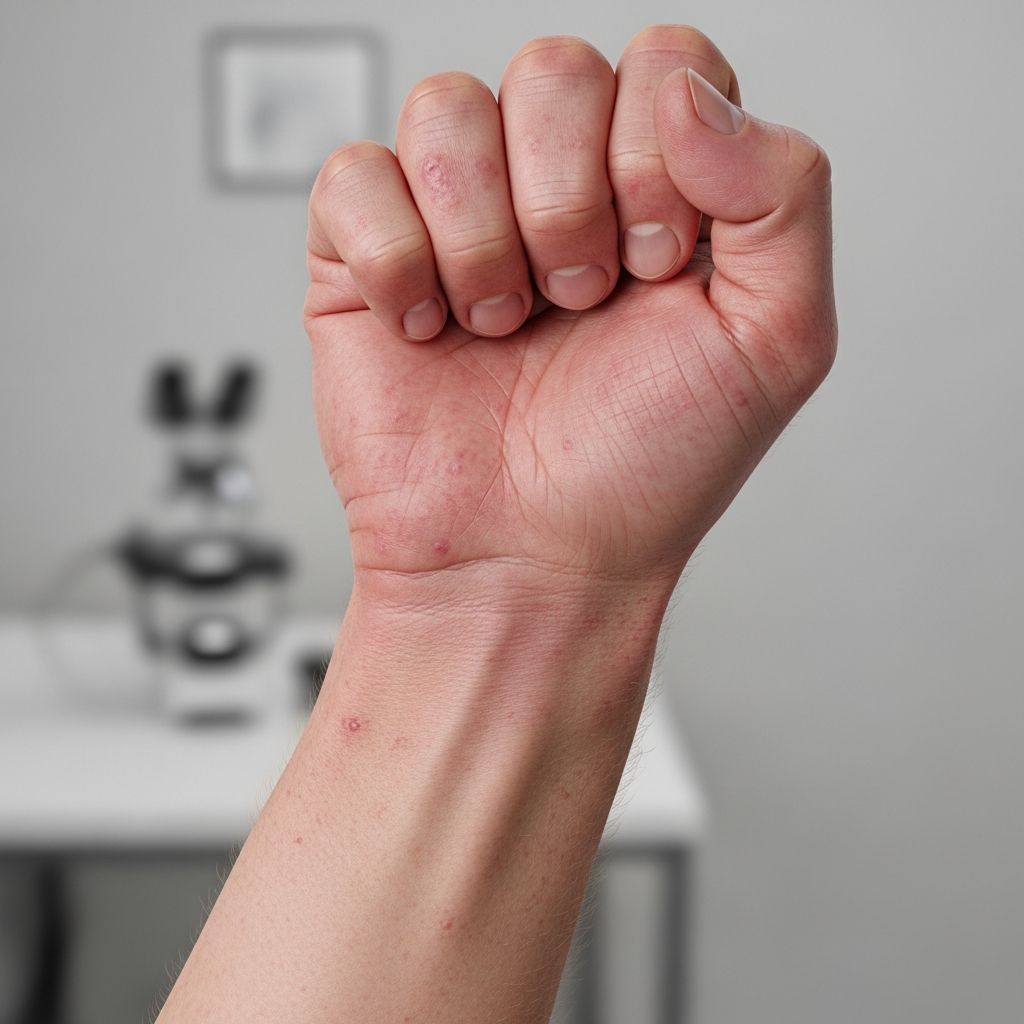
Drug-induced dermatomyositis
Author: Reviewed by Dr. Reviewed by Dr. Amanda Oakley, Dermatologist, Hamilton, New Zealand — Updated March 2024.
What is drug-induced dermatomyositis?
Drug-induced dermatomyositis (DIDM) is a rare variant of dermatomyositis, an inflammatory myopathy characterised by distinctive skin eruptions and proximal muscle weakness. Unlike idiopathic dermatomyositis (DM), which is primarily autoimmune, DIDM arises as an adverse reaction to certain medications. The condition typically resolves upon discontinuation of the offending drug, distinguishing it from classic DM that often requires long-term immunosuppression.
The pathogenesis involves a humoral immune response where drugs act as triggers, leading to complement activation and microvascular injury similar to idiopathic DM. Endomysial capillaries serve as the primary antigen, resulting in membrane attack complex deposition and subsequent muscle and skin inflammation.
Who gets drug-induced dermatomyositis?
DIDM affects individuals of any age but is more commonly reported in adults over 40 years, particularly those on long-term medications for chronic conditions such as hyperlipidaemia, hypertension, or malignancies. Women appear slightly more predisposed, mirroring idiopathic DM demographics. Genetic susceptibility may play a role, with certain HLA haplotypes increasing risk in genetically predisposed individuals exposed to triggering agents.
- Patients on statins (HMG-CoA reductase inhibitors) for cholesterol management
- Individuals treated with hydroxyurea for myeloproliferative disorders or psoriasis
- Those receiving immune checkpoint inhibitors for cancer immunotherapy
- Users of penicillamine for Wilson’s disease or rheumatoid arthritis
- Rare cases linked to other agents like lipid-lowering drugs or anti-hypertensives
What causes drug-induced dermatomyositis?
DIDM is triggered by specific medications that provoke an aberrant immune response. Common culprits include:
| Drug Class | Examples | Associated Conditions |
|---|---|---|
| HMG-CoA reductase inhibitors (statins) | Atorvastatin, simvastatin | Hyperlipidaemia |
| Antineoplastic agents | Hydroxyurea, immune checkpoint inhibitors (e.g., pembrolizumab, nivolumab) | Malignancies, psoriasis |
| Chelating agents | D-Penicillamine | Wilson’s disease, RA |
| Lipid-lowering agents | Gemfibrozil | Hypertriglyceridaemia |
| Others | Quinidine, phenylbutazone, NSAIDs, anti-hypertensives | Various |
Statins are among the most frequently implicated, with case reports documenting onset weeks to months after initiation. Hydroxyurea and checkpoint inhibitors have gained prominence with increased use in oncology. Triggers may involve molecular mimicry or direct toxicity leading to autoantibody production against nuclear and cytoplasmic antigens.
What are the clinical features of drug-induced dermatomyositis?
Clinical manifestations closely resemble idiopathic DM but may be milder and more skin-predominant. Key features include:
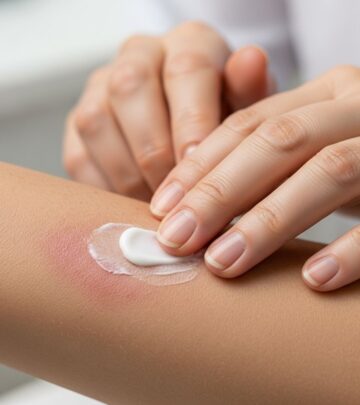
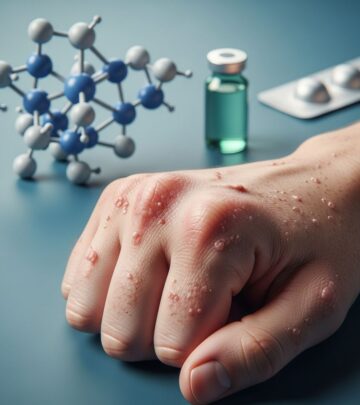
- Characteristic skin findings: Heliotrope rash (violaceous periorbital oedema), Gottron papules (erythematous papules over knuckles), V-sign (photosensitive erythema over chest), shawl sign (erythema over shoulders), and periungual telangiectasias.
- Muscle involvement: Proximal symmetric weakness, myalgias; elevated creatine kinase (CK) in 70-80% of cases, though normal levels do not exclude diagnosis.
- Systemic symptoms: Fatigue, arthralgias, dysphagia, interstitial lung disease (less common than in idiopathic DM).
- Absence of calcinosis: Unlike juvenile DM, calcinosis is rare in DIDM.
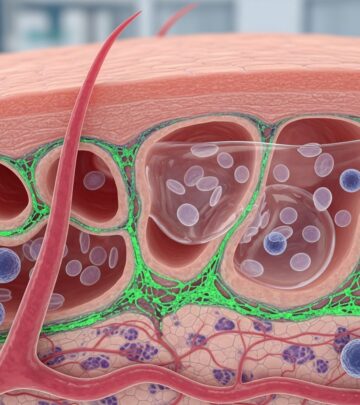
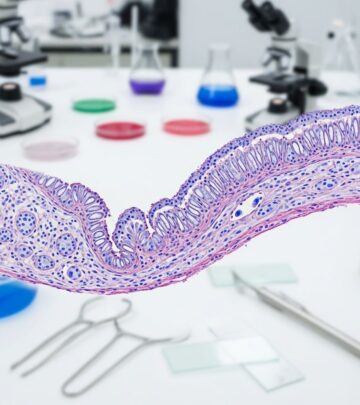
Skin biopsy reveals interface dermatitis with vacuolar degeneration, apoptotic keratinocytes, and perivascular lymphocytic infiltrate. Muscle biopsy shows perifascicular atrophy and inflammation.
How is drug-induced dermatomyositis diagnosed?
Diagnosis relies on clinical-pathological correlation:
- Clinical evaluation: Bohan and Peter criteria adapted for DM (skin findings plus 3 of: weakness, elevated enzymes, abnormal EMG, biopsy).
- Laboratory tests: ANA positive (speckled pattern), myositis-specific antibodies (anti-Mi-2, anti-TIF1γ less common; anti-MDA5 associated with amyopathic forms). Normal CK possible.
- Biopsy: Skin: interface changes; Muscle: inflammatory myopathy.
- Drug history review: Temporal association with new/changed medication.
- Exclusion: Malignancy screen (less associated than idiopathic DM), infection, other myopathies.
Differential includes idiopathic DM, overlap syndromes, drug-induced lupus, paraneoplastic DM.
How is drug-induced dermatomyositis treated?
Cornerstone is immediate discontinuation of the culprit drug, often leading to gradual resolution within weeks to months. Symptomatic therapy mirrors idiopathic DM:
- First-line: Systemic corticosteroids (prednisone 1 mg/kg/day, slow taper).
- Steroid-sparing agents: Methotrexate, azathioprine, mycophenolate mofetil, hydroxychloroquine (for skin).
- Refractory cases: IVIG, rituximab, tacrolimus.
- Skin care: Sun protection, topical steroids, antimalarials.
- Supportive: Physical therapy, malignancy surveillance.
Prognosis excellent post-drug cessation; relapse rare unless re-exposure.
Which drugs cause drug-induced dermatomyositis?
See table above; statins (e.g., atorvastatin case: 72yo woman with rash, weakness resolving post-discontinuation), hydroxyurea, checkpoint inhibitors, penicillamine most reported.
Clinical case example
A 72-year-old woman on atorvastatin developed proximal weakness and eczematous rash. Biopsy confirmed interface dermatitis; ANA 1:640. Atorvastatin stopped, prednisone/hydroxychloroquine initiated — full resolution in 6 months.
Frequently Asked Questions
What is the main treatment for drug-induced dermatomyositis?
Discontinue offending drug + corticosteroids ± immunosuppressants.
Does drug-induced dermatomyositis go away?
Yes, typically resolves after drug cessation and treatment.
Is drug-induced dermatomyositis cancerous?
Lower malignancy risk than idiopathic DM; screen regardless.
Can vaccines trigger it?
Rare reports, e.g., HPV vaccine in pediatrics.
References
- Drug-Induced Dermatomyositis — Practical Dermatology. 2023. https://practicaldermatology.com/topics/atopic-dermatitis/drug-induced-dermatomyositis/23357/
- Dermatomyositis – Symptoms, Causes, Treatment — NORD (National Organization for Rare Disorders). 2024. https://rarediseases.org/rare-diseases/dermatomyositis/
- Dermatomyositis — StatPearls, NCBI Bookshelf, NIH. 2023-10-01. https://www.ncbi.nlm.nih.gov/books/NBK558917/
- Causes and Clinical Presentation of Drug-Induced Dermatomyositis — JAMA Dermatology. 2023. https://jamanetwork.com/journals/jamadermatology/article-abstract/2813821
- Dermatomyositis: Symptoms & Causes — Mayo Clinic. 2024. https://www.mayoclinic.org/diseases-conditions/dermatomyositis/symptoms-causes/syc-20353188
Similar Articles



Read full bio of Sneha Tete