Drug-Induced Urticaria: Ultimate Guide To Diagnosis & Treatment
Understanding causes, symptoms, diagnosis, and management of hives triggered by medications.
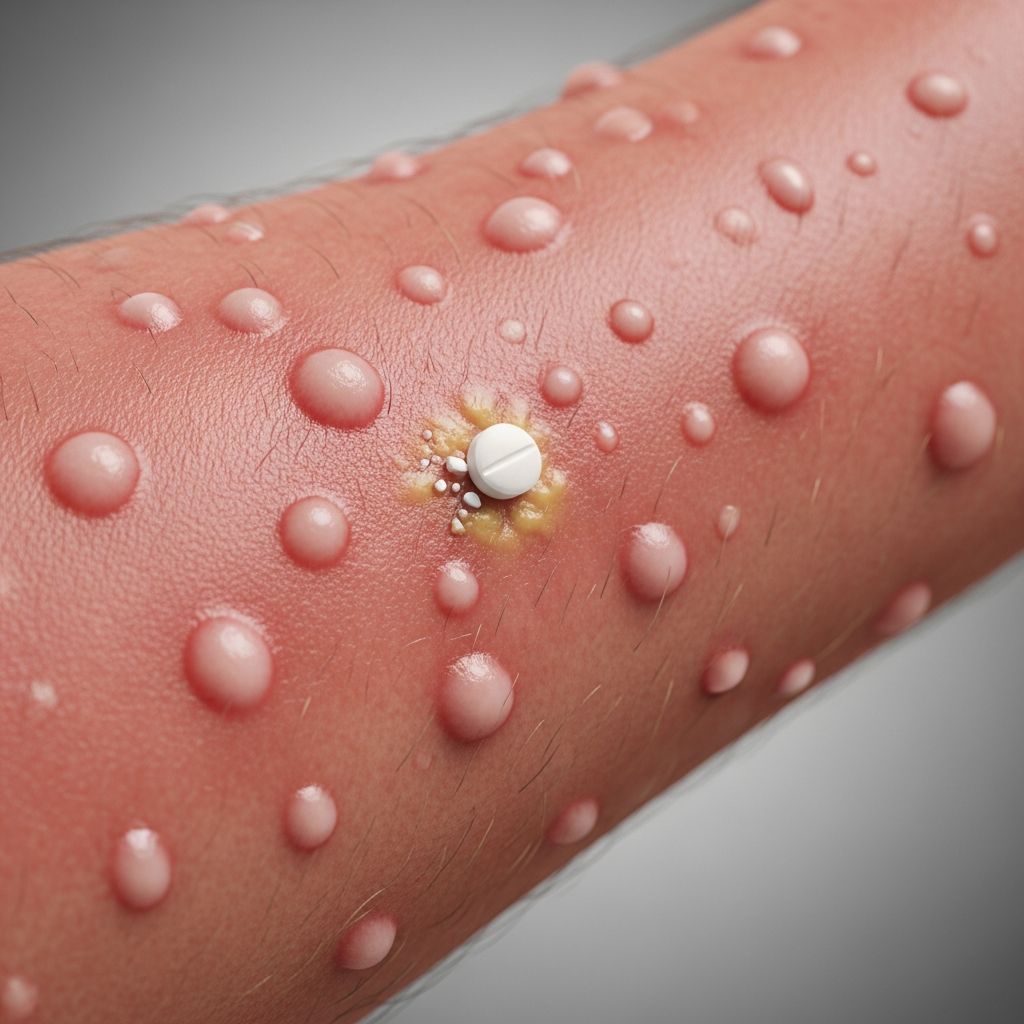
Drug-induced urticaria, commonly known as hives triggered by medications, is a frequent allergic skin reaction characterized by sudden itchy welts and potential swelling. It ranks as the second most common cutaneous sign of drug allergy, affecting 0.16% of medical inpatients and accounting for 9% of chronic urticaria cases in dermatology clinics.
What is drug-induced urticaria?
Drug-induced urticaria manifests as raised, itchy wheals (hives) on the skin, often accompanied by angioedema, which is deeper swelling affecting the dermis, subcutaneous tissue, or mucous membranes. These symptoms typically appear within 24 hours of drug exposure, distinguishing it from delayed reactions. Hives are transient, lasting 1-24 hours per lesion, while angioedema may persist up to 72 hours.
The reaction shares identical clinical features with non-drug-related urticaria but is directly linked to pharmacological agents. It can occur acutely (less than 6 weeks) or contribute to chronic urticaria (over 6 weeks), complicating identification in ongoing cases.
Who gets drug-induced urticaria?
Anyone can develop drug-induced urticaria, but risk increases with prior sensitization to medications. It is seen in medical inpatients (0.16% incidence) and dermatology outpatients (9% of chronic cases). Common in patients taking antibiotics, NSAIDs, or analgesics. Those with atopy or history of drug allergies are more susceptible, though it affects all ages and demographics.
What causes drug-induced urticaria?
The primary causes are medications that provoke mast cell degranulation or immune responses. Antibiotics, especially penicillins and cephalosporins, top the list, followed by NSAIDs, sulfonamides, and analgesics.
- Antibiotics: Beta-lactams like penicillins and cephalosporins cause IgE-mediated reactions.
- NSAIDs: Most common overall; inhibit COX-1, shunting arachidonic acid to leukotriene pathway, causing pseudo-allergic urticaria.
- Analgesics: Opioids directly release histamine; codeine and tramadol aggravate in 18% of chronic urticaria patients.
- Others: Vaccines, aspirin, vancomycin, radiocontrast media.
In chronic urticaria, drugs may aggravate rather than initiate.
What are the clinical features of drug-induced urticaria?
Symptoms mirror general urticaria: pruritic wheals that blanch on pressure, varying in size and shape, migrating across the body. Angioedema causes non-pitting swelling, often periorbital, labial, or laryngeal, posing airway risks.
Acute onset within hours of ingestion; associated with anaphylaxis (hypotension, bronchospasm) or serum sickness (fever, arthralgias). In severe cases, laryngeal edema occurs.
How is drug-induced urticaria diagnosed?
Diagnosis relies on detailed history correlating symptom onset with drug intake. No single test confirms; skin prick or intradermal testing may support IgE-mediated cases, but negative results do not exclude.
Key diagnostic steps:
- Temporal association (within 24 hours).
- Exclusion of other urticaria triggers (infections, foods).
- Challenge tests in controlled settings for confirmation.
- Laboratory: Tryptase for mast cell activation; avoid routine IgE unless specific.
For chronic cases, assess NSAID exacerbation via COX-1 inhibition history.
What is the treatment for drug-induced urticaria?
Related Stories



Treatment mirrors acute urticaria: immediate drug cessation and symptomatic relief. Second-generation H1-antihistamines are first-line (cetirizine 10 mg, up to 40 mg; loratadine, fexofenadine).
| Drug Class | Examples | Dose for Urticaria |
|---|---|---|
| H1-Antihistamines | Cetirizine, Loratadine, Fexofenadine, Desloratadine, Levocetirizine | Standard to 4x dose |
| H2-Antihistamines (add-on) | Ranitidine (if combined) | 150 mg BID |
| Corticosteroids (short-term) | Prednisone | 0.5-1 mg/kg for 3-5 days |
| For anaphylaxis | Epinephrine | 0.3-0.5 mg IM |
Severe anaphylaxis requires epinephrine, corticosteroids, fluids. Chronic cases may need omalizumab, dupilumab, BTK inhibitors (remibrutinib), or cyclosporine if refractory. Avoid triggers like NSAIDs; selective COX-2 inhibitors may tolerate better.
Symptoms resolve post-discontinuation; educate on allergy alerts.
What is the outcome for drug-induced urticaria?
Acute cases resolve within days of stopping the drug. Chronic drug-aggravated urticaria improves with avoidance. Spontaneous remission in idiopathic chronic urticaria occurs in 2-3 years. Monitor for cross-reactivity (e.g., penicillins/cephalosporins).
Prevention of drug-induced urticaria
Avoid known allergens; inform providers of history. For unavoidable NSAIDs, pre-treat with antihistamines/leukotriene antagonists or use COX-2 selective. Test tolerability for codeine/paracetamol in chronic patients. Routine allergy inquiry prevents unnecessary prescriptions.
Table 1: Common Drugs Causing Urticaria
| Category | Examples | Mechanism |
|---|---|---|
| Antibiotics | Penicillins, Cephalosporins | IgE-mediated |
| NSAIDs | Ibuprofen, Aspirin | COX-1 inhibition |
| Opioids | Codeine, Tramadol | Direct mast cell | Others | Vaccines, Contrast media | Varies |
Frequently Asked Questions
What drugs most commonly cause urticaria?
Antibiotics (cephalosporins, penicillins), NSAIDs, and opioids are leading causes.
How quickly does drug-induced urticaria appear?
Typically within 24 hours, often hours after ingestion.
Is drug-induced urticaria always allergic?
No; can be non-immunologic (e.g., NSAIDs via leukotrienes).
Can antihistamines prevent reactions?
Yes, pre-treatment may allow safe use in select cases.
What if symptoms don’t resolve?
Seek specialist for biologics or immunosuppressants.
References
- Drug-induced urticaria. Recognition and treatment — PubMed/NCBI. 2001-10-01. https://pubmed.ncbi.nlm.nih.gov/11705092/
- Drug-induced urticaria — Wikipedia (sourced from primary lit). 2023. https://en.wikipedia.org/wiki/Drug-induced_urticaria
- Chronic Urticaria: Causes, Symptoms, Diagnosis, & Treatment — Allergy Asthma Network (.org). 2024. https://allergyasthmanetwork.org/chronic-urticaria/cu-causes-symptoms-diagnosis-treatment/
- Drug-induced urticaria — DermNet NZ (.org). 2023. https://dermnetnz.org/topics/drug-induced-urticaria
- What to look for with drug-induced urticaria — Clinical Advisor. 2022. https://www.clinicaladvisor.com/clinicalchallenges/what-to-look-for-with-drug-induced-urticaria/
- Acute and Chronic Urticaria: Evaluation and Treatment — AAFP (.org). 2017-06-01. https://www.aafp.org/pubs/afp/issues/2017/0601/p717.html
- Drug-Induced Urticaria: Causes and Clinical Courses — JDDonline (.com). 2011. https://jddonline.com/articles/drug-induced-urticaria-causes-and-clinical-courses-S1545961611P1019X
Similar Articles








Read full bio of Sneha Tete