Dry Gangrene: Key Insights On Causes, Symptoms & Treatment
Understanding dry gangrene: causes, symptoms, diagnosis, and management of ischaemic tissue necrosis.
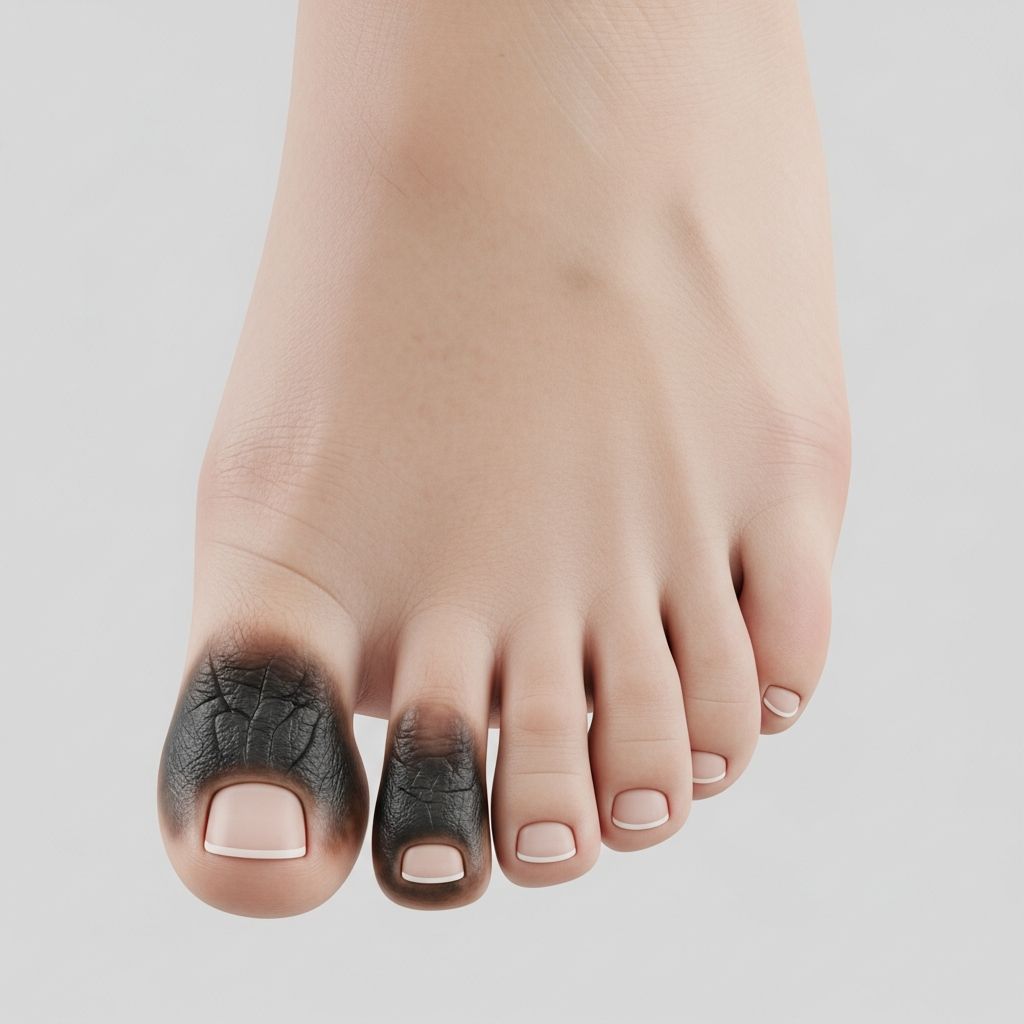
Gangrene is the localised death of body tissue resulting from inadequate blood flow or oxygenation.
Dry gangrene
specifically arises from prolonged ischaemia (reduced blood supply), leading to dry, shrivelled, and mummified necrotic tissue without significant infection. It predominantly affects the distal extremities such as toes, fingers, and feet, often presenting with a clear line of demarcation from viable tissue.What is dry gangrene?
Dry gangrene represents an aseptic form of tissue necrosis, where blood flow interruption causes progressive cell death without bacterial superinfection. The term ‘dry’ distinguishes it from ‘wet gangrene,’ which involves moisture, oedema, and infection. Tissue undergoes desiccation, becoming leathery and black due to haemosiderin deposition from haemoglobin breakdown. This condition signals advanced peripheral vascular disease, where arterial occlusion prevents nutrient delivery, leading to infarction. Unlike wet gangrene, dry gangrene evolves slowly and is less immediately life-threatening unless it progresses to infection or sepsis.
Histologically, dry gangrene shows coagulative necrosis with preserved tissue architecture initially, transitioning to mummification. It most commonly impacts lower limbs (70-80% of cases) due to gravity-dependent flow and higher atherosclerosis burden. Early recognition is crucial, as viable tissue salvage depends on restoring perfusion before irreversible necrosis sets in.
Who gets dry gangrene?
Dry gangrene primarily affects older adults with vascular risk factors. Key demographics include:
- Individuals over 60 years, with peak incidence in those with longstanding comorbidities.
- Diabetics, who comprise up to 50-70% of cases due to microvascular disease and neuropathy.
- Smokers, as tobacco accelerates atherosclerosis and vasospasm.
- Patients with peripheral arterial disease (PAD), hypertension, hyperlipidaemia, or chronic kidney disease.
Risk escalates with immobility, as in bedridden patients, or hypercoagulable states like malignancy or myeloproliferative disorders. Ethnic disparities exist, with higher rates in populations prone to diabetes, such as South Asians and African Americans.
Causes of dry gangrene
Dry gangrene stems from arterial insufficiency compromising tissue perfusion. Primary mechanisms include:
- Atherosclerosis: Plaque buildup narrows arteries, most common in femoral-popliteal segments.
- Embolism: Thrombi or atheroemboli lodge in distal vessels; sources include cardiac (atrial fibrillation) or aortic aneurysms. Large emboli affect iliac/femoral bifurcations (43%), small ones toes/fingers.
- Thrombosis: In situ clot formation from hyperviscosity (cryoglobulins, macroglobulins) or vasculitis.
- Trauma or vasospasm: Frostbite, ergotism, or Raynaud phenomenon.
- Venous factors: Chronic venous hypertension from DVT or varicosities leads to lipodermatosclerosis and secondary ischaemia.
Diabetes exacerbates via neuropathy (impaired pain sensation) and small-vessel disease. Rarely, connective tissue disorders like Buerger disease or COVID-19 coagulopathy contribute.
Clinical features of dry gangrene
Symptoms evolve gradually:
- Pain: Severe throbbing or burning claudication initially; rest pain later. Neuropathic patients may be asymptomatic until ulceration.
- Skin changes: Cool, pale, shiny skin progressing to cyanosis, then dry black mummification with demarcation line. No oedema or discharge.
- Pulses: Absent distal pulses; prolonged capillary refill.
- Systemic: Weight loss, fatigue in chronic PAD.
Differential includes wet gangrene (foul odour, pus), gas gangrene (crepitus), or necrotizing fasciitis.
Diagnosis of dry gangrene
Diagnosis combines history, exam, and imaging:
Related Stories



| Modality | Purpose | Findings |
|---|---|---|
| Ankle-brachial index (ABI) | Screen PAD | <0.9 indicates ischaemia |
| Duplex ultrasound | Assess flow | Occlusions, velocities |
| CT/MR angiography | Map anatomy | Stenoses, emboli |
| TcPO2 | Tissue perfusion | <30 mmHg predicts non-healing |
Biopsy rarely needed unless atypical; confirms necrosis. Bloods: glucose, lipids, coagulation profile.
Complications of dry gangrene
Untreated dry gangrene risks:
- Conversion to wet gangrene: <8% but rapid sepsis onset.
- Autoamputation: Natural separation in 6 months, but incomplete healing common.
- Systemic spread: Bacteraemia in diabetics/immunocompromised.
- Chronic pain: Phantom limb post-amputation.
- Mortality: 20-50% at 1 year from cardiovascular events.
Prevention of dry gangrene
Target risk factors:
- Smoking cessation, statins, antihypertensives, glycaemic control.
- Daily foot checks in diabetics; proper footwear.
- Exercise, cilostazol for claudication.
- Anticoagulation for AFib/emboli risk.
Gangrene treatment & management
Multidisciplinary: vascular surgery, endocrinology, podiatry.
- Conservative: Keep dry/clean; analgesia; risk factor optimization.
- Revascularization: Angioplasty, bypass, embolectomy for acute ischaemia.
- Debridement: Remove necrotic tissue; hyperbaric oxygen adjunctively.
- Amputation: Definitive for unsalvageable tissue; toe vs. BKA/AKA.
- Prosthetics: Post-amputation rehab.
Hyperbaric oxygen improves oxygenation in borderline cases. Monitor for infection.
Frequently Asked Questions
Q: Is dry gangrene painful?
A: Initially yes (claudication/rest pain), but nerve death renders late-stage painless.
Q: Can dry gangrene heal without amputation?
A: Possible with revascularization if caught early; otherwise, autoamputation or surgery needed.
Q: How does dry differ from wet gangrene?
A: Dry is aseptic, mummified, slow; wet infected, oedematous, rapid/spreading.
Q: What is the role of diabetes?
A: Major risk via neuropathy/microangiopathy; 50-70% cases.
Q: When to seek emergency care?
A: If swelling, pus, fever, or rapid progression indicating wet conversion.
References
- Dry gangrene – WikEM — WikEM. 2023. https://wikem.org/wiki/Dry_gangrene
- Gangrene – StatPearls – NCBI Bookshelf — NCBI/NIH. 2023-10-01. https://www.ncbi.nlm.nih.gov/books/NBK560552/
- Gangrene – Symptoms & causes – Mayo Clinic — Mayo Clinic. 2023. https://www.mayoclinic.org/diseases-conditions/gangrene/symptoms-causes/syc-20352567
- Dry gangrene – DermNet — DermNet NZ. 2023. https://dermnetnz.org/topics/dry-gangrene
- Gangrene: Causes, Symptoms, Treatments — WebMD. 2023. https://www.webmd.com/skin-problems-and-treatments/gangrene-causes-symptoms-treatments
Similar Articles








Read full bio of Sneha Tete