Dry Skin Images
Visual guide to dry skin (xerosis) manifestations across body sites, ages, and conditions including ichthyosis.
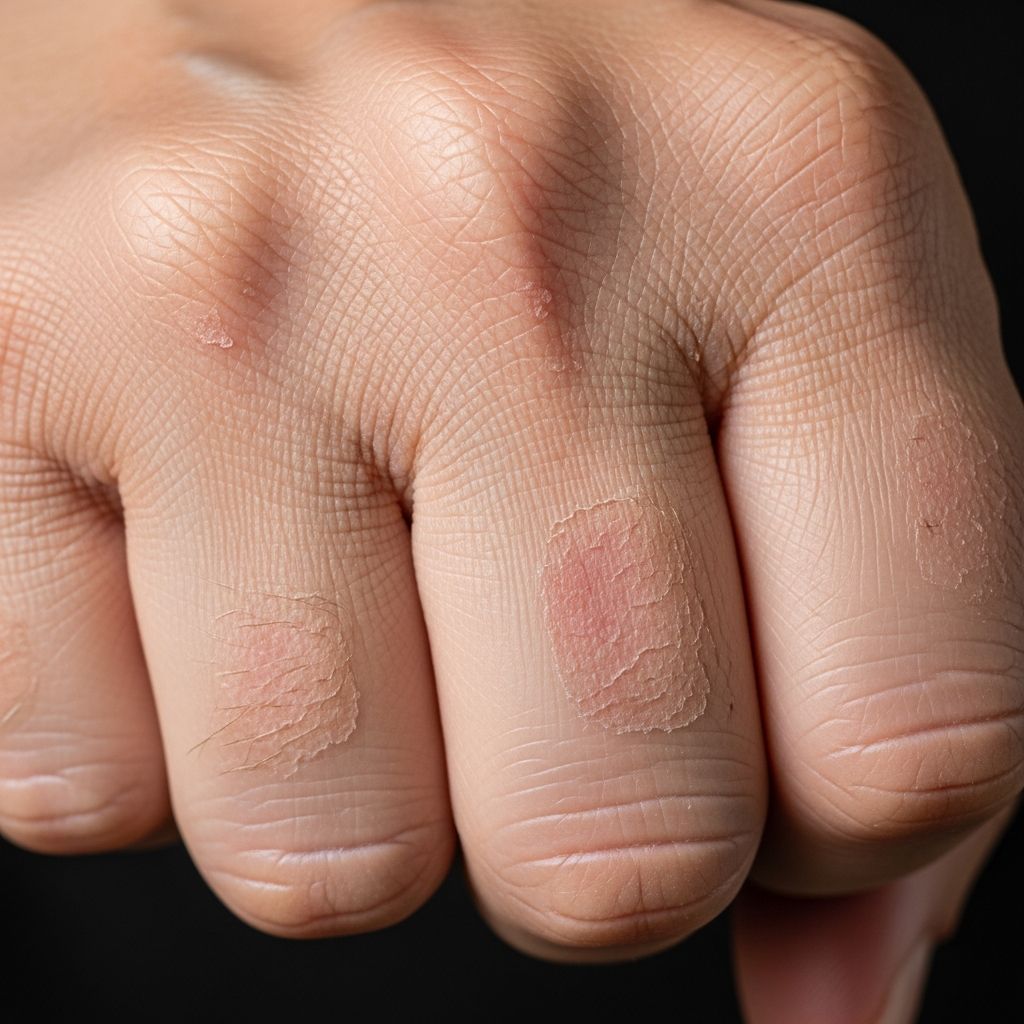
Dry skin, medically termed xerosis or xeroderma, manifests when the stratum corneum lacks sufficient moisture, leading to surface cracks, scaling, and tightness. This image collection illustrates diverse presentations across age groups, body regions, and underlying aetiologies, aiding clinical diagnosis and patient education.
What is dry skin?
Dry skin arises from impaired barrier function in the stratum corneum, the outermost epidermal layer composed of corneocytes embedded in a lipid matrix rich in ceramides, cholesterol, and natural moisturizing factors (NMFs). These components normally retain water and protect against transepidermal water loss (TEWL). Disruptions—environmental, genetic, or pathological—result in visible scaling, fissuring, and itch.
Prevalence increases with age, low humidity, frequent washing, and certain medications. While often benign, severe cases predispose to secondary infections, asteatotic eczema, or reveal inherited ichthyoses.
Images of dry skin
This gallery categorises images by presentation severity, anatomical site, demographics, and associations. Each includes clinical context for dermatological recognition.
Mild dry skin
- Lower legs in elderly: Fine white scaling on shins due to reduced sebaceous gland activity and venous insufficiency. Common in winter.
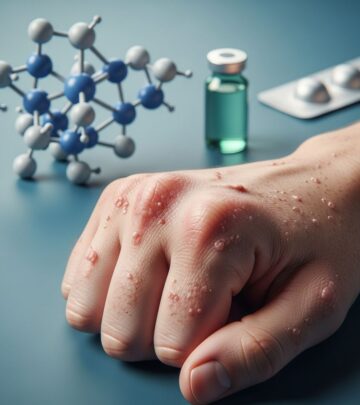
- Hands: Cracked palms from irritant contact dermatitis or repetitive washing, showing polygonal scales.
- Face: Perioral dryness in atopic individuals, exacerbated by lip-licking.
Moderate xerosis
- Full body in adult: Diffuse scaling with ‘crazy paving’ pattern on trunk, linked to low ambient humidity.
- Extensor forearms: Hyperkeratotic plaques in asteatotic eczema precursors.
- Feet: Heel fissures from occlusive footwear and hyperhidrosis.
Severe dry skin
- Generalised xerosis: Deep cracks forming rhomboidal patterns, risking bacterial superinfection.
- Shins: Erythematous, fissured plaques resembling ‘fish scale’ appearance.
Dry skin in children
- Infant cheeks: Flaky erythema from physiological post-natal adaptation or mild atopic dermatitis.
- Child limbs: Winter xerosis with pityriasis alba-like patches.
- Adolescent arms: Follicular accentuation from soap overuse.
Dry skin due to ichthyosis
Ichthyoses represent genetic disorders of cornification, classified by inheritance and phenotype.
- Ichthyosis vulgaris (autosomal dominant, filaggrin mutation): Fine white scales on extensors, sparing flexures; 1:250 prevalence.
- X-linked recessive ichthyosis (STS gene): Large, dark scales on trunk/legs in males; corneal opacities possible.
- Autosomal recessive congenital ichthyosis (TGM1/others): Collodion baby evolving to plate-like scales.
- Lamellar ichthyosis: Thick, brown scales with ectropion.
- CHILD syndrome: Unilateral erythroderma with ichthyosis following Blaschko lines.
Other types
- Acquired ichthyosis: Uniform scaling mimicking ichthyosis vulgaris, associated with malignancy (e.g., lymphoma).
- Sjögren-Larsson syndrome: Collodionic scales with spastic paralysis.
- Refsum disease: Ichthyosiform scales plus neuropathy, retinitis.
Clinical features distinguishing types
| Type | Scale Characteristics | Distribution | Associations |
|---|---|---|---|
| Physiological xerosis | Fine, white | Legs, arms | Winter, age >65 |
| Ichthyosis vulgaris | Branny, white | Extensors, abdomen | Atopy, keratosis pilaris |
| X-linked ichthyosis | Dirty brown, large | Trunk, neck | Males, family history |
| Lamellar ichthyosis | Plate-like, adherent | Generalised | Ectropion, palmoplantar |
| Asteatotic eczema | Polygonal ‘crazy paving’ | Shins, thighs | Soaps, diuretics |
Diagnosis from images
Visual inspection reveals scaling patterns: branny (fine powder-like), ichthyosiform (fish-scale), or collodion (taut membrane). History elicits triggers (climate, bathing), family pedigree, and comorbidities. Dermoscopy shows retained nuclei in hyperkeratosis; biopsy confirms orthokeratosis vs. parakeratosis.
Treatment insights
Images post-emollient show reduced scaling. Key interventions:
- Emollients: Urea (10-20%), lactic acid, or ceramide-based; apply to damp skin.
- Bathing: Lukewarm, <10min, soap substitutes.
- Topicals: Mild steroids for inflamed fissures.
- Ichthyosis-specific: Retinoids (acitretin) for severe hyperkeratosis.
Prevention
- Humidifiers in dry climates.
- Fragrance-free products.
- Daily moisturising, especially post-aqueous exposure.
Frequently Asked Questions
What causes the scaling seen in dry skin images?
Reduced lipid matrix and NMFs impair water retention, leading to corneocyte cohesion failure and visible flakes.
Can dry skin images indicate serious disease?
Yes, generalised dark scaling may signal ichthyosis or paraneoplastic syndromes; consult dermatology.
How to differentiate xerosis from eczema visually?
Xerosis shows pure scaling without vesicles/oozing; eczema adds erythema and lichenification.
Are these images suitable for self-diagnosis?
No—professional evaluation needed, as patterns overlap with psoriasis, tinea, or allergies.
Do children show different dry skin patterns?
Yes, often facial/ flexural, linked to atopy; resolves with emollients.
References
- Dry Skin (Xeroderma): Causes, Treatments, and More — DermNet NZ, Hon A/Prof Amanda Oakley. 2022-03. https://dermnetnz.org/topics/dry-skin
- Dry skin: children and teenagers — Raising Children Network (Australian Government-funded). 2023. https://raisingchildren.net.au/guides/a-z-health-reference/dry-skin
- Dry Skin — Hers Health. 2024. https://www.forhers.com/conditions/dry-skin
- Eczema and Dry Skin — Health Information Australia. 2023. https://healthinformationaustralia.com.au/api/xml/?token=BA49093FD6F225AAA6D85877&filename=cc-a4-eczema-and-dry-skin-final.pdf
- Xerosis (Dry Skin) in Older Adults — Ausmed (citing Oakley 2022). 2024. https://www.ausmed.com/learn/articles/xerosis
- Clinical Practice Guidelines: Eczema — Royal Children’s Hospital Melbourne. 2025. https://www.rch.org.au/clinicalguide/guideline_index/eczema/
Similar Articles



Read full bio of medha deb