DSM-5: Understanding Mental Disorder Diagnosis
Complete guide to DSM-5 diagnostic criteria and classification system for mental health professionals.
What Is the DSM-5?
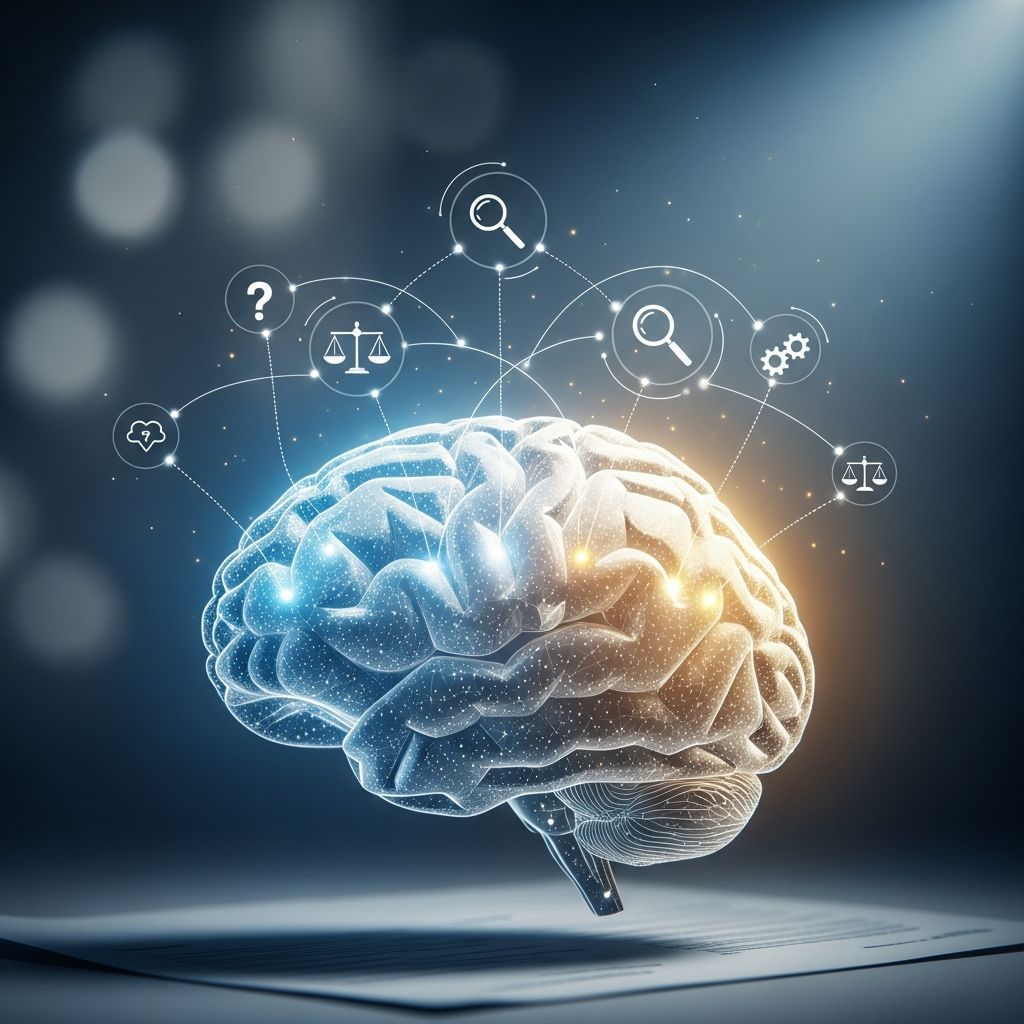
The Diagnostic and Statistical Manual of Mental Disorders, Fifth Edition (DSM-5), published in May 2013, represents the most significant revision to mental health diagnostic criteria since 1994. This comprehensive manual provides the standard language and framework by which clinicians, researchers, and public health officials in the United States communicate about mental disorders. The DSM-5 has become the federal government’s official manual for the diagnosis and reporting of mental disorders and serves as an essential tool for treatment planning, insurance reimbursement, and psychiatric research.
The manual functions as a diagnostic reference guide, establishing uniform criteria that mental health professionals use to identify and classify mental health conditions. By providing consistent diagnostic criteria and language, the DSM-5 ensures that clinicians worldwide can communicate effectively about patient conditions and treatment approaches.
Structural Changes in the DSM-5
The DSM-5 introduced significant organizational reforms that fundamentally changed how mental disorders are conceptualized and diagnosed. One of the most notable structural changes involved the elimination of the traditional multiaxial diagnostic system that had been used in previous editions.
Elimination of the Multiaxial System
Previously, the DSM-IV relied on a five-axis diagnostic framework (Axis I, II, III, IV, and V) to organize disorder information. The DSM-5 discarded this system entirely, consolidating all mental disorders into Section II, where each disorder receives equal emphasis. This change reflects a more modern understanding of mental health conditions and removes the artificial hierarchy that previously distinguished between different types of disorders.
The DSM-5 replaced Axis IV (psychosocial and environmental problems) with a more comprehensive assessment of significant psychosocial and contextual features. Additionally, Axis V, which measured overall functioning through the Global Assessment of Functioning (GAF) scale, was discontinued. Instead, the World Health Organization’s Disability Assessment Schedule (WHODAS) was added to Section III as a suggested (though not required) method to assess functioning.
Integration of Dimensional Assessment
The DSM-5 incorporates dimensional aspects of diagnosis alongside categorical classifications, recognizing that mental disorders exist on a spectrum rather than as discrete categories. While diagnostic decisions still largely depend on a “yes or no” determination, the use of specifiers, subtypes, severity ratings, and cross-cutting symptom assessments helps clinicians better capture the gradients of a disorder that might otherwise be obscured by a strict categorical approach.
This dimensional approach allows for more nuanced clinical assessment and treatment planning, as clinicians can now document the severity and specific features of a disorder using standardized measures provided in both the printed and electronic versions of the manual.
Major Changes in Neurodevelopmental Disorders
The DSM-5 made substantial revisions to how neurodevelopmental disorders are classified and diagnosed, reflecting advances in neuroscience research and clinical understanding.
Autism Spectrum Disorder
The DSM-5 reconceptualized Asperger syndrome from a distinct disorder to an autism spectrum disorder, reflecting current understanding that autism presents along a continuum. This change eliminated the separate diagnostic category and integrated individuals previously diagnosed with Asperger syndrome into a unified autism spectrum framework with varying support levels.
Related Stories



Attention-Deficit/Hyperactivity Disorder (ADHD)
ADHD no longer specifies autism as an exclusionary diagnosis, allowing individuals to receive both diagnoses when clinically appropriate. The manual also increased the symptom onset age requirement from 7 years old to 12 years old and reduced symptom thresholds for diagnosis in adolescents and adults, recognizing that ADHD often goes undiagnosed until later developmental stages.
Communication Disorders and Learning Disorders
Speech or language disorders are now called communication disorders, which include language disorder, speech sound disorder, childhood-onset fluency disorder (stuttering), and a new condition called social (pragmatic) communication disorder. Additionally, “Specific Learning Disorder” now encompasses shortcomings in academic skill development, including dyslexia and dyscalculia, providing a more comprehensive framework for learning-related conditions.
Motor Disorders
A new subcategory encompassing motor disorders includes developmental coordination disorder, stereotypic movement disorder, and tic disorders, including Tourette syndrome. This reorganization consolidates previously scattered diagnoses into a coherent category reflecting shared developmental origins.
Revisions in Anxiety, OCD-Related, and Trauma Disorders
The DSM-5 substantially reorganized anxiety-related conditions and introduced important changes to how trauma-related disorders are conceptualized.
Anxiety Disorder Changes
Panic attack became a specifier for all DSM-5 disorders, while panic disorder and agoraphobia became two separate disorders. Furthermore, separation anxiety disorder and selective mutism are now classified as anxiety disorders rather than disorders of early onset.
The generalized specifier for social anxiety disorder (formerly social phobia) changed in favor of a performance-only specifier, allowing clinicians to distinguish between individuals who fear social situations generally versus those with performance anxiety. Specific types of phobias became specifiers but remained otherwise unchanged.
Obsessive-Compulsive and Related Disorders
The DSM-5 expanded the insight specifier to allow for good or fair insight, poor insight, and “absent insight/delusional” (complete conviction that obsessive-compulsive disorder beliefs are true), adding more clinical nuance to diagnosis. Additionally, criteria were added to body dysmorphic disorder to describe repetitive behaviors or mental acts that may arise with perceived defects or flaws in physical appearance.
Trauma and Stressor-Related Disorders
For the diagnosis of acute stress disorder and PTSD, the stressor criteria were modified, and the requirement for specific subjective emotional reactions was eliminated because it lacked empirical support. This change recognized that certain groups, such as military personnel, law enforcement officers, and first responders, may not display expected emotional reactions due to their training, yet still experience genuine trauma.
Updates to Somatic Symptom and Related Disorders
Somatic symptom disorder largely takes the place of somatization disorder, hypochondriasis, pain disorder, and undifferentiated somatoform disorder, with many individuals previously diagnosed with hypochondriasis now meeting criteria for the new diagnosis of illness anxiety disorder. These disorders are now defined by positive symptoms, and the use of medically unexplained symptoms is minimized, except in cases of conversion disorder and pseudocyesis.
Functional Neurological Symptom Disorder replaces the prior name “Conversion Disorder” and requires one or more symptoms of altered voluntary motor or sensory functioning incompatible with known neurological or medical conditions. Additionally, a new diagnosis called “psychological factors affecting other medical conditions” was added, previously found in the DSM-IV chapter on other conditions that may be a focus of clinical attention.
Changes in Depressive and Substance-Related Disorders
Depression and Grief
The DSM-5 deleted the “bereavement exclusion” for depressive disorders, allowing major depressive disorder to be diagnosed even when symptoms occur following the death of a loved one. More recently, the DSM-5-TR added prolonged grief disorder as a new diagnosis, helping clinicians distinguish between typical grief and clinically significant grief requiring treatment.
Substance Use Disorders
Substance use disorder is a combination of DSM-IV’s substance abuse and substance dependence, the latter of which was deemed inappropriate due to the pejorative nature of the term “dependence” used to describe normal physiological responses of withdrawal. This change reflects a more compassionate and scientifically accurate understanding of substance-related conditions.
Conduct Disorder and Disruptive Behavior Disorders
Criteria for conduct disorder are largely unchanged from DSM-IV, though a specifier was added for people with limited “prosocial emotion,” showing callous and unemotional traits. Additionally, people over the disorder’s minimum age of 6 may now be diagnosed with intermittent explosive disorder without outbursts of physical aggression, with criteria added for frequency and specification of “impulsive and/or anger based” nature.
Additional Important Changes
New Diagnostic Additions
Suicidal Behavior and Nonsuicidal Self-Injury were added in the DSM-5-TR as conditions of clinical attention with several ICD-10 codes to indicate if the client is currently engaged in such behavior or has a history of it. This addition helps clinicians document these important clinical concerns as part of their diagnostic assessment.
Schizophrenia Spectrum Changes
The DSM-5 eliminated subtypes of schizophrenia, moving away from the categorical subtypes (paranoid, disorganized, catatonic, undifferentiated, and residual) previously used in DSM-IV. This change reflects contemporary understanding that schizophrenia is a spectrum condition with varying symptom presentations rather than distinct subtypes.
Neurocognitive Disorders
Clinical Application and Dimensional Measurement
The DSM-5 provides cross-cutting measures at multiple levels, with the first level provided in the printed manual and all three levels available in the electronic version for downloading and clinical use without additional charge. This dimensional measurement approach complements categorical diagnosis and helps clinicians monitor course and treatment response over time.
Frequently Asked Questions
What is the purpose of the DSM-5?
The DSM-5 establishes diagnostic criteria and classification standards that help clinicians, researchers, and public health officials diagnose mental disorders consistently and communicate about patient conditions using shared terminology.
How does the DSM-5 differ from previous versions?
The DSM-5 eliminated the multiaxial system, incorporated dimensional assessment alongside categorical diagnosis, reorganized disorder groupings, updated criteria based on current research, and introduced new diagnoses such as prolonged grief disorder.
What is the DSM-5-TR?
The DSM-5-TR (Text Revision) is an updated version of the DSM-5 that includes revised text updates based on scientific literature, new diagnoses like prolonged grief disorder, and clarifying modifications to criteria for more than 70 disorders.
How are specifiers used in the DSM-5?
Specifiers are extensions to a diagnosis that further clarify the course, severity, or special features of a disorder, allowing clinicians to document more specific diagnostic information and select more targeted treatment approaches.
Can someone have multiple DSM-5 diagnoses?
Yes, the DSM-5 allows for multiple diagnoses when clinically appropriate. For example, autism spectrum disorder and ADHD can now be diagnosed together, reflecting contemporary understanding of how conditions co-occur.
References
- Diagnostic and Statistical Manual of Mental Disorders (DSM-5) — American Psychiatric Association. May 2013. https://www.psychiatry.org/psychiatrists/practice/dsm
- The DSM-5: Classification and criteria changes — PubMed Central, National Center for Biotechnology Information. 2013. https://pmc.ncbi.nlm.nih.gov/articles/PMC3683251/
- Diagnostic and Statistical Manual of Mental Disorders (DSM-5-TR) — American Psychiatric Association. March 2022. https://www.psychiatry.org/psychiatrists/practice/dsm
- DSM-5-TR Overview — National Board for Certified Counselors (NBCC). 2022. https://nbcc.org/exams/dsm
- DSM-5 Overview — Wikipedia. 2024. https://en.wikipedia.org/wiki/DSM-5
Similar Articles








Read full bio of medha deb