DVT Prevention: Intermittent Pneumatic Compression Devices
Learn how intermittent pneumatic compression devices prevent blood clots and deep vein thrombosis in hospitalized patients.
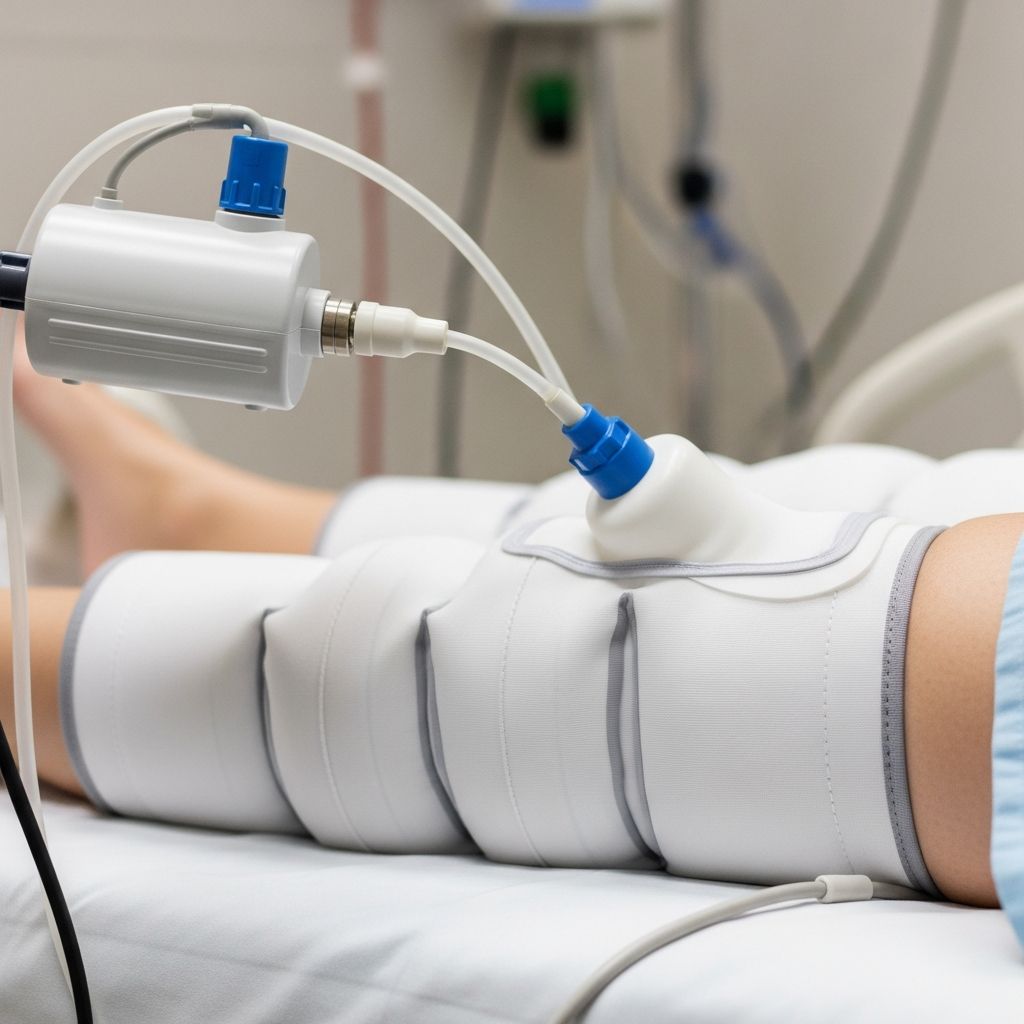
Deep vein thrombosis (DVT) is a serious medical condition where blood clots form in the deep veins of the legs. For hospitalized patients, particularly those recovering from surgery or experiencing prolonged immobility, the risk of developing DVT is significantly elevated. Intermittent pneumatic compression (IPC) devices represent an important non-pharmacological approach to preventing these dangerous clots. Understanding how these devices work and their role in DVT prevention can help patients and healthcare providers make informed decisions about thromboprophylaxis strategies.
What Are Intermittent Pneumatic Compression Devices?
Intermittent pneumatic compression devices are medical devices designed to help prevent blood clots in the deep veins of the legs. These devices consist of inflatable sleeves or cuffs that are typically worn around the calves or entire legs. The IPC device operates through a simple yet effective mechanism: the cuff automatically fills with air, applying gentle pressure that squeezes the leg, and then deflates and relaxes. This cycle repeats continuously throughout the treatment period.
The physical design of IPC devices makes them practical for hospital use and home settings. Most commonly, patients wear the device as an external cuff that wraps around the calf or extends up the entire lower leg. The cuff is connected to a pneumatic pump that controls the compression and decompression cycles. During compression, the cuff mimics the natural muscle contractions that occur during physical movement, while during the relaxation phase, oxygen-rich blood continues to flow through the arteries of the leg.
How Intermittent Pneumatic Compression Works
The mechanism of action for IPC devices involves two primary physiological processes. First, the compression helps move blood through the veins toward the heart, preventing the blood stasis that can lead to clot formation. When blood flows slowly or pools in the leg veins, the risk of thrombosis increases significantly. By mechanically stimulating blood circulation, IPC devices counteract this stagnation.
Second, IPC promotes the natural release of substances in the body that help prevent clots, a process known as fibrinolysis activation. This dual mechanism makes IPC particularly valuable as a mechanical thromboprophylaxis method. The compression-decompression cycle effectively replicates the benefits of leg muscle contractions that occur during normal walking and physical activity, which is especially important for patients who are immobilized or have limited mobility.
Risk Factors for Deep Vein Thrombosis
Understanding who needs IPC devices begins with recognizing the conditions that increase DVT risk. Several factors can elevate the likelihood of developing blood clots in the leg veins:
- Prolonged hospitalization and immobility following surgery or medical illness
- Recent orthopedic or neurosurgery procedures
- Cancer and cancer treatment
- Smoking and obesity
- Advanced age
- Pregnancy and the postpartum period
- Stroke or other neurological conditions affecting mobility
- Trauma or serious injury requiring bed rest
Patients experiencing any of these risk factors may be candidates for DVT prevention strategies, including IPC devices. Healthcare providers typically assess individual risk profiles to determine whether mechanical compression, pharmacological prophylaxis, or a combination approach is most appropriate.
Related Stories



When Are IPC Devices Used?
Hospitals most commonly use intermittent pneumatic compression devices for people who are less active while recovering from surgery, stroke, or other serious medical conditions. Patients may need the device before, during, and after surgical procedures. The device is particularly valuable in scenarios where patients cannot walk or move freely for extended periods.
IPC devices are also used in patients who cannot tolerate blood-thinning medications due to bleeding risks or contraindications. Additionally, some patients receive IPC in combination with pharmacological prophylaxis for comprehensive thromboprophylaxis strategies. The specific duration and timing of IPC use depend on individual patient factors and institutional protocols.
Effectiveness of Intermittent Pneumatic Compression
Clinical evidence demonstrates the effectiveness of IPC devices in preventing DVT. Research shows that using intermittent pneumatic compression devices decreased the risk of DVT by approximately 4% according to large clinical trials. When compared to no prophylaxis at all, IPC significantly reduced DVT incidence with an odds ratio of 0.41.
A comprehensive meta-analysis examining 16 randomized controlled trials found that IPC interventions effectively prevented DVT, pulmonary embolism (PE), and bleeding in surgical patients. The analysis revealed particularly significant benefits when IPC was compared to no prophylaxis. Importantly, IPC did not increase the incidence of DVT compared to pharmacological prophylaxis, making it an excellent alternative for patients who cannot use blood thinners.
The study also demonstrated that IPC showed a significant effect on bleeding prevention compared to IPC combined with pharmacological groups, which is clinically relevant for patients at high risk of hemorrhagic complications. These findings support the use of IPC as a safe and effective standalone prophylactic measure.
Benefits and Advantages of IPC Devices
Intermittent pneumatic compression offers several important advantages as a DVT prevention strategy. The primary benefit is its non-pharmacological approach—patients receive protection from blood clots without taking medications that carry their own risks and side effects. This makes IPC particularly suitable for individuals who are unable to use blood thinners due to contraindications or high bleeding risk.
Additional advantages include:
- Drug-free prevention method suitable for patients on anticoagulants
- No systemic side effects from medications
- Ability to use alongside other treatment modalities
- Non-invasive external application
- Continuous protection during immobility
- Promotion of natural fibrinolytic mechanisms
- Reduced bleeding complications compared to pharmacological alone
The device-based approach allows for personalized medicine, where healthcare providers can adjust compression settings and duration based on individual patient needs and tolerance.
Potential Complications and Considerations
While intermittent pneumatic compression devices are generally safe, some patients may experience complications or side effects. Potential issues include skin irritation at the cuff site, discomfort during compression cycles, or difficulties with device fitting. Some patients report claustrophobia or anxiety from wearing the device, though these psychological responses are typically manageable with proper patient education and reassurance.
Contraindications to IPC use may include severe leg edema, acute DVT already present in the treated leg, or certain vascular conditions where compression might be harmful. Healthcare providers should assess each patient individually to ensure IPC is appropriate and to identify any relative or absolute contraindications.
IPC as Part of Comprehensive DVT Prevention
In clinical practice, IPC devices may be used as a standalone therapy or combined with other prophylactic measures. Some patients receive IPC along with graduated compression stockings or pharmacological thromboprophylaxis, depending on their risk stratification. Research indicates that IPC combined with pharmacological prophylaxis provides comprehensive protection, though IPC alone remains effective compared to no prophylaxis.
For patients undergoing elective hip or knee arthroplasty, moderate evidence suggests that mechanical compression devices like IPC, combined with or without pharmacological agents, effectively reduce DVT rates. However, individual patient factors should guide the selection of the most appropriate prophylaxis strategy.
Duration and Usage Guidelines
The duration of IPC device use depends on the clinical situation and individual patient risk factors. Hospitalized patients typically use the device continuously or during extended rest periods while hospitalized. Post-operative patients may use IPC for several days to weeks, depending on their mobility status and DVT risk assessment.
Some patients with chronic conditions benefit from extended IPC use in home settings. For example, patients with chronic venous insufficiency of the legs may use IPC devices to manage edema, stasis dermatitis, and prevent ulcerations. Emerging research suggests that prolonged IPC usage during immobilization periods may optimize recovery outcomes and potentially shorten time to functional restoration.
Comparison of DVT Prevention Methods
| Prevention Method | Mechanism | Advantages | Disadvantages |
|---|---|---|---|
| Intermittent Pneumatic Compression | Mechanical compression and decompression of legs | Drug-free, no systemic side effects, safe with bleeding risk, reduces bleeding complications | Device discomfort, potential skin irritation, requires continuous use |
| Graduated Compression Stockings | Continuous pressure on leg veins | Simple, passive, can be worn under clothing | Less effective than IPC, patient compliance issues, skin breakdown risk |
| Pharmacological (Blood Thinners) | Chemical anticoagulation | Effective, passive, no special equipment needed | Increased bleeding risk, drug interactions, monitoring required |
| IPC + Pharmacological Combined | Mechanical and chemical prophylaxis | Comprehensive protection for very high-risk patients | Increased complexity, higher bleeding risk, more side effects |
Frequently Asked Questions
Q: How long does it take for an IPC device to prevent DVT?
A: IPC devices begin working immediately upon application. They provide continuous protection against blood clot formation throughout their use. The prevention is most effective when the device is used consistently during periods of immobility. Most clinical benefits are seen when the device is used for the entire hospitalization or immobilization period.
Q: Can I walk or move around with an IPC device on?
A: This depends on your specific medical situation and device design. Some patients can ambulate with portable IPC devices, though mobility may be limited. Discuss with your healthcare provider about any restrictions and whether the device can be temporarily removed during physical therapy or bathroom visits. Resuming normal activity is often the best DVT prevention, so your provider may recommend removing the device once you can walk regularly.
Q: Are there any foods or supplements that interfere with IPC device effectiveness?
A: No. IPC devices work mechanically and are not affected by diet, food, or supplements. They function independently of any medication or dietary factors, making them suitable for all patients regardless of their medications or dietary restrictions.
Q: What should I do if the IPC device causes pain or skin irritation?
A: Report any discomfort or skin irritation to your healthcare provider immediately. They may adjust the compression pressure, change the cuff size, add padding, or modify the device schedule. In some cases, the device may need to be discontinued if complications cannot be resolved.
Q: How effective is IPC compared to blood-thinning medications?
A: Studies show that IPC is comparable to blood thinners in preventing DVT but carries a lower risk of bleeding complications. In patients who cannot take blood thinners due to high bleeding risk, IPC is equally effective as a standalone therapy. For very high-risk patients, combining IPC with pharmacological prophylaxis provides enhanced protection.
Q: Can I use an IPC device at home after hospitalization?
A: Yes, IPC devices can be used in home settings. Patients with chronic venous insufficiency or those at ongoing risk for DVT may benefit from home IPC use. Your healthcare provider will determine if home use is appropriate and will provide instructions on device operation and safety.
Q: How do I know if I have a DVT while using an IPC device?
A: Watch for signs such as sudden swelling in your leg, calf pain, redness, or warmth in the affected area. Report any new symptoms to your healthcare provider immediately, even while using the IPC device. Although the device helps prevent clots, it is not 100% effective, and immediate medical evaluation is important if DVT symptoms develop.
References
- Effects of intermittent pneumatic compression devices interventions in preventing venous thromboembolism and bleeding in surgical patients: a systematic review and meta-analysis — PLOS ONE. 2024-03-15. https://journals.plos.org/plosone/article?id=10.1371/journal.pone.0307602
- Intermittent Pneumatic Compression Devices — Cleveland Clinic. 2024. https://my.clevelandclinic.org/health/treatments/14791-intermittent-pneumatic-compression-ipc-device
- DVT Prevention: Intermittent Pneumatic Compression Devices — University of Rochester Medical Center. 2024. https://www.urmc.rochester.edu/encyclopedia/content?contenttypeid=135&contentid=328
- Intermittent Pneumatic Compression Devices — Aetna Medical Policy. 2024. https://www.aetna.com/cpb/medical/data/500_599/0500.html
- Effectiveness of Intermittent Pneumatic Compression Devices for Thromboprophylaxis — National Center for Biotechnology Information. 2024. https://www.ncbi.nlm.nih.gov/books/NBK333227/
Similar Articles








Read full bio of medha deb