Dyshidrotic Eczema: Causes, Symptoms, and Treatment Options
Complete guide to dyshidrotic eczema: understand triggers, symptoms, and evidence-based treatment strategies.
What is Dyshidrotic Eczema?
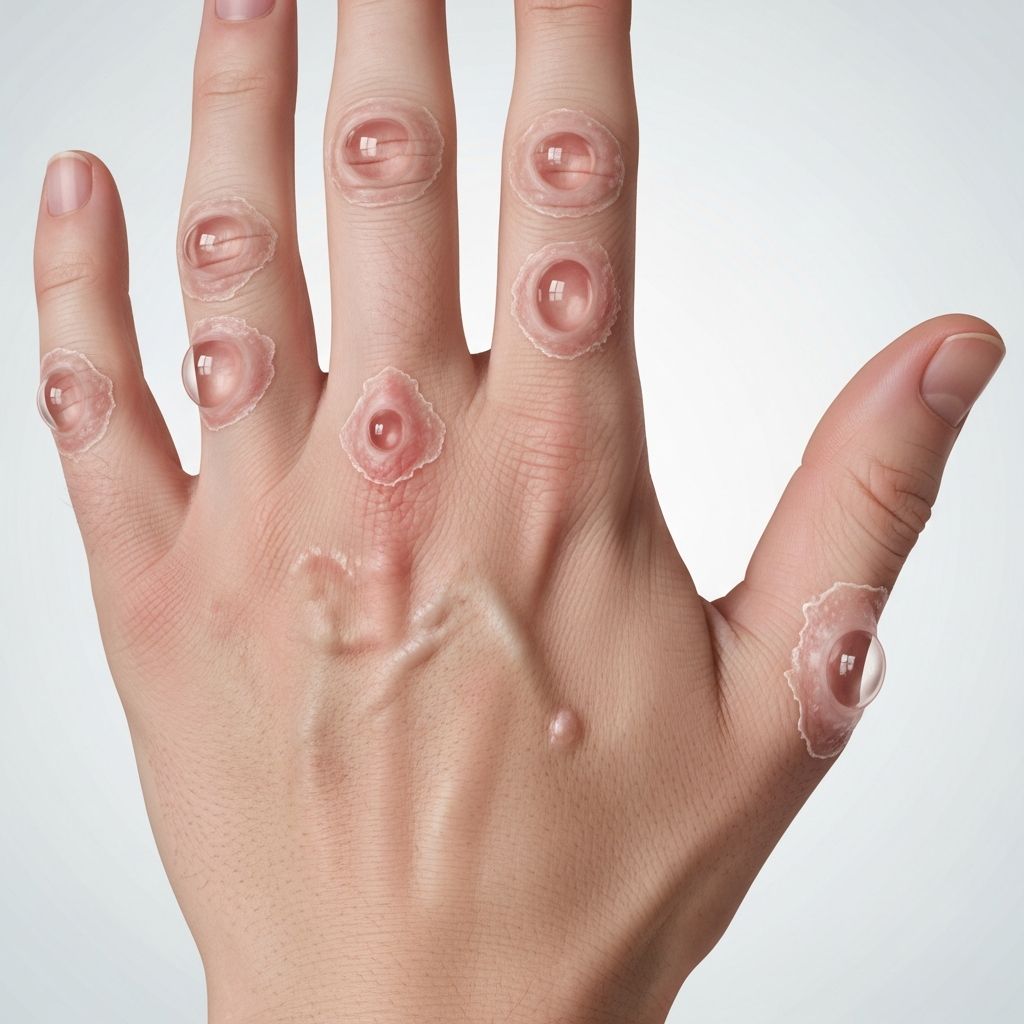
Dyshidrotic eczema, also known as pompholyx, is a chronic inflammatory skin condition characterized by the development of small, intensely itchy blisters on the palms, fingers, soles of feet, and toes. This condition represents a distinct form of hand and foot eczema that affects individuals across different age groups and demographics. The blisters typically appear in clusters and are filled with clear fluid, causing significant discomfort and functional impairment in affected individuals.
The condition is not contagious and develops when the skin’s barrier function becomes compromised, leading to an exaggerated immune response. While dyshidrotic eczema can occur at any age, it most commonly develops in adults during their 20s through 40s. The condition varies significantly in severity and frequency between individuals, with some experiencing isolated episodes and others suffering from recurrent flare-ups throughout their lives.
Epidemiology and Demographics
Dyshidrotic eczema demonstrates a clear gender predisposition, affecting women approximately twice as often as men. This difference may be related to hormonal factors, occupational exposures, or differences in immune system responses between sexes. The condition appears across all ethnic groups and geographic regions, though the prevalence may vary based on environmental and occupational factors specific to different populations.
Individuals with a personal or family history of atopic dermatitis, allergic rhinitis, or asthma have a higher likelihood of developing dyshidrotic eczema. This association suggests a genetic component and underlying atopic tendency that predisposes certain individuals to this condition.
Symptoms and Clinical Presentation
The primary symptom of dyshidrotic eczema is intense itching, which often precedes the visible appearance of blisters by several days. Patients frequently describe the itching as burning or painful, significantly impacting their quality of life and sleep quality. The itching may be so severe that it leads to involuntary scratching, which can cause secondary bacterial infections.
Key clinical features include:
- Small, clear, fluid-filled blisters (vesicles) typically 1-3 millimeters in diameter
- Blisters arranged in clusters, often symmetrically distributed
- Intense pruritus (itching) that may precede blister formation
- Burning sensation and pain, particularly after blisters rupture
- Erythema (redness) and edema (swelling) surrounding affected areas
- Lichenification (thickened, leathery skin) in chronic cases
- Scaling and desquamation as blisters heal
- Hyperhidrosis (excessive sweating) of palms and soles
- Nail changes including ridging, pitting, and discoloration in severe cases
The typical flare-up cycle lasts approximately three to four weeks before spontaneous resolution occurs. However, the frequency and severity of flare-ups vary considerably among individuals. Some patients experience only a single episode in their lifetime, while others endure multiple episodes throughout the year.
Triggers and Causative Factors
While the exact etiology remains incompletely understood, multiple environmental and internal factors can trigger dyshidrotic eczema flare-ups. These triggers are highly individualized, necessitating careful observation to identify personal risk factors.
Contact Allergens and Irritants
Metallic contact allergens represent the most commonly identified external triggers. Nickel, cobalt, and chromium salts are particularly problematic, whether encountered through occupational exposure, jewelry, watchbands, or other metal-containing objects. Certain individuals develop dyshidrotic eczema specifically in response to nickel contact, representing a true contact allergy. Laundry detergents and fabric softeners may also serve as irritants, as can frequent hand washing with harsh soaps.
Related Stories



Occupational Factors
Individuals in certain professions face elevated risk due to repeated skin exposure and irritant contact. Healthcare workers, food service employees, sanitation workers, and cleaning professionals who frequently wash their hands or wear protective gloves experience higher incidence rates. The combination of moisture from perspiration or frequent washing with chemical irritants creates an ideal environment for flare-ups.
Moisture and Sweating
Excessive moisture, whether from sweating, frequent hand washing, or prolonged contact with water, serves as a significant trigger for many individuals. Sweaty palms and feet create a humid environment that disrupts the skin barrier and promotes blister formation. This moisture-related trigger is particularly problematic during warm, humid weather or when wearing occlusive gloves for extended periods.
Environmental and Seasonal Factors
Warm, humid weather consistently exacerbates dyshidrotic eczema symptoms in susceptible individuals. Additionally, seasonal allergies such as hay fever correlate with increased flare-up frequency. Some patients demonstrate clear seasonal patterns, with symptom exacerbation during spring or summer months.
Psychological and Physical Stress
Both emotional and physical stress represent well-documented triggers for dyshidrotic eczema. The mind-body connection in dermatologic conditions is particularly evident in this disorder, where stressful life events, work pressure, or physical illness frequently precede symptom onset. This stress-related trigger underscores the importance of comprehensive stress management in treatment approaches.
Medical Conditions and Medications
Certain medications, including aspirin, intravenous immunoglobulin (IVIG), and oral contraceptives, can precipitate or worsen dyshidrotic eczema. HIV infection and other immunocompromised states have been associated with increased dyshidrotic eczema incidence. Secondary skin infections, such as athlete’s foot caused by fungal organisms, may trigger or complicate dyshidrotic eczema.
Lifestyle Factors
Smoking tobacco has been identified as an independent risk factor for dyshidrotic eczema development and flare-ups. The chemicals in tobacco smoke may directly irritate skin or impair immune function in ways that promote eczema development.
Diagnosis
Dyshidrotic eczema diagnosis is primarily clinical, based on characteristic history and physical examination findings. Healthcare providers evaluate the distribution of blisters, timing of symptoms, and relationship to potential triggers. In atypical presentations or when diagnosis remains uncertain, additional diagnostic procedures may be warranted.
Patch testing helps identify specific contact allergens, particularly metallic allergens like nickel, which may be triggering or perpetuating the condition. This testing involves applying small amounts of suspected allergens to the skin under occlusive patches and observing for reactions over 48-96 hours.
Skin biopsy is occasionally performed in unusual cases to exclude other dermatologic conditions that may mimic dyshidrotic eczema, such as other forms of eczema, dermatophyte infections, or bullous disorders. Histopathologic examination reveals characteristic intraepidermal spongiosis and microvesicle formation.
Fungal culture or testing may be indicated when concurrent fungal infection is suspected, as secondary fungal colonization can occur in dyshidrotic eczema lesions.
Treatment Approaches
Topical Corticosteroids
Topical corticosteroids represent the first-line treatment for dyshidrotic eczema. These medications reduce inflammation, control itching, and promote blister healing. The potency of corticosteroid prescribed depends on the severity of flare-up and affected body area. Hands typically require stronger corticosteroid formulations due to thicker skin and the need for adequate penetration.
Application technique significantly influences treatment efficacy. Applying topical corticosteroids to damp skin, followed by occlusion with plastic wrap or moist bandages, substantially enhances skin penetration and therapeutic effect. This moisture-enhancing approach allows for more rapid resolution of symptoms.
Long-term topical corticosteroid use carries potential side effects including skin atrophy, spider veins, and other cutaneous complications, necessitating judicious use and periodic breaks.
Oral Corticosteroids
In severe flare-ups that do not respond adequately to topical corticosteroids, oral corticosteroids such as prednisone may be prescribed as a short-term bridge therapy. These systemic medications provide rapid anti-inflammatory effects but carry significant side effects with prolonged use, limiting their application to acute situations.
Calcineurin Inhibitors
Topical calcineurin inhibitors including tacrolimus (Protopic) ointment and pimecrolimus (Elidel) cream offer alternative anti-inflammatory therapy, particularly for patients who cannot tolerate corticosteroids or experience side effects. These medications work through distinct mechanisms, suppressing T-cell activation without causing skin atrophy.
Antihistamines
Oral antihistamines such as diphenhydramine (Benadryl) and loratadine (Claritin, Alavert) provide symptomatic relief from itching. These medications are particularly helpful for severe pruritus that disrupts sleep and triggers secondary excoriation.
Biologic Therapies
Advanced biologic medications represent newer treatment options for moderate to severe dyshidrotic eczema that has not responded to conventional therapies. These injectable or oral agents target specific immune molecules involved in inflammation:
- Dupilumab (Dupixent) — targets IL-4 receptor, reducing Th2-mediated inflammation
- Lebrikizumab (Ebglyss) — targets IL-13 cytokine
- Nemolizumab (Nemluvio) — targets IL-31 receptor for itch reduction
- Tralokinumab (Adbry) — targets IL-13 cytokine
Biologics work by targeting specific inflammatory pathways rather than broadly suppressing immune function, potentially reducing systemic side effects.
Janus Kinase (JAK) Inhibitors
JAK inhibitors represent an emerging treatment category available in oral or injectable formulations. These medications inhibit specific signaling pathways within immune cells, modulating inflammatory responses while potentially preserving protective immunity.
Phosphodiesterase 4 (PDE4) Inhibitors
PDE4 inhibitors including crisaborole (Eucrisa) and roflumilast (Zoryve) provide topical anti-inflammatory therapy through distinct mechanisms. These medications are particularly useful in patients seeking alternatives to corticosteroids.
Phototherapy
Light therapy using ultraviolet (UV) radiation, particularly narrowband UV-B or psoralen and UVA (PUVA) phototherapy, effectively treats chronic dyshidrotic eczema when other therapies prove insufficient. Phototherapy may be enhanced by prior application of photosensitizing medications that increase skin responsiveness to light. This treatment typically requires multiple sessions over weeks to months.
Botulinum Toxin Injections
Botulinum toxin (Botox) injections represent a specialized treatment approach for dyshidrotic eczema triggered or exacerbated by excessive sweating. These injections block acetylcholine release at sweat glands, significantly reducing perspiration and thereby reducing flare-up frequency.
Adjunctive Treatments
Cool, wet compresses applied for 15 minutes multiple times daily provide symptomatic relief and promote blister drainage. In cases with larger blisters, careful drainage under sterile conditions may accelerate healing and reduce discomfort.
When secondary fungal infection complicates dyshidrotic eczema, topical or systemic antifungal medications become necessary components of treatment.
Home Care and Lifestyle Modifications
Comprehensive management of dyshidrotic eczema requires consistent home care practices alongside medical treatment:
- Wash hands and feet with lukewarm water rather than hot water, which exacerbates skin irritation
- Use mild, fragrance-free cleansers specifically formulated for sensitive skin
- Pat skin dry gently rather than rubbing, then immediately apply moisturizer to damp skin
- Apply thick emollients and moisturizing creams containing ceramides, which repair skin barrier function
- Avoid prolonged water exposure and wet conditions by wearing protective gloves when necessary, though ensuring glove linings remain dry
- Identify and avoid personal triggers through careful observation of flare-up patterns
- Minimize contact with identified allergens, particularly nickel and other metals
- Use fragrance-free laundry detergent and avoid fabric softeners that may irritate skin
- Manage stress through relaxation techniques, exercise, or professional counseling
- Maintain appropriate humidity levels in home and work environments
- Avoid smoking and secondhand smoke exposure
Prognosis and Long-term Management
While dyshidrotic eczema has no cure, most individual flare-ups resolve within three to four weeks with appropriate treatment. However, recurrent episodes are common, with many patients experiencing multiple flare-ups throughout their lives. The unpredictable nature of the condition necessitates long-term management strategies combining trigger avoidance, preventive skin care, and rapid treatment initiation when flare-ups occur.
Repeated flare-ups may result in long-term skin changes including chronic dryness, thickening, and cracking. In some individuals, the condition significantly impacts mental health due to visible lesions, chronic itching, and functional limitations.
Successful long-term management requires partnership between patient and healthcare provider, with individualized treatment plans adjusted based on response and changing triggers over time.
Frequently Asked Questions
Q: Is dyshidrotic eczema contagious?
A: No, dyshidrotic eczema is not contagious. It is an inflammatory skin condition caused by internal and external triggers, not by infectious agents. You cannot transmit this condition to other people through contact.
Q: Can dyshidrotic eczema be cured permanently?
A: There is currently no permanent cure for dyshidrotic eczema. However, symptoms can be effectively managed with appropriate treatment, and many individuals experience long periods of remission between flare-ups through trigger avoidance and preventive skin care.
Q: How long do flare-ups typically last?
A: Most dyshidrotic eczema flare-ups last approximately three to four weeks before naturally resolving. However, this timeline varies among individuals. Appropriate treatment can help shorten duration and reduce symptom severity.
Q: Which metals most commonly trigger dyshidrotic eczema?
A: Nickel, cobalt, and chromium are the metals most frequently associated with triggering dyshidrotic eczema. These metals may be encountered through jewelry, watches, occupational exposure, or other metal-containing objects.
Q: What is the difference between dyshidrotic eczema and other types of eczema?
A: Dyshidrotic eczema specifically affects hands and feet with characteristic small, fluid-filled blisters and intense itching. Other eczema types may affect different body areas and present with different clinical features. Dyshidrotic eczema represents a distinct subcategory of hand and foot eczema.
Q: Are there any natural remedies that help dyshidrotic eczema?
A: While some natural approaches like pure aloe vera and colloidal oatmeal may provide symptomatic relief for mild cases, professional medical treatment is typically necessary for effective healing and symptom control. Natural remedies alone generally cannot cure dyshidrotic eczema.
References
- Dyshidrotic Eczema: Pictures, Symptoms, Causes and Treatment — WebMD. 2024. https://www.webmd.com/skin-problems-and-treatments/eczema/dyshidrotic-eczema
- Dyshidrotic Eczema: Symptoms, Causes, Treatment — National Eczema Association. 2024. https://nationaleczema.org/types-of-eczema/dyshidrotic-eczema/
- Dyshidrotic Eczema (Dyshidrosis): Causes, Treatment, Location — Cleveland Clinic. 2024. https://my.clevelandclinic.org/health/diseases/17728-dyshidrotic-eczema
- Dyshidrosis – Diagnosis and Treatment — Mayo Clinic. 2024. https://www.mayoclinic.org/diseases-conditions/dyshidrosis/diagnosis-treatment/drc-20352348
- Dyshidrotic Eczema: Symptoms, Causes & Treatment — BIODERMA US. 2024. https://www.bioderma.us/en/expert-advice/normal-dry-to-atopic-skin/dyshidrotic-eczema.html
- Dyshidrotic Eczema — Cedars-Sinai. 2024. https://www.cedars-sinai.org/health-library/diseases-and-conditions/d/dyshidrotic-eczema.html
Similar Articles








Read full bio of Sneha Tete