Dyslexia: Understanding Causes, Symptoms & Treatment
Comprehensive guide to dyslexia: Learn about causes, diagnosis, and evidence-based treatment strategies.
What Is Dyslexia?
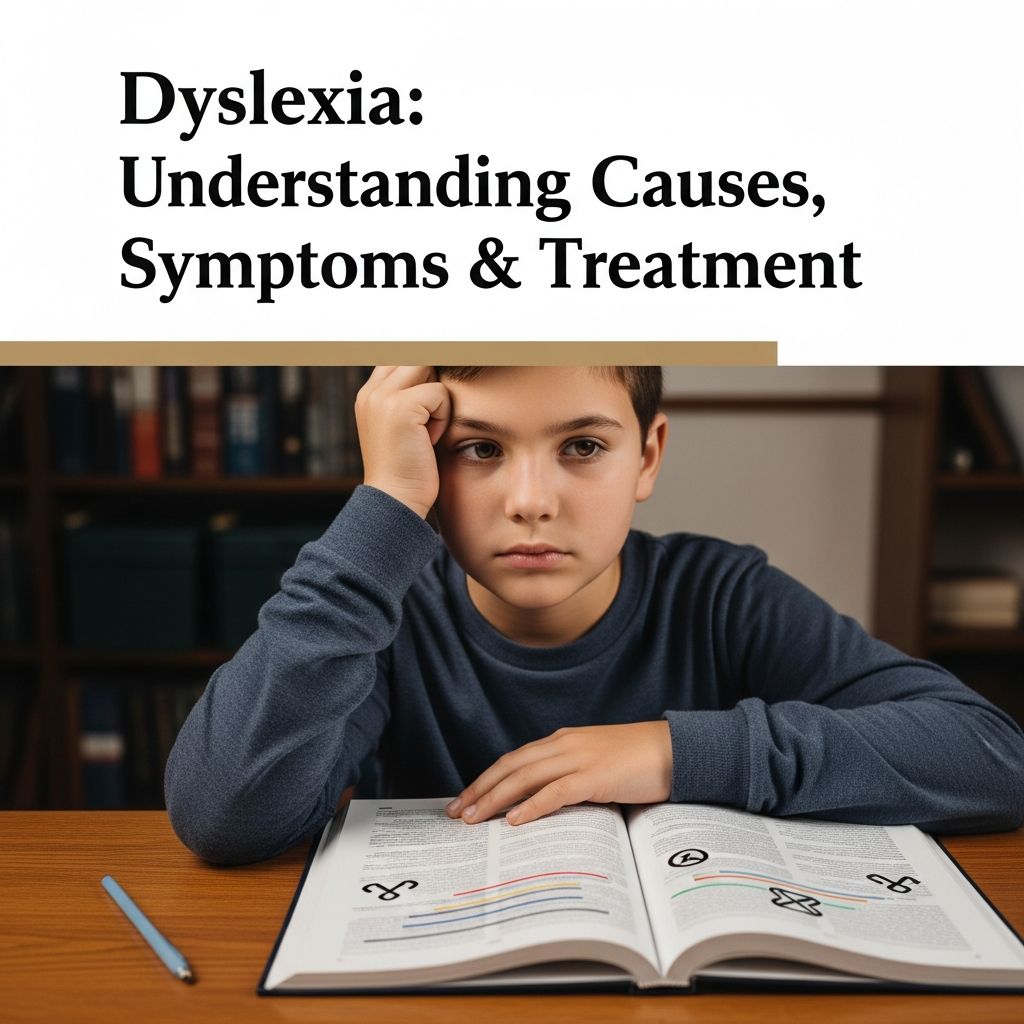
Dyslexia is a specific learning disability that disrupts how your brain processes written language, making reading and related language tasks significantly more challenging. This condition falls under the broader umbrella of specific learning disorders and affects how individuals recognize, decode, and comprehend written symbols. People with dyslexia often experience difficulties with reading fluency, spelling, writing, and phonological processing—the ability to recognize and manipulate the sounds in words. It is important to understand that dyslexia is not a reflection of intelligence; individuals with dyslexia often have average to above-average cognitive abilities but experience unique challenges in processing written language.
Dyslexia is neurobiological in nature, meaning it stems from how the brain is wired and organized rather than from lack of effort, motivation, or educational opportunity. The condition affects approximately 5-15% of the population, making it one of the most common learning disabilities. Early identification and intervention with evidence-based strategies can help individuals with dyslexia develop effective compensatory techniques and improve their reading skills significantly.
Types of Dyslexia
Dyslexia manifests in different ways, and understanding the specific type a person experiences can help guide appropriate interventions and support strategies. The primary types include:
- Phonological Dyslexia: This type involves difficulty with phonological processing—recognizing and manipulating the sounds that make up words. Individuals struggle to connect letters to their corresponding sounds, making phonetic decoding challenging.
- Surface Dyslexia: People with surface dyslexia have difficulty recognizing whole words by sight and rely heavily on sounding out words phonetically. They struggle with irregular words and sight words that don’t follow standard phonetic patterns.
- Rapid Automatized Naming (RAN) Deficit: This type affects the speed at which individuals can name familiar objects, colors, numbers, or letters. While accuracy may be acceptable, the processing speed is significantly slower than typical.
Each type requires tailored intervention strategies, and many individuals may exhibit characteristics of more than one type simultaneously.
How Dyslexia Develops
Understanding how reading works is essential to comprehending how dyslexia disrupts the process. Reading begins with spoken language—a skill that develops in early childhood through making simple sounds, gradually expanding to form words, phrases, and sentences. As language skills develop, learning to read involves connecting these spoken sounds to different written symbols, specifically letters and letter combinations. This process requires coordination between multiple brain regions responsible for language processing, phonological awareness, visual recognition, and memory.
In typical reading development, the brain builds strong neural pathways that connect visual symbols to their corresponding sounds and meanings. However, in individuals with dyslexia, these neural pathways develop differently. The brain may struggle to establish efficient connections between the visual representation of letters and the sounds they represent. This disruption in phonological processing creates the characteristic reading difficulties associated with dyslexia. Research using brain imaging has shown that individuals with dyslexia use different neural pathways when attempting to read, suggesting that the brain compensates for the typical pathway difficulties.
Symptoms and Warning Signs
Dyslexia can manifest differently at various life stages, but certain warning signs may indicate the presence of this learning disability:
- Difficulty with phonemic awareness: Trouble recognizing that words are made up of individual sounds and difficulty manipulating these sounds.
- Slow reading speed: Reading significantly slower than peers, even with considerable effort.
- Spelling difficulties: Persistent spelling errors that seem inconsistent with the child’s overall abilities and educational level.
- Trouble with written expression: Difficulty organizing thoughts and expressing ideas in written form.
- Reversing letters or numbers: Frequently writing or reading letters and numbers backward, particularly in early elementary years.
- Speech delays: In younger children, slower language development or delayed speech may precede reading difficulties.
- Difficulty with rhyming: Trouble recognizing rhyming patterns or creating rhyming words.
Related Stories



Parents and educators should note that occasional reversals in early readers are typical development. However, persistent difficulties beyond first grade, particularly when combined with a family history of dyslexia, warrant professional evaluation.
Diagnosing Dyslexia
Comprehensive evaluation for dyslexia involves multiple steps and typically requires involvement from various professionals, including psychologists, speech-language pathologists, educational specialists, and pediatricians. The diagnostic process is thorough and may take several hours, sometimes spanning multiple sessions depending on the complexity of the case.
Assessment Components
A complete dyslexia evaluation typically includes:
- Language Skills Assessment: Evaluators assess how individuals produce language verbally, examining sentence structure, vocabulary usage, and overall communication effectiveness.
- Receptive Language Testing: This measures how well an individual understands spoken language and follows instructions.
- Memory Assessment: Beyond simple recall, evaluators assess academic memory—the ability to retain information, manipulate it mentally, and apply it in context.
- Cognitive Testing: While intelligence is not directly related to dyslexia, IQ testing helps identify whether other factors may be contributing to reading difficulties.
- Phonological Processing Tests: Specialized tests measure phonemic awareness, rapid naming speed, and the ability to manipulate sounds in words.
- Reading and Spelling Tests: Direct assessment of decoding skills, reading fluency, comprehension, and spelling abilities.
Getting Evaluated
Parents concerned about reading difficulties should start by consulting their child’s pediatrician or classroom teacher. Many schools have certified educational psychologists on staff or can refer families to qualified professionals. At specialized medical centers like Cleveland Clinic, evaluators are specifically trained in diagnosing learning disabilities. Throughout the United States, psychologists, speech-language pathologists, and neurologists are qualified to conduct comprehensive dyslexia evaluations. It is important to seek professionals with specific training and experience in dyslexia assessment rather than general educational or psychological testing.
Treatment and Management Strategies
Currently, no medications treat dyslexia directly. Instead, research-based educational interventions teach effective alternative strategies for learning and reading. The key to successful treatment involves early identification and consistent, specialized instruction tailored to the individual’s specific needs.
Structured Literacy Approach
The most effective treatment framework is structured literacy, an explicit and systematic approach to teaching reading that emphasizes the connection between letters and sounds. This approach teaches phonics in a careful sequence, mastering one level before introducing the next. Rather than overwhelming learners with multiple concepts simultaneously, structured literacy keeps phonics concepts organized into manageable units that build upon each other logically.
Working with Specialists
Children with dyslexia benefit from working with trained specialists who understand how the dyslexic brain learns differently. These professionals, which may include reading specialists, special educators, or speech-language pathologists, teach new reading skills and strategies tailored to individual needs. Pacing becomes important—sometimes slowing down lessons allows students with dyslexia to process information more thoroughly and build stronger foundational skills.
School-Based Support
Families should work with their child’s school to develop an Individualized Education Plan (IEP). This legally binding document establishes personalized expectations, learning goals, and specific accommodations tailored to the child’s needs. Accommodations might include extra time on tests, alternative formats for presenting information, or permission to use assistive technology. These accommodations level the playing field, ensuring that assessment measures reading ability and comprehension rather than being limited by dyslexia-related processing challenges.
Home Support Strategies
Beyond formal treatment, parents can implement several evidence-based strategies at home. Building oral language skills through conversation and reading aloud strengthens the language centers of the brain. Using mnemonic devices—memory tools that employ acronyms, rhymes, or phrases—can help with spelling difficult words and organizing information. Encouraging multisensory learning engages different brain pathways: considering how words look, how they sound, and how they feel when spoken activates multiple cognitive systems simultaneously. Decodable readers, which follow a structured phonics sequence, help children master high-frequency words and phonics concepts systematically. Consistent practice, with regular review of previously learned concepts, strengthens neural connections and improves reading fluency.
Dyslexia in Adults
Many adults struggle with undiagnosed dyslexia, having developed coping strategies throughout their education and careers. The good news is that adults can benefit significantly from dyslexia-related treatment. Various programs and assistive technology tools are available to help adults with reading difficulties, regardless of age. Adult diagnosis can provide clarity, validation, and access to workplace accommodations that improve productivity and reduce stress. Many adults discover that understanding their dyslexia helps explain lifelong struggles with reading, writing, or organization and enables them to implement more effective strategies.
Resources and Support
Families and individuals seeking information about dyslexia should consult reputable sources such as the International Dyslexia Association, which provides up-to-date, evidence-based information. Pediatricians are excellent starting points for raising concerns about reading difficulties and can provide referrals to qualified evaluators. Many children’s hospitals have specialized centers for learning disability evaluation and can direct families to appropriate resources within their facility or recommend community professionals. School administration can also assist in connecting families with certified educational psychologists and intervention specialists.
Frequently Asked Questions
Q: Is dyslexia the same as being lazy about reading?
A: No. Dyslexia is a neurobiological learning disability, not a lack of effort or motivation. Individuals with dyslexia often work much harder than peers to read and still experience difficulties. It reflects how the brain is wired to process language, not effort level or intelligence.
Q: Can dyslexia be cured?
A: Dyslexia cannot be cured, but with appropriate interventions and strategies, individuals can learn to read and write effectively. Many people with dyslexia become proficient readers through specialized instruction and consistent support. The key is developing alternative neural pathways and learning strategies that work with their brain’s unique processing style.
Q: At what age should dyslexia be evaluated?
A: While formal diagnosis typically occurs in elementary school once reading instruction begins, some indicators may be present earlier. Children showing persistent speech delays or difficulty with rhyming should be monitored. If reading difficulties persist beyond the first grade despite appropriate instruction, evaluation is recommended.
Q: Does dyslexia affect intelligence?
A: No. Dyslexia does not affect intelligence. Many individuals with dyslexia have average to above-average IQs. The condition specifically affects reading and language processing, not overall cognitive ability or problem-solving skills.
Q: Can adults be diagnosed with dyslexia?
A: Yes, absolutely. Many adults reach adulthood without receiving a dyslexia diagnosis. Adult evaluation and diagnosis can provide valuable insight, reduce frustration, and open access to workplace accommodations and supportive resources.
Q: What accommodations are available for students with dyslexia?
A: Common accommodations include extended time on tests, books in audio format, permission to use text-to-speech software, alternative methods for demonstrating knowledge, and modified homework assignments. Specific accommodations depend on individual needs and should be outlined in an IEP or 504 plan.
References
- Dyslexia: What It Is, Causes, Symptoms, Treatment & Types — Cleveland Clinic. 2023-04-11. https://my.clevelandclinic.org/health/diseases/6005-dyslexia
- Learning Disabilities & Disorders: What To Know — Cleveland Clinic. https://my.clevelandclinic.org/health/diseases/4865-learning-disabilities-what-you-need-to-know
- Dyslexia: A Challenge That Can Be Overcome — Cleveland Clinic Podcasts. https://my.clevelandclinic.org/podcasts/health-essentials/dyslexia-a-challenge-that-can-be-overcome
- Children’s Dyslexia: Tips To Help at Home — Cleveland Clinic Health. https://health.clevelandclinic.org/childrens-dyslexia
- Ohio’s Dyslexia Guidebook — Ohio Department of Education and Workforce. 2025-11-04. https://education.ohio.gov/Topics/Learning-in-Ohio/Literacy/Dyslexia
- Understanding Dyslexia: What It Is And How It’s Diagnosed — Cleveland Clinic. https://www.youtube.com/watch?v=AlF2kobhhpU
Similar Articles








Read full bio of medha deb