Ear Anatomy & Function: Complete Guide For Hearing And Balance
Complete guide to ear structure, hearing, and balance functions explained.
Understanding the Ear: Anatomy, Facts & Function
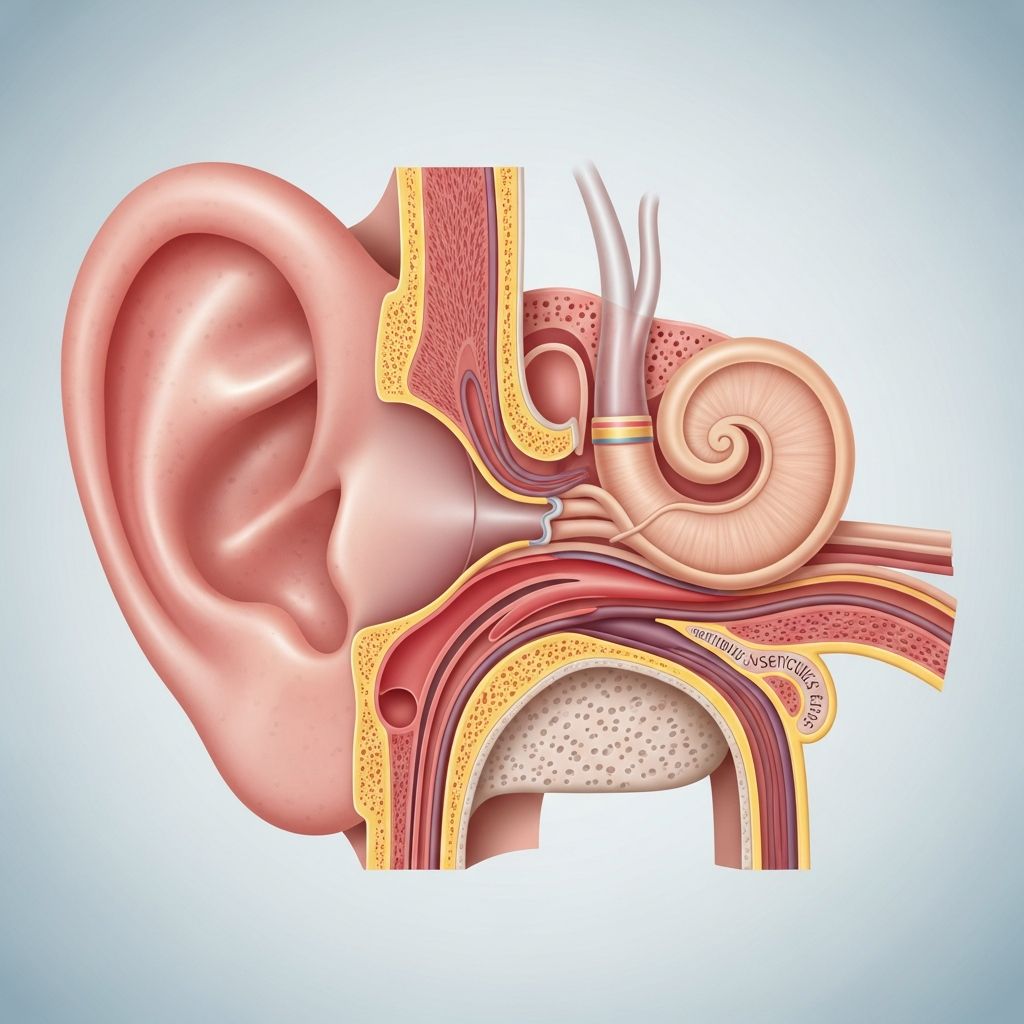
Your ears are remarkable sensory organs that serve two essential functions: hearing and balance. Located on either side of your head directly over your temporal lobe—the brain region responsible for hearing, speech, memory, and emotion—your ears are far more complex than they appear from the outside. The ear is divided into three distinct anatomical sections: the outer ear, middle ear, and inner ear. Each section plays a critical role in how you perceive sound and maintain equilibrium in your daily life.
The Three Main Parts of Your Ear
The ear’s structure can be understood by examining its three primary divisions, each with specialized functions that work together seamlessly to process sound and maintain balance.
Outer Ear: Your Sound Collector
The outer ear consists of two main components: the auricle (or pinna), which is the visible portion that projects from the side of your head, and the external auditory canal, commonly known as the ear canal. This canal is a tube-shaped passage that extends into your head and terminates at the tympanic membrane, or eardrum.
The primary function of the outer ear is to collect sound waves from your environment and guide them through the ear canal to your eardrum. The unique shape and curves of the auricle help capture and funnel sound waves, while the ear canal amplifies certain frequencies that are important for human hearing. This initial stage is crucial because it determines how effectively sound reaches the deeper structures of your ear.
Middle Ear: The Amplification Chamber
The middle ear begins on the opposite side of your tympanic membrane and is a narrow, air-filled cavity located within the temporal bone of your skull. This chamber contains three of the tiniest bones in your entire body: the malleus (hammer), incus (anvil), and stapes (stirrup). Healthcare professionals collectively refer to these three bones as the ossicles.
These delicate ossicles form an interconnected chain that serves a vital purpose: transferring sound vibrations from your eardrum to your inner ear while amplifying the signal along the way. When your eardrum vibrates in response to sound waves, the malleus moves first, causing a chain reaction that transmits the vibrations through the incus and finally to the stapes. This amplification process is essential because it increases the strength of vibrations reaching your inner ear, enabling you to hear softer sounds.
In addition to housing the ossicles, your middle ear also contains the eustachian tubes, which are tubes made of bone and cartilage that run from your middle ears to the back of your nose and throat. These tubes play an important role in equalizing air pressure in your ears, particularly when you’re traveling at high altitudes or experiencing changes in elevation.
Inner Ear: The Sensory Powerhouse
Your inner ear is the most complex section of your auditory system and contains two main functional components: the cochlea and the semicircular canals. This intricate structure is sometimes referred to as the labyrinth due to its complicated system of fluid-filled passages and cavities located deep within the petrous portion of the temporal bone.
Related Stories



How Hearing Works: The Journey of Sound
Understanding how hearing functions requires following the path that sound takes through your ear. The process begins when sound waves enter your ear canal and set your eardrum in motion.
Step 1: Vibration of the Eardrum
When sound waves enter your ear canal, they cause your tympanic membrane (eardrum) to vibrate. This thin, circular layer of tissue acts as the boundary between your outer ear and middle ear, and its vibrations are the first mechanical response to sound.
Step 2: Transmission Through the Ossicles
These vibrations pass to the three tiny bones in your middle ear—the ossicular chain. The malleus, attached to your eardrum, begins to move. Its motion causes the incus to move, which in turn causes the stapes to vibrate. Throughout this process, the ossicles amplify (or boost) the sound signal, meaning that the vibrations reaching your cochlea are stronger than when they left your eardrum.
Step 3: Inner Ear Processing
Once the amplified vibrations reach your inner ear, they enter the cochlea, which is the hearing organ. This snail-shaped structure is filled with fluid and is divided into three tubes by two thin membranes. One of these membranes, called the basilar membrane, contains the organ of Corti, which houses thousands of delicate sensory hair cells called stereocilia.
Step 4: Conversion to Electrical Signals
When the sound-induced vibrations cause the fluid inside your cochlea to move, the stereocilia—hair-like projections at the ends of the sensory hair cells—bend in response. This bending triggers the release of electrical impulses that travel along nerve fibers to your brain, where they are interpreted as sound. This remarkable transformation from mechanical vibration to electrical signal is what allows you to perceive the rich tapestry of sounds in your environment.
The Role of Endolymph in Hearing
Within your cochlea flows a specialized fluid called endolymph, which plays a crucial role in transforming sound waves into auditory signals. Endolymph fills the cochlear duct—the innermost part of your cochlea—where the organ of Corti is located. When sound waves traveling through your inner ear create vibrations in the endolymph, the fluid moves and stimulates the hair cells of the organ of Corti. The displaced hair cells then release auditory signals that travel to the auditory cortex of your brain, enabling you to hear.
Balance and the Vestibular System
While much attention is given to hearing, your inner ear also houses your balance system through structures called the semicircular canals and otolith organs, collectively known as the vestibular system. These structures contain sensory organs that detect the position and movement of your head in space.
The three semicircular canals are oriented in different planes and detect rotational movements—such as when you turn your head side to side, nod forward and backward, or tilt your head. The otolith organs, which include the utricle and saccule, detect linear movements and changes in head position relative to gravity. Together, these components send signals to your brain about your body’s position and movement, helping you maintain balance, coordinate eye movements, and navigate your environment safely.
Location and Significance
Your ears are positioned on either side of your head, directly over your temporal lobe. This location is not arbitrary; the temporal lobe is the brain region responsible for processing hearing, speech, memory formation, and some emotional responses. The proximity of your ears to this critical brain region allows for efficient transmission of auditory information and integration with other cognitive functions.
Key Anatomical Features
The Tympanic Membrane (Eardrum)
The eardrum is a thin, circular layer of tissue approximately 8-10 millimeters in diameter. It’s remarkably delicate yet resilient, capable of vibrating thousands of times per second in response to sound waves. The eardrum’s position at the end of the ear canal makes it the critical junction between your outer ear and middle ear.
The Ossicles
These three bones—the malleus, incus, and stapes—are the smallest bones in the human body. Despite their diminutive size, they are precisely engineered structures that work together with mechanical precision. The malleus is shaped like a hammer with a head, neck, and handle that attaches directly to your eardrum. The incus connects the malleus to the stapes through specialized joints. When functioning properly, these bones can amplify sound by as much as 30 times.
The Cochlea
The cochlea is a spiral-shaped structure that resembles a snail’s shell, containing approximately 16,000 hair cells. These hair cells are arranged in four rows and are topped with stereocilia that bend in response to fluid movement. The cochlea’s design allows it to process different frequencies of sound, with high frequencies detected near the base and low frequencies detected near the apex.
How Sound Frequencies Are Processed
One of the most fascinating aspects of hearing is how your ear distinguishes between different pitches and frequencies. The basilar membrane inside your cochlea is thicker and stiffer at the base (near the stapes) and thinner and more flexible toward the apex. This gradient means that different frequencies cause maximum vibration at different locations along the basilar membrane. High-frequency sounds cause vibrations near the base, while low-frequency sounds vibrate the apex. This frequency mapping allows your brain to distinguish between different pitches and tones.
Common Ear Conditions and Health
Understanding ear anatomy helps explain why certain conditions affect hearing or balance. Middle ear infections can occur when fluid becomes trapped behind the eardrum. Otosclerosis occurs when abnormal bone growth affects the stapes. Inner ear disorders can cause dizziness or vertigo by affecting the vestibular system. Age-related hearing loss often results from degeneration of hair cells in the cochlea. By maintaining ear health and seeking prompt treatment for infections or hearing changes, you can preserve these delicate structures and maintain optimal auditory function.
Protecting Your Ears
Given the complexity and delicate nature of ear structures, protection is essential. Avoid prolonged exposure to loud noises, use hearing protection in noisy environments, keep water and foreign objects out of your ear canal, and see a healthcare provider if you experience hearing loss, ear pain, or balance problems. Regular hearing checks can detect problems early, potentially preventing further damage to these irreplaceable sensory organs.
Frequently Asked Questions
Q: What is the function of the eustachian tube?
A: The eustachian tube equalizes air pressure between your middle ear and the atmosphere. This prevents your eardrum from becoming too taut or too slack and is especially important during altitude changes or when diving.
Q: Why are the ossicles so important?
A: The ossicles amplify sound vibrations before they reach your inner ear, allowing you to hear quieter sounds and providing about 30 times amplification. Without them, hearing would be significantly impaired.
Q: How do stereocilia work?
A: Stereocilia are microscopic hair-like projections on sensory cells in your cochlea. When they bend in response to fluid movement from sound vibrations, they trigger the release of electrical signals that your brain interprets as sound.
Q: What causes balance problems?
A: Balance problems can result from disorders affecting the vestibular system, including the semicircular canals and otolith organs in your inner ear. Infections, inflammation, or degeneration of these structures can lead to dizziness and vertigo.
Q: At what age does hearing typically decline?
A: While hearing can be affected at any age, age-related hearing loss typically becomes noticeable after age 60, though it can begin as early as age 30-40 due to cumulative exposure to loud sounds and degeneration of hair cells.
References
- Ossicles: Function & Anatomy — Cleveland Clinic. 2024. https://my.clevelandclinic.org/health/body/ossicles
- Eustachian Tubes: Anatomy, Function & Related Disorders — Cleveland Clinic. 2024. https://my.clevelandclinic.org/health/body/22072-eustachian-tubes
- Tympanic Membrane (Eardrum): Function & Anatomy — Cleveland Clinic. 2024. https://my.clevelandclinic.org/health/body/24642-tympanic-membrane-eardrum
- Human Ear | Structure, Function, & Parts — Britannica. 2024. https://www.britannica.com/science/ear
- Endolymph: Function, Anatomy & Related Disorders — Cleveland Clinic. 2024. https://my.clevelandclinic.org/health/body/endolymph
- Inner Ear: Anatomy, Function & Related Disorders — Cleveland Clinic. 2024. https://my.clevelandclinic.org/health/body/24340-inner-ear
- Vestibular System: Function & Anatomy — Cleveland Clinic. 2024. https://my.clevelandclinic.org/health/body/vestibular-system
Similar Articles








Read full bio of Sneha Tete