Earlobe Health: Understanding Creases and What They Mean
What diagonal earlobe creases reveal about your cardiovascular health and aging.
What Are Earlobe Creases?
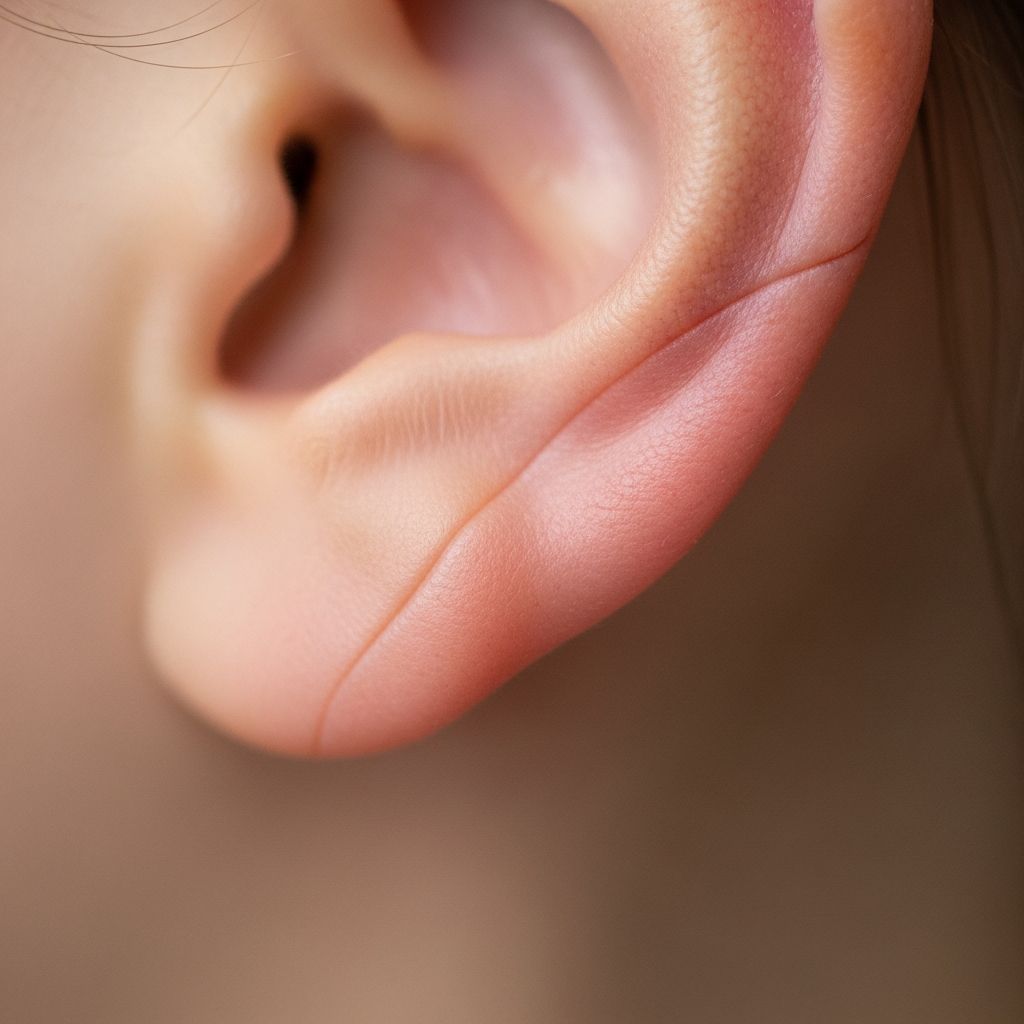
An earlobe crease, medically termed a diagonal earlobe crease (DELC), is a diagonal fold or wrinkle extending from the tragus (the small cartilaginous projection in front of the ear canal) across the earlobe lobule to the rear edge of the auricle (outer ear). These creases typically extend at approximately a 45-degree angle backward from the tragus toward the back of the ear. While earlobe creases are common and often considered a normal part of aging, emerging research suggests they may have significant health implications.
Earlobe creases are classified based on their characteristics, including length, depth, width, and the number of creases present. Healthcare providers score creases on each ear, with a deep and clear crease that extends completely through the earlobe receiving a higher score than superficial creases that do not penetrate fully through the tissue.
The Connection Between Earlobe Creases and Heart Disease
One of the most significant findings in recent medical research is the association between earlobe creases and coronary artery disease (CAD). Multiple epidemiological and meta-analysis studies have demonstrated that diagonal earlobe creases are independently linked to coronary artery disease, making them a simple cutaneous (skin) marker for cardiovascular risk.
Research has shown that patients with earlobe creases have notably higher rates of:
- Coronary heart disease (CHD)
- Carotid artery lesions
- Ischemic and hemorrhagic stroke
- Myocardial infarction (heart attack)
A significant 35-year prospective cohort study involving 10,885 participants found that earlobe creases were associated with an increased risk of ischemic heart disease and myocardial infarction, independent of age and other traditional cardiovascular risk factors. This suggests that earlobe creases may serve as an independent predictor of cardiovascular disease.
Understanding the Pathophysiology
The exact mechanisms behind earlobe crease development remain incompletely understood, but several theories have emerged from recent research:
Advanced Glycation End Products (AGEs)
One promising area of investigation involves advanced glycation end products (AGEs) and skin autofluorescence (SAF). Research suggests that the accumulation of AGEs may contribute to earlobe crease formation. AGEs are compounds formed when proteins or fats undergo a non-enzymatic reaction with sugars, a process that accelerates with age, high blood sugar, and oxidative stress. The presence of elevated AGEs is associated with vascular aging and atherosclerosis.
Elastin Fiber Degradation
Biopsy specimens from earlobe tissue in patients with creases have revealed several precocious variations, including:
- Elastin degeneration
- Atrophic (thinned) elastic fibers
- Increased thickness of anterior artery walls
- Microvascular disease
- Low oxygen saturation in earlobe tissues
These findings suggest that earlobe creases may reflect systemic vascular aging and microvascular dysfunction affecting tissues throughout the body.
Visceral Obesity Theory
An anatomical explanation for earlobe crease formation involves facial visceral obesity, particularly fat accumulation in the sideburn area of the cheek. As deep cheek fat increases in patients with visceral obesity, excess cheek skin creates pleating in the earlobes. The long-term traction of the earlobe attachment, combined with this skin pleating, creates the characteristic anterior ear crease and anterior vertical crease known as ELC.
Related Stories



Klotho Protein and Premature Aging
Recent research has identified a potential link between earlobe creases and Klotho, a protein associated with longevity and aging. Patients with earlobe creases have been found to have significantly lower serum Klotho levels compared to those without creases. Since Klotho is implicated in regulating aging processes and protecting against cardiovascular disease, decreased levels may contribute to premature vascular aging.
A 30% increase in the incidence of earlobe creases was associated with a decrease of just 100 pg/mL in Klotho level, suggesting a strong biological relationship between this aging marker protein and earlobe crease development.
Risk Factors and Demographics
Research has identified several characteristics and risk factors associated with earlobe creases:
| Risk Factor/Characteristic | Association with ELC |
|---|---|
| Gender | More prevalent in males |
| Age | Prevalence increases significantly with advancing age |
| Hypertension | Higher prevalence in patients with ELC |
| Atherosclerosis | Strong association with ELC |
| Type 2 Diabetes | Higher prevalence and rates in ELC patients |
| Alcohol Consumption | Higher rates among ELC patients |
| Menopausal Status | Higher prevalence in menopausal vs. premenopausal women |
| Dyslipidemia | No statistically significant difference with ELC |
| Atrial Fibrillation | No statistical difference between ELC and non-ELC patients |
Treating Swollen Earlobes
While earlobe creases themselves are permanent features, swollen earlobes may occur from various causes and can often be treated effectively. A swollen earlobe typically results from damage or an inflammatory reaction to the earlobe tissue.
Common Causes of Earlobe Swelling
- Bacterial infections: Bacteria entering through cuts or piercings can cause infection
- Allergic reactions: Contact dermatitis from nickel jewelry, perfumed products, or other allergens
- Traumatic injuries: Pulling on earrings, wearing heavy or oversized earrings, ear piercing complications, or blunt trauma
- Cysts and boils: Benign growths or infected skin lesions
- Otitis externa: Swimmer’s ear, an infection of the ear canal
- Mastoiditis: Infection of the mastoid bone behind the ear, requiring urgent medical attention
- Insect stings or bites: Local allergic reactions or infections
Treatment Options
Treatment for a swollen earlobe depends on the underlying cause:
- Home remedies: Many cases respond to warm compresses, over-the-counter pain relievers, and keeping the area clean and dry
- Topical treatments: Over-the-counter antibiotic ointments or anti-inflammatory creams
- Antibiotics: Oral or topical antibiotics prescribed by a healthcare provider for bacterial infections
- Allergen avoidance: Identifying and avoiding triggering substances (such as nickel or specific skincare products)
- Medical intervention: Drainage, cyst removal, or treatment of underlying conditions
Prevention and Management
While earlobe creases cannot be reversed, several strategies may help prevent complications and reduce cardiovascular risk:
- Manage cardiovascular risk factors (blood pressure, cholesterol, blood sugar)
- Maintain a healthy weight and reduce visceral fat through diet and exercise
- Avoid known allergens in jewelry and personal care products
- Remove heavy or oversized earrings that create traction on the earlobe
- Keep the earlobe clean and free from excess oil and dirt
- Avoid inserting objects into the ear canal
- Seek prompt medical attention for ear injuries, infections, or swelling
- Have regular cardiovascular health screenings, especially if earlobe creases are present
Clinical Significance and Future Implications
The recognition of earlobe creases as a cutaneous marker of cardiovascular disease has important clinical implications. Unlike many cardiovascular risk factors that require laboratory testing or specialized imaging, earlobe creases are immediately visible during physical examination. This makes them a potentially valuable screening tool in clinical practice.
However, healthcare providers emphasize that earlobe creases should not be used as a sole predictor of heart disease. Instead, they should be considered as one piece of a comprehensive cardiovascular risk assessment, particularly in patients with other risk factors such as hypertension, diabetes, or age-related concerns.
Frequently Asked Questions
Q: Does everyone with an earlobe crease have heart disease?
A: No. While earlobe creases are associated with increased cardiovascular risk, they do not definitively indicate heart disease. The presence of a crease suggests an elevated risk that warrants cardiovascular evaluation and lifestyle modifications, but many people with creases live healthy lives without developing significant heart disease.
Q: Can earlobe creases be removed?
A: Earlobe creases are permanent anatomical features and cannot be reversed through topical treatments or non-invasive methods. Surgical options exist but are rarely pursued purely for cosmetic reasons and do not address the underlying vascular aging that produces the creases.
Q: What should I do if I have an earlobe crease?
A: If you have an earlobe crease, consult with your healthcare provider about cardiovascular risk assessment. This may include blood pressure monitoring, lipid panel testing, and discussion of lifestyle modifications such as regular exercise, healthy diet, smoking cessation, and stress management.
Q: Are earlobe creases hereditary?
A: While earlobe shape and size have genetic components, earlobe creases develop primarily due to age-related vascular changes and systemic factors rather than pure genetic inheritance. However, genetic factors influencing cardiovascular health and aging may indirectly affect crease development.
Q: Can earlobe swelling be prevented?
A: Yes, many cases of earlobe swelling can be prevented by avoiding known allergens, wearing appropriately sized earrings, keeping the ears clean, removing jewelry that causes discomfort or traction, and avoiding trauma to the ears.
References
- Association of advanced glycation end products with ear lobe crease — PMC National Center for Biotechnology Information. 2024. https://pmc.ncbi.nlm.nih.gov/articles/PMC11006612/
- Patients with Earlobe Crease May Associate with Lower Klotho — PMC National Center for Biotechnology Information. 2023. https://pmc.ncbi.nlm.nih.gov/articles/PMC8629917/
- Swollen earlobe: Pictures, causes, and treatment — Medical News Today. 2024. https://www.medicalnewstoday.com/articles/321359
- Genetics of Earlobes — News-Medical.Net. https://www.news-medical.net/health/Genetics-of-Earlobes.aspx
Similar Articles








Read full bio of medha deb