Early Waking and Sleep Disruption: Causes and Solutions
Understanding why you wake too early and can't fall back asleep—plus expert strategies to reclaim your rest.
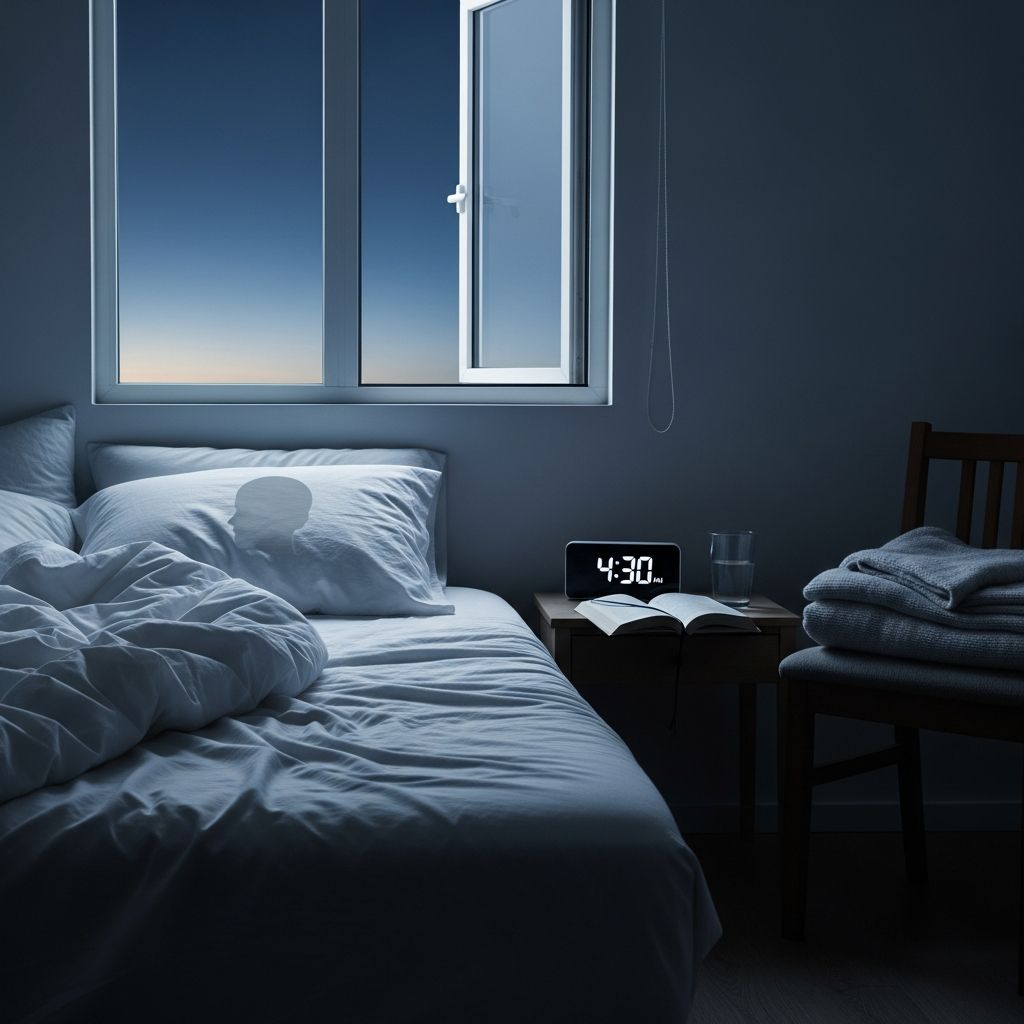
Why You Wake Too Early and Can’t Fall Back Asleep
Waking up too early and struggling to return to sleep is a frustrating experience that affects millions of people. Unlike the difficulty some face in initially falling asleep, early morning waking presents a unique challenge: you’re well-rested enough to be conscious, but not well-rested enough to feel satisfied. Understanding the mechanisms behind this sleep disruption is the first step toward reclaiming your night and waking refreshed.
This phenomenon is more common than you might think, and it often becomes more pronounced with age. The good news is that by understanding what causes this pattern and implementing targeted strategies, you can significantly improve your sleep quality and duration.
Understanding Your Sleep Architecture
To understand why you might be waking too early, it helps to first understand how sleep works. Sleep is not a uniform state but rather a cyclical process that moves through distinct stages throughout the night.
The Sleep Cycle
Each night, your brain cycles through non-REM (rapid eye movement) sleep stages and REM sleep in roughly 90-minute intervals. Early in the night, you spend more time in deep, restorative non-REM sleep. As the night progresses, REM sleep periods become longer and more frequent, while deep sleep stages decrease. This natural progression means that sleep in the second half of the night is lighter and more easily disrupted, which is why early morning waking is particularly common.
Understanding this architecture explains why waking at 3 or 4 a.m. feels especially problematic—you’re in a lighter stage of sleep when your brain is more easily aroused by internal and external stimuli.
Common Causes of Early Morning Waking
Early morning waking can stem from multiple sources. Identifying which factors apply to your situation is crucial for selecting the right intervention.
Age-Related Changes
As we age, our sleep patterns naturally shift. Older adults tend to wake earlier and sleep fewer total hours. This is partly due to changes in circadian rhythm regulation and a decrease in the production of sleep-promoting hormones like melatonin. Research shows that this pattern is increasingly common after age 50, but can occur at any age.
Circadian Rhythm Misalignment
Your circadian rhythm is your body’s internal 24-hour clock that regulates sleep-wake cycles, hormone production, and body temperature. When your social schedule, light exposure, and natural body rhythms become misaligned, sleep disruption often follows. This misalignment becomes particularly problematic during daylight saving time transitions or when managing irregular schedules.
Light Exposure Patterns
Morning light exposure powerfully influences your circadian rhythm. If you’re exposed to bright light too early—whether from windows, alarm clocks, or outdoor dawn—your brain may interpret this as a signal to wake. Additionally, irregular light exposure patterns throughout the day can disrupt the circadian timing that helps consolidate sleep. People with irregular light exposure and sleep schedules show delayed circadian rhythms and lighter sleep overall.
Temperature Regulation
Your core body temperature drops as you fall asleep and rises as you prepare to wake. An environment that becomes too warm during the early morning hours can trigger waking. Most people sleep best in a room temperature between 60-67°F (15-19°C), and this becomes increasingly important as you age.
Sleep Fragmentation and Aging
As we age, the quality of deep sleep diminishes, and we experience more frequent arousals. Even minor disruptions—a partner’s movement, a sound outside, or internal factors—become more likely to cause waking rather than brief arousals from which we easily return to sleep.
Hormonal Changes
Menopause in women and age-related testosterone changes in men can significantly disrupt sleep architecture. Night sweats and hot flashes frequently trigger waking. Additionally, cortisol levels naturally increase in the early morning hours to prepare your body for wakefulness, and in some people, this rise becomes excessive and premature.
Medical and Psychological Factors
Several conditions commonly cause early waking: depression (particularly characterized by early morning waking), sleep apnea, restless leg syndrome, anxiety, acid reflux, and chronic pain. If early waking is a new development for you, it’s worth discussing with a healthcare provider to rule out underlying conditions.
Strategies to Address Early Morning Waking
Once you understand the potential causes, you can implement targeted strategies to improve your sleep continuity.
Optimize Light Exposure
Control your light environment strategically. Keep your bedroom completely dark, using blackout curtains if necessary. This prevents early dawn light from triggering premature waking. Conversely, ensure you get bright light exposure earlier in the day—ideally within two hours of waking—to anchor your circadian rhythm to your desired sleep-wake schedule. Light-based interventions can be therapeutically effective in improving sleep regularity and consolidation.
Maintain Sleep Consistency
Go to bed and wake at the same time every day, even on weekends. This consistency strengthens your circadian rhythm, making it easier to stay asleep through the night and harder to wake prematurely. A consistent sleep schedule supports the body’s natural desire to sleep when conditions are optimal.
Control Your Sleep Environment
Create a bedroom environment optimized for continuous sleep. Maintain a cool temperature (around 65-68°F or 18-20°C), use white noise or earplugs to mask disruptive sounds, and ensure your mattress and pillows are comfortable. Remove sources of light, including LED clocks or smartphone notifications that might trigger waking.
Manage Your Pre-Sleep Routine
Begin winding down 30-60 minutes before bedtime. Dim lights to signal your body to produce melatonin. Avoid screens, which emit blue light that suppresses melatonin production. Avoid caffeine after 2 p.m., as its effects can linger 8-10 hours. Limit alcohol, which disrupts sleep architecture and often causes waking in the second half of the night.
Address Nighttime Bathroom Trips
If you’re waking to urinate, reduce fluid intake in the evening, particularly in the 2-3 hours before bed. However, ensure you remain adequately hydrated during the day. If nighttime bathroom trips persist despite these measures, consult your healthcare provider.
Use the “Cognitive Shuffle” Technique
If you wake and cannot fall back asleep, avoid checking the time or becoming frustrated. Instead, try the cognitive shuffle: allow your mind to drift through random, non-emotional images and thoughts rather than focusing on the fact that you’re awake. This technique reduces the mental activation that keeps you alert and makes return to sleep easier.
Consider the “Stimulus Control” Approach
If you lie awake for more than 20 minutes after waking, get up and go to a different room. Do a quiet, boring activity in dim light until you feel sleepy again, then return to bed. This prevents your brain from associating the bed with wakefulness and frustration.
When to Seek Professional Help
If early morning waking persists despite implementing these strategies, or if it’s accompanied by other sleep symptoms, consider consulting a sleep medicine specialist. A physical examination can rule out underlying health conditions that may be contributing to your sleep disruption. You might benefit from sleep studies to assess for conditions like sleep apnea, or you might be referred for cognitive behavioral therapy for insomnia (CBT-I), which is highly effective for sleep maintenance problems.
The Role of Acceptance and Patience
Finally, recognize that changing sleep patterns takes time. Your circadian rhythm didn’t shift overnight, and it won’t reset overnight either. Most sleep-related interventions require 2-4 weeks of consistent application before showing significant benefits. Be patient with yourself during this adjustment period.
Frequently Asked Questions
Q: Is waking at 4 or 5 a.m. normal?
A: Occasional early waking is normal, especially as we age. However, if you regularly wake 1-2 hours earlier than desired and cannot fall back asleep, it warrants investigation and intervention to improve your overall sleep quality and health.
Q: Why do I wake up at the same time every morning?
A: Your body likely has an entrained circadian rhythm and internal clock that triggers waking at that time, even without an alarm. This can be beneficial if the time aligns with your desired wake time, but problematic if it occurs earlier than needed. Your circadian rhythm responds to light, temperature, and consistent sleep schedules.
Q: Does checking the time make it harder to fall back asleep?
A: Yes. Checking the time triggers cognitive activation and often creates anxiety about how much sleep time remains. This mental activation makes returning to sleep significantly harder. Cover your clock and avoid phone use after waking.
Q: Can caffeine in the morning affect early morning waking?
A: Caffeine consumed in the afternoon or evening can definitely contribute to sleep disruption. Even caffeine consumed earlier in the day can affect sensitive individuals. To optimize sleep, limit caffeine to before 2 p.m.
Q: How long does it take to fix an early waking pattern?
A: Most sleep interventions require 2-4 weeks of consistent application to show noticeable improvement. Some people see benefits sooner, while others need 6-8 weeks. Consistency is more important than the specific duration.
Q: Should I try to force myself back to sleep?
A: No. Forcing yourself to sleep increases frustration and mental activation, both of which prevent sleep. If you’re awake for more than 20 minutes, it’s better to get up and do a quiet activity until you feel sleepy again.
Conclusion
Early morning waking and difficulty returning to sleep is a common but addressable problem. By understanding your circadian rhythm, optimizing your sleep environment, maintaining consistency, and managing light exposure, you can significantly improve your sleep quality. Whether your early waking stems from age-related changes, circadian rhythm shifts, environmental factors, or underlying health conditions, targeted interventions offer genuine hope for better sleep. Remember that improving sleep takes patience and consistency, and when self-help strategies aren’t sufficient, professional guidance can make all the difference.
References
- The Dark Side of Daylight Saving — Harvard Magazine. 2022-04. https://www.harvardmagazine.com/2022/04/the-dark-side-of-daylight-saving
- Irregular sleep/wake patterns are associated with poorer academic performance and delayed circadian and sleep/wake timing — Phillips, A.J.K., et al., Scientific Reports. 2017-06-12. https://pubmed.ncbi.nlm.nih.gov/28607474/
- Sleep – Harvard University — Harvard University. 2024. https://www.harvard.edu/in-focus/sleep/
- Sleep-wake cycle needs to be consistent — Healthy Life. 2024. https://healthylife.com/online/healthieratschool/centrallaborerspw/hn/assets/aipm-healthnews-wellbeing–15.pdf
Similar Articles








Read full bio of Sneha Tete