Eating Challenges in Parkinson’s Disease
Practical strategies to manage swallowing difficulties, nutrition, and daily eating for better quality of life with Parkinson's.
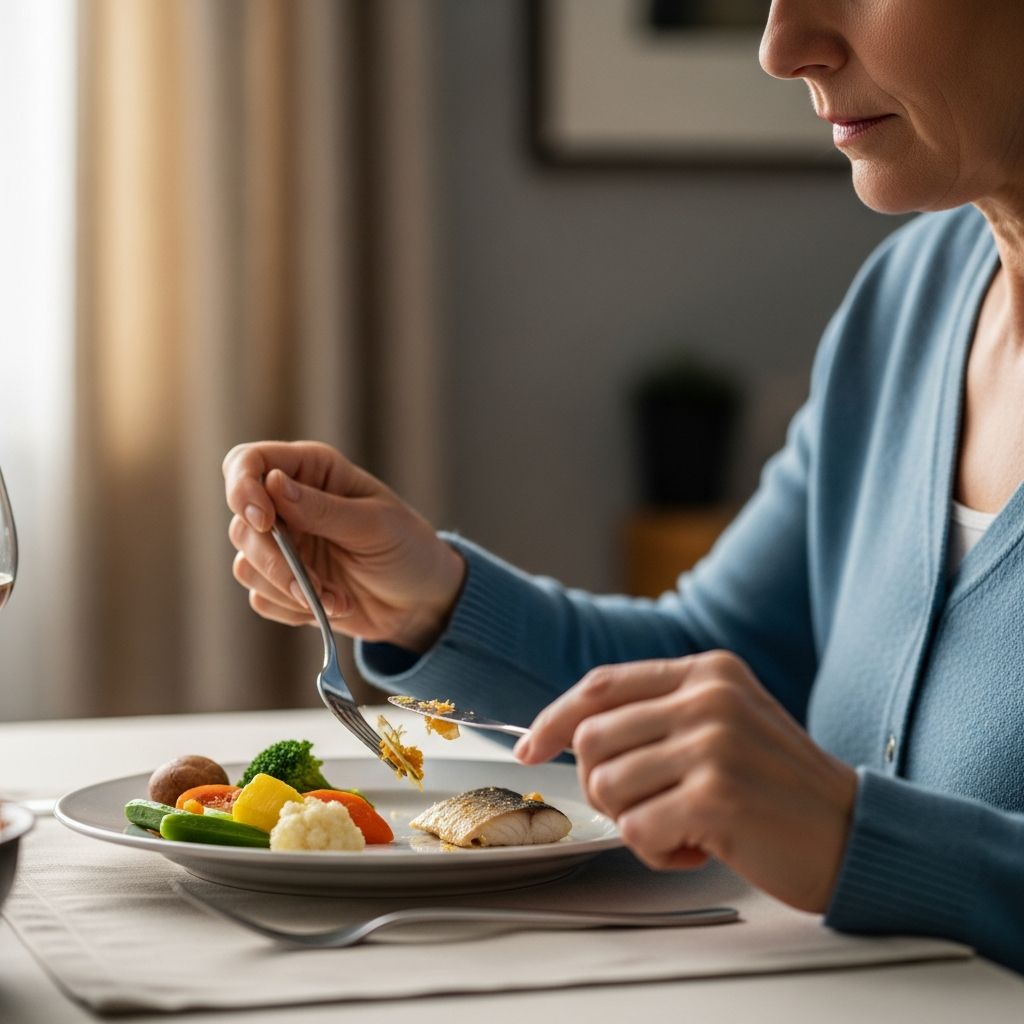
Parkinson’s disease often brings hurdles to everyday tasks like eating, primarily due to dysphagia, or trouble swallowing. This condition arises from impaired muscle coordination in the mouth, throat, and esophagus, raising risks of choking, aspiration pneumonia, and malnutrition. Early recognition and targeted interventions can significantly enhance safety and enjoyment of meals.
Understanding Swallowing Difficulties in Parkinson’s
Dysphagia in Parkinson’s stems from the loss of dopamine-producing neurons, affecting both motor and sensory functions needed for swallowing. Patients may experience delayed swallowing reflexes, reduced tongue strength, or silent aspiration—where material enters the lungs unnoticed. Advanced stages, particularly Hoehn and Yahr stages 4-5, demand routine evaluations like video fluoroscopic swallow study (VFSS) or fiberoptic endoscopic evaluation of swallowing (FEES) to tailor food consistencies and avert complications.
Symptoms include coughing during meals, prolonged chewing, drooling, or unintended weight loss. These issues not only compromise nutrition but also impact quality of life, medication absorption, and social dining. Proactive screening, especially in Parkinson-related disorders like progressive supranuclear palsy (PSP) or multiple system atrophy (MSA), is vital as their swallowing decline progresses faster.
Assessing and Diagnosing Eating Problems
Clinical exams start with bedside swallowing tests, observing oral control, residue after swallows, and voice changes post-meal. For precision, instrumental tools like VFSS visualize the swallow in real-time under X-ray, while FEES uses a camera to check throat function. These are recommended for severe cases to customize therapies and monitor progression.
- Bedside evaluation: Quick check for immediate risks.
- VFSS: Tracks bolus flow from mouth to stomach.
- FEES: Detects silent aspiration without radiation.
Multidisciplinary teams, including speech-language pathologists (SLPs), neurologists, and dietitians, collaborate for holistic assessments. Treatment initiates upon evidence of unsafe or inefficient swallowing, regardless of disease stage.
Dietary Modifications for Safer Meals
Adjusting food textures and liquids is a cornerstone of management. Thickening fluids increases viscosity, slowing transit to prevent airway entry, while pureed or chopped solids ease mastication and formation.
| Food Category | Recommended Options | Why It Helps |
|---|---|---|
| Breads | Moderately textured wheat, moistened | Reduces chewing effort, avoids crumbliness |
| Proteins | Tender chicken, ground meats, scrambled eggs | Minimizes tough textures needing vigorous bite |
| Vegetables | Soft-cooked, creamed, or pureed | Prevents residue from fibrous types |
| Fruits | Mashed, sauces, juices | Eliminates hard skins or seeds |
| Liquids | Thickened with agents | Improves bolus control |
gravies or sauces moisten dry foods, aiding clearance. Avoid nuts, raw veggies, or stringy meats. Dietitians tailor plans to ensure balanced intake, possibly adding supplements if caloric needs falter.
Compensatory Techniques During Eating
These immediate strategies promote safe intake without altering anatomy. Postural changes redirect food flow: chin tuck narrows the airway entrance, head turn aids unilateral weakness.
- Chin tuck: Lowers jaw to close larynx.
- Head tilt: Toward stronger side for better propulsion.
- Double swallow: Clears pharyngeal residue.
- Supraglottic swallow: Breath-hold then swallow to protect airway.
Mindful eating—slow bites, full chews, distraction-free environments—enhances focus and reduces errors. Alternate solids and liquids to trigger reflexes.
Related Stories



Exercises to Strengthen Swallowing Muscles
Rehabilitative exercises target endurance and power. The Shaker exercise (head lifts while supine) bolsters hyoid muscles; Mendelsohn maneuver prolongs laryngeal elevation.
- Sit upright, tuck chin slightly.
- Perform effortful swallows repeatedly.
- Practice breath-hold techniques daily.
SLPs guide progressive programs, often combining with biofeedback from VFSS. Long-term adherence yields sustained gains, though benefits vary by disease progression.
Medication and Advanced Interventions
Optimizing dopaminergic therapy addresses motor fluctuations exacerbating dysphagia. If oral intake fails, nasogastric tubes (NGT) or percutaneous endoscopic gastrostomy (PEG) provide nutrition, especially in PRDs with rapid decline.
Emerging options like neuromodulation show promise but require specialist input. Pharmacological aids for gastroparesis, like prokinetics, complement swallowing therapy.
Nutrition and Weight Management
Malnutrition risks rise with dysphagia, prompting high-calorie, nutrient-dense foods. Track weight weekly; supplements like shakes bridge gaps. Occupational therapists adapt utensils—angled spoons, non-slip grips—for independence.
Caregiver training ensures safe assistance: upright positioning (90 degrees), small bites, supervision.
Role of Multidisciplinary Care
Ideal management involves SLPs for therapy, dietitians for plans, OTs for adaptations, and nurses for monitoring. Parkinson’s nurses adjust med timing around meals for optimal absorption.
Home strategies include adaptive environments: stable tables, good lighting. Family education empowers all.
FAQs
What causes swallowing issues in Parkinson’s?
Rigidity, bradykinesia, and sensory deficits disrupt coordinated swallowing phases.
How often should swallowing be evaluated?
Routinely in advanced PD; more frequently in PRDs.
Can exercises reverse dysphagia?
They improve function but may not fully reverse advanced impairment.
Is tube feeding always necessary?
Only if oral risks outweigh benefits; prioritize oral when possible.
What if weight loss persists?
Consult dietitians for fortified foods or enteral options.
Daily Living Tips for Mealtime Success
– Eat in quiet spaces to concentrate.
– Time meds for ‘on’ periods during meals.
– Use straws for thickened drinks if tolerated.
– Hydrate between bites, not during.
– Celebrate small victories to maintain morale.
References
- Management of Dysphagia in Patients with Parkinson’s Disease and Related Disorders — Mancopes R, et al. 2020-02-07. https://pmc.ncbi.nlm.nih.gov/articles/PMC6995701/
- Management of dysphagia and gastroparesis in Parkinson’s disease — Frontiers in Aging Neuroscience. 2022-10-27. https://www.frontiersin.org/journals/aging-neuroscience/articles/10.3389/fnagi.2022.979826/full
- Oral Dysfunction & Parkinson’s Disease | Drooling & Difficulty Swallowing — APDA. Accessed 2026. https://www.apdaparkinson.org/what-is-parkinsons/symptoms/swallowing-difficulties-and-drooling/
- Choking and Swallowing Issues with Parkinson’s — YouTube (Speech Therapist). 2023. https://www.youtube.com/watch?v=UifvsNTJlDA
- Eating, swallowing and managing saliva — Parkinson’s UK. Accessed 2026. https://www.parkinsons.org.uk/information/symptoms/non-motor/eating-swallowing-managing-saliva
- Eating, Chewing and Swallowing Difficulties — Stony Brook Medicine. Accessed 2026. https://southampton.stonybrookmedicine.edu/services/parkinson-disease/ltv-eat-well/december-episode/eating-chewing-and-swallowing-difficulties
Similar Articles








Read full bio of Sneha Tete