Eating Fruit for Weight Loss: 7 Best Fruits To Shed Pounds
Discover how incorporating whole fruits into your diet can support weight loss, boost satiety, and provide essential nutrients without spiking calories.
Whole fresh fruits are nutrient-dense, low-calorie foods that can play a key role in weight management. Randomized controlled trials (RCTs) show that increasing fruit intake promotes weight maintenance or modest loss over 3–24 weeks, particularly when fruits displace higher-calorie foods.
Unlike fruit juices or processed sweets, whole fruits’ fiber matrix slows sugar absorption, curbs hunger, and supports gut health. Prospective studies link higher fruit consumption to less weight gain over time, with apples and berries showing strongest effects.
Why Fruit Helps With Weight Loss
Fruits aid weight loss through multiple mechanisms: their high water and fiber content creates volume with few calories, promoting fullness. A small apple (77 calories) delivers 4g fiber—16% of daily needs—while satisfying sweet cravings naturally.
Fiber slows digestion, stabilizes blood sugar, and reduces overall energy intake. Single-meal RCTs confirm fruits consumed before meals decrease subsequent calorie consumption, especially versus energy-dense snacks. In one RCT, high fruit intake led to 1.36kg loss over 6 weeks in overweight participants.
Observational data from 133,468 adults over 24 years found higher fruit eaters lost more weight, with 100g extra daily fruit linked to slower gain. Berries, apples, and pears excelled, while starchy fruits showed neutral effects.
7 Best Fruits for Weight Loss
Select fruits low in sugar, high in fiber and water. Prioritize whole forms over dried or juiced varieties.
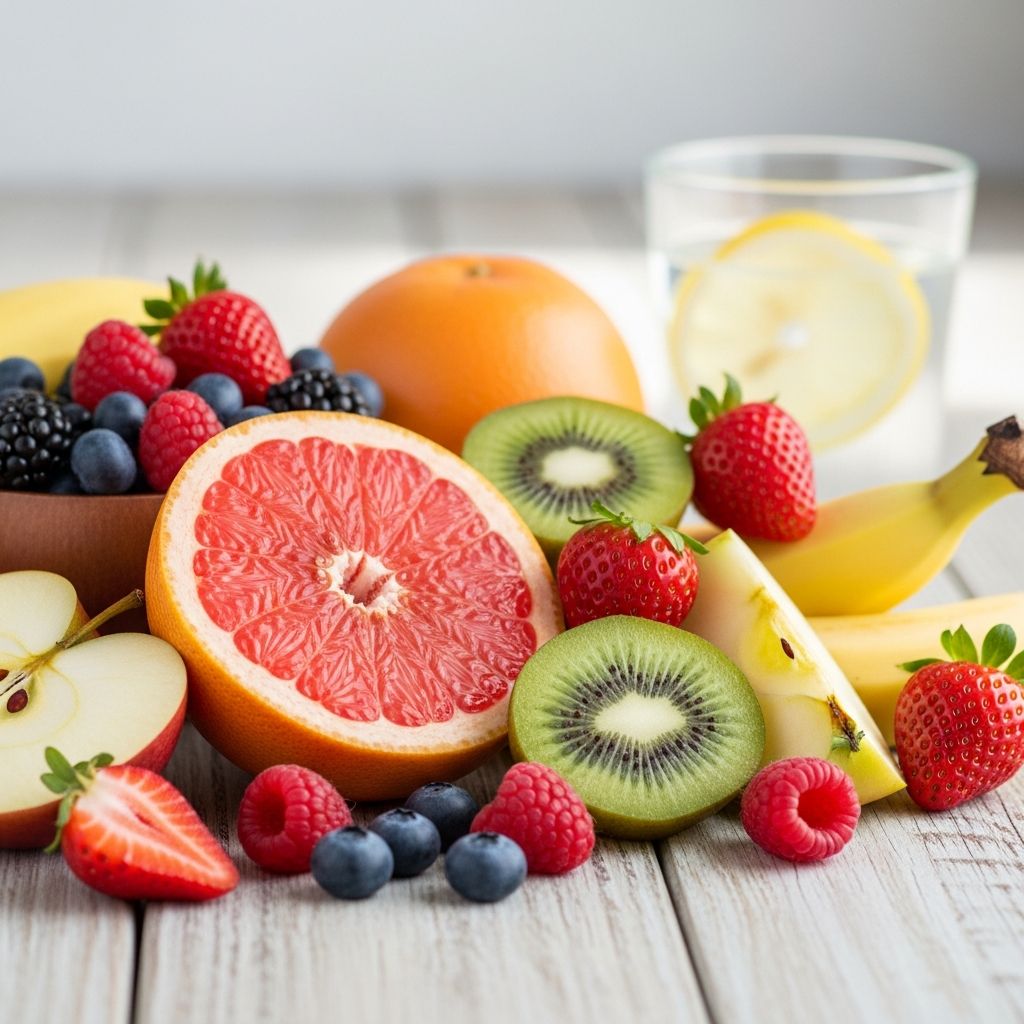
- Grapefruit: Half delivers 52 calories, 2g fiber; may lower insulin, aiding fat burn per small studies.
- Berries (Strawberries, Blueberries): 50 calories/cup, 3–4g fiber; antioxidants combat inflammation linked to obesity.
- Apples: 95 calories/medium, 4g fiber; top satiety index food, reduces appetite.
- Oranges: 62 calories/medium, 3g fiber; high vitamin C supports metabolism.
- Kiwi: 42 calories/medium, 2g fiber; enzymes aid digestion.
- Pears: 101 calories/medium, 6g fiber; linked to weight loss in cohorts.
- Watermelon: 46 calories/cup, 92% water; hydrates while filling.
Incorporate 2–3 servings daily, aiming for variety to maximize nutrients.
Fruit Promotes Fullness—Here’s How
Satiety index ranks apples and oranges highest due to fiber-water combo. Fiber prolongs gastric emptying; one study showed high-fiber meals cut appetite and intake.
Over 20 months, women eating more fiber gained less fat. Fruits’ pectin forms gels in the gut, signaling fullness via hormones like GLP-1. RCTs confirm pre-meal fruit reduces ad libitum eating by 10–20%.
Can You Eat Too Much Fruit?
Moderation is key: 2–4 servings/day fits most diets. Excess (5+ servings) may add fructose load, though whole fruit’s fiber mitigates spikes unlike soda.
For low-carb/keto, limit high-sugar fruits. Those with IBS may need low-FODMAP options like berries. RCTs show even high intakes aid weight loss in overweight individuals without adiposity gain.
| Fruit | Calories (per 100g) | Fiber (g) | Satiety Score |
|---|---|---|---|
| Apple | 52 | 2.4 | High |
| Banana | 89 | 2.6 | Medium |
| Strawberries | 32 | 2 | High |
| Grapes | 69 | 0.9 | Low |
Table compares common fruits; choose high-fiber, low-calorie options.
6 Ways to Eat More Fruit
- Pre-portion snacks: Keep washed berries or apple slices ready.
- Add to meals: Top oatmeal with berries or salad with oranges.
- Pre-meal ritual: Eat an apple before lunch to cut calories.
- Frozen treats: Blend frozen banana for ‘ice cream’.
- Smoothie base: Use low-sugar fruits; add spinach/protein.
- Swap sweets: Fruit over candy reduces intake significantly.
Fruit vs. Fruit Juice for Weight Loss
Whole fruit wins: juice lacks fiber, spiking blood sugar. One cup OJ (110 calories) equals 2–3 oranges without satiety. Studies link juice to weight gain, whole fruit to loss.
Related Stories



The Fruit Diet: Pros and Cons
Short-term fruit-only diets create deficits via low calories but risk nutrient gaps (fats, protein). Initial loss is water; unsustainable long-term. Better: balanced pattern with 2–3 fruit servings.
Pros: Easy, cheap, nutrient-rich. Cons: Hunger without protein/fat, potential GI issues.
Frequently Asked Questions (FAQs)
Does fruit make you gain weight?
No, whole fruits support weight loss or maintenance. RCTs show modest loss with increased intake.
Is fruit good for weight loss?
Yes, low-calorie, high-fiber fruits reduce intake when replacing snacks.
What fruit burns the most fat?
No single fruit ‘burns’ fat, but grapefruit, berries, apples aid via satiety/low calories.
Can I eat fruit on keto?
Limit to low-carb like berries; avoid bananas, grapes.
How much fruit per day for weight loss?
2–4 servings; more may help overweight individuals.
Does fruit juice count toward fruit intake?
No, prefer whole for fiber benefits.
This comprehensive guide draws from rigorous evidence, emphasizing sustainable habits over fads. Pair fruits with veggies, proteins for optimal results.
References
- Impact of Whole, Fresh Fruit Consumption on Energy Intake and Adiposity — O’Neil CE et al. PMC. 2019-05-29. https://pmc.ncbi.nlm.nih.gov/articles/PMC6518666/
- Does Fruit Help You Lose Weight? — Healthline Nutrition Team. Healthline. 2023-08-15. https://www.healthline.com/nutrition/fruit-and-weight-loss
- Fruit Diet for Weight Loss: Benefits, Risks + Alternatives — Knownwell Team. Knownwell. 2024-06-12. https://www.knownwell.co/blog-posts/fruit-diet-for-weight-loss-benefits-risks-alternatives
- Vegetables and Fruits — Harvard T.H. Chan School of Public Health. Harvard Nutrition Source. 2024-01-10. https://nutritionsource.hsph.harvard.edu/what-should-you-eat/vegetables-and-fruits/
Similar Articles








Read full bio of medha deb