Echocardiogram Types: 4 Key Tests And When To Use Each
Discover how echocardiograms reveal your heart's secrets through safe ultrasound imaging, from preparation to results and advanced types.
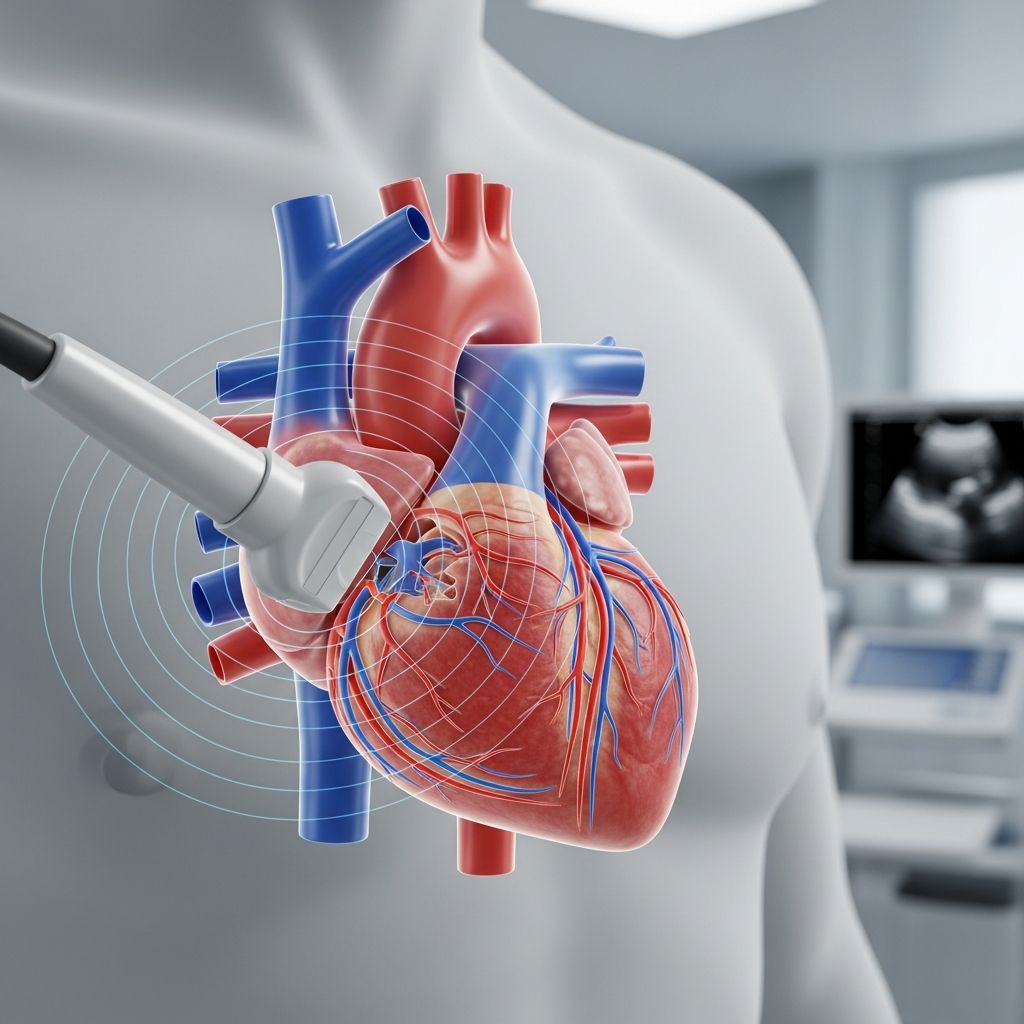
An echocardiogram, commonly called an echo, is a vital diagnostic tool that employs high-frequency sound waves to generate real-time images of the heart’s structure and function. This non-invasive procedure helps healthcare providers evaluate heart chambers, valves, walls, and blood flow without radiation exposure, making it suitable for patients of all ages, including pregnant individuals.
Why Echocardiograms Matter in Modern Cardiology
Echocardiograms play a crucial role in detecting a wide array of cardiac issues early, enabling timely interventions that can significantly improve outcomes. They provide detailed visuals of heart muscle movement, valve performance, and fluid accumulation, which are essential for managing chronic conditions and acute events.
- Identify structural abnormalities like thickened walls or enlarged chambers.
- Assess damage from prior heart attacks by examining muscle contraction patterns.
- Monitor valve function to spot narrowing (stenosis) or leakage (regurgitation).
- Evaluate blood flow dynamics to detect clots or blockages.
- Track disease progression in heart failure patients under treatment.
Common triggers for ordering an echo include persistent chest discomfort, irregular heartbeats, breathlessness, leg swelling, or unexplained fatigue. It’s also routine post-heart attack or stroke to pinpoint underlying causes.
Primary Types of Echocardiograms Explained
Several echocardiogram variants exist, each tailored to specific diagnostic needs. The choice depends on the clinical question, patient anatomy, and image clarity required.
| Type | Description | Best For |
|---|---|---|
| Transthoracic (TTE) | Standard external ultrasound via chest probe. | General heart evaluation. |
| Transesophageal (TEE) | Probe inserted via throat for internal views. | Clots, infections, or unclear TTE images. |
| Stress Echo | Combines echo with exercise or medication stress. | Detecting ischemia during activity. |
| Doppler Echo | Measures blood flow speed and direction. | Valve issues and pressure gradients. |
Transthoracic Echocardiogram: The Everyday Choice
The most frequently performed type, TTE involves a sonographer gliding a transducer over the chest after applying conductive gel. Patients lie on their side while electrodes monitor heart rhythm via ECG. Images capture chamber sizes, ejection fraction (pumping efficiency), and valve motion in motion.
Transesophageal Echocardiogram: Deeper Visibility
When chest imaging is obscured by body habitus or lung issues, TEE offers superior resolution. After throat numbing and mild sedation, a flexible probe travels down the esophagus, positioning the transducer near the heart. This excels at visualizing atrial structures, clots, or endocarditis.
Stress Echocardiograms: Testing Under Pressure
These reveal how the heart responds to exertion. Exercise versions use treadmills or bikes; pharmacological ones employ drugs like dobutamine to simulate stress. Pre- and post-stress images compare for wall motion abnormalities indicating coronary artery disease.
Advanced Doppler Techniques
Doppler enhances standard echoes by analyzing sound wave shifts from moving blood cells. Color Doppler overlays flow visuals in hues, while spectral Doppler quantifies velocities. This duo detects high pulmonary pressures or turbulent leaks.
Related Stories



Preparing for Your Echocardiogram Appointment
Preparation varies by type but is generally minimal, emphasizing comfort and accuracy.
- TTE: Wear loose clothing; no fasting needed. Avoid lotions on chest.
- TEE: Fast 6-8 hours; arrange transport due to sedation.
- Stress Echo: Skip caffeine, beta-blockers, or nitrates beforehand; wear sneakers.
Inform providers of allergies, implants, or pregnancy. Diabetics may adjust insulin timings.
Step-by-Step: What Happens During the Test
A trained sonographer conducts the exam in a dimly lit room for optimal screen viewing.
- Change into a gown and lie on an exam table, typically left side down.
- ECG electrodes and a blood pressure cuff are applied.
- Gel is spread on chest; transducer presses firmly to transmit/receive waves.
- Multiple chest positions scanned; hold breath briefly for crisp images.
- For Doppler, you’ll hear whooshing blood flow sounds.
- Test lasts 30-60 minutes; no recovery needed for TTE.
Sensations include cool gel, mild pressure, and transducer warmth. TEE may cause gagging or throat soreness post-procedure.
Safety Profile and Patient Comfort
Echocardiograms are exceptionally safe, radiation-free, and painless for most. Rare TEE risks include minor bleeding or perforation, mitigated by expert oversight. No known long-term effects from ultrasound.
Interpreting Your Echocardiogram Results
A cardiologist reviews images, generating a report on key metrics like ejection fraction (normal 50-70%), valve gradients, and chamber dimensions. Abnormal findings might prompt further tests like angiography.
- Normal: Symmetric contractions, competent valves, laminar flow.
- Abnormal: Dilated left ventricle, mitral regurgitation, elevated right pressures.
Follow-up discusses implications, from lifestyle tweaks to surgery.
Conditions Routinely Diagnosed via Echo
Echos excel in multifaceted heart assessments.
- Congenital defects like septal holes.
- Post-infarct remodeling or aneurysms.
- Pericardial effusions or tamponade.
- Pulmonary hypertension via tricuspid regurgitant jet.
- Cardiomyopathies (dilated, hypertrophic).
- Endocarditis vegetations.
Echocardiograms in Ongoing Heart Management
Beyond diagnosis, serial echos gauge treatment efficacy, such as valve repairs or chemotherapy cardiotoxicity. They guide device implants like pacemakers by measuring dyssynchrony.
FAQs About Echocardiograms
Q: Is an echocardiogram painful?
A: No, it’s comfortable; only mild pressure from the probe.
Q: How long do results take?
A: Preliminary same-day; full report in days.
Q: Can I drive after TEE?
A: No, sedation impairs; get a ride.
Q: Are echoes safe during pregnancy?
A: Yes, ultrasound poses no risk.
Q: What if images are unclear?
A: TEE or contrast agents enhance visibility.
Advancements Shaping Future Echocardiography
3D/4D imaging, AI-assisted analysis, and portable devices promise even greater precision and accessibility, revolutionizing point-of-care cardiac evaluations.
References
- Echocardiogram – Penn Medicine — Penn Medicine. 2023. https://www.pennmedicine.org/treatments/echocardiogram
- Echocardiogram | Beth Israel Deaconess Medical Center — BIDMC. 2024. https://bidmc.org/services/heart/tests-diagnosis/cardiac-imaging-monitoring/echocardiogram
- What to Expect During an Echocardiogram – WebMD — WebMD. 2024-02-15. https://www.webmd.com/heart-disease/diagnosing-echocardiogram
- What Is an Echocardiogram and Why Is It Done? — The CVIG. 2023. https://www.thecvig.com/blog/1356886-what-is-an-echocardiogram-and-why-is-it-done/
- What Is an Echocardiogram? – American Heart Association — American Heart Association. 2023. https://www.heart.org/-/media/files/health-topics/answers-by-heart/what-is-echocardiography.pdf
- Echocardiogram: Types & What To Expect – Cleveland Clinic — Cleveland Clinic. 2024-01-10. https://my.clevelandclinic.org/health/diagnostics/16947-echocardiogram
Similar Articles








Read full bio of medha deb