Undefined Ecthyma: Diagnosis, Treatment, And Prevention Guide
Deep skin infection forming crusted ulcers: causes, symptoms, risks, and effective treatments explained.
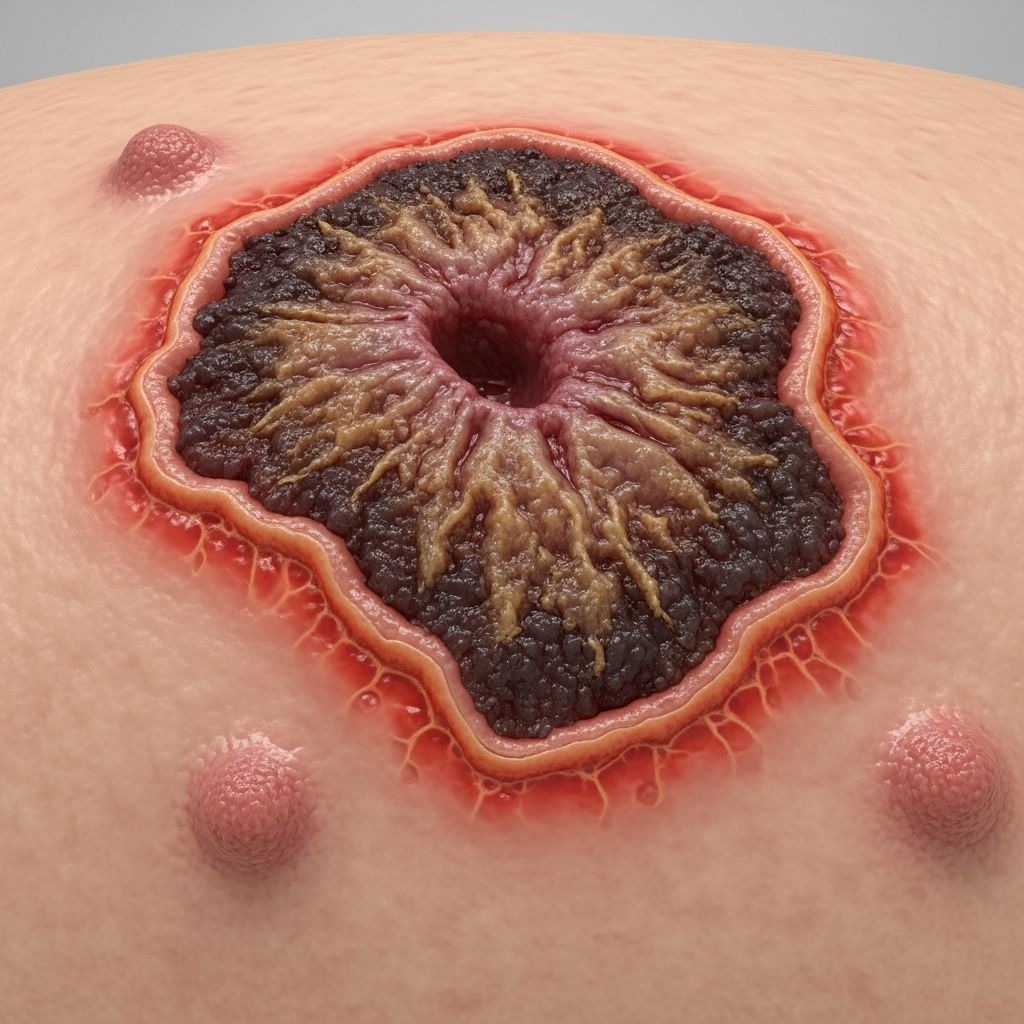
Ecthyma is a bacterial skin infection characterized by the formation of crusted sores that develop into deep ulcers penetrating the dermis. It represents a more invasive form of impetigo, primarily caused by Streptococcus pyogenes (group A Streptococcus) and Staphylococcus aureus, including methicillin-resistant strains (MRSA).
Introduction
Ecthyma arises when bacteria invade damaged skin, leading to deeper tissue destruction compared to superficial impetigo. Unlike standard impetigo, which is confined to the epidermis, ecthyma erodes into the dermis, forming punched-out ulcers covered by thick, adherent crusts. This condition is often seen in areas prone to trauma or moisture, such as the lower extremities. Prompt recognition and treatment are crucial to prevent scarring and systemic spread, particularly in vulnerable populations.
The infection typically begins as a small vesicle or pustule on erythematous skin, evolving rapidly into a necrotic ulcer. Healing often results in scar formation, distinguishing it from milder skin infections. Ecthyma gangrenosum, a distinct but related entity, involves Pseudomonas aeruginosa in immunocompromised patients and features hemorrhagic bullae progressing to gangrenous ulcers.
Demographics
Ecthyma affects individuals of all ages, sexes, and races, but certain groups are at higher risk. Children, particularly in crowded or unhygienic environments, older adults, and immunocompromised patients—including those with diabetes, neutropenia, malignancy, HIV, or on immunosuppressive therapy—are disproportionately impacted.
Prevalence is higher in tropical climates, rural settings with poor sanitation, and among homeless populations. Community outbreaks may occur in schools or daycare centers due to close contact. Immunosuppression from medications like corticosteroids or chemotherapy further elevates susceptibility.
Causes
The primary causative agents are Streptococcus pyogenes and Staphylococcus aureus. These bacteria enter through breaks in the skin barrier, such as insect bites, abrasions, or eczematous lesions. Risk factors include:
- Poor hygiene and overcrowding
- Immunosuppression (e.g., diabetes, HIV)
- Underlying skin conditions like scabies, pediculosis, or dermatitis
- Malnutrition
- Warm, humid environments
- Recent viral infections weakening skin integrity
In rare cases, ecthyma-like lesions stem from other pathogens, including Pseudomonas in ecthyma gangrenosum.
Signs and symptoms
Lesions typically start as vesicles or pustules on inflamed skin, quickly forming grayish-yellow crusts. Beneath the crust lies a shallow ulcer with a punched-out appearance. Common sites include buttocks, thighs, legs, ankles, and feet in children; lower legs in adults. Pain, pruritus, and regional lymphadenopathy may occur.
Symptoms progress as follows:
- Early stage: Vesicle or pustule (1-2 mm) on red, tender skin.
- Crust formation: Thick, adherent eschar develops within 24-48 hours.
- Ulceration: Removal of crust reveals a 1-3 cm ulcer with purulent base.
- Healing: Slow resolution with hyperpigmentation or scarring (2-4 weeks).
In darker skin types, erythema may be subtle, with postinflammatory hyperpigmentation prominent.
Complications
Untreated ecthyma can lead to:
- Permanent scarring and pigment changes
- Bacteremia or sepsis, especially in immunocompromised
- Cellulitis or lymphangitis
- Glomerulonephritis from streptococcal strains
- Secondary infections
Rarely, extensive disease mimics necrotizing fasciitis. Ecthyma gangrenosum signals severe systemic infection with high mortality if untreated.
Diagnosis
Diagnosis is clinical, based on characteristic lesions. Swabs from beneath debrided crusts guide culture and sensitivity. Gram stain reveals gram-positive cocci. Skin biopsy is reserved for atypical cases or ecthyma gangrenosum suspects, showing dermal necrosis with bacterial invasion.
Related Stories



Differential diagnoses include:
| Condition | Key Features |
|---|---|
| Impetigo | Superficial, no dermal involvement |
| Herpes zoster | Dermatomal, vesicular clusters |
| Pyoderma gangrenosum | Rapidly enlarging, painful ulcers |
| Ecthyma gangrenosum | Hemorrhagic bullae, Pseudomonas |
| Spider bite | Central necrosis, history of bite |
Treatment
Treatment escalates with severity:
General measures
- Hygiene: Frequent handwashing, short nails, clean clothing.
- Crust removal: Soak with vinegar compress (1/2 cup white vinegar in 1L water) 10 min several times daily.
- Treat underlying conditions (e.g., scabies).
Topical therapy (localized disease)
Apply mupirocin, fusidic acid, or antiseptics (povidone-iodine, hydrogen peroxide cream, Manuka honey) 3-4 times daily after crust removal. Continue 3-5 days post-healing.
Systemic antibiotics (extensive/slow response)
Oral penicillins like dicloxacillin or flucloxacillin (active against both pathogens). Alternatives: cephalexin, clindamycin for MRSA. Duration: 7-14 days or longer.
In hospitalized cases or ecthyma gangrenosum: IV anti-pseudomonal agents (e.g., piperacillin-tazobactam).
Prevention
- Avoid skin trauma
- Moisturize dry skin
- Control chronic conditions
- Isolate cases in outbreaks
Outcome
With treatment, most resolve in 2-4 weeks, though scarring is common. Recurrence is possible without addressing risk factors. Monitor for complications in high-risk patients.
Frequently Asked Questions
Q: Is ecthyma contagious?
A: Yes, via direct contact or fomites. Practice strict hygiene.
Q: Can ecthyma be treated at home?
A: Mild cases with topical agents yes; extensive require medical evaluation.
Q: Does ecthyma always scar?
A: Often, but early treatment minimizes scarring.
Q: What if I’m diabetic and get ecthyma?
A: Higher risk of spread; seek prompt antibiotics and glucose control.
Q: How to differentiate ecthyma from impetigo?
A: Ecthyma ulcers penetrate dermis; impetigo is superficial honey-crusted.
References
- Ecthyma — DermNet NZ. 2023. https://dermnetnz.org/topics/ecthyma
- Adult female with a painful and pruritic lower extremity skin lesion — PMC (Wiley). 2023-05-01. https://pmc.ncbi.nlm.nih.gov/articles/PMC10189074/
- Ecthyma gangrenosum — DermNet NZ. 2023. https://dermnetnz.org/topics/ecthyma-gangrenosum
- Impetigo — DermNet NZ. 2023. https://dermnetnz.org/topics/impetigo
- Bacterial Skin Infections — DermNet NZ. Reviewed by Dr Ian Coulson. 2023. https://dermnetnz.org/topics/bacterial-skin-infections
Similar Articles








Read full bio of Sneha Tete