Eczema Pathology: Understanding Skin Inflammation
Explore the histological patterns and cellular mechanisms underlying eczema and dermatitis conditions.
Introduction to Eczema Pathology
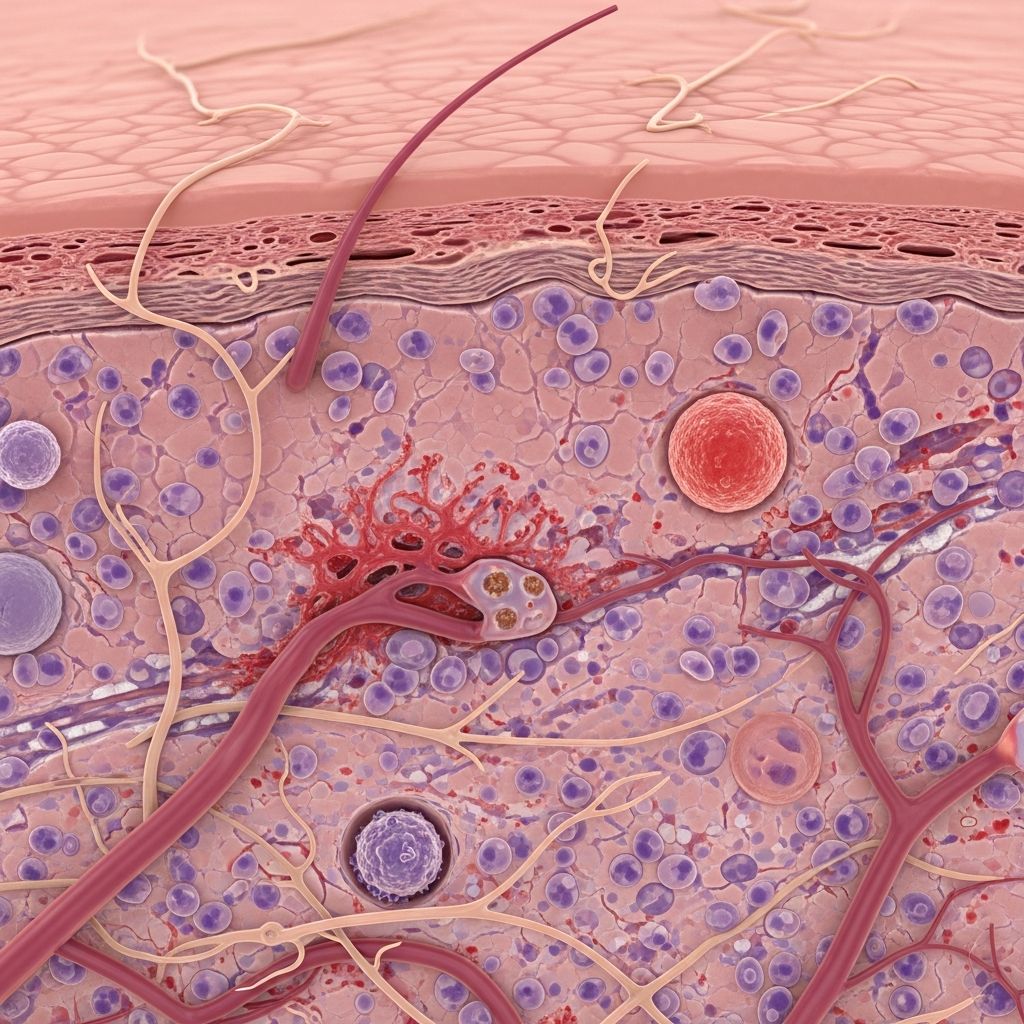
Eczema is a prevalent skin condition characterized by multiple clinical presentations and a distinctive histological pattern known as spongiotic tissue reaction. The pathology of eczema represents a dynamic inflammatory process involving complex interactions between the epidermis, dermis, and immune system. Spongiotic dermatitis is not a static condition but rather a fluid pathological process where vesicles continuously form and resolve at varying epidermal levels. Understanding the histopathological features of eczema is essential for accurate diagnosis and treatment planning, particularly when clinical presentation remains ambiguous after initial evaluation.
The Dynamics of Spongiotic Dermatitis
Spongiosis forms the foundation of eczematous inflammation and represents the hallmark histological finding across eczema variants. This dynamic process involves intercellular edema that creates characteristic changes in epidermal architecture. The pathological mechanism includes widening of intercellular spaces, disruption of desmosomes (the adhesive junctions between keratinocytes), and formation of microvesicles. Importantly, spongiotic dermatitis is continuously evolving, with vesicles appearing and disappearing at different epidermal depths, making single point-in-time histological examination potentially variable.
Infiltration of the epidermis with lymphocytes, a process termed exocytosis, commonly accompanies spongiosis. Above areas of spongiosis, parakeratosis develops—a retention of nuclei in the stratum corneum—likely resulting from accelerated keratinocyte movement toward the skin surface. Droplets of plasma accumulate within parakeratotic mounds, reflecting the inflammatory state of the skin barrier.
Acute Spongiotic Dermatitis
Acute spongiosis represents the most severe manifestation of spongiotic inflammation. This form is typified by massive intercellular edema throughout the epidermis, causing pronounced widening of intercellular spaces and disruption of desmosomes. The edema leads to formation of intraepidermal microvesicles filled with proteinaceous fluid containing lymphocytes and histiocytes. With sufficient vesiculation intensity, these intraepidermal vesicles may progress to become subepidermal, indicating severe barrier disruption.
In allergic and contact dermatitis scenarios, eosinophilic spongiosis becomes a prominent histological feature, with eosinophils infiltrating the epidermis alongside lymphocytes. This eosinophil predominance distinguishes allergic reactions from other spongiotic patterns and provides diagnostic information regarding the underlying immunological mechanism.
Subacute Spongiotic Dermatitis
Subacute spongiotic dermatitis represents the most frequently encountered form in clinical practice. This pattern exhibits mild to moderate spongiosis and exocytosis of inflammatory cells, distinguishing it from the more severe acute variant. Additional hallmark features include irregular acanthosis (epidermal thickening) and parakeratosis, representing transitional changes between acute and chronic disease states.
Dermal involvement in subacute eczema includes a superficial dermal perivascular infiltrate composed primarily of lymphocytes and histiocytes. Endothelial cell swelling and papillary dermal edema contribute to the overall inflammatory landscape, creating the clinical appearance of erythema and induration characteristic of active eczematous lesions.
Irritant Contact Dermatitis
Irritant contact dermatitis develops following exposure to irritant substances such as water, detergents, and various chemicals, with hand involvement being particularly common. The histological features of irritant dermatitis differ notably from allergic contact dermatitis, displaying characteristic patterns of mild spongiosis, epidermal cell necrosis, and neutrophilic infiltration.
Early lesions of irritant dermatitis show infiltration of the epidermis by neutrophils, creating a distinctive inflammatory pattern. More acute and severe examples may demonstrate full-thickness epidermal necrosis, reflecting the cytotoxic nature of irritant-induced inflammation. This neutrophil-predominant infiltration distinguishes irritant reactions from allergic contact dermatitis, which typically shows lymphocytic rather than neutrophilic patterns.
Related Stories



Chronic Eczematous Changes
Chronic eczema undergoes progressive histological transformation as the condition persists over time. The acute inflammatory features gradually diminish while lichenification—thickening and hardening of the skin—becomes increasingly prominent. The epidermis demonstrates progressive thickening (acanthosis), with the granular layer becoming more prominent and the stratum corneum showing increased thickness and hyperkeratosis.
Chronic lesions exhibit reduced spongiosis compared to acute phases, reflecting adaptation of the inflamed tissue. Dermal changes include persistent but less intense perivascular infiltration of lymphocytes and histiocytes, along with mild to moderate papillary dermal edema. The clinical transformation from acute weeping dermatitis to chronic scaly, thickened plaques mirrors these histological progressions.
Discoid Eczema (Nummular Dermatitis)
Discoid eczema, also termed nummular dermatitis, represents a particularly chronic eczema variant characterized clinically by coin-shaped patches of papules or papulovesicles. The histological features vary significantly with disease chronicity, reflecting the dynamic nature of this condition.
Early lesions of discoid eczema demonstrate moderate spongiosis with mild acanthosis and exocytosis of inflammatory cells. As the condition progresses chronically, the degree of acanthosis increases substantially, with additional features including scale-crust formation above the thickened epidermis. The dermal component shows a perivascular inflammatory infiltrate typical of chronic eczematous disease.
More chronic presentations exhibit progressive psoriasiform hyperplasia of the epidermis with reduced spongiosis, creating a histological appearance that may resemble psoriasis. Dermal changes remain relatively mild, with slight papillary dermal edema and a superficial perivascular infiltrate of lymphocytes, histiocytes, and neutrophils. Clinical correlation is essential in discoid eczema, as special stains to exclude fungal infection (tinea corporis) should be performed, since the coin-shaped morphology may suggest mycotic etiology.
The Id Reaction (Autoeczematization)
The id reaction, or autoeczematization, describes a distinctive phenomenon wherein generalized eczema develops in response to a localized dermatosis or infection at a distant anatomical site. This interesting pattern demonstrates the systemic nature of immune responses in eczematous disease.
Clinically, the id reaction presents with polymorphous morphology, including pompholyx-like eruptions affecting hands and feet or more generalized papular patterns. Histologically, the id reaction often mimics the initially localized dermatosis or demonstrates a spongiotic reaction pattern with variable intensity. Mild dermal edema and lymphocytic infiltration characterize the microscopic appearance, reflecting a generalized immune response to distant cutaneous pathology.
Dermal Inflammatory Infiltrate
The dermal component of eczematous inflammation represents a critical aspect of the pathological process. Dermal changes across eczema variants include varying degrees of edema and superficial perivascular infiltrates. The typical inflammatory cell composition includes lymphocytes, histiocytes, and occasional neutrophils and eosinophils, with the specific cell types varying based on the type and stage of eczematous disease.
Perivascular distribution of inflammatory cells indicates that dermal blood vessels serve as the primary source of infiltrating immune cells. Endothelial cell activation and increased vascular permeability contribute to both the cellular infiltration and edema observed in dermal tissue. The superficial location of this infiltrate explains the clinical features of erythema and induration characteristic of eczematous lesions.
Histopathological Features Summary Table
| Eczema Type | Primary Features | Inflammatory Pattern | Epidermal Changes |
|---|---|---|---|
| Acute Spongiotic | Massive intercellular edema, microvesicles | Lymphocytes, histiocytes, ± eosinophils | Severe acanthosis, parakeratosis |
| Subacute Spongiotic | Mild to moderate spongiosis and exocytosis | Lymphocytic infiltrate | Irregular acanthosis, parakeratosis |
| Irritant Contact | Mild spongiosis, cell necrosis | Neutrophil-predominant infiltrate | Full-thickness necrosis in severe cases |
| Discoid/Nummular | Variable with chronicity | Lymphohistiocytic infiltrate | Progressive acanthosis, psoriasiform pattern chronically |
| Id Reaction | Variable, mimics initial dermatosis | Mild lymphocytic infiltrate | Spongiotic pattern with variable intensity |
The Role of Parakeratosis and Scale Formation
Parakeratosis—the retention of keratinocyte nuclei in the stratum corneum—represents an important histological marker of active inflammation. This finding indicates disrupted normal epidermal maturation and acceleration of keratinocyte transit time. Parakeratotic mounds accumulate proteinaceous plasma droplets, creating the clinical scale observed in eczematous lesions. The presence and intensity of parakeratosis correlates with the activity and severity of the inflammatory process, making it a useful diagnostic indicator.
Frequently Asked Questions
Q: What is the primary histological hallmark of eczema?
A: The primary histological hallmark of eczema is spongiosis, characterized by intercellular edema of the epidermis with widening of intercellular spaces and disruption of desmosomes.
Q: How does acute spongiotic dermatitis differ from subacute spongiotic dermatitis?
A: Acute spongiotic dermatitis shows massive intercellular edema with prominent microvesicles, while subacute spongiotic dermatitis displays mild to moderate spongiosis and exocytosis with irregular acanthosis and parakeratosis.
Q: What distinguishes irritant contact dermatitis histologically from other eczema types?
A: Irritant contact dermatitis is characterized by mild spongiosis, epidermal cell necrosis, and neutrophil infiltration rather than the lymphocytic predominance seen in other eczema variants.
Q: Why might special stains be necessary in discoid eczema?
A: Special stains, particularly PAS staining, help exclude fungal infection (tinea corporis) because the coin-shaped morphology of discoid eczema may clinically resemble fungal lesions.
Q: What is the id reaction and how does it relate to eczema pathology?
A: The id reaction is a generalized eczematous eruption occurring in response to a localized distant dermatosis or infection, demonstrating that systemic immune responses can trigger eczematous inflammation.
Q: How do histological features change as eczema becomes chronic?
A: Chronic eczema shows reduced spongiosis, increased acanthosis (epidermal thickening), lichenification, and progressive psoriasiform epidermal hyperplasia with persistent but less intense dermal inflammation.
References
- Atopic Dermatitis Complicated by Recurrent Eczema Herpeticum Is Associated with Dysregulation of Genes Involved in Epidermal Differentiation and Antimicrobial Function — National Center for Biotechnology Information (NCBI). 2024. https://pmc.ncbi.nlm.nih.gov/articles/PMC11239700/
- Eczema Pathology — DermNet. https://dermnetnz.org/topics/eczema-pathology
- Histopathologic Diagnosis of Dermatitis — DermNet. https://dermnetnz.org/topics/guidelines-for-the-diagnosis-and-assessment-of-eczema
- Atopic Dermatitis (Atopic Eczema): Symptoms and Causes — DermNet. https://dermnetnz.org/topics/atopic-dermatitis
Similar Articles








Read full bio of medha deb