Eczema Vs Psoriasis: Key Differences, Symptoms, Treatments
Unravel the distinctions between eczema and psoriasis: symptoms, causes, treatments, and expert insights for better skin health management.
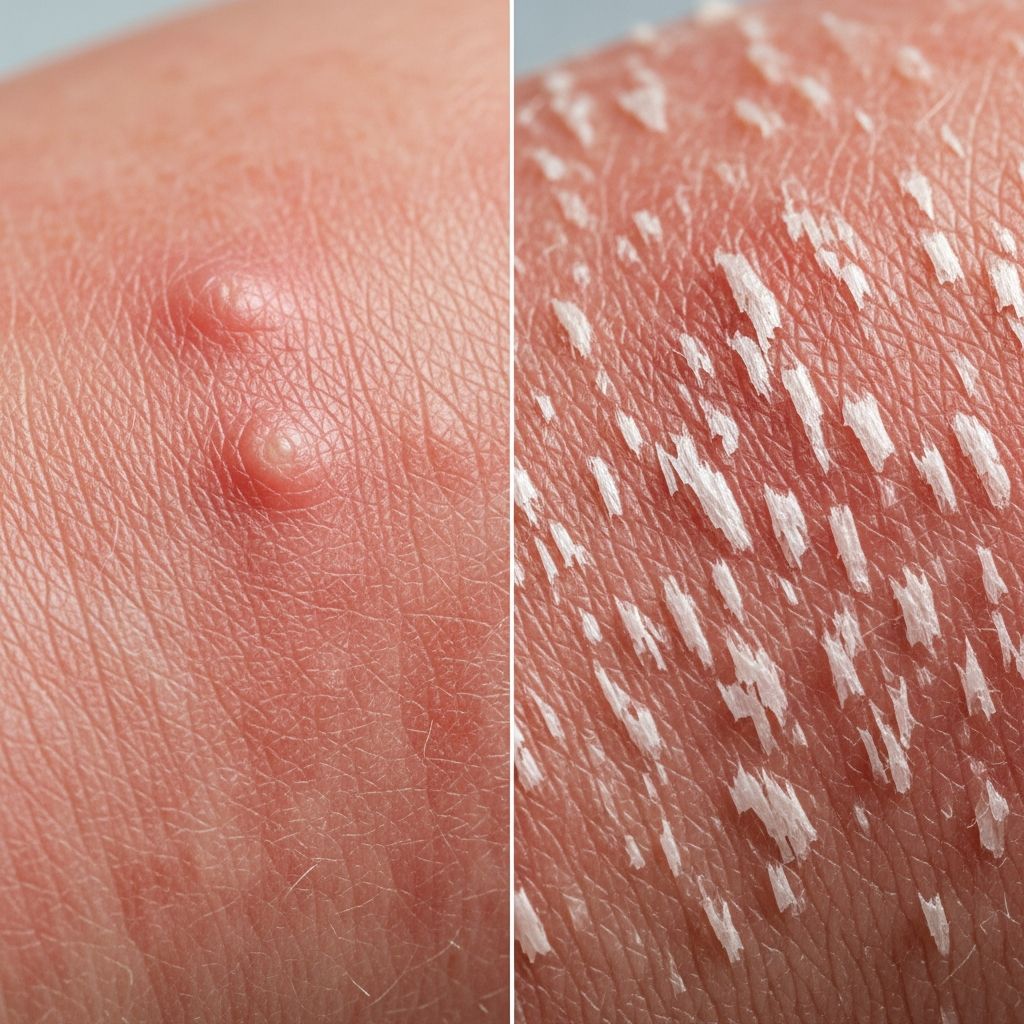
Eczema and psoriasis are two prevalent chronic skin conditions that frequently cause confusion due to their overlapping symptoms like red, itchy, and inflamed skin. However, they stem from distinct underlying mechanisms: eczema often arises from environmental triggers and genetic predispositions leading to a compromised skin barrier, while psoriasis is an autoimmune disorder driving rapid skin cell turnover.
What Is Eczema?
Eczema, also known as atopic dermatitis in its most common form, is an inflammatory skin condition characterized by dry, itchy, and inflamed patches that can appear anywhere on the body. It affects over 30 million Americans, predominantly children, with symptoms often starting before age 5 and potentially improving or resolving by adolescence. The condition results from a defective skin barrier that allows moisture loss and irritant entry, exacerbated by allergic responses and Th2 immune pathway dominance.
On lighter skin tones, eczema manifests as pink or red rashes with bumps, oozing, or crusting; on darker tones, it appears as dark brown, gray, or purple patches with dry, small bumps. These patches typically have ill-defined borders and intense itching, especially at night, which can disrupt sleep. Common sites include skin folds, face, neck, front of elbows, and behind knees.
What Is Psoriasis?
Psoriasis is a systemic autoimmune disease where the immune system mistakenly attacks healthy skin cells, causing them to multiply up to 10 times faster than normal—maturing in 3-4 days instead of 28-30. This leads to thick, scaly plaques buildup. It impacts about 8 million Americans, primarily adults onset after age 18, with over 125 million cases worldwide.
Plaques are well-demarcated, raised, thick red areas covered in silvery-white scales, varying by skin tone: red/white/gray on light skin, purple/ashen on darker tones. Locations favor elbows, knees, scalp, lower back, and nails; it may cause joint stiffness (psoriatic arthritis in 30% cases). Itching is milder, often burning or stinging, unlike eczema’s intense itch.
Similarities Between Eczema and Psoriasis
Both conditions present with dry, red, inflamed, itchy skin, impacting quality of life physically and emotionally. They are chronic, non-contagious, involve immune dysregulation (Th2 for eczema, Th1/Th17 for psoriasis), and flare with triggers like stress or infections. Prevalence is high, with genetic links, and both benefit from moisturizers and anti-inflammatories.
- Dry, scaly, itchy rashes
- Chronic inflammation
- Trigger-induced flares
- No cure; managed long-term
Differences Between Eczema and Psoriasis
While appearances overlap superficially, key distinctions aid diagnosis. Eczema stems from barrier dysfunction and allergies; psoriasis from hyperproliferation via faulty immunity.
| Aspect | Eczema | Psoriasis |
|---|---|---|
| Appearance | Ill-defined red/dry patches, oozing, crusting; bumps on dark skin | Well-defined thick plaques with silvery scales; raised |
| Itch Intensity | Intense, worse at night | Mild burning/stinging |
| Location | Skin folds, face, inner elbows/knees | Extensor surfaces: elbows, knees, scalp |
| Age of Onset | Children (<5 years) | Adults (>18 years) |
| Prevalence | 30M+ US (more kids) | 8M US (more adults) |
| Other Symptoms | Allergies, asthma link | Joint pain, nail changes |
Related Stories



Symptoms of Eczema
- Intense pruritus disrupting sleep
- Dry, bumpy, inflamed rashes
- Oozing/weeping in acute flares
- Thickened skin (lichenification) chronically
- Associated with hay fever/asthma
Symptoms vary by type (7+ exist, e.g., dyshidrotic, nummular) and skin tone.
Symptoms of Psoriasis
- Thick, silvery-scaled plaques
- Mild itch or soreness
- Pitted nails, scalp involvement
- Joint swelling/stiffness (psoriatic arthritis)
- Auspidz sign (pinpoint bleeding post-scale removal)
Five types: plaque (most common), guttate, inverse, pustular, erythrodermic.
Causes and Triggers
Eczema Causes: Genetic mutations (filaggrin gene impairing barrier), allergies, irritants, microbes. Triggers: soaps, pollen, stress, weather.
Psoriasis Causes: Genetic (HLA-Cw6), T-cell overactivation. Triggers: stress (40% flares), streptococcal infections, skin trauma (Koebner), alcohol, smoking.
Risk Factors
- Eczema: Family history of atopy, urban living, early antibiotic use
- Psoriasis: Family history (30% risk if parent affected), obesity, smoking
Both worsened by cold/dry air.
Diagnosis
No single test; dermatologists use clinical exam, history, biopsy if needed. Eczema: flexible borders, weepy; psoriasis: sharp plaques, scales. Dermoscopy or Wood’s lamp aids. Rule out overlaps (1.4% kids have both).
Treatment Options
No cures; focus on symptom control, flare prevention.
Eczema Treatments
- Moisturizers (ceramide-based) daily
- Topical corticosteroids (hydrocortisone mild; stronger Rx)
- Calcineurin inhibitors (tacrolimus)
- Phototherapy (UVB)
- Biologics (dupilumab for severe)
- Wet wraps, bleach baths for infection
Psoriasis Treatments
- Topical: corticosteroids, vitamin D analogs (calcipotriene), retinoids
- Phototherapy (NB-UVB, excimer laser)
- Systemics: methotrexate, cyclosporine
- Biologics: TNF/IL-17/IL-23 inhibitors (etanercept, secukinumab)
- Lifestyle: trigger avoidance
Both: identify/avoid triggers, gentle skincare.
When to See a Doctor
Seek care for widespread rash, infection signs (pus, fever), sleep-disrupting itch, joint pain, failed OTC relief. Early intervention prevents complications like scarring or psoriatic arthritis.
Living With Eczema or Psoriasis
Adopt routines: daily emollients, fragrance-free products, stress management (yoga/meditation), healthy diet, humidity control. Support groups aid emotional health. Customized plans from dermatologists optimize outcomes.
Frequently Asked Questions (FAQs)
What is the main difference between eczema and psoriasis?
Eczema features ill-defined itchy patches from barrier issues; psoriasis shows defined scaly plaques from rapid cell growth.
Can you have both eczema and psoriasis?
Rare (1.4% in kids); possible but requires specialist confirmation.
Is eczema or psoriasis worse?
Subjective; psoriasis often more visible/painful with systemic risks; eczema intensely itchy.
Do eczema and psoriasis go away?
Eczema may remit in kids; psoriasis lifelong but manageable.
How are they treated similarly?
Topicals (steroids), moisturizers, phototherapy for both.
References
- The Difference between Eczema and Psoriasis — Forefront Dermatology. 2023. https://forefrontdermatology.com/difference-eczema-psoriasis/
- Psoriasis vs. eczema: Differences in symptoms and treatments — Medical News Today. 2023-05-24. https://www.medicalnewstoday.com/articles/315749
- Eczema vs. Psoriasis: Similarities, Differences and Treatments — National Eczema Association. 2024. https://nationaleczema.org/blog/eczema-or-psoriasis/
- Psoriasis vs. Eczema: Key Differences, Triggers, and Treatment — Altitude Dermatology. 2023. https://www.altitudedermatology.com/blog-post/eczema-vs-psoriasis
- Psoriasis: What It Is, Symptoms, Causes, Types & Treatment — Cleveland Clinic. 2023-11-21. https://my.clevelandclinic.org/health/diseases/6866-psoriasis
Similar Articles








Read full bio of Sneha Tete