Distinguishing Eczema from Psoriasis: A Clinical Guide
Learn the key clinical distinctions between two commonly confused skin conditions.
Chronic skin conditions affect millions of individuals worldwide, with two of the most commonly misdiagnosed being eczema and psoriasis. While both conditions present with similar surface characteristics—dry, irritated, and inflamed skin—their underlying mechanisms, treatment approaches, and triggers differ significantly. Proper identification is essential for receiving appropriate medical care and managing symptoms effectively. This comprehensive guide explores the fundamental differences between these conditions, helping individuals recognize which may be affecting their skin.
Understanding the Underlying Nature of Each Condition
Eczema and psoriasis originate from distinctly different physiological processes. Eczema, or atopic dermatitis, is characterized by a compromised skin barrier function that allows moisture to escape and irritants to penetrate the epidermis. This condition often develops as part of the “atopic triad,” alongside allergic rhinitis and asthma, suggesting a genetic predisposition toward allergic responses. The immune system in eczema sufferers overreacts to environmental triggers, causing inflammation that manifests as visible skin changes.
Psoriasis, by contrast, is an autoimmune condition where skin cells multiply at an abnormally rapid rate. In healthy skin, cells complete their lifecycle over approximately 28 days; in psoriasis, this process accelerates dramatically to just 3-7 days. This rapid turnover causes cells to accumulate on the skin surface, creating the characteristic thick, scaly appearance. The condition results from the immune system malfunctioning, causing it to attack healthy skin cells as though they were foreign invaders.
Comparative Analysis of Symptom Presentation
Intensity and Character of Itching
One of the most distinguishing features between these conditions involves the sensation they produce. Eczema typically causes intense, sometimes unbearable itching that can disrupt sleep and daily functioning. The itching is so severe that many individuals scratch until their skin bleeds, creating secondary infections and further damage. This “itch-scratch-itch” cycle perpetuates the condition, making management challenging.
Psoriasis, while still uncomfortable, presents a milder itching sensation often accompanied by burning or stinging sensations. Some individuals with psoriasis experience soreness or pain related to cracked skin rather than the primary sensation of itching. This distinction in sensory experience can serve as a valuable diagnostic clue when combined with other observations.
Visual Characteristics and Scaling Patterns
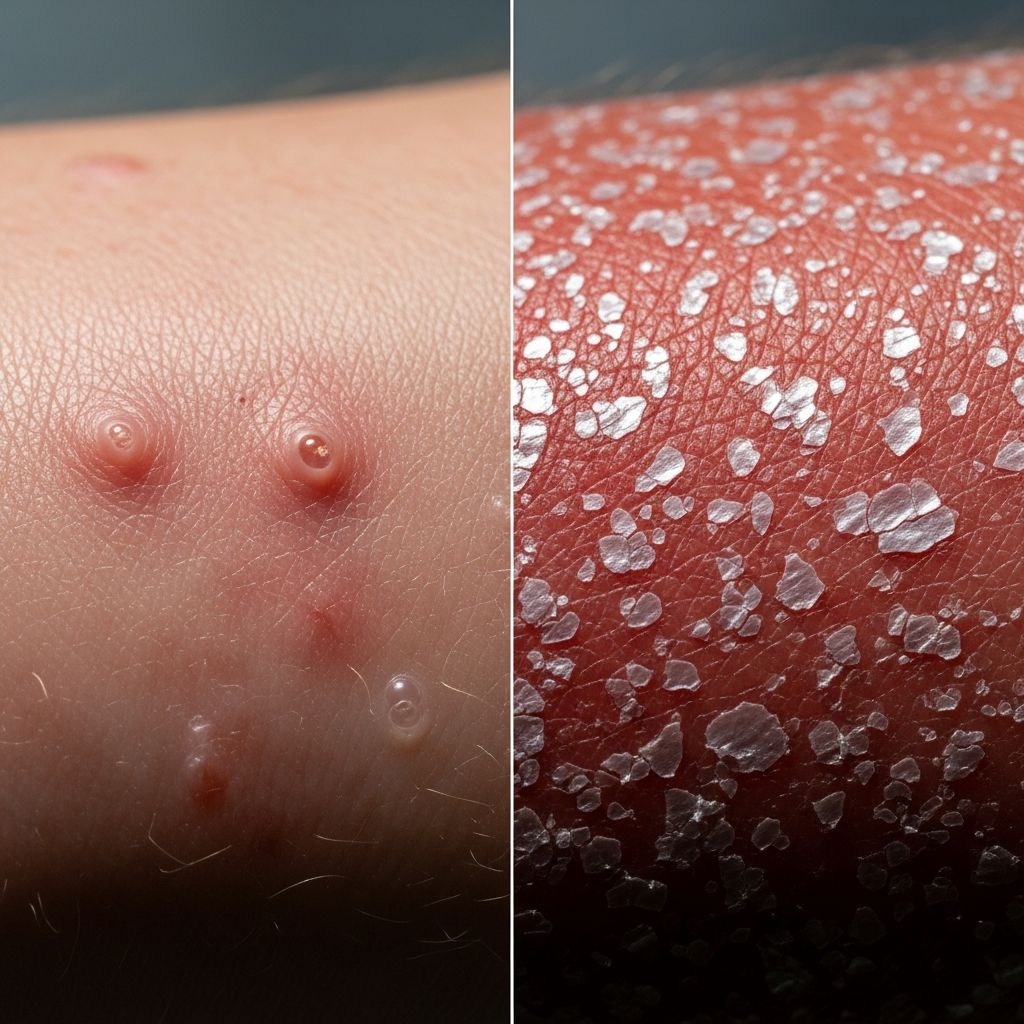
The appearance of skin lesions differs markedly between conditions. Eczema typically manifests as red, inflamed patches that may appear swollen and raw. The skin often develops a rough, leathery texture, particularly in chronic cases. In some instances, small fluid-filled bumps emerge that may ooze clear liquid before crusting over. The appearance varies by skin tone, with lighter skin displaying red rashes and darker skin tones showing grayish or darker discoloration.
Psoriasis creates thick, raised plaques with well-defined borders covered in silvery-white or gray scales. The clarity of these boundaries distinguishes psoriatic lesions from the less-defined borders typical of eczema. The buildup of dead skin cells creates a noticeably thicker, more inflamed appearance compared to eczematous rashes. When scales are removed, the skin underneath is typically red and inflamed.
Related Stories



Anatomical Distribution Patterns
The body areas affected by each condition follow distinct patterns that aid in differentiation. Eczema predominantly affects skin folds and creased areas, particularly the inner elbows, behind the knees, on the face, hands, feet, and neck. This preference for moist, protected areas relates to the condition’s connection to skin barrier dysfunction and moisture retention.
Psoriasis, conversely, tends to develop on the extensor surfaces and outer areas of the body. The elbows, knees, scalp, and lower back are common sites. Psoriasis can also affect less typical locations including the genital region, hands, feet, and nails. Additionally, psoriasis uniquely impacts joints, causing psoriatic arthritis, and can affect the eyes, resulting in uveitis.
| Characteristic | Eczema | Psoriasis |
|---|---|---|
| Primary Location | Skin folds (elbows, knees, neck, face) | Extensor surfaces (elbows, knees, scalp, back) |
| Appearance | Red, inflamed, sometimes oozing | Thick, silvery-scaled plaques |
| Border Definition | Indistinct, blurred edges | Well-defined, sharp boundaries |
| Primary Sensation | Intense itching | Mild itching with burning/stinging |
| Typical Onset Age | Infancy or childhood | Adolescence or adulthood |
Age of Onset and Developmental Patterns
Eczema typically emerges in infancy or early childhood, with many cases presenting before age five. While the condition can persist into adulthood, its prevalence is highest among pediatric populations. In some individuals, eczema may improve or resolve with age.
Psoriasis most commonly develops during adolescence or adulthood, though children can certainly develop the condition. The onset in adulthood distinguishes it from the earlier presentation typical of eczema. This age-of-onset difference provides valuable diagnostic information when evaluating skin conditions.
Triggering Factors and Environmental Influences
Understanding what initiates or worsens symptoms provides insight into each condition’s nature. Eczema flares are typically triggered by external irritants such as soaps, detergents, fragrances, certain fabrics, and environmental allergens. Stress, dry air, and rapid temperature changes also exacerbate the condition. The external trigger nature reflects the condition’s origin in skin barrier dysfunction.
Psoriasis flares stem primarily from internal factors including stress, infections, hormonal changes, and certain medications. While stress is a universal trigger, bacterial infections—particularly streptococcal throat infections—commonly precede or worsen psoriatic episodes. Some research suggests viral factors and specific fungi may also contribute to disease development.
Scalp Involvement: A Special Consideration
Both conditions can affect the scalp, but manifestations differ. Eczema on the scalp, sometimes called seborrheic dermatitis, typically produces dandruff-like white or yellowish flakes accompanied by greasy skin and itching. In individuals with darker skin tones, this may appear as a ring-shaped rash around the hairline. The condition creates an itchy, scaly rash without necessarily producing the thick plaques seen with psoriasis.
Psoriatic scalp involvement creates thick, oily, crusty patches that are more substantial than simple dandruff. These patches may extend beyond the hairline and produce scaling along with inflammation. The presentation tends to be more severe than seborrheic dermatitis.
Prevalence and Epidemiological Differences
The frequency of occurrence differs between conditions. Eczema is significantly more common, affecting approximately four times as many people as psoriasis. This higher prevalence makes eczema the more likely diagnosis when encountering skin conditions with similar presentations. However, prevalence alone should not guide diagnosis, as individual circumstances vary considerably.
Dermatological Examination and Professional Diagnosis
While these distinguishing features provide valuable guidance, professional evaluation remains essential. A dermatologist can readily differentiate between psoriasis and eczema through clinical examination, and may employ additional diagnostic techniques if uncertainty remains. Seeking professional evaluation ensures accurate diagnosis and appropriate treatment planning.
Key examination elements include assessing:
- The precise location and distribution pattern of lesions
- The quality and extent of scaling
- Border characteristics and definition
- Associated symptoms and their severity
- Patient age and symptom onset timeline
- Family history of atopic or autoimmune conditions
- Triggering factors and seasonal patterns
Nail Changes as Diagnostic Indicators
Both conditions can affect nails, though manifestations differ. Psoriasis frequently causes small pits in nails or nail discoloration, creating a distinctive appearance that aids diagnosis. Nail involvement occurs in a significant percentage of psoriasis cases and may be the only visible manifestation in some individuals. Eczema, while it can affect nails, typically does so less frequently and less characteristically than psoriasis.
Frequently Asked Questions
Can someone have both eczema and psoriasis simultaneously?
Yes, though uncommon, some individuals may experience both conditions. However, the distinct pathophysiological mechanisms make simultaneous occurrence relatively rare. A dermatologist can distinguish between the two if both are present.
Is one condition more serious than the other?
Both conditions can significantly impact quality of life and require appropriate management. Psoriasis carries the additional concern of associated joint and eye involvement, while eczema’s intense itching can severely disrupt sleep and daily functioning. “Seriousness” depends on individual disease severity and impact rather than the condition itself.
Can either condition be cured?
Both eczema and psoriasis are chronic conditions without definitive cures. However, various treatments effectively manage symptoms and reduce flare frequency. With appropriate care, many individuals achieve substantial improvement in their quality of life.
What role does genetics play in developing these conditions?
Genetic predisposition influences both conditions. Eczema’s association with the atopic triad indicates strong hereditary components, while psoriasis also shows familial clustering. Having family members with either condition increases individual risk.
How do stress and emotions affect each condition?
Stress serves as a significant trigger for both conditions. For psoriasis, stress is a well-established precipitant of flares. Eczema similarly worsens during stressful periods. Stress management and mental health support constitute important components of comprehensive treatment.
Management Approaches and Treatment Philosophies
While specific medications and treatments differ based on condition type, both require individualized approaches. Eczema management emphasizes skin barrier repair through moisturizers and avoidance of identified triggers, with topical and systemic anti-inflammatory medications for flares. Psoriasis treatment focuses on slowing rapid cell turnover through various pharmaceutical interventions, from topical treatments to biologic therapies targeting specific immune pathways.
Both conditions benefit from lifestyle modifications including stress reduction, maintaining appropriate humidity, using gentle cleansing products, and avoiding identified trigger substances or situations.
Conclusion: Recognizing the Distinction for Optimal Care
While eczema and psoriasis share surface similarities—both presenting as chronic inflammatory skin conditions causing discomfort—their underlying mechanisms, distribution patterns, symptom characteristics, and treatment approaches differ substantially. Eczema’s intense itching in skin folds, typical childhood onset, and external trigger dependence contrast sharply with psoriasis’s milder burning sensation on extensor surfaces, adult-onset pattern, and internal trigger association. Recognition of these distinctions enables individuals to seek appropriate medical care, implement targeted management strategies, and achieve better control of their specific condition. When uncertainty exists, professional dermatological evaluation provides definitive diagnosis and personalized treatment planning, ultimately improving outcomes and quality of life.
References
- Summa Health — Summa Health. 2022-07-01. https://www.summahealth.org/flourish/entries/2022/07/is-it-psoriasis-eczema-or-something-else
- Psoriasis vs. Eczema: Images and Key Differences — GoodRx. 2025-02-23. https://www.goodrx.com/health-topic/dermatology/eczema-vs-psoriasis
- Eczema or Psoriasis: How to Tell Which One You May Have — Rush University Medical Center. 2025-02-23. https://www.rush.edu/news/eczema-or-psoriasis-how-tell-which-one-you-may-have
- Psoriasis vs. eczema: Differences in symptoms and treatments — Medical News Today. 2025-02-23. https://www.medicalnewstoday.com/articles/315749
- What is the Difference Between Psoriasis and Eczema — Happy Skin Dermatology. 2025-04-04. https://www.happyskindermatology.com/2025/04/04/what-is-the-difference-between-psoriasis-and-eczema/
- Psoriasis vs Eczema: How to Tell the Difference — WebMD. 2025-02-23. https://www.webmd.com/skin-problems-and-treatments/psoriasis/psoriasis-or-eczema
- Eczema vs. Psoriasis: How to Spot the Difference — Ross Dermatology. 2025-02-23. https://www.rossdermatology.com/post/eczema-vs-psoriasis-how-to-spot-the-difference
Similar Articles








Read full bio of medha deb