Eczema Through Time: A Historical Journey
Discover how eczema evolved from ancient observations to modern breakthroughs, tracing centuries of medical insights and innovative treatments.
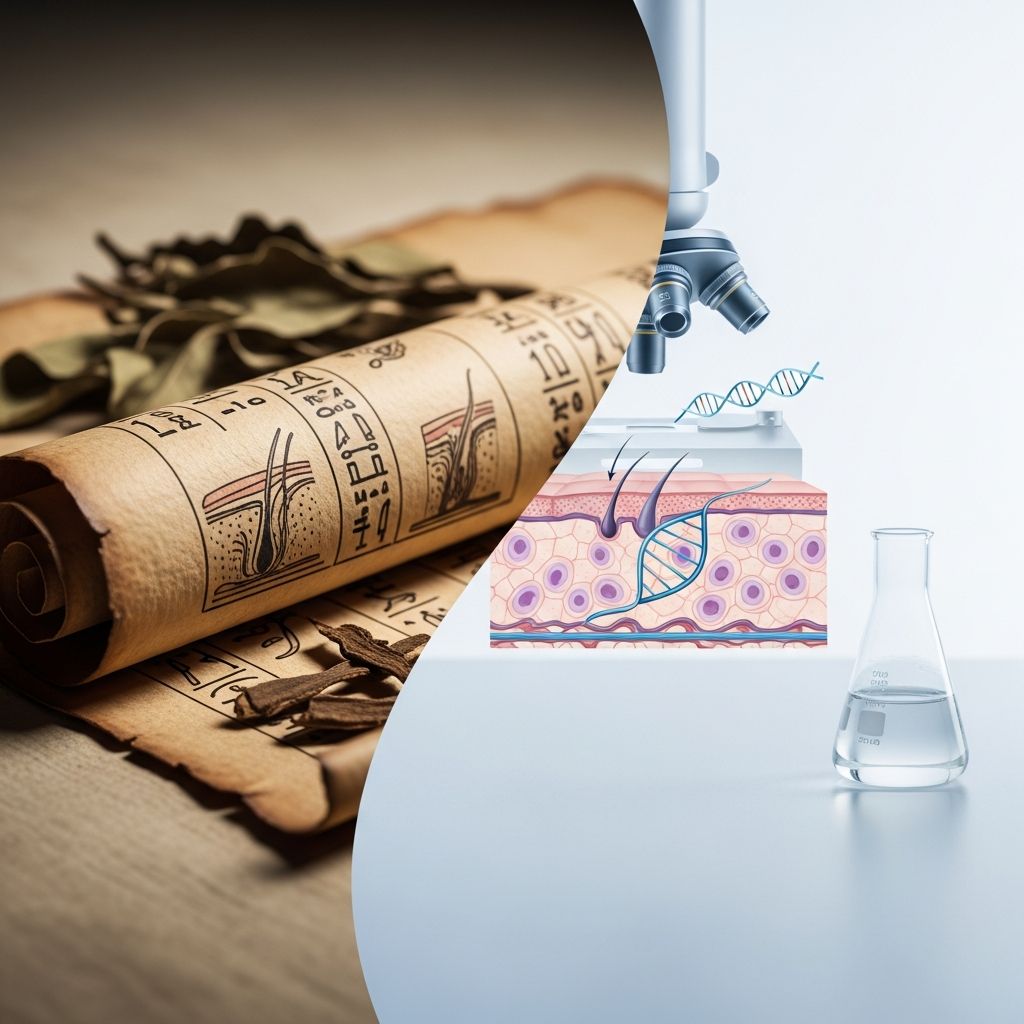
Eczema, a persistent skin condition marked by intense itching, redness, and inflammation, has challenged medical minds for millennia. Its recognition spans ancient civilizations to contemporary research, evolving from vague descriptions of irritated skin to precise diagnoses and effective interventions. This exploration delves into pivotal moments that shaped our comprehension and management of eczema, drawing on historical records and scientific progress.
Ancient Roots of Skin Ailment Recognition
Early accounts of conditions resembling eczema appear in ancient medical texts. Egyptian papyri from over 3,500 years ago documented various skin afflictions, including inflamed and scaly patches that align with modern eczema symptoms. These writings suggested remedies like honey-based ointments and herbal poultices, reflecting an intuitive grasp of soothing irritated skin.
In the Hippocratic era around 400 BCE, Greek physicians categorized skin disorders under terms like ‘tetter,’ encompassing eruptions with oozing and crusting. They linked these to imbalances in bodily humors, advocating dietary adjustments and gentle cleansing. Such observations laid foundational ideas about environmental and internal triggers for skin flare-ups.
During the Islamic Golden Age (8th-13th centuries), scholars like Avicenna advanced these concepts. In his comprehensive Canon of Medicine, he detailed dry, itchy skin conditions exacerbated by excessive bathing, recommending oils post-wash to restore moisture—a practice echoed in today’s emollient routines.
Renaissance Insights and Early Dermatology
The European Renaissance (14th-17th centuries) brought systematic study to skin diseases, fueled by the printing press’s spread of knowledge. Italian physician Girolamo Mercuriale’s 1572 work De Morbis Cutaneis classified dermatoses by location and appearance, distinguishing scalp issues from widespread rashes. His morphological breakdowns—considering color, texture, and volume—foreshadowed modern diagnostics.
Dermatology textbooks emerged in Italy, France, and the UK, describing childhood itchy rashes akin to eczema. Prevailing views held that oozing represented the body expelling toxins, so treatment was minimal, focusing on avoidance rather than intervention. Visual aids like wood engravings began documenting these conditions, aiding identification across generations.
19th-Century Breakthroughs: Naming and Classifying Eczema
The 19th century marked a turning point with Robert Willan and Thomas Bateman in 1818 coining ‘eczema’ from the Greek for ‘to boil over,’ capturing the eruptive nature of the disease. This terminology spurred detailed classifications, separating eczema from other rashes based on patterns like infantile forms.
Austrian dermatologists Ferdinand von Hebra and Moriz Kaposi pioneered topical treatments, including tar, sulfur, moderate-temperature baths, and softening agents. French and British researchers like Ernest Besnier and Thomas Wilson emphasized nocturnal itch intensification and ties to allergies, defining infantile eczema more clearly.
| Era | Key Figure(s) | Contribution |
|---|---|---|
| Early 1800s | Willan & Bateman | Coined ‘eczema’; systematic classification |
| Mid-1800s | Von Hebra & Kaposi | Topical remedies: tar, sulfur, emollients |
| Late 1800s | Wilson & Besnier | Infantile eczema; allergy links |
Related Stories



20th-Century Advances: Atopy and Diagnostic Standards
The early 1900s introduced ‘atopy’ in 1923, meaning ‘out of place’ in Greek, to describe anomalous immune responses underlying allergic conditions. By 1933, Wise and Sulzberger formalized ‘atopic dermatitis’ as eczema’s primary form, integrating it with hay fever and asthma.
A major leap came in 1952 with topical corticosteroids, revolutionizing symptom control by reducing inflammation effectively. In 1980, Jon Hanifin and Georg Rajka established the first diagnostic criteria for atopic dermatitis, still relevant today, requiring three of four features: pruritus, typical morphology, chronicity, and personal/family atopy.
Phototherapy innovations, like Goeckerman’s 1923 UVB for psoriasis, extended to eczema, while cryosurgery experiments with liquid oxygen in 1889 targeted lesions precisely, though safety concerns limited use.
Modern Era: Biologics, Inhibitors, and Targeted Therapies
The 21st century ushered in sophisticated options. Topical calcineurin inhibitors arrived in 2001, offering steroid-sparing relief for sensitive areas. Dupilumab, the first biologic for moderate-to-severe atopic dermatitis, gained approval in 2016, blocking IL-4 and IL-13 pathways to curb inflammation.
Further approvals included topical PDE4 inhibitors in 2017 and oral JAK inhibitors in 2021, targeting intracellular signaling to halt itch-scratch cycles. These therapies reflect a shift to precision medicine, addressing immune dysregulation at molecular levels.
- 2001: Calcineurin inhibitors for non-steroidal control
- 2016: Biologics like dupilumab
- 2017: PDE4 inhibitors (e.g., crisaborole)
- 2021: JAK inhibitors (e.g., abrocitinib)
Eczema in Children: Patterns of Persistence and Resolution
Childhood eczema often improves with age. Studies indicate 40-70% of cases resolve by ages 6-7, with flares diminishing in school years (6-12). Early enhancements around ages 2-4 feature fewer outbreaks, though stress or seasons can trigger persistence into adulthood.
Diagnosis hinges on history: early-onset itchy rashes favor atopic dermatitis, while adult debut is rarer. Management emphasizes moisturizers, trigger avoidance, and escalating therapies as needed.
Surgical and Procedural Evolutions in Dermatology
Dermatology transitioned to a surgical field mid-20th century. Frederic Mohs’ 1940 chemosurgery fixed tissues in vivo for precise cancer excision, adaptable to severe eczema lesions. Jeffrey Klein’s 1987 tumescent anesthesia enabled safe outpatient procedures like biopsies and excisions.
Botulinum toxin, FDA-approved for aesthetics in 2002, found roles in hyperhidrosis, indirectly benefiting eczema patients with sweat-induced flares.
Holistic Management: From Past to Present
Historical wisdom persists: Avicenna’s post-bath moisturizing mirrors current ‘soak and seal’ methods. Modern care integrates genetics, microbiome research, and personalized plans. Flares last days to weeks untreated, shortening with prompt intervention.
Patient journeys, like a 14-month clearance using herbal approaches alongside standard care, underscore gradual healing potential without immunosuppressants.
FAQs
What is the origin of the term ‘eczema’?
Derived from Greek meaning ‘to boil over,’ coined in 1818 by Willan and Bateman to describe bubbling eruptions.
Do most children outgrow eczema?
Yes, 40-70% resolve by age 6-7, with further improvements in school years.
What are the latest eczema treatments?
Biologics (2016), PDE4 inhibitors (2017), and JAK inhibitors (2021) target immune pathways effectively.
How has dermatology visualization evolved?
From wood engravings to photography in 1865 and digital imaging today.
Can eczema be cured?
Not typically cured, but managed long-term; many achieve remission.
References
- What’s old, what’s new with eczema: a brief history — Eczema Help CA. 2023. https://eczemahelp.ca/whats-old-whats-new-with-eczema-a-brief-history/
- History of dermatology — PMC (PubMed Central). 2021-06-08. https://pmc.ncbi.nlm.nih.gov/articles/PMC8178570/
- Eczema Transformation: A 14-Month Journey to Clear Skin — Tang’s Clinical. 2023. https://tangsclinical.com/eczema-transformation-a-14-month-journey-to-clear-skin/
- Does Childhood Eczema Ever Go Away? — Happy Skin Dermatology. 2025-11-07. https://www.happyskindermatology.com/2025/11/07/does-childhood-eczema-ever-go-away/
- Atopic Dermatitis: Symptoms, Causes & Treatment — Cleveland Clinic. 2023. https://my.clevelandclinic.org/health/diseases/24299-atopic-dermatitis
- Eczema Diagnosis — Rady Children’s Health. 2023. https://www.rchsd.org/programs-services/dermatology/eczema-and-inflammatory-skin-disease-center/diagnosis/
- How Long Does Eczema Last When It’s Treated or Untreated? — Healthline. 2023. https://www.healthline.com/health/how-long-does-eczema-last
Similar Articles








Read full bio of medha deb