Eggs vs. Oatmeal: Best Breakfast for Health
Discover the nutritional showdown between eggs and oatmeal to find the ultimate healthy breakfast choice for weight loss, heart health, and sustained energy.
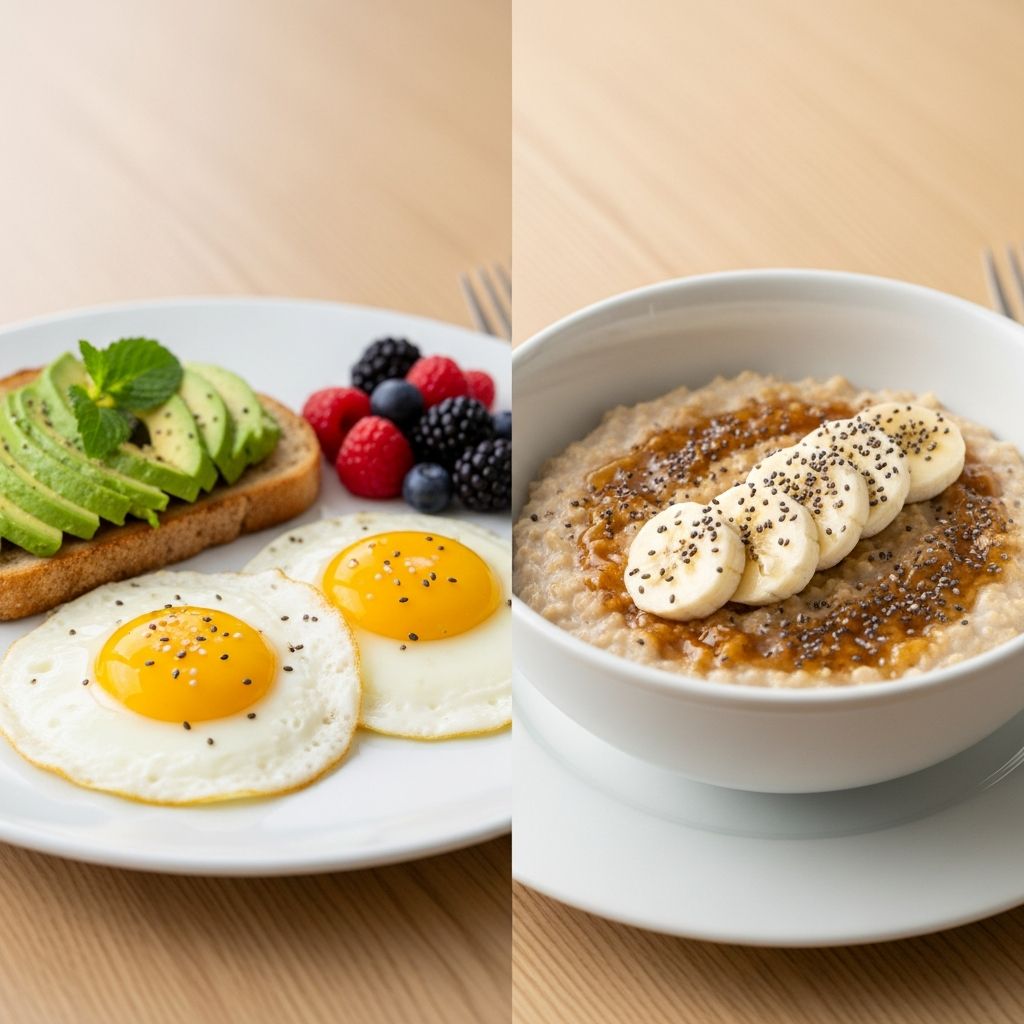
Choosing between eggs and oatmeal for breakfast often sparks debate among health enthusiasts. Both are nutrient-dense staples, but they offer distinct benefits for energy, satiety, heart health, and weight management. This article breaks down their nutritional profiles, health impacts, and which might suit your goals best.
Nutrition Comparison: Eggs vs. Oatmeal
Eggs and oatmeal provide complementary nutrition, making them powerful breakfast options when prepared mindfully. A single large egg delivers about 70 calories, 6 grams of high-quality protein, and essential vitamins like A, D, E, B5, and B12. Oatmeal, in a 1-cup cooked serving (about 135 calories), offers 5 grams of protein, rich manganese (75% DV for women), copper, B1, magnesium, phosphorus, zinc, and notably 4 grams of soluble beta-glucan fiber.
| Nutrient (per serving) | Eggs (1 large) | Oatmeal (1 cup cooked) |
|---|---|---|
| Calories | 70 | 135 |
| Protein (g) | 6 | 5 |
| Fiber (g) | 0 | 4 (beta-glucan) |
| Cholesterol (mg) | 185 | 0 |
| Key Micronutrients | Vitamins A, D, E, B12 | Manganese, Copper, B1, Mg |
This table highlights eggs’ protein edge and oatmeal’s fiber superiority. Eggs provide complete protein for muscle repair, while oatmeal’s beta-glucan supports gut health and metabolism.
Health Benefits of Eggs for Breakfast
Eggs are a powerhouse for satiety and nutrient density. Research shows consuming two eggs daily increases feelings of fullness, reducing fasting ghrelin (hunger hormone) levels compared to oatmeal. In a randomized crossover study of 50 participants, egg breakfasts led to lower ghrelin and higher satiety scores via visual analog scales (VAS).
Rich in choline, lutein, and zeaxanthin, eggs support brain health, eye protection, and stable energy without fiber-induced blood sugar spikes. Despite 370 mg cholesterol in two eggs, they don’t adversely affect CVD biomarkers like LDL-C/HDL-C ratio in healthy adults.
- High satiety: Keeps you full longer, aiding weight control.
- Complete protein: All essential amino acids for muscle maintenance.
- Vitamin boost: Supports immunity and bone health.
Preparation tip: Boil, poach, or scramble without excess oil to maximize benefits.
Health Benefits of Oatmeal for Breakfast
Oatmeal shines in heart health and digestion. Its beta-glucan fiber lowers LDL cholesterol, manages blood sugar, and feeds the gut microbiome. One cup provides 20% of daily soluble fiber needs, promoting steady energy release.
Unlike eggs, oatmeal is naturally cholesterol-free and low-glycemic, ideal for diabetes management. Studies confirm its role in reducing cardiovascular risk through lipid metabolism support.
- Heart protection: Beta-glucan reduces bad cholesterol.
- Gut health: Fermentable fiber nurtures beneficial bacteria.
- Sustained energy: Prevents mid-morning crashes.
Opt for steel-cut or rolled oats over instant to retain full nutrition; avoid sugary packets.
Effects on Weight Loss: Eggs vs. Oatmeal
For weight loss, eggs may have a slight edge due to superior satiety. The same study found egg breakfasts decreased hunger hormones more effectively, potentially leading to lower calorie intake later. Participants maintained stable weight (68.2 kg) in both periods, but eggs increased protein intake (19.2% vs. 17.6% of calories).
Related Stories



Oatmeal supports weight management via fiber-induced fullness, though it may not suppress appetite as potently. Combine both for optimal results: eggs provide protein punch, oatmeal adds volume without calories.
| Factor | Eggs | Oatmeal |
|---|---|---|
| Satiety (Ghrelin Reduction) | High (significant decrease) | Moderate |
| Calorie Density | Low (70 cal/egg) | Moderate (135 cal/cup) |
| Weight Impact | No adverse; supports loss | No adverse; fiber aids |
Blood Sugar and Heart Health Comparison
Oatmeal excels in blood sugar control due to its low glycemic index and viscous fiber, which slows digestion. Eggs offer minimal carbs (0g), avoiding spikes altogether—ideal for insulin sensitivity.
On heart health, oatmeal’s fiber lowers LDL-C, while eggs raise both LDL-C and HDL-C without altering ratios. No differences in triglycerides, glucose, or blood pressure between groups. Both are heart-healthy when not loaded with butter or sugar.
Potential Downsides and How to Mitigate
Eggs: High cholesterol concerns are outdated; dietary cholesterol minimally impacts blood levels for most. Limit to 1-2/day if at risk for hypercholesterolemia. Avoid frying in excess fat.
Oatmeal: Can be bland or carb-heavy if sweetened. Viral claims of ‘no nutrition’ are false—it’s packed with minerals and fiber. Choose plain varieties.
Common pitfalls: Toppings. Track added sugars, butter, cheese— they can negate benefits.
Expert Recommendations: Which to Choose?
No clear winner—combine them! A meal with eggs and oats delivers protein, fiber, and micronutrients. UCLA Health experts endorse both, noting oatmeal’s fiber advantage and eggs’ protein.
Tailor to goals:
- Weight loss/satiety: Prioritize eggs.
- Heart health/digestion: Go oatmeal.
- Balanced energy: Mix both.
Daily example: Scrambled eggs with oats topped with berries (300-400 cal, balanced macros).
Frequently Asked Questions (FAQs)
Is oatmeal bad for you?
No, viral claims are misleading. Plain oatmeal is nutrient-rich with beta-glucan fiber for heart and gut health.
Do eggs raise cholesterol?
In healthy people, two eggs/day don’t harm CVD risk markers and boost satiety.
Which is better for weight loss?
Eggs edge out due to higher protein and ghrelin suppression, but both support weight management.
Can I eat eggs and oatmeal together?
Yes, ideal for complete nutrition—protein from eggs, fiber from oats.
How much oatmeal or eggs per day?
1 cup oats or 1-2 eggs; monitor toppings for calories.
Meal Prep Ideas and Recipes
Eggs: Veggie scramble (eggs + spinach, tomatoes).
Oatmeal: Overnight oats with nuts, chia.
Combo: Egg oat muffins—blend oats, eggs, bake.
These keep prep simple, under 400 calories.
References
- Oatmeal and eggs are both nutritious breakfast options — UCLA Health. 2023-10-12. https://www.uclahealth.org/news/article/oatmeal-and-eggs-are-both-nutritious-breakfast-options
- Consuming Two Eggs per Day, as Compared to an Oatmeal Breakfast… — Nutrients (PMC). 2017-02-14. https://pmc.ncbi.nlm.nih.gov/articles/PMC5331520/
Similar Articles








Read full bio of Sneha Tete