EGPA Pathology: Histopathology of Eosinophilic Granulomatosis
Understanding the histopathological features and microscopic findings in EGPA diagnosis.
Introduction to Eosinophilic Granulomatosis with Polyangiitis Pathology
Eosinophilic granulomatosis with polyangiitis (EGPA), formerly known as Churg-Strauss syndrome or allergic granulomatosis, is a rare autoimmune vasculitis characterized by distinct pathological features that distinguish it from other systemic vasculitides. This disease begins with allergic manifestations such as asthma and hay fever-like symptoms, which eventually progress to a systemic small-vessel vasculitis with associated tissue damage. Understanding the pathological basis of EGPA is essential for accurate diagnosis and differentiation from other vasculitic conditions. The histopathology of EGPA varies considerably depending on the stage of disease progression and the specific type of lesion biopsied, requiring careful examination and correlation with clinical and serological findings.
Key Histopathological Features
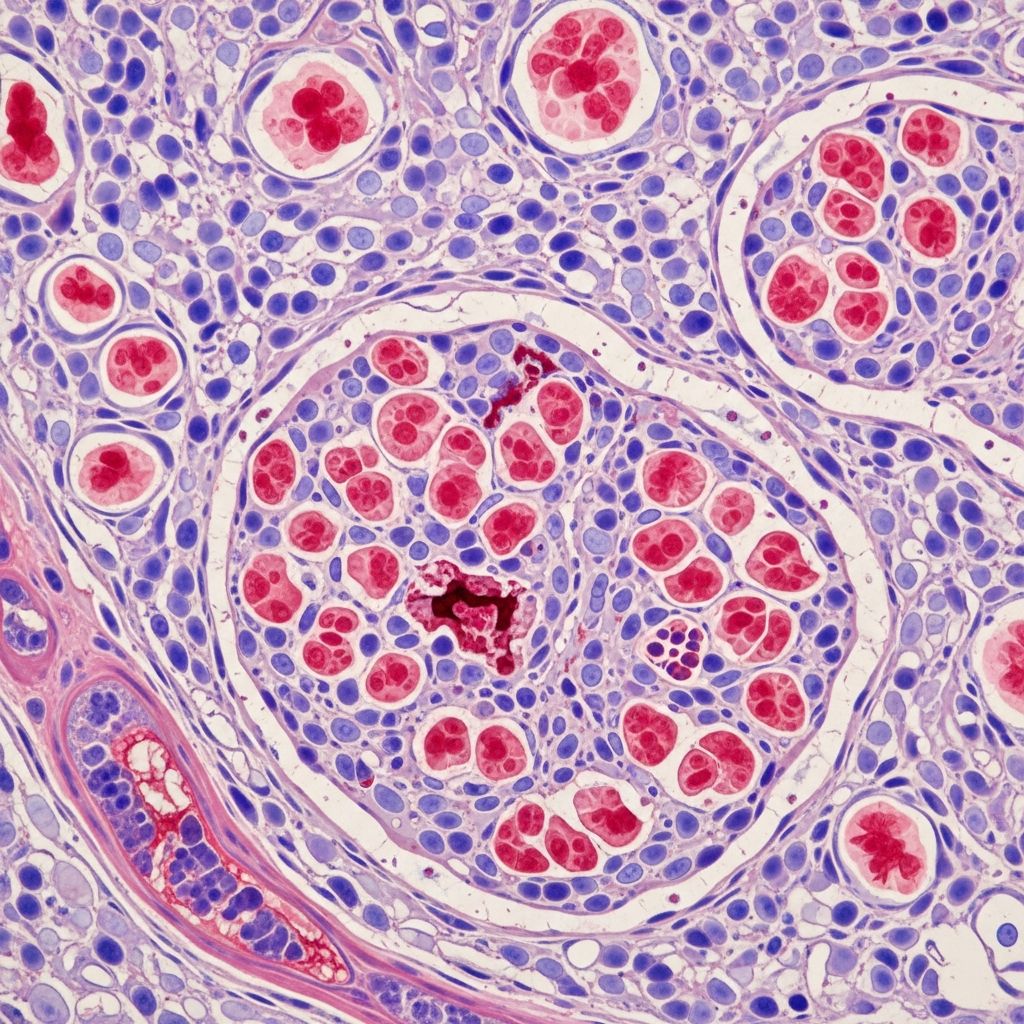
The hallmark histological findings in EGPA include three primary features that form the diagnostic triad: tissue eosinophilia, necrotizing vasculitis, and extravascular eosinophilic granulomas. These features collectively distinguish EGPA from other forms of systemic vasculitis and are fundamental to establishing the diagnosis through microscopic examination.
Tissue Eosinophilia
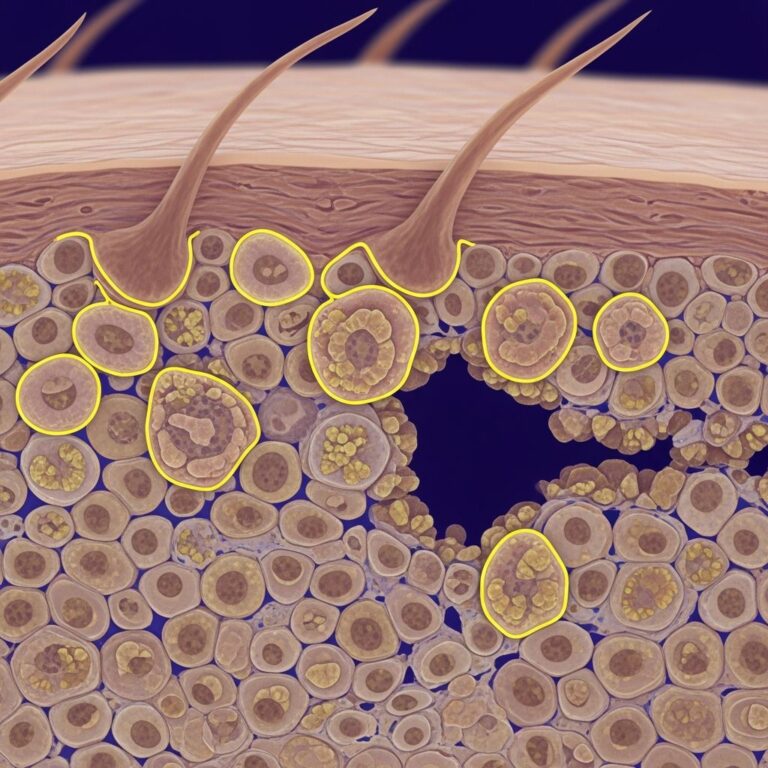
One of the most prominent and characteristic features of EGPA pathology is marked tissue eosinophilia, the infiltration of eosinophils throughout affected tissues. This eosinophilic infiltration is particularly notable for the presence of distinctive structures known as ‘flame figures’ or eosinophilic deposition on collagen fibers. These flame figures represent areas where eosinophils have degraded collagen through the release of their potent granule proteins, creating a characteristic appearance under light microscopy. The abundance of eosinophils within tissues reflects the underlying immunopathologic mechanism of the disease, where eosinophil activation and prolonged lifespan contribute significantly to tissue damage.
Extravascular Granulomas
The presence of extravascular granulomas is another defining feature of EGPA pathology. These granulomas form outside of blood vessels in the surrounding connective tissue and typically contain perivascular granulomatous inflammation with eosinophilic infiltration. The granulomas observed in EGPA differ from those seen in granulomatosis with polyangiitis (previously Wegener’s granulomatosis), as they are characteristically eosinophil-rich rather than composed of epithelioid histiocytes. This distinction is critical for histological differentiation between these two important systemic vasculitides.
Necrotizing Vasculitis
Necrotizing vasculitis represents the vasculitic component of EGPA pathology and typically involves small to medium-sized vessels located in the dermis and subcutis. The pathological process includes fibrinoid necrosis of small muscle arteries, with the vessel walls showing evidence of acute inflammation and destruction. Mural giant cells may be observed within affected vessels, and the surrounding inflammatory infiltrate is dominated by eosinophils rather than neutrophils, distinguishing this pattern from leukocytoclastic vasculitis. This necrotizing process underlies much of the systemic manifestations of EGPA, affecting multiple organ systems beyond the skin.
Skin Involvement and Clinical Manifestations
Skin involvement occurs in approximately half of EGPA patients and typically represents a later-stage manifestation of the disease. Cutaneous lesions present with diverse morphologies, including purpura, petechiae, cutaneous nodules, and papules. The histopathology of these skin lesions characteristically reveals the prominent features of tissue eosinophilia and extravascular granulomas, which become more evident in later lesions alongside vasculitis affecting both dermis and subcutaneous vessels.
Histological Presentation by Disease Stage
The histopathological appearance of EGPA varies significantly depending on the stage of disease progression at the time of biopsy. Understanding these stage-dependent features is crucial for accurate diagnosis and interpretation of pathological findings.
Early Stage Features
In the early stages of EGPA, biopsies may show predominantly eosinophilic infiltration with less organized granulomatous inflammation. The tissue demonstrates marked eosinophilia with characteristic flame figures on collagen fibers. Vasculitis may be less prominent at this stage, requiring careful examination to identify early vascular involvement.
Later Stage Features
Later lesions characteristically show more robust vasculitis involving small to medium-sized vessels in both the dermis and subcutis. The necrotizing component becomes more evident, with fibrinoid necrosis of vessel walls and associated inflammatory infiltrate. Extravascular granulomas become more organized and prominent, contributing to the distinctive histopathological pattern of advanced EGPA.
Related Stories



Immunopathologic Mechanisms
The underlying immunopathology of EGPA involves complex dysregulation of multiple immune pathways. Th2 responses predominate, with upregulation of interleukins IL-4, IL-13, and IL-5, driving the eosinophilic component of the disease. However, Th1 and Th17 responses also contribute to pathogenesis. Eosinophils become activated, develop a prolonged lifespan, and cause tissue damage through the release of preformed granule proteins including eosinophil peroxidase, major basic protein, and eosinophil cationic protein. Tissue recruitment of eosinophils is regulated by chemokines such as eotaxin-3 and CCL17.
Humoral immunity is also dysregulated in EGPA, with prominent IgG4 and IgE responses. This immunological pattern reflects the underlying Th2-driven nature of the disease and distinguishes it from other systemic vasculitides. Additionally, antineutrophil cytoplasmic antibodies (ANCA) are positive in approximately 40% of EGPA cases, occurring more frequently in patients with clinical manifestations related to small-vessel vasculitis.
Special Histological Studies
While routine histological examination with hematoxylin and eosin (H&E) staining typically provides sufficient diagnostic information, special stains and immunohistochemical studies may be employed to support the diagnosis and exclude alternative diagnoses. The characteristic pattern of tissue eosinophilia with granulomatous inflammation usually renders special studies unnecessary. However, when differentiation from other vasculitides is required, immunohistochemical markers such as CD15 (labeling neutrophils), CD33 (labeling myeloid cells), and eosinophil-specific antibodies may be used to further characterize the inflammatory infiltrate.
Differential Diagnoses in EGPA Pathology
Distinguishing EGPA from other forms of vasculitis is essential for appropriate clinical management. Several other vasculitides and inflammatory conditions can present with cutaneous involvement and require histopathological differentiation.
Other Systemic Vasculitides
Other forms of systemic vasculitis do not generally demonstrate the distinctive combination of extravascular granulomas and prominent tissue eosinophilia characteristic of EGPA. Granulomatosis with polyangiitis (formerly Wegener’s granulomatosis) presents with necrotizing granulomas but lacks the marked eosinophilic infiltration and extravascular granulomas of EGPA. Microscopic polyangiitis shows necrotizing vasculitis affecting small vessels but lacks the granulomatous component and eosinophilic predominance.
Leukocytoclastic Vasculitis
Leukocytoclastic vasculitis (LCV) may occasionally present with eosinophilic infiltration, but the degree and distribution of eosinophilia in EGPA is typically much more prominent and extensive than in isolated LCV. The presence of organized extravascular granulomas distinguishes EGPA from pure LCV patterns.
Eosinophilic Vasculitis Associated with Connective Tissue Disease
Secondary eosinophilic vasculitis can occur in association with various connective tissue diseases; however, these typically lack the characteristic extravascular granulomatous inflammation and distinctive pattern of tissue eosinophilia observed in primary EGPA. Clinical and serological correlation is essential for differentiation.
Diagnostic Importance and Clinical Correlation
Accurate histopathological diagnosis of EGPA requires careful correlation between microscopic findings and clinical presentation. The EGPA Consensus Task Force has established diagnostic criteria encompassing asthma, eosinophilia, pulmonary infiltrates, and extrapulmonary vasculitis manifestations such as cutaneous involvement with purpura. Histopathologic evidence of vasculitis may be accompanied by eosinophilic infiltration and/or perivascular granulomatous inflammation.
Correlation with clinical and serological findings is usually essential to rule out other forms of vasculitis and establish the diagnosis of EGPA. Clinical features including the history of asthma, peripheral neuropathy, cardiac involvement, and upper respiratory tract disease help contextualize the pathological findings. Laboratory findings such as absolute eosinophilia, elevated inflammatory markers (CRP, ESR), and ANCA status further support the diagnosis.
Recent Advances in EGPA Pathology Understanding
Recent advances in understanding EGPA pathology have revealed distinct disease phenotypes with partly overlapping clinical and pathological presentations. Recognition of these phenotypic variations has important implications for disease stratification and treatment selection. Research continues to elucidate the complex interplay between eosinophilic and vasculitic processes that characterize EGPA pathogenesis.
Clinical Pathology Correlation Table
| Histopathological Feature | Clinical Significance | Associated Findings |
|---|---|---|
| Tissue eosinophilia with flame figures | Hallmark feature; indicates eosinophil-mediated tissue damage | Elevated blood eosinophils, allergic history |
| Extravascular granulomas | Distinguishes EGPA from other vasculitides | Systemic vasculitis, multi-organ involvement |
| Necrotizing vasculitis (small to medium vessels) | Indicates vascular inflammation and tissue ischemia | Cutaneous purpura, systemic manifestations |
| Fibrinoid necrosis with mural giant cells | Acute vasculitic process with severe vessel wall injury | Active disease, need for immunosuppressive therapy |
Frequently Asked Questions
Q: What is the primary difference between EGPA and other systemic vasculitides at the histopathological level?
A: EGPA is distinguished by the combination of marked tissue eosinophilia, extravascular eosinophil-rich granulomas, and necrotizing vasculitis, whereas other systemic vasculitides like granulomatosis with polyangiitis lack the prominent eosinophilic component and extravascular granulomas characteristic of EGPA.
Q: What are ‘flame figures’ and why are they significant in EGPA diagnosis?
A: Flame figures represent eosinophilic deposition on collagen fibers caused by eosinophil degranulation and protein release. They are highly significant because they indicate eosinophil-mediated tissue damage and are a characteristic feature that aids in identifying EGPA on histological examination.
Q: Does the histopathology of EGPA change with disease progression?
A: Yes, histopathology varies significantly depending on disease stage. Early lesions show predominantly eosinophilic infiltration, while later lesions characteristically show more prominent vasculitis involving small to medium-sized vessels with organized extravascular granulomas and fibrinoid necrosis.
Q: Are special histological stains necessary for diagnosing EGPA?
A: No, special stains are generally not needed for EGPA diagnosis. Routine H&E staining typically provides sufficient diagnostic information when characteristic features of tissue eosinophilia and extravascular granulomas are present. Special studies may be used to exclude alternative diagnoses.
Q: How does clinical correlation improve EGPA diagnosis?
A: Clinical correlation is essential for distinguishing EGPA from other vasculitides. Combining histopathological findings with clinical features (asthma history, peripheral neuropathy, cardiac involvement), laboratory results (eosinophilia, ANCA status), and serological findings enables accurate diagnosis and exclusion of mimicking conditions.
Q: What percentage of EGPA patients show ANCA positivity?
A: Approximately 40% of EGPA patients are ANCA-positive, and ANCA positivity occurs more frequently in patients with clinical manifestations related to small-vessel vasculitis, helping to distinguish these patients from ANCA-negative EGPA cases.
References
- Eosinophilic vasculitis: Pathological findings in clinical case — Arkana Laboratories. 2024. https://www.arkanalabs.com/eosinophilic-granulomatosis-with-polyangiitis-egpa-previously-churg-strauss-syndrome/
- Churg-Strauss syndrome pathology — DermNet. 2024. https://dermnetnz.org/topics/eosinophilic-granulomatosis-with-polyangiitis-pathology
- Eosinophilic granulomatosis with polyangiitis: Cutaneous clinical and pathological features — PubMed Central. 2021. https://pubmed.ncbi.nlm.nih.gov/34019312/
- Eosinophilic granulomatosis with polyangiitis (Churg–Strauss): state of the art — Wiley Online Library. 2014. https://onlinelibrary.wiley.com/doi/10.1111/all.12088
- Eosinophilic Granulomatosis with Polyangiitis: Clinical Pathology and Disease Heterogeneity — PubMed Central. 2019. https://pubmed.ncbi.nlm.nih.gov/30197069/
Similar Articles








Read full bio of Sneha Tete