Ehlers-Danlos Syndrome Images: Visual Atlas Of 13 Subtypes
Visual guide to Ehlers-Danlos syndrome skin, joint, and vascular manifestations across all 13 subtypes.
Ehlers-Danlos syndromes (EDS) represent a heterogeneous group of 13 heritable connective tissue disorders characterized by defects in collagen synthesis or structure, leading to manifestations in skin, joints, blood vessels, and internal organs. This visual atlas presents key clinical images across EDS subtypes, highlighting diagnostic hallmarks such as skin hyperextensibility, atrophic scarring, joint hypermobility, and fragility of tissues. Proper recognition of these features is crucial for early diagnosis and management to prevent complications like arterial rupture and organ perforation.
What is Ehlers-Danlos Syndrome?
Ehlers-Danlos syndrome (EDS) encompasses genetic disorders affecting collagen, the primary structural protein in connective tissues. First described in 1892 by Edvard Ehlers and Henri-Alexandre Danlos, EDS impacts approximately 1 in 5,000 individuals worldwide, though hypermobile EDS (hEDS) may be more prevalent. The 2017 international classification identifies 13 subtypes, each with distinct genetic etiologies and phenotypic expressions. Collagen types I, III, and V are most commonly implicated, with mutations in genes such as COL5A1, COL3A1, and TNXB.
Core clinical triad includes joint hypermobility, skin hyperextensibility, and tissue fragility. Complications range from chronic pain and fatigue to life-threatening vascular events. Hypermobile EDS, the most common form, lacks a specific genetic marker but relies on clinical criteria including a Beighton score ≥5/9 for adults. Multisystem involvement often includes autonomic dysfunction like postural orthostatic tachycardia syndrome (POTS), gastrointestinal dysmotility, and mast cell activation syndrome (MCAS).
Classical Ehlers-Danlos Syndrome (cEDS)
Classical EDS, caused by autosomal dominant mutations in COL5A1 or COL5A2, features prominent skin findings. Major criteria include skin hyperextensibility, atrophic scarring, and generalized joint hypermobility.
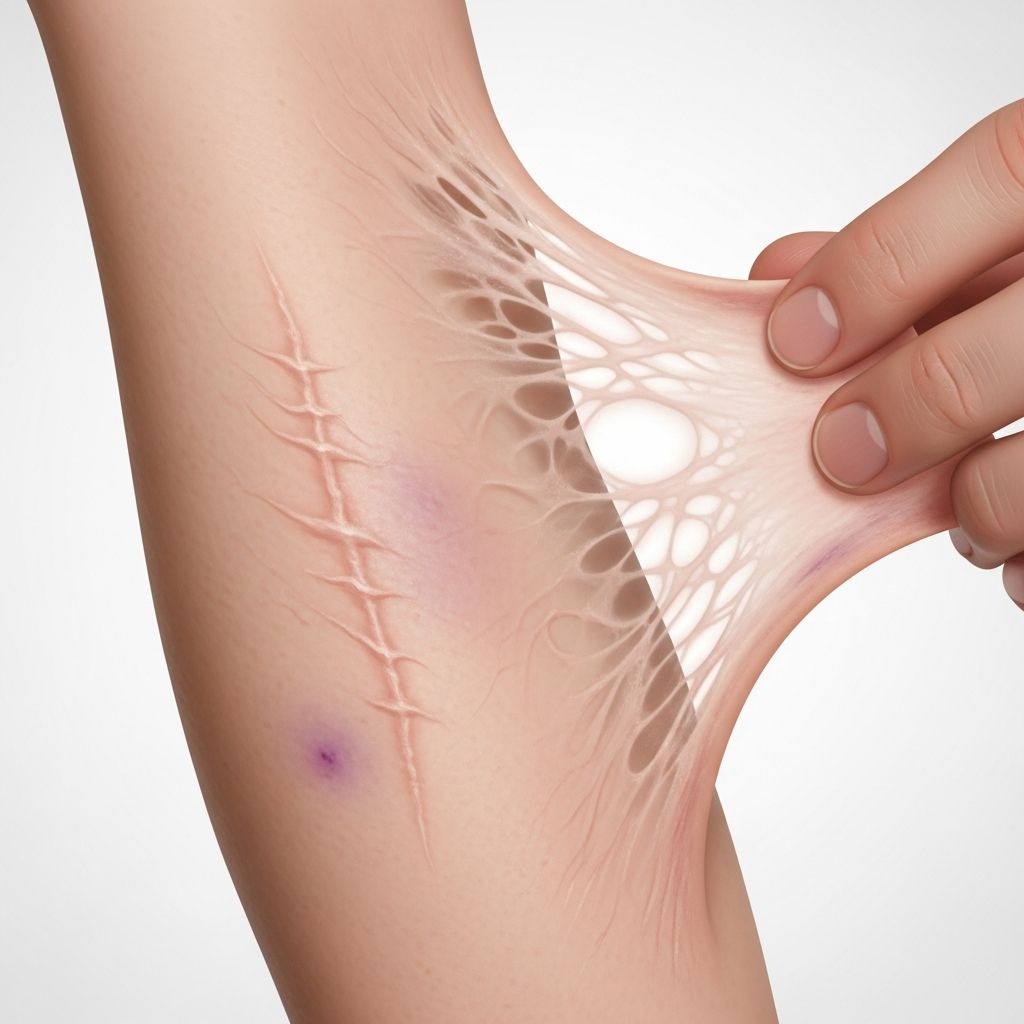
- Skin hyperextensibility: Skin stretches >1.5 cm on the forearm and snaps back after release, demonstrating rubbery resilience. Images show forearm skin extended to 4 cm without tearing.
- Atrophic scarring: Cigarette paper-like scars on knees, elbows, and shins from minor trauma, often hypopigmented with underlying telangiectasia.
- Joint hypermobility: Passive apposition of thumb to forearm and hyperextension of elbows/knees visible in clinical photos.
Minor features: molluscoid pseudotumours (subcutaneous nodules over pressure points), subcutaneous spherules (calcified fat collections), easy bruising, and epicanthal folds. Complications include hernias and dental crowding.
Hypermobile Ehlers-Danlos Syndrome (hEDS)
Hypermobile EDS, diagnosed clinically per 2017 criteria, affects up to 1 in 3,100–5,000 people and presents with profound joint laxity and chronic pain. Criterion 1 requires generalized hypermobility (Beighton score ≥5); Criterion 2 mandates ≥5 skin/musculoskeletal features or family history; Criterion 3 excludes other disorders.
- Joint instability: Recurrent shoulder, patellar, and subtalar dislocations documented in images showing lax ligaments.
- Skin features: Velvety soft skin, mild hyperextensibility, piezogenic papules (fat herniation on heel pressure), and striae without weight changes.
- Musculoskeletal pain: Chronic widespread pain ≥3 months, proprioceptive impairment leading to falls.
Associated conditions: POTS (tachycardia upon standing), orthostatic intolerance, fatigue, and gastrointestinal issues. Images depict positive thumb-to-forearm sign and elbow hyperextension.
Vascular Ehlers-Danlos Syndrome (vEDS)
Vascular EDS, due to COL3A1 mutations (autosomal dominant), is the most severe subtype with thin, translucent skin revealing underlying veins, easy bruising, and arterial fragility. Major criteria: arterial/organ rupture, uterine rupture, carotid-cavernous fistula, family history.
Related Stories



- Thin skin: Images show facial thinness with visible veins, acrogeria (aged hands/feet).
- Bruising: Spontaneous hematomas on trunk and limbs.
- Vascular complications: Rare imaging captures post-rupture pseudoaneurysms; prematurity and clubfoot common at birth.
Mortality from arterial dissection peaks in 30s; genetic confirmation essential.
Kyphoscoliotic EDS (kEDS)
Autosomal recessive kEDS results from PLOD1 or FKBP14 mutations causing lysyl hydroxylase deficiency. Neonatal kyphoscoliosis, hypotonia, and scleral fragility are hallmarks.
- Scoliosis: Severe congenital curves evident in radiographs.
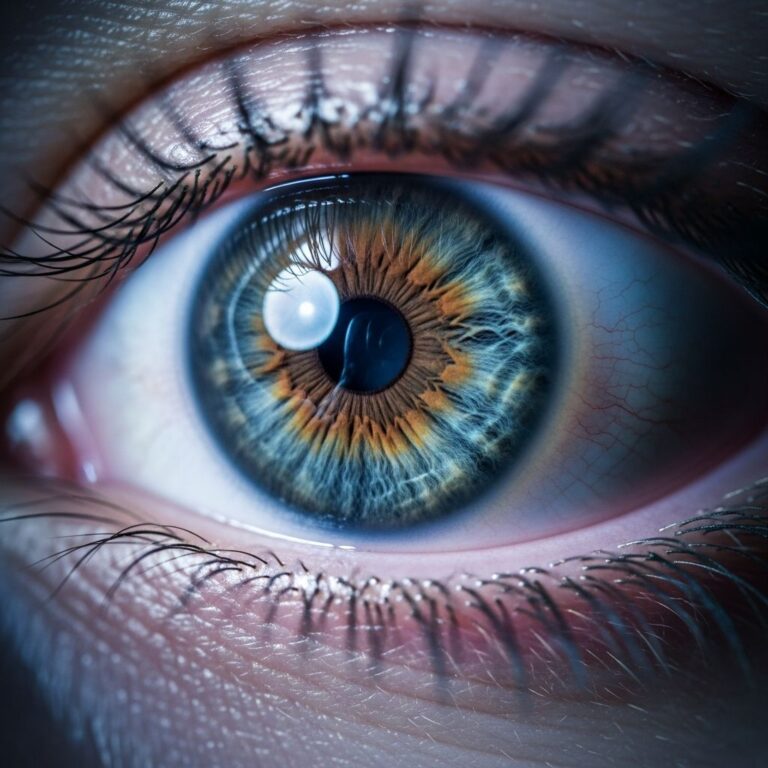
- Eye involvement: Blue sclerae, globe rupture risk.
- Skin: Lax, doughy with increased fragility.
Muscle hypotonia leads to delayed motor milestones; dental issues like hypodontia reported.
Other Rare EDS Subtypes
Classical-like EDS (clEDS): TNXB mutations yield hyperextensible skin without atrophic scars, joint laxity, bruising, and foot deformities.
Cardiac-valvular EDS (cvEDS): COL1A2 mutations cause skin fragility, valve prolapse, and joint issues.
Dermatosparaxis EDS (dEDS): Severe skin fragility with sagging, redundant folds; ADAMTS2 defect.
Brittle cornea syndrome: Corneal rupture risk from ZNF469/PRDM5 mutations.
Images illustrate subtype-specific traits like gingival recession in periodontal EDS and muscle atrophy in spondylodysplastic EDS.
Skin Manifestations Across EDS
| Feature | Description | Common Subtypes |
|---|---|---|
| Hyperextensibility | Skin stretches >1.5cm, elastic recoil | cEDS, hEDS, clEDS |
| Atrophic scars | Cigarette-paper, hypopigmented | cEDS, vEDS |
| Fragility | Large lacerations from minor trauma | dEDS, kEDS |
| Thin/translucent | Visible veins, acrogeria | vEDS |
| Piezogenic papules | Heel fat herniation | hEDS |
Skin biopsy may reveal collagen disorganization; electron microscopy shows ‘cauliflower’ fibrils in cEDS.
Joint and Musculoskeletal Images
Joint hypermobility assessed via Beighton score: passive dorsiflexion of pinky >90°, thumb to forearm, elbow/knee hyperextension, trunk flexion.
- Recurrent dislocations (shoulder, patella).
- Early osteoarthritis, pes planus, scoliosis.
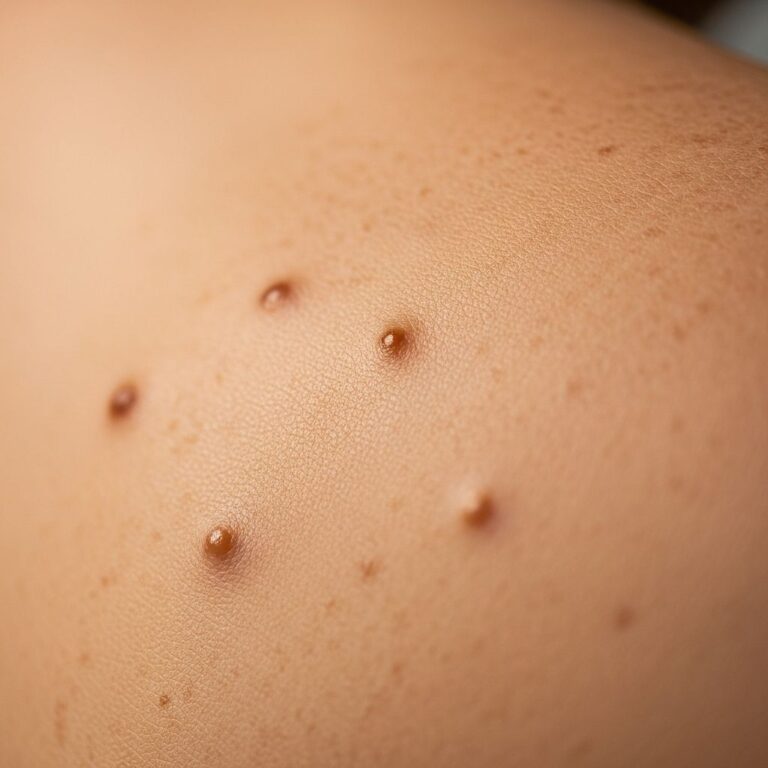
- Molluscoid pseudotumors over elbows/knees.
Chronic pain affects >90% of patients, often with fibromyalgia overlap.
Vascular and Internal Organ Involvement
VEDS images rarely capture ruptures but show thin skin predisposing to hematomas. Organ perforation (bowel, uterus) risks highest in vEDS. Echocardiography reveals mitral valve prolapse, aortic dilation in some.
Diagnosis
Diagnosis combines clinical criteria, family history, and genetic testing. For hEDS, all three criteria must be met; exclude mimics like Marfan syndrome. Imaging (echo, CT angiography for vEDS), skin biopsy adjunctive.
Management
Multidisciplinary: physiotherapy for stability, pain management, vascular surveillance in vEDS (annual imaging). Avoid invasive procedures; celiprolol reduces arterial events in vEDS. Supportive care addresses POTS (compression, salt), GI symptoms.
Frequently Asked Questions (FAQs)
What causes EDS?
Genetic mutations in collagen genes, inherited autosomal dominant or recessive.
Is EDS curable?
No cure; management focuses on symptom control and complication prevention.
Can EDS be mild?
Yes, especially hEDS, but multisystem issues often emerge over time.
Does EDS affect pregnancy?
High risks in vEDS (uterine/arterial rupture); preconception counseling essential.
How is joint hypermobility tested?
Beighton score: 9-point scale assessing limb flexibility.
References
- Ehlers-Danlos Syndrome – StatPearls — NCBI Bookshelf / NIH. 2023-07-17. https://www.ncbi.nlm.nih.gov/books/NBK549814/
- The Ehlers-Danlos syndromes (EDS) GP Toolkit — Ehlers-Danlos.org. 2023. https://gptoolkit.ehlers-danlos.org
- Diagnostic Criteria for Hypermobile Ehlers-Danlos Syndrome (hEDS) — The Ehlers-Danlos Society. 2017. https://www.ehlers-danlos.com/wp-content/uploads/2017/05/hEDS-Dx-Criteria-checklist-1.pdf
- What is EDS? — The Ehlers-Danlos Society. 2024. https://www.ehlers-danlos.com/what-is-eds/
- Patient’s Guide to Hypermobile Ehlers-Danlos Syndrome — NYDN Rehab. 2023. https://nydnrehab.com/blog/patients-guide-to-hypermobile-ehlers-danlos-syndrome/
Similar Articles








Read full bio of Sneha Tete