Ehlers-Danlos Syndrome Subtypes: Complete Guide
Comprehensive overview of 13 EDS subtypes, genetic causes, symptoms, and clinical features.
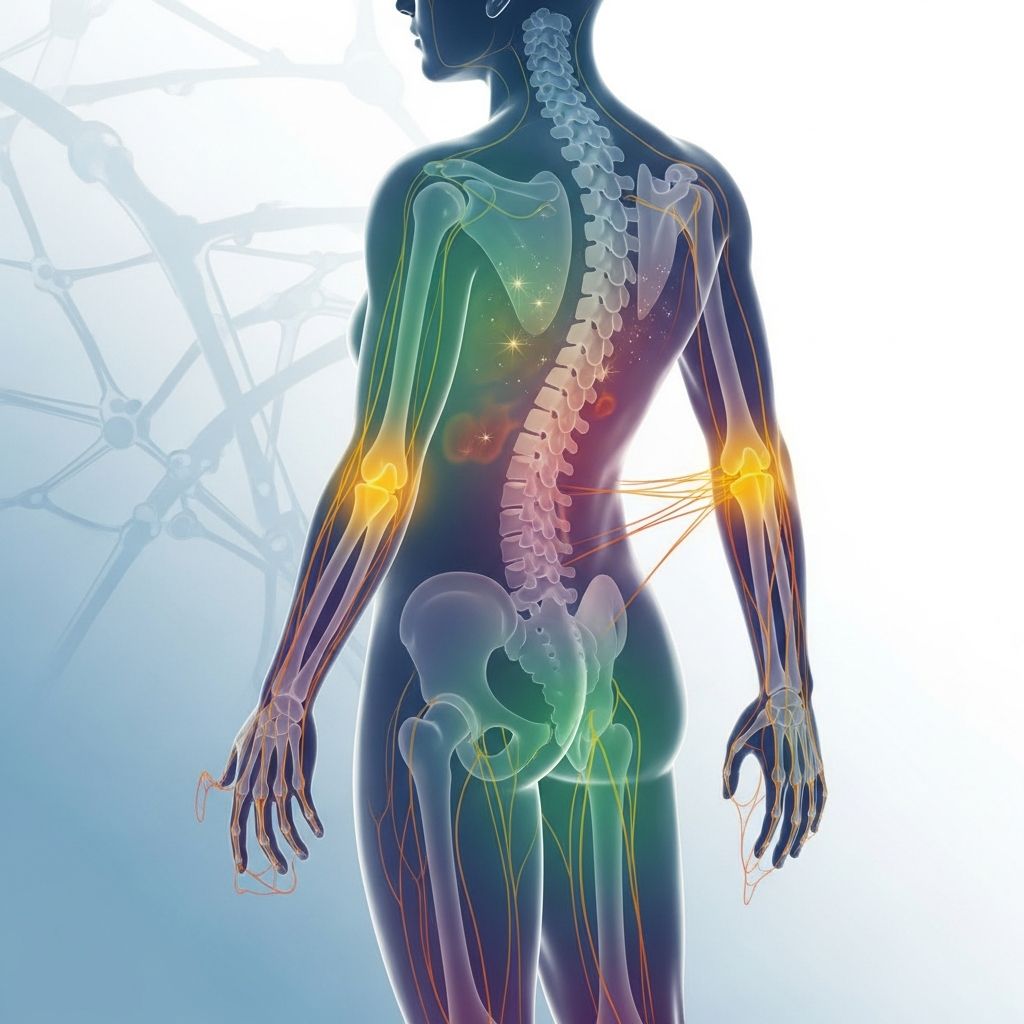
Ehlers-Danlos Syndrome Subtypes: Understanding the 13 Classifications
Ehlers-Danlos syndrome (EDS) represents a clinically and genetically diverse group of heritable connective tissue disorders characterized by joint hypermobility, skin hyperextensibility, and tissue fragility. In 2017, the International Consortium on EDS and other connective tissue disorder organizations published a revised classification system that recognizes 13 distinct subtypes based on specific clinical and genetic criteria. This modern classification system replaced the previous Villefranche Nosology, which had outlined only six subtypes since 1998.
The evolution from six to 13 recognized subtypes reflects significant advances in genetic research and clinical understanding. Over the past two decades, researchers identified mutations in an expanding array of genes responsible for different EDS manifestations, leading to the recognition of novel subtypes and refined diagnostic criteria.
Classification System and Genetic Basis
The 13 EDS subtypes are inherited either in an autosomal dominant or autosomal recessive pattern. Variants in approximately 29 genes have been associated with Ehlers-Danlos syndrome, with specific variants linked to different subtypes. These genetic variants may be inherited from biological parents or may occur randomly in affected individuals.
The International EDS Consortium categorizes these disorders into functional groups based on the underlying pathophysiological mechanism:
- Group A: Disorders affecting primary collagen structure and processing
- Group B: Disorders affecting collagen folding and crosslinking
- Group C: Disorders affecting the structure and function of the myomatrix
- Group D: Disorders affecting glycosaminoglycan biosynthesis
- Group E: Disorders characterized by defects in the complement pathway
- Group F: Disorders of intracellular processes
- Group G: Unresolved forms of EDS
Autosomal Dominant EDS Subtypes
Five of the 13 EDS subtypes follow an autosomal dominant inheritance pattern, meaning an affected individual has a 50% chance of passing the condition to each offspring.
Arthrochalasia EDS (aEDS)
Arthrochalasia EDS is a rare autosomal dominant subtype caused by mutations in the COL1A1 or COL1A2 genes, which encode type I collagen. This subtype is characterized by severe joint hypermobility and congenital joint dislocations, particularly affecting the hips bilaterally. The prevalence of aEDS remains unknown, as it is exceptionally rare.
Classical EDS (cEDS)
Classical EDS represents one of the more common subtypes with a prevalence of approximately 1 in 20,000 individuals. This autosomal dominant condition results from mutations in COL1A1, COL5A1, or COL5A2 genes. Classical EDS is characterized by skin hyperextensibility, abnormal scarring, and generalized joint hypermobility. Individuals with cEDS typically exhibit distinctive features including easy bruising, smooth or velvety skin texture, and tissue fragility.
Hypermobile EDS (hEDS)
Hypermobile EDS is the most common subtype with a prevalence ranging from 1 in 5,000 to 1 in 20,000 individuals. This autosomal dominant disorder is primarily characterized by generalized joint hypermobility, chronic pain, and various systemic symptoms. Unlike most other EDS subtypes, hEDS diagnosis cannot currently be confirmed through genetic testing alone, as the specific causative genes remain unknown. Clinical diagnostic criteria are therefore essential for diagnosis.
Periodontal EDS (pEDS)
Periodontal EDS is an autosomal dominant subtype caused by mutations in the C1R or C1S genes. This rare form, with unknown prevalence, is characterized by early-onset periodontitis, which may be accompanied by joint hypermobility and skin hyperextensibility. The periodontal manifestations often begin in childhood or adolescence and can lead to significant dental complications if untreated.
Related Stories



Vascular EDS (vEDS)
Vascular EDS is a serious autosomal dominant subtype with a prevalence of approximately 1 in 50,000 individuals. Caused by mutations in the COL3A1 gene encoding type III collagen, vEDS involves structural abnormalities in blood vessels, hollow organs, and connective tissues. This subtype carries significant health risks including arterial rupture, bowel perforation, and uterine rupture in pregnant women, making medical surveillance and careful management essential.
Autosomal Recessive EDS Subtypes
Eight of the 13 EDS subtypes demonstrate autosomal recessive inheritance, meaning affected individuals must inherit mutated genes from both parents. These subtypes are generally rarer than their autosomal dominant counterparts.
Brittle Cornea Syndrome (BCS)
Brittle cornea syndrome is an exceptionally rare autosomal recessive subtype with a prevalence of less than 1 in 1,000,000 individuals. BCS results from mutations in the ZNF469 or PRDM5 genes. This condition is characterized by progressive corneal thinning and fragility, leading to corneal scarring, keratoconus, and potential vision loss. Systemic features may include joint hypermobility, skin hyperextensibility, and progressive scoliosis.
Cardiac-Valvular EDS (cvEDS)
Cardiac-valvular EDS is an extremely rare autosomal recessive subtype caused by mutations in the COL1A2 gene, with a prevalence of less than 1 in 1,000,000 individuals. This subtype is characterized by progressive cardiac valve abnormalities, particularly affecting the aortic and mitral valves. Individuals typically present with congenital bilateral hip dislocations, generalized joint hypermobility, and variable skin manifestations. Early cardiac evaluation and monitoring are critical for disease management.
Classical-like EDS (clEDS)
Classical-like EDS is a rare autosomal recessive condition caused by mutations in the AEBP1 or TNXB genes, with a prevalence less than 1 in 1,000,000. Despite its name, clEDS presents with clinical features similar to classical EDS, including skin hyperextensibility and abnormal scarring; however, it exhibits a different genetic basis. This distinction is important for genetic counseling and understanding disease mechanisms.
Dermatosparaxis EDS (dEDS)
Dermatosparaxis EDS is a rare autosomal recessive subtype caused by mutations in the ADAMTS2 gene, with a prevalence less than 1 in 1,000,000. This condition is characterized by severe skin fragility present from birth, with extreme skin hyperextensibility and premature aging of the skin. Individuals typically have sagging, redundant skin and are prone to severe bruising and poor wound healing.
Kyphoscoliotic EDS (kEDS)
Kyphoscoliotic EDS is an autosomal recessive subtype resulting from mutations in the FKBP14 or PLOD1 genes. The prevalence of kEDS remains unknown. This subtype is characterized by congenital muscle hypotonia, progressive kyphoscoliosis, and generalized joint hypermobility. Early manifestations include muscle weakness and poor muscle tone, progressing to significant skeletal deformities requiring orthopedic management.
Musculocontractural EDS (mcEDS)
Musculocontractural EDS is a rare autosomal recessive subtype with a prevalence less than 1 in 1,000,000. Caused by mutations in the CHST14 or DSE genes, mcEDS is characterized by congenital contractures, particularly affecting the hands and feet, along with hypermobility in other joints. The condition typically presents at birth with progressive muscle contractures and joint limitations.
Myopathic EDS (mEDS)
Myopathic EDS results from mutations in the COL12A1 gene, which can follow either autosomal dominant or autosomal recessive inheritance patterns. This rare subtype is characterized by progressive muscle weakness and myopathy as primary features, distinguishing it from other EDS subtypes. The clinical presentation may vary depending on the specific mutation and inheritance pattern.
Spondylodysplastic EDS (spEDS)
Spondylodysplastic EDS is an autosomal recessive subtype affecting skeletal development and structure. This rare form features distinctive skeletal abnormalities, including short stature and spinal dysplasia, along with connective tissue manifestations typical of EDS.
Diagnostic Criteria and Classification Table
The 2017 International Classification system provides specific clinical diagnostic criteria for each EDS subtype to assist healthcare providers in clinical diagnosis. However, except for hypermobile EDS, definitive diagnosis of all other subtypes relies on molecular genetic confirmation through identification of causative genetic variants.
| EDS Subtype | Inheritance Pattern | Affected Gene(s) | Prevalence |
|---|---|---|---|
| Arthrochalasia EDS (aEDS) | Autosomal Dominant | COL1A1, COL1A2 | Unknown |
| Classical EDS (cEDS) | Autosomal Dominant | COL1A1, COL5A1, COL5A2 | 1 in 20,000 |
| Hypermobile EDS (hEDS) | Autosomal Dominant | Unknown | 1 in 5,000–20,000 |
| Periodontal EDS (pEDS) | Autosomal Dominant | C1R, C1S | Unknown |
| Vascular EDS (vEDS) | Autosomal Dominant | COL3A1 | 1 in 50,000 |
| Brittle Cornea Syndrome (BCS) | Autosomal Recessive | ZNF469, PRDM5 | <1 in 1,000,000 |
| Cardiac-Valvular EDS (cvEDS) | Autosomal Recessive | COL1A2 | <1 in 1,000,000 |
| Classical-like EDS (clEDS) | Autosomal Recessive | AEBP1, TNXB | <1 in 1,000,000 |
| Dermatosparaxis EDS (dEDS) | Autosomal Recessive | ADAMTS2 | <1 in 1,000,000 |
| Kyphoscoliotic EDS (kEDS) | Autosomal Recessive | FKBP14, PLOD1 | Unknown |
| Musculocontractural EDS (mcEDS) | Autosomal Recessive | CHST14, DSE | <1 in 1,000,000 |
| Myopathic EDS (mEDS) | Autosomal Dominant or Recessive | COL12A1 | <1 in 1,000,000 |
| Spondylodysplastic EDS (spEDS) | Autosomal Recessive | Unknown | Unknown |
Clinical Overlaps and Diagnostic Challenges
Due to the vast genetic heterogeneity and phenotypic variability of EDS subtypes, significant clinical overlap exists both between different EDS subtypes and with other heritable connective tissue disorders. This overlap presents diagnostic challenges that require careful clinical evaluation combined with genetic testing to establish accurate diagnoses. Healthcare providers must consider the constellation of clinical features, detailed patient history, family history, and genetic findings to differentiate between subtypes.
Naming Convention Update
An important change in the 2017 classification system is the shift in nomenclature. The different types of EDS are no longer described using numbers or Roman numerals; terms such as “EDS type 3” and “EDS type III” have been replaced with descriptive names using lowercase letter abbreviations. For example, hypermobile Ehlers-Danlos syndrome is abbreviated as hEDS, classical EDS as cEDS, and vascular EDS as vEDS. This change improves clarity and reduces confusion associated with the older numerical classification system.
Frequently Asked Questions (FAQs)
Q: How many types of Ehlers-Danlos syndrome are currently recognized?
A: There are currently 13 recognized subtypes of Ehlers-Danlos syndrome as classified by the 2017 International Classification system established by the International Consortium on EDS and connective tissue disorder organizations.
Q: Can EDS be inherited from parents?
A: Yes, EDS can be inherited through autosomal dominant or autosomal recessive inheritance patterns. However, some individuals with EDS develop the condition due to new genetic mutations that occur randomly rather than being inherited from parents.
Q: Which EDS subtype is the most common?
A: Hypermobile EDS (hEDS) is the most common subtype, with a prevalence of approximately 1 in 5,000 to 1 in 20,000 individuals. Classical EDS is the second most common, occurring in about 1 in 20,000 individuals.
Q: Why is genetic testing important for EDS diagnosis?
A: Except for hypermobile EDS, all other EDS subtypes require molecular genetic confirmation through identification of causative genetic variants for definitive diagnosis. Genetic testing helps distinguish between subtypes with overlapping clinical features and guides treatment and genetic counseling.
Q: Are all EDS subtypes equally severe?
A: No, severity varies significantly among EDS subtypes. Vascular EDS is considered among the most serious due to risks of arterial rupture and organ perforation. Other subtypes, such as periodontal EDS, primarily affect specific body systems, while general features like joint hypermobility and skin changes are present across most subtypes.
Q: How is EDS diagnosed if the genes are unknown?
A: Hypermobile EDS is diagnosed using specific clinical diagnostic criteria established by the International Consortium on EDS, as the causative genes remain unknown. Diagnosis relies on characteristic clinical features, medical history, family history, and specialized testing such as the Beighton score for joint hypermobility assessment.
References
- Ehlers-Danlos Syndrome (EDS): Types, Symptoms, Causes and Genetics — Medicover Genetics. 2025. https://medicover-genetics.com/ehlers-danlos-syndrome-eds-types-symptoms-causes-and-genetics/
- Guide 13 EDS Types: Symptoms, Causes & Classification — LIV Hospital. 2025. https://int.livhospital.com/guide-13-eds-types-symptoms-causes-classification/
- The 2017 International Classification of the Ehlers-Danlos Syndromes — Malfait F, Francomano C, Byers P, et al. American Journal of Medical Genetics. 2017. https://pubmed.ncbi.nlm.nih.gov/28306229/
- The 2017 International Classification of the Ehlers–Danlos Syndromes — Malfait F, Francomano C, Byers P, et al. American Journal of Medical Genetics Part C. 2017. https://onlinelibrary.wiley.com/doi/10.1002/ajmg.c.31552
- What is EDS? — The Ehlers Danlos Society. 2025. https://www.ehlers-danlos.com/what-is-eds/
- Types of EDS — The Ehlers-Danlos Support UK. 2025. https://www.ehlers-danlos.org/what-is-eds/information-on-eds/types-of-eds/
Similar Articles








Read full bio of medha deb