Ejaculation Frequency and Prostate Cancer Risk
Understanding the protective effect of ejaculation frequency on prostate cancer risk in men.
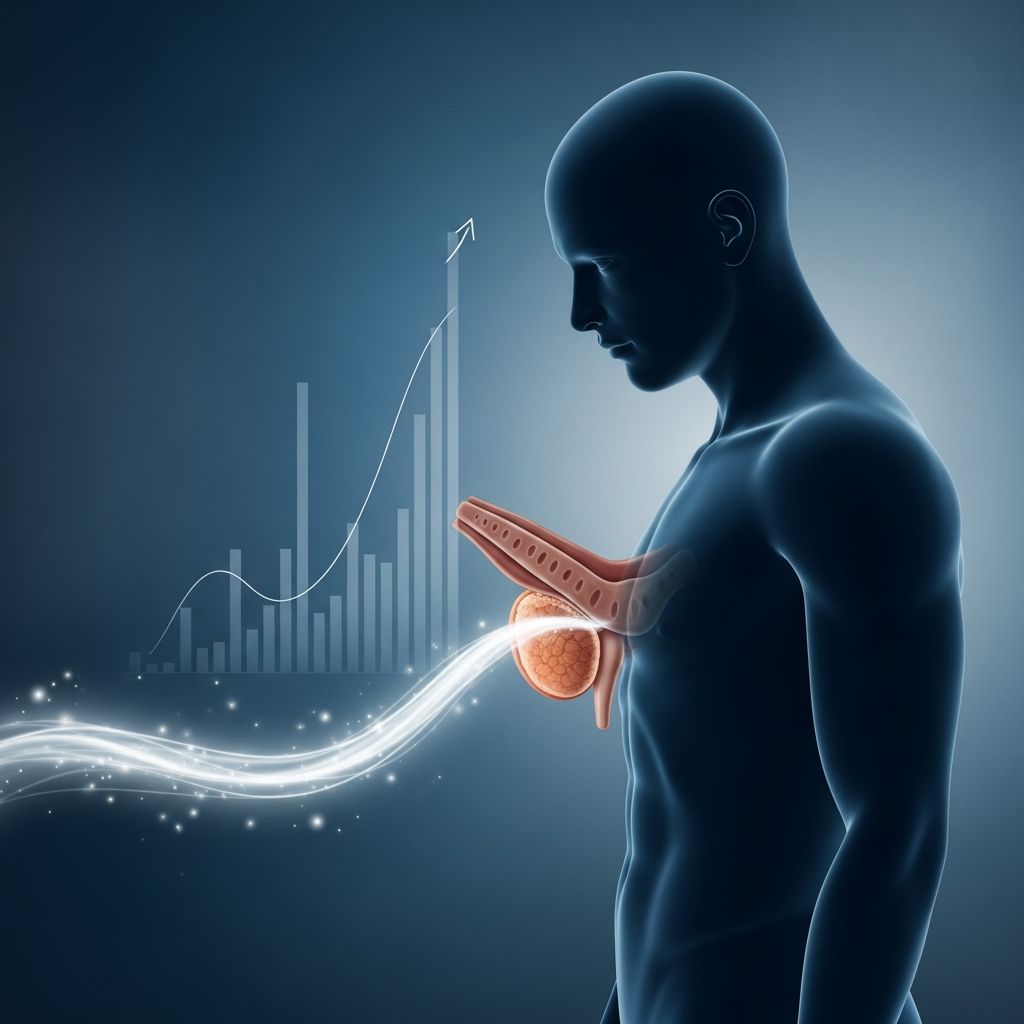
Ejaculation Frequency and Prostate Cancer Risk: What Science Reveals
Prostate cancer remains one of the most common malignancies affecting men worldwide, prompting researchers to identify modifiable risk factors that could help reduce disease incidence. Among the various lifestyle and behavioral factors studied, ejaculation frequency has emerged as a significant area of scientific investigation. Multiple large-scale epidemiological studies have demonstrated a consistent inverse relationship between ejaculation frequency and prostate cancer risk, suggesting that men who ejaculate more frequently throughout their adult lives may have a lower risk of developing this disease.
The connection between sexual activity and prostate health is not merely anecdotal but grounded in rigorous scientific evidence from prospective cohort studies involving tens of thousands of men. Researchers have discovered that this protective effect appears most pronounced for early-stage, localized prostate cancer rather than advanced disease, and the benefits may persist across different age groups when measured at multiple life stages.
The Research Foundation: Large-Scale Studies
The primary evidence supporting the relationship between ejaculation frequency and prostate cancer risk comes from the Health Professionals Follow-Up Study (HPFS), a prospective cohort study that has tracked the health outcomes of over 31,000 men since its inception. This comprehensive dataset has allowed researchers to examine associations between self-reported ejaculation frequency at different life stages and subsequent prostate cancer diagnoses over decades of follow-up.
In a landmark 2016 study published in European Urology, researchers analyzed data from men who reported their ejaculation frequency at ages 20-29, 40-49, and during the year preceding the study. The findings were striking: men reporting 21 or more ejaculations per month compared to those with only 4-7 ejaculations per month showed a 20% reduction in prostate cancer risk when measured at ages 20-29 years. Similar protective associations were observed when ejaculation frequency was measured at ages 40-49 years, indicating that the protective effect of frequent ejaculation may extend throughout adult life.
Understanding the Protective Mechanism
While the epidemiological evidence clearly demonstrates an inverse relationship between ejaculation frequency and prostate cancer risk, the biological mechanisms underlying this association have remained somewhat unclear. However, recent molecular-level research has begun to shed light on how frequent ejaculation influences prostate tissue at the genetic level.
The Prostate Stagnation Hypothesis
One leading theory explaining the protective effect of ejaculation frequency is the “prostate stagnation hypothesis.” This hypothesis proposes that infrequent ejaculation allows carcinogenic secretions and potentially harmful substances to accumulate and stagnate within the prostate gland. These accumulated carcinogens may then interact with prostate cells over extended periods, potentially damaging cellular DNA and initiating carcinogenic processes. In contrast, more frequent ejaculation would theoretically flush these potentially harmful substances from the prostate tissue, reducing exposure and lowering cancer risk.
Gene Expression Changes
Research led by Jennifer R. Rider at Boston University School of Public Health has provided molecular evidence supporting biological mechanisms behind the epidemiological observations. In a study examining prostate tissue from men diagnosed with prostate cancer, researchers found that higher ejaculation frequency was associated with alterations in the expression of 409 genes in normal prostate tissue. More importantly, these molecular changes involved six distinct biological processes at the cellular level, suggesting that ejaculation frequency influences fundamental cellular functions in the prostate.
Among the most significant findings was the association between higher ejaculation frequency and the cellular process of ubiquitin-mediated proteolysis, which plays a crucial role in regulating the cell cycle. Proper cell cycle regulation is essential for preventing uncontrolled cellular proliferation, a hallmark of cancer development. Additionally, research identified an association between higher ejaculation rates and increased production and export of citrate, a component of seminal fluid. This finding is particularly significant because reduced citrate production is a distinguishing feature of prostate cancer cells, suggesting that frequent ejaculation may help maintain normal prostate cell function.
Related Stories



Research Findings: Quantifying the Risk Reduction
Age-Specific Associations
The protective effects of ejaculation frequency have been documented across multiple age groups, suggesting that sexual activity may influence prostate cancer risk throughout adult life. When researchers examined ejaculation frequency specifically at ages 20-29 years, they found that men with 21 or more ejaculations per month had a hazard ratio of 0.81 compared to men with only 4-7 ejaculations per month, translating to approximately a 19% lower risk of prostate cancer. This association remained statistically significant even after accounting for various confounding factors.
Similarly, when ejaculation frequency was measured at ages 40-49 years, the protective effect was even more pronounced, with a hazard ratio of 0.78 for men ejaculating 21 or more times monthly compared to the reference group. This means roughly a 22% reduction in prostate cancer risk. The consistency of these associations across different age groups suggests that sexual activity influences prostate cancer development independently of age.
Disease-Specific Risk Patterns
An important nuance in the research findings is that the protective effect of ejaculation frequency appears to be specific to certain types of prostate cancer. The strongest associations have been observed for low-risk and organ-confined prostate cancer—cancers that are localized to the prostate gland itself and typically have a better prognosis. These associations remained robust even when researchers restricted their analysis to men who underwent PSA screening, reducing the possibility that detection bias could explain the findings.
Interestingly, the relationship between ejaculation frequency and advanced prostate cancer appears weaker or absent in some studies, with very high ejaculation frequencies showing a suggestive but not statistically significant increase in advanced cancer risk. This pattern suggests that frequent ejaculation may primarily benefit men by preventing the development of early-stage, slow-growing prostate cancers rather than affecting aggressive disease.
Continuous Exposure Analysis
When researchers analyzed ejaculation frequency as a continuous variable rather than dividing men into categorical groups, they found that each additional increment of 3 ejaculations per week was associated with approximately a 15% decrease in total prostate cancer risk. This dose-response relationship provides additional evidence that the association between ejaculation frequency and prostate cancer risk is genuine and not merely a statistical artifact.
Persistent Molecular Changes
Research has demonstrated that the molecular changes associated with higher ejaculation frequency in prostate tissue appear to persist for many years, even decades. This finding is important because it suggests that sexual activity during earlier life stages may have long-lasting protective effects on prostate tissue, potentially influencing cancer risk years or even decades later. These persistent molecular changes mean that the protective effect of frequent ejaculation is not merely a temporary acute response to sexual activity but rather represents sustained alterations in fundamental cellular processes.
Defining Ejaculation Frequency
In these research studies, “ejaculation frequency” is defined broadly to encompass all forms of ejaculation, including ejaculation through sexual intercourse, nocturnal emissions (wet dreams), and masturbation. This inclusive definition is important because it captures the full range of sexual activity and provides a comprehensive measure of prostate gland function and secretion patterns. The use of this broad definition enhances the biological relevance of the findings, as it reflects actual physiological events rather than limiting measurement to one specific type of sexual activity.
Key Considerations and Limitations
Study Population Characteristics
It is important to note that the major studies establishing the relationship between ejaculation frequency and prostate cancer risk were conducted primarily in cohorts of middle-aged and older white men in the United States. Therefore, the findings may not be directly generalizable to other ethnic groups, younger men, or men from different geographic regions. However, the consistency of findings across multiple large studies and the biological plausibility of proposed mechanisms suggest that similar associations may exist across diverse populations.
Residual Confounding
While researchers have attempted to account for known prostate cancer risk factors, including family history, history of sexually transmitted infections, and screening practices, the possibility of residual confounding cannot be completely eliminated. Men with higher ejaculation frequency may differ from those with lower frequency in ways not fully captured by available measurements, potentially influencing the observed associations.
Implications for Prostate Cancer Prevention
The evidence linking ejaculation frequency to reduced prostate cancer risk has potential implications for cancer prevention strategies. However, it is important to emphasize that ejaculation frequency should not be viewed as a primary or sole prevention strategy for prostate cancer. Rather, it represents one modifiable behavioral factor that may contribute to overall prostate health when combined with other evidence-based preventive measures.
Men interested in reducing their prostate cancer risk should consider multiple strategies, including maintaining a healthy weight, consuming a diet rich in fruits and vegetables, engaging in regular physical activity, limiting processed red meat consumption, and discussing screening options with their healthcare providers. For men at higher risk due to family history or race, having informed conversations with physicians about the potential benefits and risks of screening tests such as PSA testing is particularly important.
Ongoing Research Directions
While the current body of research establishes a strong epidemiological association between ejaculation frequency and prostate cancer risk, several important questions remain unanswered. Future research may clarify whether interventions aimed at increasing ejaculation frequency could meaningfully reduce prostate cancer incidence in the population. Additionally, researchers continue to investigate the specific molecular mechanisms linking ejaculation to prostate tissue health, with the goal of potentially developing targeted medical or behavioral interventions to prevent prostate cancer.
Frequently Asked Questions
Q: How much ejaculation frequency is considered protective against prostate cancer?
A: Research suggests that ejaculating 21 or more times per month (roughly 5 times per week) is associated with approximately a 20% reduction in prostate cancer risk compared to ejaculating only 4-7 times per month. However, even more moderate increases in frequency may provide some protective benefit.
Q: Does the type of ejaculation matter—intercourse versus masturbation?
A: Studies have examined total ejaculation frequency regardless of the source, including intercourse, masturbation, and nocturnal emissions. The research suggests that the protective effect relates to the frequency of ejaculation itself rather than the specific mechanism by which ejaculation occurs.
Q: Is the protective effect of ejaculation frequency the same at all ages?
A: Research has documented protective associations when ejaculation frequency is measured at ages 20-29 and 40-49 years, suggesting that the benefit may extend throughout adult life. However, the strongest associations have been observed when frequency is measured more recently, suggesting that current sexual activity may be most relevant.
Q: Does high ejaculation frequency increase the risk of advanced prostate cancer?
A: While very high ejaculation frequencies show some suggestive associations with advanced prostate cancer risk in some analyses, these findings are not statistically significant and should be interpreted cautiously. The protective effect appears most robust for early-stage, organ-confined prostate cancer.
Q: Should men specifically increase their sexual activity to prevent prostate cancer?
A: While the evidence suggests an association between higher ejaculation frequency and lower prostate cancer risk, ejaculation frequency should not be viewed as a primary prevention strategy. Men should focus on maintaining overall health through diet, exercise, weight management, and appropriate screening discussions with their healthcare providers.
Q: How long do the protective molecular changes from ejaculation persist?
A: Research indicates that molecular changes associated with higher ejaculation frequency persist for many years, suggesting that sexual activity during earlier life stages may have long-lasting protective effects on prostate tissue health.
Q: Are these findings applicable to all men regardless of ethnicity?
A: The major studies establishing this relationship were conducted primarily in white men in the United States. While the biological mechanisms are likely universal, the findings may not be directly generalizable to other ethnic groups without additional research.
References
- Ejaculation Changes Prostate Tissue, Lowering Cancer Risk — Boston University School of Public Health. 2018-09-14. https://www.bu.edu/articles/2018/ejaculation-changes-prostate-tissue-lowering-cancer-risk/
- Ejaculation Frequency and Risk of Prostate Cancer — European Urology, PubMed/NIH. 2016-04-01. https://pubmed.ncbi.nlm.nih.gov/27033442/
- Ejaculation Frequency and Subsequent Risk of Prostate Cancer — JAMA (Journal of the American Medical Association). 2004-04-07. https://jamanetwork.com/journals/jama/fullarticle/198487
- Why more sex may lower prostate cancer risk — Harvard T.H. Chan School of Public Health. 2022-03-22. https://hsph.harvard.edu/news/why-more-sex-may-lower-prostate-cancer-risk/
Similar Articles








Read full bio of medha deb