Ejection Fraction: What It Is, Types and Normal Range
Understanding ejection fraction: Your guide to heart strength, normal ranges, and what abnormal values mean.
Understanding Ejection Fraction: A Comprehensive Guide to Heart Health
Ejection fraction (EF) is one of the most important indicators of your heart’s health and function. It measures the percentage of oxygen-rich blood pumped out to your body with each heartbeat, providing crucial information about how efficiently your heart is working. Understanding your ejection fraction can help you and your healthcare provider make informed decisions about your cardiovascular health and treatment options.
What Is Ejection Fraction?
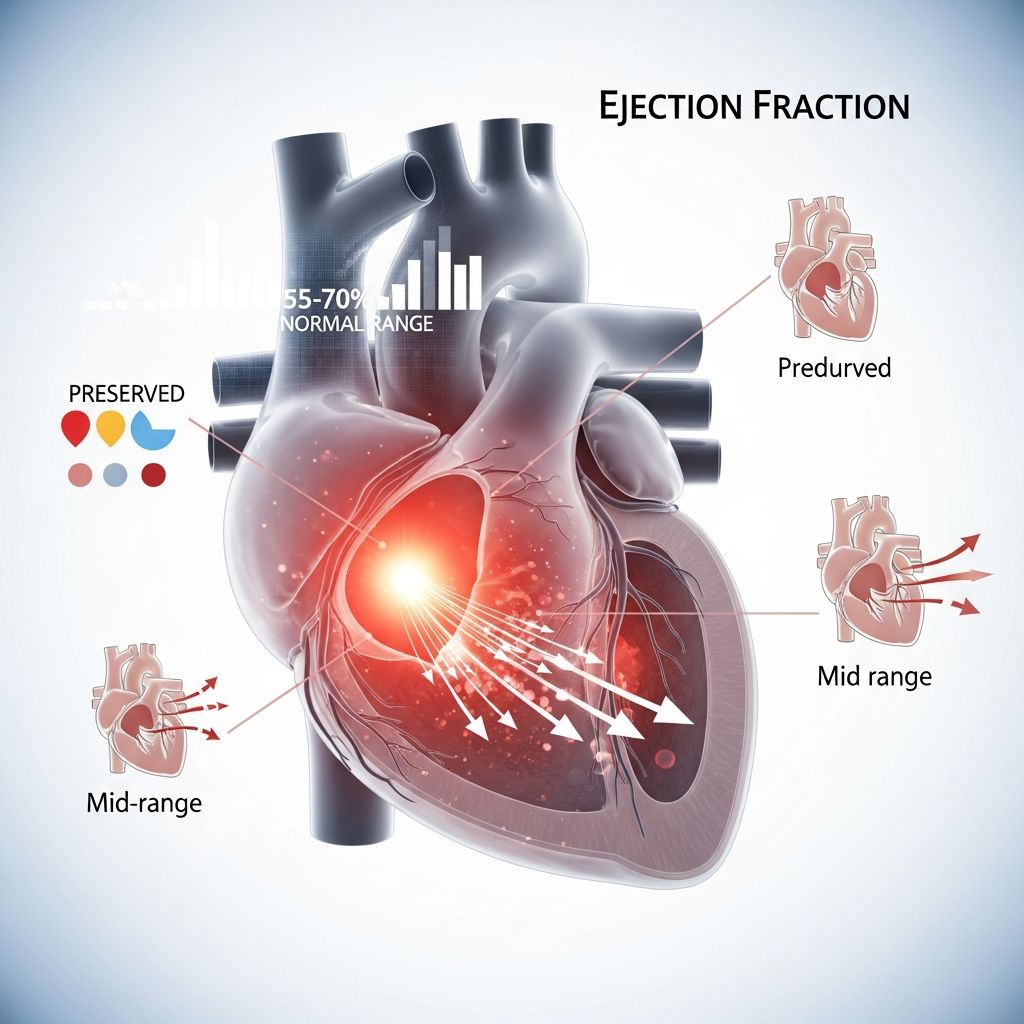
Ejection fraction represents the proportion of blood that leaves your left ventricle—the heart’s main pumping chamber—with each contraction. Think of it as a measurement of your heart’s pumping power. When your heart beats, the left ventricle fills with blood during the relaxation phase (diastole), then contracts to push that blood out to the rest of your body during the contraction phase (systole). The ejection fraction tells us what percentage of the total blood volume in the left ventricle actually gets pumped out with each heartbeat.
A normal ejection fraction indicates that your heart is efficiently moving blood throughout your body, ensuring that all your organs and tissues receive adequate oxygen and nutrients. When ejection fraction is abnormal—either too low or, rarely, too high—it suggests that your heart may be struggling to perform its essential function.
How Is Ejection Fraction Calculated?
The ejection fraction formula is straightforward but important to understand. The calculation equals the amount of blood pumped out of the ventricle with each contraction (stroke volume) divided by the end-diastolic volume (the total amount of blood in the ventricle when it’s full). To express this as a percentage, you multiply by 100:
EF = (Stroke Volume / End-Diastolic Volume) × 100
In other words, the ejection fraction is the percentage of blood pumped out of the ventricle after a contraction. Healthcare providers typically measure ejection fraction using imaging tests such as echocardiograms, which use ultrasound to visualize the heart and calculate these volumes, or cardiac MRI, which provides detailed images of the heart structure and function.
Normal Ejection Fraction Ranges
For a healthy heart, ejection fraction typically ranges from 50% to 70%. This means that with each heartbeat, 50% to 70% of the blood in your left ventricle gets pumped out to your body. However, normal ranges can vary slightly between men and women and depend on various individual factors.
Ejection Fraction Values by Sex
| Sex | Normal | Mildly Abnormal | Moderately Abnormal | Severely Abnormal |
|---|---|---|---|---|
| Male | 52% to 72% | 41% to 51% | 30% to 40% | Below 30% |
| Female | 54% to 74% | 41% to 53% | 30% to 40% | Below 30% |
These ranges highlight that women typically have slightly higher normal ejection fractions than men. Any measurement outside these ranges warrants further investigation and discussion with your healthcare provider about what it means for your specific situation.
What Does Low Ejection Fraction Mean?
A low ejection fraction indicates that your heart’s pumping action is weaker than normal. The lower your ejection fraction, the less efficiently your heart is moving blood throughout your body. This condition is directly associated with heart failure, and the severity of symptoms generally correlates with how far your ejection fraction deviates from normal.
Related Stories



When ejection fraction is reduced, your body may not receive adequate blood flow to meet its oxygen demands, particularly during physical activity or stress. This can lead to various symptoms and complications that affect your quality of life and overall health.
Symptoms of Low Ejection Fraction
If you have a low ejection fraction, you might experience:
- Shortness of breath, especially during physical activity or when lying flat
- Fatigue and weakness
- Swelling in your legs, ankles, or abdomen
- Rapid or irregular heartbeat
- Difficulty exercising or reduced exercise tolerance
- Persistent cough or wheezing
- Dizziness or lightheadedness
The severity and combination of symptoms vary depending on how low your ejection fraction is and how rapidly it declined. Some people with mildly reduced ejection fraction may have minimal symptoms, while others with severely reduced ejection fraction may experience significant limitations in daily activities.
What Does High Ejection Fraction Mean?
While less common, an ejection fraction of 75% or higher is unusual and can indicate potential problems. An abnormally high ejection fraction may occur in people with hypertrophic cardiomyopathy, a condition where the heart muscle becomes abnormally thick. This thickening can reduce the heart’s ability to fill properly and pump efficiently, paradoxically leading to symptoms similar to those of reduced ejection fraction despite the high percentage.
A very high ejection fraction can also be associated with other conditions such as restrictive cardiomyopathy or aortic stenosis. If you have an elevated ejection fraction, your doctor will investigate the underlying cause to determine appropriate treatment.
Heart Failure with Preserved Ejection Fraction
Interestingly, some people with a normal ejection fraction also have heart failure. This condition is known as heart failure with preserved ejection fraction (HFpEF). In HFpEF, the heart contracts normally and ejects a normal percentage of blood, but the heart muscle becomes stiff and cannot relax properly to fill with blood adequately. This impaired filling leads to heart failure symptoms despite a preserved ejection fraction.
HFpEF accounts for a significant portion of heart failure cases and requires different diagnostic approaches and treatment strategies compared to heart failure with reduced ejection fraction. If you have symptoms of heart failure but a normal ejection fraction, your doctor may order additional tests to evaluate your heart’s diastolic (relaxation) function.
Why Ejection Fraction Matters
Understanding your ejection fraction is crucial for several reasons. First, it provides objective information about your heart’s pumping efficiency and helps your healthcare provider assess the severity of any heart condition you may have. Second, ejection fraction guides treatment decisions—different medications and interventions are recommended based on whether your ejection fraction is reduced, normal, or elevated.
According to cardiologists, low ejection fraction is directly proportional to survival outcomes. By improving your ejection fraction through appropriate treatment, you can significantly improve your survival outlook and quality of life. This is why monitoring your ejection fraction regularly and following your doctor’s treatment recommendations is so important.
It’s particularly helpful to know your ejection fraction if you have or are at risk for conditions that can lead to heart failure, such as high blood pressure, diabetes, coronary artery disease, or a family history of heart disease.
How Ejection Fraction Is Measured
Several imaging tests can measure your ejection fraction with varying degrees of detail and accuracy. The most common tests include:
- Echocardiogram: Uses ultrasound waves to create images of your heart, allowing doctors to measure chamber sizes and calculate ejection fraction
- Cardiac MRI: Provides detailed images of heart structure and function using magnetic resonance imaging
- Nuclear imaging (MUGA scan): Uses radioactive tracers to track blood movement through the heart chambers
- Cardiac catheterization: Involves inserting a catheter into blood vessels to directly measure pressure and volume
- CT scan: Uses X-rays to create detailed cross-sectional images of the heart
Your doctor will recommend the most appropriate test based on your medical history, current symptoms, and the specific information needed to guide your treatment plan.
Improving Your Ejection Fraction
If you have a reduced ejection fraction, several approaches can help improve it. Medications such as ACE inhibitors, beta-blockers, and aldosterone antagonists have been shown to help the heart pump more effectively over time. Continued use of these medications is essential for maintaining ejection fraction improvements.
Lifestyle modifications also play a crucial role in improving ejection fraction. These include managing high blood pressure, maintaining a healthy weight, limiting sodium intake, avoiding alcohol and smoking, regular exercise as tolerated, and managing stress. Working closely with your healthcare team to implement these changes can lead to meaningful improvements in your heart function and overall health.
Ejection Fraction and Treatment Planning
Your ejection fraction measurement helps your healthcare provider determine the most effective treatment strategy for your specific situation. Knowing how your heart is functioning allows doctors to choose medications, recommend lifestyle changes, or consider interventions like implantable devices or surgery when appropriate. Regular monitoring of your ejection fraction helps track whether treatments are working and whether adjustments are needed.
Frequently Asked Questions About Ejection Fraction
Q: What is considered a dangerously low ejection fraction?
A: An ejection fraction below 30% is considered severely abnormal and indicates advanced heart failure. Ejection fractions in the 30% to 40% range are moderately abnormal, while 41% to 51% (males) or 41% to 53% (females) are mildly abnormal. Any significant reduction from normal ranges warrants medical attention.
Q: Can ejection fraction improve over time?
A: Yes, ejection fraction can improve with appropriate treatment, including medications, lifestyle changes, and in some cases, devices like pacemakers or defibrillators. However, improvement takes time and requires consistent adherence to treatment plans.
Q: How often should I have my ejection fraction measured?
A: The frequency depends on your specific condition and whether you’re undergoing treatment. Your cardiologist will recommend appropriate intervals, which might range from every few months to annually, depending on your situation.
Q: Does age affect what is considered a normal ejection fraction?
A: While the reference ranges remain consistent, some studies suggest that ejection fraction may vary slightly with age. Your doctor considers your age and other health factors when interpreting your results.
Q: Can I have symptoms of heart failure with a normal ejection fraction?
A: Yes, this condition is called heart failure with preserved ejection fraction (HFpEF). In this case, the heart pumps normally but cannot relax and fill properly, still causing heart failure symptoms.
Q: What medications help improve ejection fraction?
A: ACE inhibitors, beta-blockers, aldosterone antagonists, and other heart failure medications have been proven to help improve ejection fraction. Your doctor will recommend specific medications based on your condition.
References
- Ejection Fraction: What It Is, Types and Normal Range — Cleveland Clinic. 2024. https://my.clevelandclinic.org/health/articles/16950-ejection-fraction
- Optimal left ventricular ejection fraction in risk stratification of cardiac sarcoidosis patients — National Center for Biotechnology Information (NIH). 2023. https://pmc.ncbi.nlm.nih.gov/articles/PMC10516712/
- 7 Ways to Improve Ejection Fraction – Health Cleveland Clinic — Cleveland Clinic. 2024. https://health.clevelandclinic.org/7-ways-to-improve-your-ejection-fraction-and-what-that-actually-means
- Factors Associated With Maintenance of an Improved Ejection Fraction — Journal of the American Heart Association. 2023. https://www.ahajournals.org/doi/10.1161/JAHA.123.031093
- Heart failure with reduced ejection fraction: What’s new in the 2022 Guidelines — Cleveland Clinic Journal of Medicine. 2022. https://www.ccjm.org/content/90/4/215
- Congestive Heart Failure: Symptoms, Stages & Treatment — Cleveland Clinic. 2024. https://my.clevelandclinic.org/health/diseases/17069-heart-failure-understanding-heart-failure
- Get Heart Failure Treatment | Cleveland Clinic — Cleveland Clinic. 2024. https://my.clevelandclinic.org/services/heart-failure-treatment
Similar Articles








Read full bio of Sneha Tete