Elastolytic Giant Cell Granuloma: Diagnosis & Clinical Care
Rare granulomatous skin disorder linked to sun damage, featuring elastolysis and giant cells on sun-exposed areas.
Author: Expert Dermatologist (Synthesized from peer-reviewed sources)
Revised: January 2026
What is elastolytic giant cell granuloma?
Elastolytic giant cell granuloma (EGCG), also known as actinic granuloma or annular elastolytic giant cell granuloma (AEGCG), is a rare granulomatous skin disorder characterized by an inflammatory reaction targeting damaged elastic fibers in the dermis. It primarily affects sun-exposed areas such as the face, dorsal hands, neck, and upper extremities, presenting as annular plaques with raised borders and central hypopigmentation or atrophy. First described in the 1970s, EGCG features hallmark histological findings of elastolysis (breakdown of elastic fibers), elastophagocytosis (phagocytosis of elastic fragments by giant cells), and infiltration by multinucleated giant cells.
The condition is benign but chronic, often lasting years, with variable response to treatment and a tendency for recurrence. While typically localized, generalized forms have been reported. EGCG must be differentiated from similar granulomatous conditions like granuloma annulare, collagenous and elastotic marginal plaques of the hands (CEMPH), and sarcoidosis.
Who gets elastolytic giant cell granuloma?
EGCG predominantly affects middle-aged to older adults, with a mean age of onset around 50–60 years, and shows a slight female predominance in some series. It is more common in fair-skinned individuals with significant sun exposure history, aligning with its association with actinic damage. Rare cases occur in younger patients or on sun-protected sites like palms, suggesting additional triggers beyond UV radiation.
- Prevalence: Exact incidence is unknown due to rarity; retrospective studies report dozens of cases over decades.
- Risk factors: Chronic sun exposure, fair skin phototype, possible autoimmune predisposition.
- Sites: 80–90% sun-exposed (face 40%, hands 30%); 7–20% mixed or protected areas.
Summary
EGCG arises from an aberrant immune response to altered elastic fibers, likely due to solar elastosis. CD4+ T-cell mediated inflammation leads to macrophage and dendritic cell recruitment, forming granulomas with elastin degradation via matrix metalloproteinase-12 (MMP-12). Clinically, it manifests as pink papules coalescing into annular plaques. Biopsy confirms diagnosis via elastophagocytosis and absent mucin/necrobiosis. Treatments include topicals, systemic agents, and phototherapy, though recurrence is common (up to 50%). Prognosis is excellent for spontaneous resolution in some cases, but monitoring is advised.
Clinical features of elastolytic giant cell granuloma
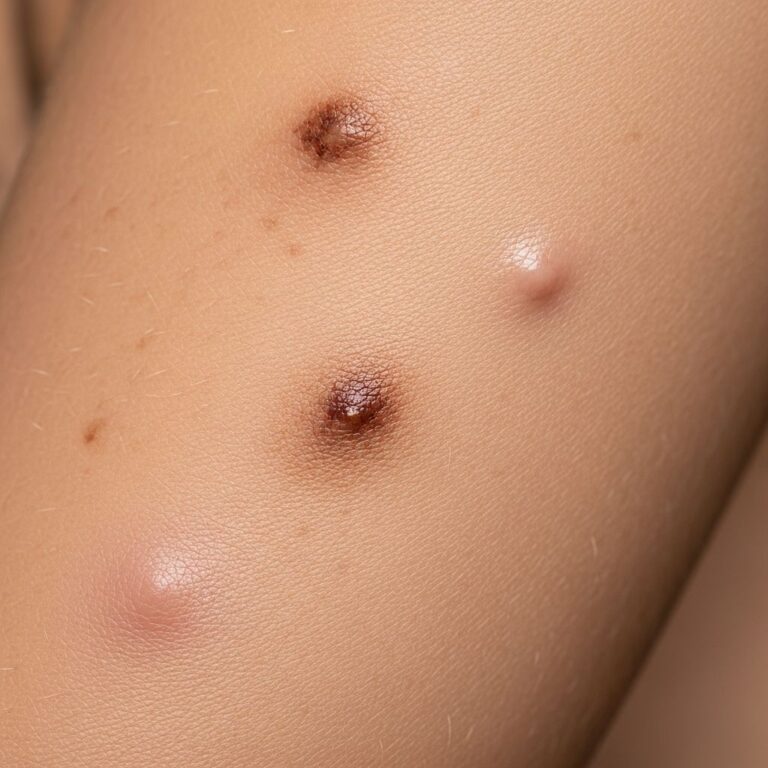
Lesions typically begin as small, flesh-coloured or erythematous papules that expand and coalesce into annular or polycyclic plaques measuring 2–10 cm. Key features include:
- Raised, red-brown or violaceous borders with subtle scaling.
- Central clearing, hypopigmentation, or atrophy.
- Smooth surface; rarely pruritic or symptomatic.
- Most common on face (periorbital, cheeks), dorsal hands, V-neck; less often arms, trunk.
- Rare variants: papular (disseminated small bumps), reticulated (net-like), or palmoplantar.
Progression is slow; untreated lesions persist for 2–5 years on average. Palm involvement, as in reported cases, shows marginal erythematous papules/plaques, mimicking granuloma annulare or vasculitis.
Diagnosis of elastolytic giant cell granuloma
Clinical suspicion arises from annular lesions on sun-damaged skin, but histological confirmation via punch biopsy is essential. Key pathology:
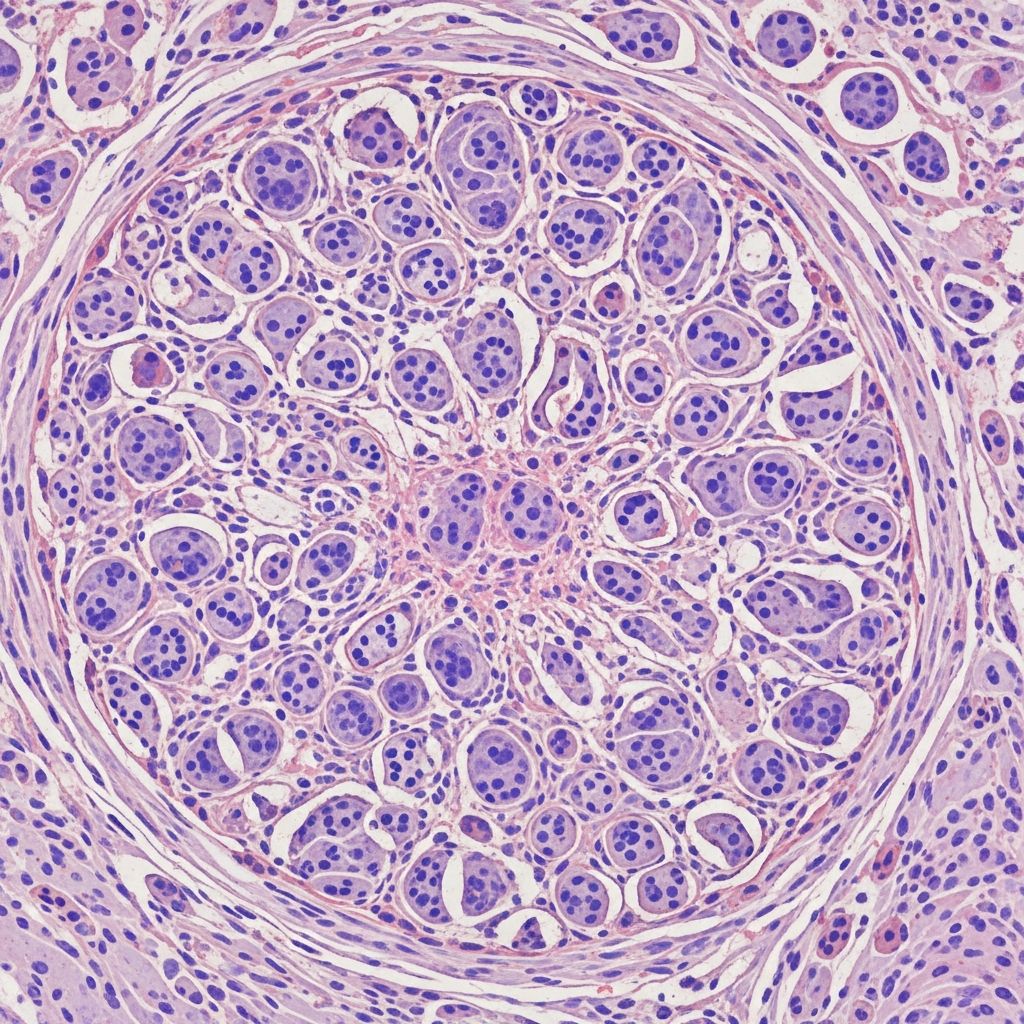
- Granulomatous infiltrate: Histiocytes, lymphocytes, multinucleated giant cells (foreign body type) in upper/mid-dermis.
- Elastolysis: Loss of elastic fibers in granulomatous zones (Verhoeff-Van Gieson stain).
- Elastophagocytosis: Elastic fragments within giant cell cytoplasm.
- Background: Solar elastosis; no necrobiosis, mucin (Alcian blue negative), or lipids.
- Thickened, haphazard collagen bundles may mimic CEMPH.
Related Stories



Differential diagnosis:
| Condition | Key Differentiators |
|---|---|
| Granuloma annulare | Mucin-positive, necrobiosis, no elastophagocytosis. |
| CEMPH | Hand margins, thickened collagen, less granulomas. |
| Sarcoidosis | Naked granulomas, no elastolysis. |
| Mid-dermal elastolysis | No giant cells/inflammation, band-like elastolysis. |
| Granulomatous infections | Special stains (GMS, AFB) positive. |
Imaging or labs rarely needed; rule out syphilis, mycosis fungoides if atypical.
Pathophysiology of elastolytic giant cell granuloma
Solar UV damage alters elastic fiber antigenicity, triggering CD4+ T-cell response. Macrophages/dendritic cells phagocytose elastin via MMP-12, forming giant cells. Upregulated MMP-12 confirms elastin degradation role. Autoimmunity or paraneoplastic links are hypothesized but unproven; elastic fiber-poor sites (scars, striae) are spared.
Treatment of elastolytic giant cell granuloma
No standardized guidelines exist; therapy is empiric based on extent/response. Success rates vary (30–70% clearance), with high recurrence.
| Category | Options | Efficacy/Notes |
|---|---|---|
| Topical | High-potency corticosteroids (clobetasol 0.05%), tacrolimus, pimecrolimus, tretinoin | Good for limited lesions; palm cases cleared in 2–4 weeks. |
| Intralesional | Corticosteroids | For solitary plaques. |
| Systemic | Pentoxifylline, antimalarials (hydroxychloroquine), retinoids (acitretin, isotretinoin), dapsone, cyclosporine (2.5–5 mg/kg/day) | For extensive/refractory; monitor side effects. |
| Phototherapy | Narrowband UVB, PUVA | Effective but UVB preferred (less carcinogenic). |
| Surgical | Excision, cauterization | Small, cosmetic areas only. |
First-line: Topical clobetasol BID for 2–4 weeks, taper. Refractory cases escalate to systemic/phototherapy. Sun protection advised.
Prognosis of elastolytic giant cell granuloma
Benign, self-limiting in 20–30% (mean 2.4 years). Treatment achieves clearance in most, but 40–60% recur post-cessation (months–years). No scarring typically; cosmetic concern main issue. Rare progression to generalized disease.
Frequently asked questions about elastolytic giant cell granuloma
What causes elastolytic giant cell granuloma?
Sun-induced damage to elastic fibers triggers immune-mediated granuloma formation via elastophagocytosis.
Is elastolytic giant cell granuloma cancerous?
No, it is a benign inflammatory condition, not associated with malignancy.
How is it diagnosed?
By skin biopsy showing giant cells with elastophagocytosis and elastolysis on special stains.
Does it go away on its own?
Yes, often self-resolves in 2–5 years, though treatment accelerates clearance.
Can it appear on palms or covered skin?
Rarely (6–20%); reported cases on palms responded well to topicals.
What is the best treatment?
Topical high-potency steroids first-line; options vary by extent.
Is sun exposure a risk after treatment?
Yes, ongoing photoprotection is recommended to prevent recurrence.
References
- Two Case Reports of Elastolytic Giant Cell Granuloma on the Palms — Dove Press (Clinical, Cosmetic and Investigational Dermatology). 2021. https://www.dovepress.com/two-case-reports-of-elastolytic-giant-cell-granuloma-on-the-palms-peer-reviewed-fulltext-article-CCID
- Elastolytic giant cell granuloma — DermNet NZ. Accessed 2026. https://dermnetnz.org/topics/elastolytic-giant-cell-granuloma
- Annular Elastolytic Giant Cell Granuloma — Dermatology Advisor. Accessed 2026. https://www.dermatologyadvisor.com/home/decision-support-in-medicine/dermatology/annular-elastolytic-giant-cell-granuloma/
- Treatment of Annular Elastolytic Giant Cell Granuloma With Topical Tretinoin — Journal of Drugs in Dermatology. 2017. https://jddonline.com/articles/treatment-of-annular-elastolytic-giant-cell-granuloma-with-topical-tretinoin-S1545961617P0699X
Similar Articles








Read full bio of medha deb