Elastosis Perforans Serpiginosa: Pathology
Comprehensive guide to the pathological mechanisms of elastosis perforans serpiginosa.
Elastosis Perforans Serpiginosa: Understanding the Pathology
Elastosis perforans serpiginosa (EPS) is a rare perforating dermatosis characterized by the transepidermal elimination of abnormal elastic fibers from the papillary dermis. This unique condition represents one of four primary perforating disorders and involves a complex interplay between abnormal elastic tissue and the body’s inflammatory response. Understanding the pathological mechanisms underlying EPS is essential for accurate diagnosis and clinical management of affected patients.
Historical Background and Classification
Elastosis perforans serpiginosa was first described by Lutz in 1953, establishing it as a distinct clinical entity within the spectrum of perforating skin disorders. The condition is classified as a primary perforating dermatosis, alongside reactive perforating collagenosis, perforating folliculitis, and Kyrle disease. This classification reflects the shared characteristic of transepidermal elimination of dermal material, which distinguishes perforating disorders from other cutaneous conditions.
The recognition of EPS as a distinct pathological entity has evolved significantly since its initial description, with subsequent research identifying three distinct forms of the disease and clarifying its histopathological features. This evolution in understanding has improved diagnostic accuracy and clinical recognition among dermatologists worldwide.
Demographic and Clinical Presentation
Elastosis perforans serpiginosa demonstrates specific demographic patterns that inform both diagnosis and disease understanding. The condition most commonly affects individuals during early adulthood, with peak incidence occurring between 20-30 years of age. However, cases have been documented in children as young as 5 years and in individuals as old as 89 years, indicating a broader potential age range than initially recognized.
The male predominance in EPS is well-established, with males affected approximately four times more frequently than females, representing a male-to-female ratio of approximately 4:1. Approximately 90% of EPS cases occur in individuals under 30 years of age, with only 25% of cases detected among women, underscoring the notable sex-based differences in disease prevalence.
Clinical presentation of EPS typically includes:
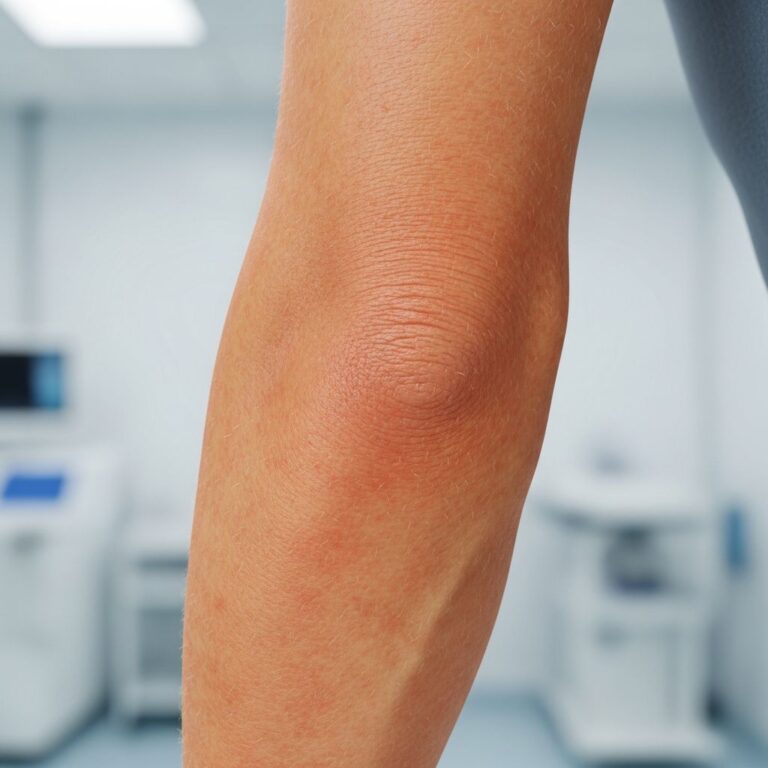
- Small reddish or skin-colored papules and plaques measuring 2-5 mm in diameter
- Keratotic surface texture with hyperkeratotic appearance
- Serpiginous (snake-like) or annular (ring-shaped) arrangement patterns
- Central umbilication or pitting in individual lesions
- Crusted or scaly plugs within central pits
- Lesions often symmetrically distributed, typically solitary rather than numerous
The back of the neck represents the most frequently affected site, involved in approximately 70% of cases, while the arms (20%), face (11%), legs (6%), and trunk (3%) are affected less commonly. This characteristic distribution pattern can assist clinicians in clinical diagnosis and differential diagnosis considerations.
Pathological Mechanisms and Etiology
The underlying etiology and pathogenesis of elastosis perforans serpiginosa remain incompletely understood, despite significant research efforts. Current understanding suggests a multifactorial mechanism involving abnormal elastic fiber formation and aberrant inflammatory response. The prevailing theory proposes that the epidermis perceives abnormal elastic tissue as a foreign object, triggering an inflammatory attack that facilitates transepidermal elimination of these fibers.
Related Stories



The origin of abnormal elastic tissue in EPS remains unclear, with evidence suggesting potential contributions from genetic mutations or external factors. Penicillamine exposure has been identified as a significant exogenous factor capable of inducing EPS, indicating that external agents can trigger or modify the disease process. In penicillamine-induced EPS cases, calcification between collagen fibers may be observed, representing a distinguishing histopathological feature.
Recent molecular research has advanced understanding of disease mechanisms. In 2000, Fujimoto and colleagues identified 67 kDa elastin receptor peptides on keratinocytes located near transepidermal tunnels, suggesting these receptors may facilitate abnormal fiber migration and contribute to the pathological process characteristic of EPS. This discovery provides molecular insight into how aberrant elastic fibers interact with epidermal cells to generate disease manifestations.
Histopathological Features and Diagnostic Findings
The histopathological examination of elastosis perforans serpiginosa reveals distinctive and characteristic features that are essential for accurate diagnosis and differentiation from related conditions. Skin biopsy remains the gold standard diagnostic method, providing definitive confirmation through histological analysis.
Key histopathological findings in EPS include:
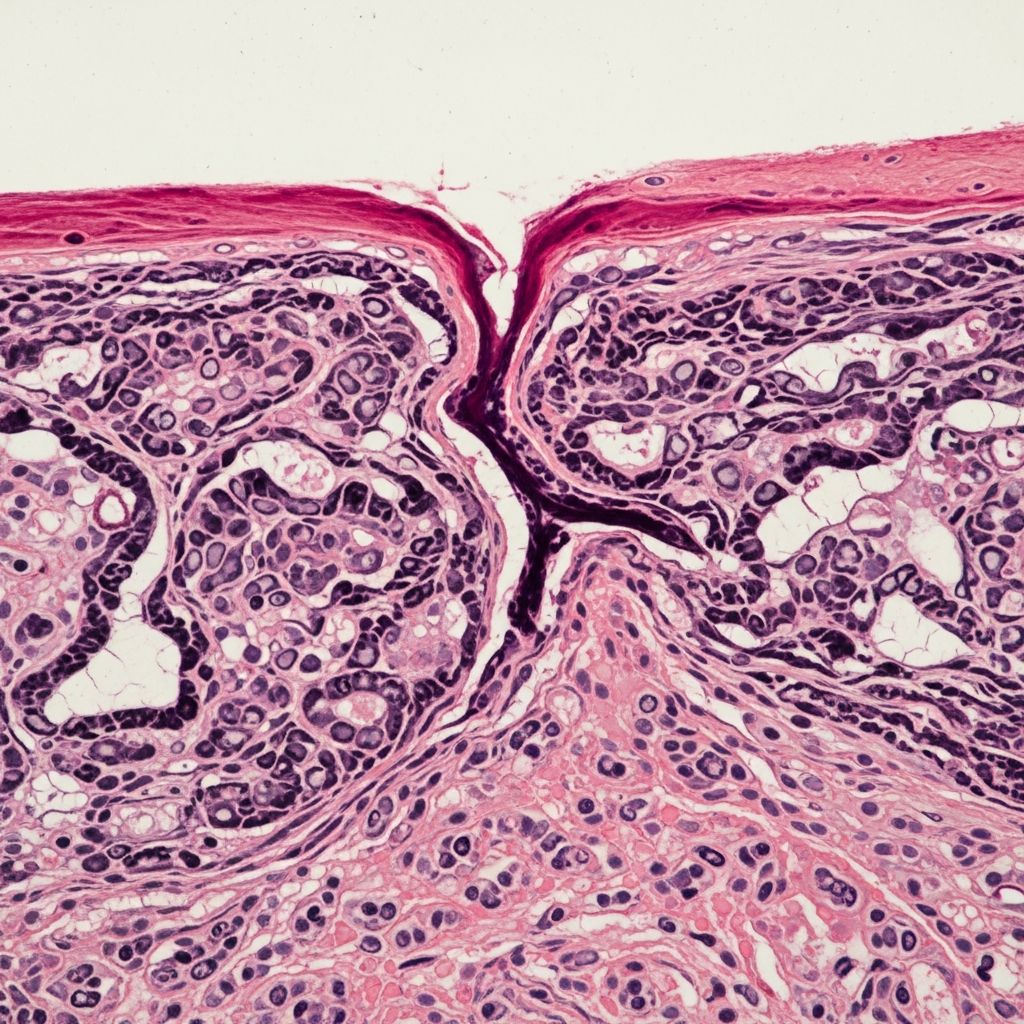
- Focal epidermal hyperplasia with acanthosis and thickened epidermis surrounding the pathological channel
- Narrow vertical transepidermal channels extending from dermis through epidermis in straight, wave, corkscrew, or spiral arrangements
- Transepidermal elimination of basophilic nuclear debris and eosinophilic degenerated elastic fibers within these channels
- Marked increase in amount and thickness of elastic fibers in the papillary dermis
- Compacted, twisted, and fragmented elastic fibers arranged vertically in the papillary layer
- Bowl-shaped cavity at the skin surface filled with keratinous plug containing parakeratotic keratin
- Basophilic degeneration material in transepidermal channels consisting of keratinocyte remnants, crumbled inflammatory cells, and elastic fibers
Special staining techniques are invaluable in confirming the elastic fiber involvement characteristic of EPS. Verhoeff-van Gieson staining is particularly useful, demonstrating dense clumps of altered elastic fibers forming compact arrangements in the upper dermis and papillary layer. This specialized staining specifically highlights elastic tissue, enabling clear visualization of both the increased quantity and abnormal morphology of elastic fibers in affected areas.
Inflammatory infiltration represents another important histopathological component of EPS. Chronic inflammatory infiltrates containing lymphocytes, macrophages, and multinucleated giant cells are frequently observed in the dermis at sites of fiber perforation. These inflammatory cells accumulate at the entrance of transepidermal channels, forming characteristic pincers-like configurations that contribute to the distinctive histological appearance of the condition.
Types and Variants of Elastosis Perforans Serpiginosa
Three distinct forms of elastosis perforans serpiginosa have been identified through clinical and epidemiological analysis:
- Primary EPS: Occurring spontaneously without association with systemic disease or external triggers
- Syndromic EPS: Associated with specific genetic syndromes such as Down syndrome, which demonstrate characteristic EPS manifestations
- Drug-induced EPS: Resulting from exposure to penicillamine or related compounds that trigger elastic fiber abnormalities
The identification of these distinct forms reflects the heterogeneous nature of disease presentation and underlying mechanisms. Primary EPS represents the most common presentation, while syndromic and drug-induced variants occur in specific clinical contexts. Recognition of these variants is important for understanding disease etiology and predicting treatment response.
Diagnostic Approach and Clinical Evaluation
Diagnosis of elastosis perforans serpiginosa is established through correlation of clinical presentation with characteristic histopathological findings. The distinctive clinical appearance of small hyperkeratotic papules arranged in serpiginous or annular patterns, particularly when localized to the posterior neck, raises clinical suspicion for EPS and prompts confirmatory investigation.
Skin biopsy remains essential for definitive diagnosis, allowing histopathological examination to demonstrate the pathognomonic features of transepidermal elimination of abnormal elastic fibers. Importantly, the histological diagnosis specifically demonstrates transepidermal elimination of elastic tissue, distinguishing EPS from secondary elastosis or other dermatological conditions affecting elastic fibers.
Additional diagnostic considerations may include potassium hydroxide preparation to exclude fungal infection in cases presenting with acute inflammation or uncertain clinical features. This differential diagnostic approach ensures accurate diagnosis and prevents inappropriate therapeutic interventions.
Disease Course and Natural History
Elastosis perforans serpiginosa typically demonstrates variable natural history. While some lesions may spontaneously resolve, many lesions persist for extended periods, sometimes remaining stable without significant change. The condition is classified as a mild dermatosis that is not accompanied by systemic organ involvement, distinguishing it from more aggressive or systemic perforating disorders.
Lesions frequently demonstrate central subsidence with healing, though solitary satellite lesions in close proximity may be detected during observation. Pruritus is not typically a feature of EPS, though occasional cases have been documented where affected individuals report subjective symptoms related to lesion manipulation rather than intrinsic disease characteristics.
Frequently Asked Questions About EPS Pathology
Q: What is the primary pathological hallmark of elastosis perforans serpiginosa?
A: The primary pathological hallmark of EPS is transepidermal elimination of abnormal elastic fibers from the papillary dermis through the epidermis, occurring via distinctive transepidermal channels. This process distinguishes EPS from other elastic fiber disorders and defines it as a perforating dermatosis.
Q: Why does the epidermis eliminate abnormal elastic fibers in EPS?
A: Current understanding suggests the epidermis perceives abnormal elastic tissue as a foreign material, triggering an inflammatory response that facilitates transepidermal elimination. This represents an aberrant host response to pathologically altered elastic fibers rather than a primary epidermal disorder.
Q: How is EPS definitively diagnosed through histopathology?
A: Skin biopsy demonstrates the characteristic features of focal epidermal hyperplasia, narrow transepidermal channels containing fragmented elastic fibers and nuclear debris, and markedly increased elastic fibers in the papillary dermis. Verhoeff-van Gieson staining confirms the elastic fiber involvement by highlighting dense clumps of altered elastic material.
Q: What is the significance of special staining in EPS diagnosis?
A: Verhoeff-van Gieson staining is essential for confirming elastic fiber involvement, as it specifically highlights elastic tissue and demonstrates the increased quantity, abnormal morphology, and distinctive arrangement of elastic fibers characteristic of EPS pathology.
Q: Can histopathological findings differentiate EPS from other perforating disorders?
A: Yes, the specific presence of transepidermal elimination of elastic tissue distinguishes EPS from reactive perforating collagenosis, perforating folliculitis, and Kyrle disease, which involve elimination of different dermal materials. Characteristic elastic fiber staining patterns further confirm the diagnosis.
Q: What role do inflammatory cells play in EPS pathology?
A: Chronic inflammatory infiltrates containing lymphocytes, macrophages, and multinucleated giant cells accumulate at perforation sites and surround transepidermal channels. These cells contribute to the host inflammatory response and facilitate the transepidermal elimination process characteristic of the disease.
References
- Elastosis perforans serpiginosa — Wikipedia. Accessed January 29, 2026. https://en.wikipedia.org/wiki/Elastosis_perforans_serpiginosa
- Elastosis Perforans Serpiginosa — National Center for Biotechnology Information, National Library of Medicine. 2013. https://pmc.ncbi.nlm.nih.gov/articles/PMC3956773/
- Elastosis perforans serpiginosa: a review of the literature and case reports — National Center for Biotechnology Information, National Library of Medicine. 2016. https://pmc.ncbi.nlm.nih.gov/articles/PMC5110631/
- Elastosis perforans serpiginosa — DermNet New Zealand. 2003. https://dermnetnz.org/topics/elastosis-perforans-serpiginosa
Similar Articles








Read full bio of medha deb