Elbow Fracture ORIF Surgery: Treatment & Recovery
Complete guide to elbow fracture ORIF surgery, procedure details, recovery timeline and rehabilitation.
Understanding Elbow Fracture Open Reduction and Internal Fixation
Open reduction and internal fixation, commonly referred to as ORIF, represents a surgical intervention designed to stabilize and facilitate the healing of broken bones. When an elbow fracture occurs and cannot be treated through conservative methods, ORIF becomes a necessary treatment option to restore proper bone alignment and function. This procedure is performed by orthopedic surgeons who have specialized training in treating bone, joint, and muscle conditions.
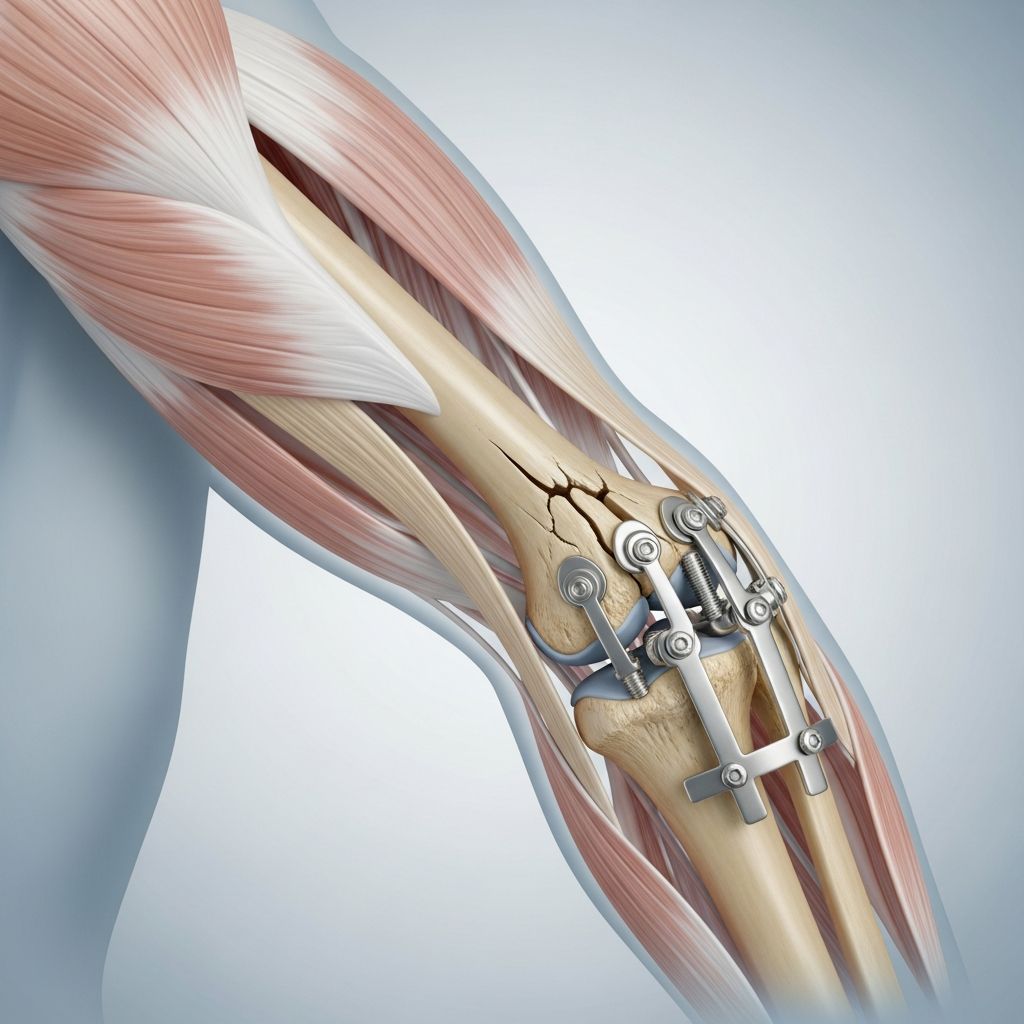
The elbow joint is a complex hinge-type articulation composed of three distinct bones working in harmony. The humerus, which forms the upper arm bone, connects with two forearm bones: the radius and the ulna. The ulna forms the bony prominence at the elbow point. When any of these bones fracture, the structural integrity of the joint becomes compromised, potentially affecting movement, stability, and long-term function.
What is ORIF and How Does It Work?
ORIF surgery combines two complementary components that work together to restore bone integrity. The “open reduction” aspect involves surgical exposure and repositioning of fractured bone segments back to their anatomically correct alignment. This differs from closed reduction, where a healthcare provider manually manipulates bones back into place without surgical exposure.
The “internal fixation” component refers to the stabilization method used to hold the repositioned bones in their correct position during the healing process. Surgeons employ various specialized hardware including screws, metal plates, wires, or pins that are surgically placed within or attached to the bones. This hardware prevents the bones from healing abnormally or drifting out of alignment as callus formation occurs.
Why You Might Need Elbow Fracture ORIF
Not all elbow fractures require surgical intervention. In fact, the majority of elbow fractures can be successfully managed through conservative treatment approaches. Healthcare providers typically prefer non-surgical options initially, including pain management, immobilization with splints or slings, and supervised healing.
However, certain circumstances make ORIF necessary to prevent long-term complications and ensure proper healing. Your healthcare provider will likely recommend ORIF if your fracture falls into one of the following categories:
- The fractured bone pieces are severely displaced or out of position
- The broken bone has pierced through the skin (compound fracture)
- The bone has fragmented into multiple pieces (comminuted fracture)
- Conservative treatment has failed to achieve proper alignment
- The fracture involves the joint surface, requiring precise anatomical restoration
ORIF can address fractures occurring at various locations within the elbow joint complex, including the lower portion of the humerus and the upper sections of the radius or ulna. Certain medical conditions increase the likelihood of elbow fractures and may influence treatment decisions. Osteoporosis, for example, significantly increases fracture risk in older adults by reducing bone density and strength.
The ORIF Surgical Procedure
Understanding the step-by-step process of ORIF surgery can help patients prepare mentally and physically for their procedure. The surgery typically takes place under general anesthesia, ensuring the patient remains asleep and comfortable throughout the operation.
Pre-Operative Preparation
Before the surgical procedure begins, the surgical team prepares the operative site through thorough cleansing and sterilization. Proper site preparation is critical for preventing surgical site infections and ensuring optimal healing outcomes.
Surgical Incision and Exposure
The surgeon creates an incision through the skin and underlying muscle tissue over the fracture site. The specific location and size of the incision varies depending on which bone or bones are fractured and the extent of displacement. This surgical exposure allows the surgeon direct visualization of the fractured bone fragments.
Open Reduction Phase
Once the fracture site is exposed, the surgeon carefully manipulates the bone fragments, bringing them back into proper anatomical alignment. This is the “reduction” phase of the procedure. The surgeon must achieve precise positioning to restore the joint’s mechanical integrity and prevent future complications such as arthritis or functional limitations.
Internal Fixation Phase
After achieving proper bone alignment, the surgeon secures the fragments using appropriate internal fixation hardware. The specific hardware selection depends on the fracture pattern, bone quality, and surgeon preference. Common fixation methods include:
- Metal screws placed through bone fragments
- Metal plates attached to the bone surface
- Stainless steel wires looped through or around bone segments
- Metal pins or nails inserted through the bone
Additional Repairs and Closure
Once bone fixation is secure, the surgeon performs any necessary additional repairs to surrounding soft tissues. The surgical team then closes the incision by carefully approximating the muscle layers and skin, using either sutures or surgical staples to hold tissues in proper alignment during healing.
Recovery and Post-Operative Care
Immediate Post-Operative Period
Following surgery, your elbow may be placed in a protective splint or cast to provide additional stability and reduce pain during the initial healing phase. Pain management is an important component of early recovery, and your healthcare team will provide appropriate analgesics and anti-inflammatory medications.
Physical Therapy and Rehabilitation
Physical therapy represents a critical component of successful ORIF recovery. Most patients begin therapeutic exercises shortly after surgery, sometimes as early as the following day. These exercises are designed to restore strength and flexibility to muscles surrounding the elbow and forearm.
Consistent performance of prescribed exercises is essential for optimal recovery outcomes. The exercises make a meaningful difference only when performed regularly and as directed by your physical therapist. Formal outpatient therapy typically continues for 8 to 12 weeks, though individual timelines vary based on fracture severity and healing progression.
Activity Restrictions
Your healthcare provider will establish specific activity restrictions based on your fracture severity. Initially, you may be permitted to use your arm for basic self-care activities including feeding, bathing, and dressing yourself. However, you will likely face restrictions on lifting, pushing, or pulling activities with the injured arm for a period of 6 to 12 weeks post-operatively.
Return to Normal Activities
Most patients can return to their normal daily activities within a few months following ORIF surgery. The specific timeline depends on individual healing rates, adherence to rehabilitation protocols, and the complexity of the original fracture. Your orthopedic surgeon will provide guidance regarding when it is safe to gradually increase activity levels.
Signs Requiring Medical Attention
While recovery typically progresses smoothly, certain signs and symptoms warrant immediate medical attention. Contact your healthcare provider if you experience any of the following:
- Increased swelling in your arm or elbow
- Redness at or around the surgical incision site
- Worsening or uncontrolled pain despite medication
- Fever or signs of infection
- Shortness of breath or chest pain, even at rest
- Rapid or irregular heartbeat
- Numbness or tingling in the hand or fingers
- Loss of color or warmth in the hand or fingers
Follow-Up Appointments and Wound Care
It is essential to maintain all scheduled follow-up appointments with your orthopedic surgeon. These appointments allow your surgeon to monitor healing progress, assess surgical outcomes, and make any necessary adjustments to your rehabilitation program.
Suture or staple removal typically occurs approximately one week after surgery, depending on wound healing progress. Your surgical team will provide specific instructions regarding wound care, when sutures can be removed, and any restrictions on showering or water exposure during the initial healing phase.
Comparison of Treatment Approaches
| Treatment Approach | Best For | Advantages | Disadvantages |
|---|---|---|---|
| Conservative Treatment | Non-displaced, non-comminuted fractures | No surgery required; lower infection risk; less invasive | Longer immobilization; may result in stiffness |
| ORIF Surgery | Displaced, comminuted, or open fractures | Precise alignment; faster healing; early mobilization; better long-term outcomes | Surgical risks; infection potential; hardware removal sometimes needed |
| External Fixation | Severe open fractures with soft tissue damage | Minimally invasive initially; allows soft tissue healing; can be converted to ORIF | Pin site infections; temporary external device; requires second surgery |
Expected Recovery Timeline
Understanding the typical recovery progression can help set realistic expectations for your healing journey. While individual timelines vary based on fracture complexity and personal factors:
- Week 1: Initial healing; pain management; suture/staple removal around day 7-10
- Weeks 2-6: Begin gentle range of motion exercises; continue pain management as needed
- Weeks 6-12: Progressive strengthening exercises; gradual increase in activity
- Months 3-4: Return to most normal daily activities; continued functional improvement
- Months 4-6: Near-complete recovery for most patients; return to sports or demanding activities
Frequently Asked Questions
Q: Will I need to have the hardware removed after my bone heals?
A: Not necessarily. Many patients do not require hardware removal unless it causes pain, irritation, or infection. Your surgeon will discuss this during follow-up visits. Some hardware, particularly internal plates and screws, may remain permanently without causing problems.
Q: How long will I need to wear a cast or splint after surgery?
A: The duration varies based on your specific fracture and surgical approach. Most patients wear protective immobilization for 2-6 weeks after surgery, though this timeline should be confirmed with your orthopedic surgeon.
Q: Can I drive after my ORIF surgery?
A: Driving restrictions depend on which arm was injured and your pain level. If your right arm is injured, you will likely need to wait 6-12 weeks or until you have adequate strength and pain-free motion. Your surgeon will provide specific guidance.
Q: Will my elbow be as strong as before the fracture?
A: With proper treatment and rehabilitation, most patients achieve excellent functional outcomes. The bone typically heals to its original strength, though physical therapy is essential to restore muscle strength and joint mobility.
Q: What are the risks of ORIF surgery?
A: Like all surgeries, ORIF carries potential risks including infection, bleeding, nerve or blood vessel injury, and anesthesia complications. However, serious complications are relatively uncommon when the procedure is performed by experienced orthopedic surgeons in appropriate surgical facilities.
Q: How much pain should I expect after surgery?
A: Some pain and discomfort are normal after surgery. Your surgical team will provide pain management medications and strategies. Pain typically improves significantly within the first two weeks and continues to diminish during the recovery period.
References
- Open Reduction and Internal Fixation of Elbow Fractures — University of Rochester Medical Center. https://www.urmc.rochester.edu/encyclopedia/content?contenttypeid=135&contentid=330
- Elbow (Olecranon) Fractures — American Academy of Orthopaedic Surgeons (AAOS). https://orthoinfo.aaos.org/en/diseases–conditions/elbow-olecranon-fractures/
- Surgery for Shoulder and Elbow Fractures — NYU Langone Health. https://nyulangone.org/conditions/shoulder-elbow-fractures/treatments/surgery-for-shoulder-elbow-fractures
- Having Elbow Fracture Open Reduction and Internal Fixation (ORIF) — University of Michigan Health. https://www.ummhealth.org/health-library/having-elbow-fracture-open-reduction-and-internal-fixation-orif
- ORIF Elbow Surgery and Physiotherapy — Physio.co.uk. https://www.physio.co.uk/what-we-treat/surgery/elbow/orif-elbow.php
Similar Articles







Read full bio of medha deb