Electrical Burn: 4 Types, Symptoms, Diagnosis, And Treatment
Comprehensive guide to electrical burns: causes, clinical features, diagnosis, management, and prevention strategies for optimal outcomes.
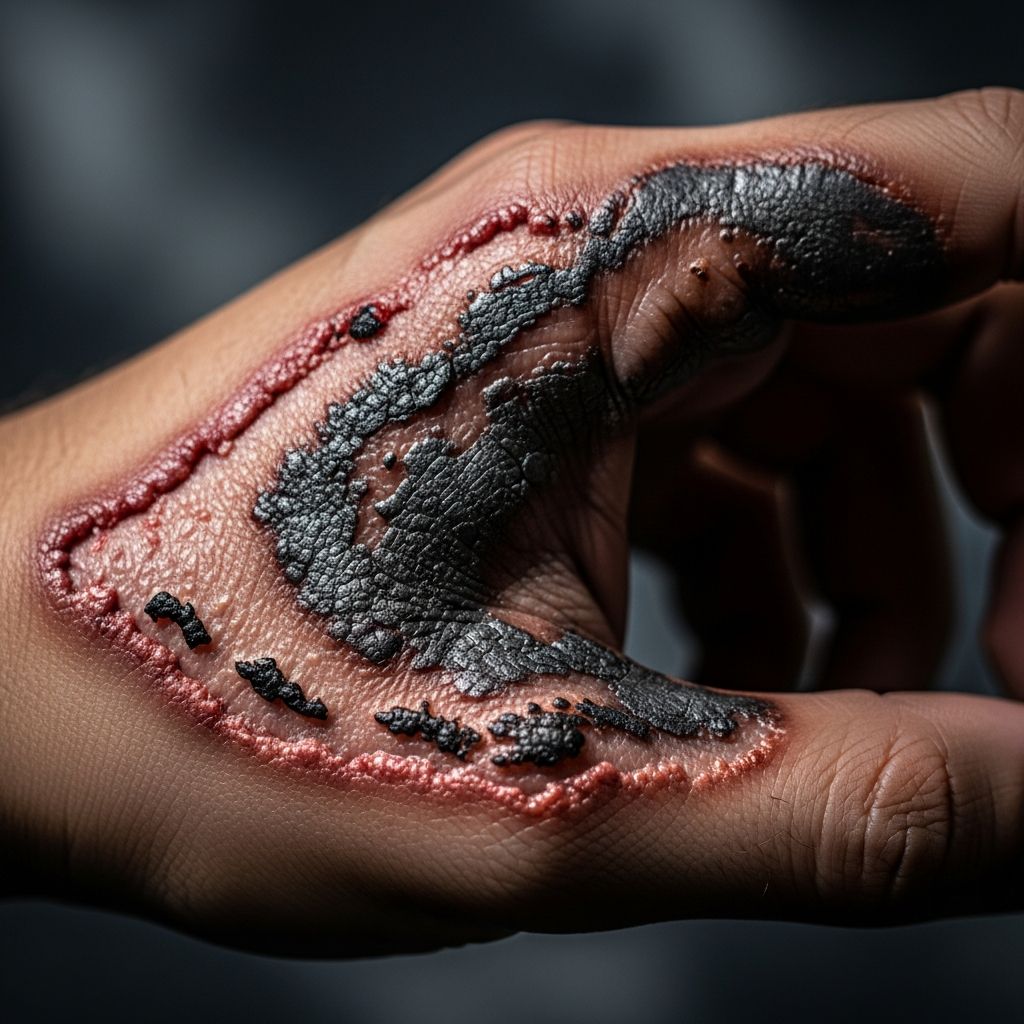
An
electrical burn
is a burn injury caused by electricity passing through the body. The injury may appear small on the skin but can be severe internally.Who gets electrical burns?
Electrical burns affect individuals exposed to electric current, most commonly:
- Electricians and construction workers handling live wires
- Individuals using faulty household appliances or outlets
- Children chewing on extension cords
- Victims of lightning strikes
- Workers in industrial settings with high-voltage equipment
High-risk groups include males aged 20–40 years in occupational settings, accounting for the majority of cases. Children under 5 years often suffer low-voltage household injuries.
What causes electrical burns?
Electrical burns occur when electric current passes through the body, converting to heat that damages tissues along the current’s path. Key factors determining severity include:
- Voltage: Low (<1000 V, household) vs. high (>1000 V, industrial)
- Current type: Alternating (AC, more dangerous due to muscle tetany) vs direct (DC)
- Duration of contact
- Pathway: Vertical (hand-to-foot, cardiac risk) vs. horizontal
- Resistance: Skin, bone, and tissue conductivity
Current generates heat per Joule’s law: Heat = I²Rt (I = current, R = resistance, t = time). High current density causes deep coagulation necrosis.
Types of electrical injuries
- True electrical burns: Current passes through body (entry/exit wounds)
- Flash burns: Arc heat without current entry (superficial cutaneous)
- Flame burns: Ignited clothing from electrical spark
- Lightning injuries: Massive voltage discharge (often survivable but multisystem)
What are the clinical features of electrical burn?
External skin findings often underestimate internal damage due to deep current penetration along low-resistance paths (muscle > vessel > nerve > skin > fat > bone).
Skin findings
- Entry wounds: Small, full-thickness burns (1–2 cm), depressed, charred, central pale halo (electrodesiccation)
- Exit wounds: Larger, explosive (due to steam expansion), often on foot/buttock
- Arc burns: Superficial flash injuries
- Associated burns: Flame or thermal from ignited materials
Ligamentous and skeletal injuries
Violent tetanic contractions cause:
- Spinal fractures (thoracolumbar)
- Shoulder dislocations
- Vertebral compression fractures
Neurological features
- Immediate: Loss of consciousness, confusion, seizures
- Late: Peripheral neuropathy, mononeuropathies
Cardiovascular features
Current traversing myocardium causes:
- Ventricular fibrillation, asystole (high-voltage)
- ECG changes: QT prolongation, ST elevation
- Myocardial necrosis
Ocular features
- Cataracts (60% develop within 1 year)
- Vitreous hemorrhage
Renal features
Myoglobinuria from muscle necrosis causes acute kidney injury:
- Tea-colored urine
- Rhabdomyolysis (CK >1000 IU/L)
How is electrical burn diagnosed?
Diagnosis combines history, examination, and investigations. All patients require hospital assessment.
History
- Voltage/current details
- Contact duration
- Entry/exit sites
- Loss of consciousness
- Falls/trauma
Examination
- ABCDE approach (prioritize airway/cardiac monitoring)
- Full-thickness burn assessment
- Neurological exam (GCS, focal deficits)
- Compartment pressure check
Investigations
| Test | Purpose |
|---|---|
| ECG (12-lead, continuous) | Arrhythmias, ischaemia |
| CK, myoglobin | Muscle damage |
| Urine myoglobin | Rhabdomyolysis |
| FBC, U&E, LFTs | Baseline organ function |
| Chest X-ray | Pulmonary injury |
| CT head/spine | Trauma |
| Compartment pressure | Fasciotomy indication (>30 mmHg) |
Related Stories



What is the differential diagnosis for electrical burn?
- Chemical burns
- Thermal burns
- Crush injury
- Rhabdomyolysis (non-traumatic)
- Lightning injury
- High-pressure injection injury
What is the treatment for electrical burn?
Multidisciplinary burn center care essential.
Pre-hospital
- Scene safety first – disconnect power source
- Call emergency services
- Do not touch victim if current flowing
- Start CPR if pulseless
Emergency department
- ATLS protocol
- Continuous ECG monitoring (48–72 hours)
- Fluid resuscitation (Parkland formula adjusted for electrical)
- Urine output 1–1.5 ml/kg/h, alkalinize if myoglobinuria
Wound management
- Escharotomy for circumferential burns
- Fasciotomy for compartment syndrome (high suspicion in high-voltage limb injuries)
- Early debridement (48 hours) of necrotic tissue
- Tetanus prophylaxis, IV antibiotics
Supportive care
- Mannitol/alkali for rhabdomyolysis
- Eye protection (patching)
- Nutritional support
Surgical management
Serial debridements; amputation rate 20–40% in high-voltage.
Complications of electrical burns
High morbidity despite small cutaneous area (10–20% TBSA average).
| Immediate | Early | Late |
|---|---|---|
| Cardiac arrest Respiratory failure | Compartment syndrome Acute kidney injury Sepsis | Contractures Neuropathy Cataracts Psychological trauma |
Compartment syndrome
Mandatory fasciotomy consideration in high-voltage extremity injuries due to myonecrosis and edema. Clinical diagnosis: pain on passive stretch, sensory loss, tense compartments.
Prevention of electrical burns
- Workplace: Lockout-tagout procedures, PPE (insulated gloves/tools)
- Home: Outlet covers, cord inspection, GFCI protection
- Children: Supervise near outlets/appliances
- Lightning: Avoid open areas, seek shelter
Electrical burns in children
Oral commissure burns from cords: full-thickness triangle at mouth angles. Risk of labial artery bleeding (delayed 3–5 days). Manage conservatively unless active bleeding.
Lightning injuries
1 billion volts, 200,000 amps, 1/100,000 seconds. “Flashover” effect spares deeper tissues. Features: fern-like erythema, tympanic rupture, keraunoparalysis (transient paralysis).
Frequently asked questions
Q: Do all electrical injuries cause visible burns?
A: No. Low-voltage or flash injuries may have minimal skin findings despite severe internal damage.
Q: When is fasciotomy indicated?
A: High-voltage injuries, myoglobinuria, CK >1000 IU/L, clinical compartment syndrome signs.
Q: How long monitor cardiac rhythm?
A: 24–72 hours minimum, longer if ECG abnormalities.
Q: What causes myoglobinuria?
A: Massive muscle necrosis releases myoglobin, risking acute tubular necrosis.
Q: Are lightning survivors safe?
A: No, require full evaluation for cardiac/neurological sequelae despite flashover.
References
- Electrical Burns Symptoms & Treatment — Baptist Health. 2023. https://www.baptisthealth.com/care-services/conditions-treatments/electrical-burns
- Electrical injury — MedlinePlus Medical Encyclopedia (U.S. National Library of Medicine). 2024-01-15. https://medlineplus.gov/ency/article/000053.htm
- Electrical Burns — American Burn Association. 2023. https://www.ameriburn.org/patients/common-types-of-burns/electrical-burns
- Electrical Burns — Burn and Reconstructive Centers of America. 2024. https://burncenters.com/burns/burn-services/electrical-burns/
- Electric shocks and burns — Healthdirect (Australian Government). 2024. https://www.healthdirect.gov.au/electric-shocks-and-burns
- Electrical Injuries — StatPearls (NCBI Bookshelf, NIH). 2023-07-17. https://www.ncbi.nlm.nih.gov/books/NBK448087/
Similar Articles








Read full bio of medha deb