Electroencephalogram (EEG): Complete Guide to Brain Wave Testing
Understanding EEG testing: How brain wave monitoring diagnoses neurological conditions and guides patient care decisions.
What Is an Electroencephalogram (EEG)?
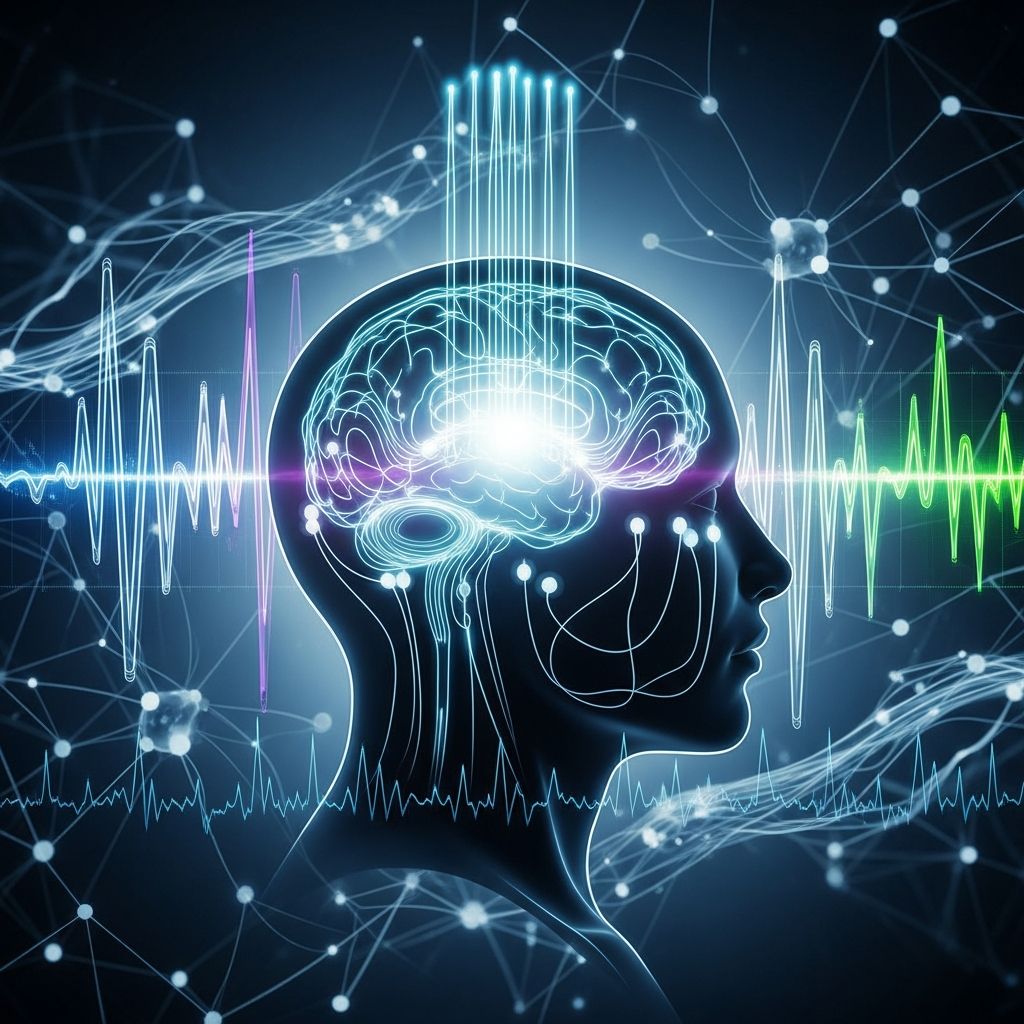
An electroencephalogram, commonly abbreviated as EEG, is a diagnostic medical test that records the electrical activity generated by your brain. The test uses small metal discs called electrodes that are attached to your scalp with a sticky adhesive. These electrodes detect electrical signals produced when brain cells communicate with each other through electrical impulses. Your brain cells are constantly working and generating electrical activity, even when you are asleep or at rest. This ongoing neural communication appears on an EEG recording as a series of wavy lines that represent the pattern and frequency of your brain’s electrical activity.
The EEG machine amplifies these tiny electrical signals and displays them as tracings on paper or on a computer screen, creating a visual representation of your brain’s functional state at a specific moment in time. Unlike imaging tests such as CT scans or MRIs that show the physical structure of the brain, an EEG directly measures electrical function, making it uniquely valuable for assessing how your brain is working.
Why EEG Testing Is Important
EEG testing plays a crucial role in modern neurology and critical care medicine. It is particularly valuable because it can be performed at the bedside, making it especially useful for critically ill patients who cannot be transported to imaging facilities. The test provides real-time functional information about the brain’s electrical activity, which helps clinicians make informed decisions about patient care and treatment options.
One of the most significant advantages of EEG is its sensitivity to detecting changes in brain function that may not be visible on structural imaging studies. For example, in patients with disorders of consciousness or those in intensive care units, EEG can assess brain reactivity and responsiveness to stimuli. Recent advances in quantitative EEG (qEEG) analysis have enhanced the ability to objectively measure and interpret brain activity patterns, leading to more accurate diagnoses.
Conditions Diagnosed With EEG Testing
EEG is an essential diagnostic tool for identifying and managing a wide range of neurological conditions. Healthcare providers use EEG to evaluate patients with suspected brain disorders, unexplained neurological symptoms, and disturbances in consciousness. The test helps clinicians distinguish between different conditions that may present with similar symptoms but require entirely different treatment approaches.
EEG is particularly effective at diagnosing the following conditions:
- Epilepsy and seizure disorders – EEG can detect characteristic spike patterns during and between seizures
- Alzheimer’s disease and other types of dementia – showing characteristic slowing of brain waves
- Brain injuries and traumatic brain injury – assessing the extent of brain dysfunction
- Stroke – detecting abnormal electrical patterns in the affected brain region
- Brain tumors – showing focal abnormalities and slowing of waves
- Sleep disorders such as sleep apnea and narcolepsy – recording brain activity during sleep cycles
- Encephalitis and other brain infections – showing inflammation-related patterns
- Creutzfeldt-Jakob disease – a rapidly progressive neurodegenerative disorder
- Psychosis and other severe mental illnesses – assessing abnormal brain electrical patterns
- Drug intoxication and substance abuse effects – detecting characteristic changes in brain activity
- Disorders of consciousness in comatose patients – evaluating responsiveness and prognosis
Types of EEG Studies
Different clinical situations require different EEG protocols. The most common types of EEG testing include routine EEG, prolonged EEG, and ambulatory EEG, each serving specific diagnostic purposes.
Routine EEG
A routine EEG is the standard test performed in most clinical settings and typically lasts between 20 to 40 minutes. During this test, you lie on an examination table while approximately 20 electrodes are placed on your scalp. The technician may ask you to perform certain tasks during the recording, such as opening and closing your eyes, breathing deeply and rapidly, or watching a flashing light. These activities help activate different brain regions and may provoke abnormal electrical patterns if present. The entire procedure is non-invasive and painless, though some patients may find the electrode placement slightly uncomfortable.
Related Stories



Prolonged EEG
Prolonged EEG monitoring provides more detailed information about brain electrical activity than routine testing and typically lasts between one to two hours. Some specialized prolonged EEG studies may continue for several days. This extended monitoring period increases the likelihood of capturing abnormal brain activity, particularly seizures that may occur infrequently. Prolonged EEG is especially valuable for patients with suspected seizure disorders who have not shown abnormalities on routine testing.
Ambulatory EEG
Ambulatory EEG allows continuous brain wave monitoring while you go about your normal daily activities. This test involves wearing a portable EEG device over one to three days. The electrodes attach to a small recording unit that you clip to your clothing, and the device either transmits data directly to your doctor’s office or stores it for later analysis. Ambulatory EEG is particularly useful for capturing seizures that occur infrequently or under specific circumstances, as it records brain activity in the patient’s natural environment rather than in a clinical setting.
The EEG Procedure: What to Expect
Understanding what happens during an EEG examination can help reduce anxiety and ensure you are well-prepared. The procedure follows a standardized protocol designed to safely record your brain’s electrical activity.
Preparation and Setup
You will be asked to lie down on an examination table or bed in a comfortable position. Before electrodes are placed, the technician may cleanse your scalp with a mild abrasive paste and alcohol to improve the conductivity of the electrodes. Approximately 20 small metal discs are then attached to your scalp using a sticky conductive paste. These electrodes are positioned according to an international standard system that ensures consistent placement across different testing centers and allows for proper interpretation of results.
During the Test
Once all electrodes are securely attached, the EEG machine begins recording. You will be instructed to relax and remain still for most of the test. The technician may request that you perform specific activities to help identify abnormal patterns, such as opening and closing your eyes, hyperventilating (breathing deeply and rapidly) for several minutes, or fixating on a flashing light. If you experience a seizure during the test, the technician will make careful note of the exact time and your behaviors, which provides valuable diagnostic information.
After the Test
Once the recording is complete, the electrodes are gently removed, and any remaining paste is washed away. You can immediately resume your normal activities, as EEG poses no risks or side effects. A neurologist will analyze your recorded brain wave patterns and compare them to established normal patterns. Your primary care physician will then review these results with you and discuss what they mean for your diagnosis and treatment plan.
Understanding EEG Results
EEG results appear as a series of wavy lines representing electrical activity in different regions of your brain. A neurologist trained in EEG interpretation analyzes these patterns, looking for abnormalities in frequency, amplitude, and reactivity.
Normal EEG Results
A normal EEG shows a steady, regular pattern of brain waves with consistent peaks and valleys. The electrical activity should be symmetrical between the left and right hemispheres, and the wave patterns should remain relatively constant throughout the recording. Normal patterns vary depending on whether you are awake or asleep, but the transitions between these states should be gradual and appropriately organized.
Abnormal EEG Findings
Abnormal EEG patterns may indicate various neurological conditions. Epileptic seizures typically produce distinctive spike or spike-and-wave patterns. Brain tumors often cause localized slowing of waves in the affected area. Strokes may produce focal abnormalities or general slowing. Dementia disorders characteristically show progressive slowing of background brain activity. The specific pattern of abnormality, combined with your clinical history and symptoms, helps your physician determine the underlying cause.
Advances in EEG Technology and Analysis
Modern neurology has seen significant advances in how EEG data is analyzed and interpreted. Quantitative EEG (qEEG) represents a major breakthrough in making EEG interpretation more objective and precise. Rather than relying solely on visual inspection of wave patterns, qEEG applies sophisticated mathematical and statistical techniques to analyze brain electrical activity.
qEEG methods are generally classified into linear and nonlinear approaches. Linear methods include spectral analysis, which examines the frequency content of brain waves. Nonlinear methods assess complex properties of brain electrical activity that cannot be captured by traditional analysis, such as chaos measures and higher-order statistics. These advanced techniques have proven particularly valuable in assessing EEG reactivity—the brain’s ability to respond to external stimuli—which is increasingly recognized as an important prognostic indicator.
Recent research has also demonstrated the value of algorithmic approaches to EEG interpretation. For example, new machine learning tools have been developed that can identify markers of epilepsy in routine EEG tests that appear normal on visual inspection, potentially reducing epilepsy misdiagnosis by up to 70%. These advances represent a paradigm shift in how clinicians use EEG information to make diagnostic and treatment decisions.
EEG in Critical Care Settings
EEG is particularly valuable in intensive care units (ICUs) and critical care environments, where it serves as a non-invasive tool for continuously monitoring brain function in seriously ill patients. In patients receiving extracorporeal membrane oxygenation (ECMO) support or those with disorders of consciousness, EEG can assess the level of consciousness and predict outcomes. The portability of EEG equipment means it can be brought to the bedside, making it accessible even for patients with severe medical instability who cannot be safely transported for imaging studies.
EEG reactivity—the change in brain electrical activity in response to external stimuli such as sound, touch, or other sensory input—has emerged as an important clinical indicator in critical care. Patients who show appropriate EEG reactivity generally have better neurological outcomes than those with unreactive EEGs. Quantitative measures of EEG reactivity are increasingly being used to objectively assess consciousness level and guide clinical decision-making in ICU patients.
Safety and Risks of EEG Testing
EEG is a safe, non-invasive procedure with minimal risk to patients. There are no electrical currents passing through your body—the machine simply records the electrical activity your brain naturally produces. The electrodes are placed on the scalp and do not puncture or penetrate the skin. Some patients may experience mild skin irritation from the adhesive paste used to attach the electrodes, but this resolves quickly after removal.
One rare consideration is that in susceptible individuals with epilepsy, the flashing light stimulus used during some EEG tests could theoretically trigger a seizure. Your technician will be prepared for this possibility and can immediately stop the light stimulation if needed. Overall, EEG remains one of the safest diagnostic procedures available in medicine.
Preparing for Your EEG Test
Proper preparation can help ensure the most accurate EEG recording. You should wash your hair the night before or morning of your test, as clean hair allows better electrode contact. Avoid using hair products such as conditioner, oils, or styling sprays on the day of your test. Wear comfortable, loose-fitting clothing that allows easy access to your scalp. If you are taking any medications, continue taking them as prescribed unless your physician instructs otherwise. Avoid caffeine and alcohol for at least 24 hours before your test, as these substances can affect brain wave patterns. If you have a seizure disorder and your medication helps control seizures, continue taking your anti-seizure medications as prescribed. Notify your healthcare team of any recent illnesses, medications, or medical conditions, as these may affect test results.
Frequently Asked Questions About EEG
Q: Is an EEG the same as an electrocardiogram (ECG)?
A: No. An EEG records electrical activity from the brain, while an electrocardiogram (ECG or EKG) records electrical activity from the heart. They are completely different tests measuring activity in different organs.
Q: Can an EEG predict if I will have a seizure?
A: An EEG cannot predict future seizures with certainty, but it can identify abnormal brain wave patterns that suggest an increased risk. Normal EEG results do not rule out epilepsy, as some patients with seizure disorders have normal EEGs between seizures.
Q: How long does it take to get EEG results?
A: A neurologist typically analyzes your EEG within 24 to 48 hours. Your physician will review the results and discuss them with you during a follow-up appointment.
Q: Does EEG hurt?
A: No. EEG is a painless procedure. You may feel slight discomfort during electrode placement, but most patients describe the procedure as easy and tolerable.
Q: Can I eat or drink before my EEG?
A: Yes, you can eat and drink normally before your EEG unless specifically instructed otherwise by your healthcare provider.
Q: What does it mean if my EEG is normal?
A: A normal EEG is reassuring, but it does not completely rule out certain neurological conditions. Some epilepsy patients have normal EEGs between seizures, and some brain disorders may not produce obvious EEG abnormalities.
References
- Quantitative Assessment of Electroencephalogram Reactivity Features in Comatose Patients on ECMO Support — National Center for Biotechnology Information. 2022-09-01. https://pmc.ncbi.nlm.nih.gov/articles/PMC9436243/
- What Is an EEG (Electroencephalogram) Test? — WebMD. 2024. https://www.webmd.com/epilepsy/electroencephalogram-eeg
- New Epilepsy Tool Could Cut Misdiagnoses by Nearly 70% — Johns Hopkins University Hub. 2025-01-22. https://hub.jhu.edu/2025/01/22/episcalp-epilepsy-diagnosis/
- Advances in Quantitative Electroencephalogram Analysis Methods — Johns Hopkins University Research. 2024. https://pure.johnshopkins.edu/en/publications/advances-in-quantitative-electroencephalogram-analysis-methods-4/
Similar Articles








Read full bio of Sneha Tete