Electrolysis Vs Laser Hair Removal: 5 Key Differences
Discover the key differences between electrolysis and laser hair removal to choose the best permanent hair reduction method for your skin and hair type.
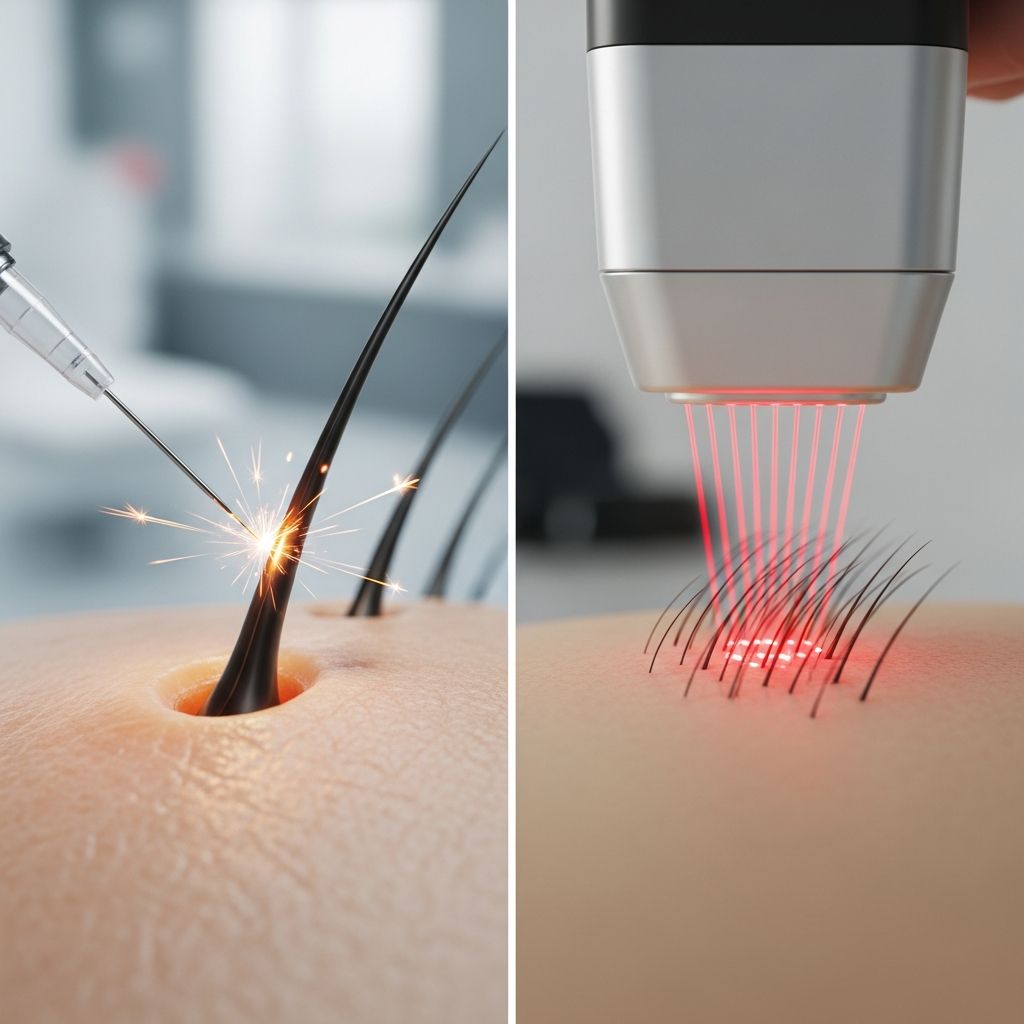
Electrolysis and laser hair removal are two leading methods for achieving long-lasting hair reduction, each with unique mechanisms, benefits, and limitations. While laser hair removal targets melanin in hair follicles for broad-area treatment, electrolysis destroys individual follicles electrically, offering true permanence approved by the FDA.
What Is Electrolysis?
Electrolysis is the only FDA-approved method for permanent hair removal, involving the insertion of a fine probe into each hair follicle to deliver an electric current that destroys the follicle’s growth center. This process targets the dermal papilla, preventing future hair growth regardless of skin tone or hair color.
There are three main types of electrolysis: galvanic, thermolysis, and blend. Galvanic electrolysis uses a direct current to produce a chemical reaction (lyses) that caustically destroys the follicle. Thermolysis applies high-frequency alternating current to generate heat, coagulating follicle proteins. The blend method combines both for enhanced effectiveness on stubborn hairs.
Treatments require multiple sessions since hair grows in cycles, and each follicle must be treated individually when in the active growth (anagen) phase. Sessions can last from 15 minutes to over an hour, depending on the area.
What Is Laser Hair Removal?
Laser hair removal uses concentrated light beams absorbed by melanin in the hair shaft and follicle, converting to heat that damages the follicle and inhibits regrowth. Devices like alexandrite, diode, or Nd:YAG lasers are common, with treatments covering larger areas quickly.
It’s highly effective for long-term hair reduction but not always permanent, as dormant follicles may reactivate. Optimal results occur on light skin with dark, coarse hair due to melanin contrast; it’s less effective on light or gray hair and may risk burns on darker skin tones.
Sessions are spaced 4-6 weeks apart, typically requiring 6-8 treatments for 70-90% reduction, with occasional maintenance.
Electrolysis vs. Laser Hair Removal: Key Differences
Both methods outperform temporary options like shaving or waxing by targeting follicles, but differ in technology, speed, permanence, and suitability. Laser excels in efficiency for large areas, while electrolysis provides unmatched versatility and permanence.
| Aspect | Electrolysis | Laser Hair Removal |
|---|---|---|
| Permanence | FDA-approved permanent; destroys each follicle individually | Long-term reduction (70-90%); maintenance often needed |
| Suitability | All skin tones, hair colors/types | Best for light skin/dark coarse hair; limited on others |
| Treatment Area | Small areas (face, bikini); slow for large | Large areas (legs, back) quickly |
| Sessions | 15-30+; frequent for full coverage | 6-8; fewer overall |
| Time per Session | 30 min to 2+ hrs per area | Minutes to 1 hr |
How Effective Is Each Treatment?
A clinical study comparing alexandrite laser and electrolysis on axillary hair showed laser achieving 74% clearance vs. 35% for electrolysis six months post-treatment. However, laser required fewer sessions (3 vs. 4) and was 60 times faster with less pain.
Related Stories



Electrolysis offers true permanence, treating all hairs individually to prevent regrowth, effective across all types. Laser provides significant reduction but may not eliminate dormant follicles, necessitating touch-ups.
For fine or light hair, electrolysis outperforms laser, which struggles without sufficient pigment. Laser shines on coarse, dark hair.
Pain Levels: Which Hurts More?
Electrolysis often feels like a stinging or pricking sensation per follicle, rated more painful due to probe insertion. Numbing creams help, but it’s uncomfortable for sensitive areas.
Laser causes mild snapping or rubber-band-like pain, with built-in cooling reducing discomfort. Many describe it as tolerable without anesthesia.
Individual tolerance varies; electrolysis pain is localized and brief, while laser heat dissipates quickly over areas.
Treatment Areas for Electrolysis vs. Laser
- Face (upper lip, chin, eyebrows): Both ideal; electrolysis precise for small, precise spots.
- Bikini/Underarms: Laser faster; electrolysis for permanent precision.
- Legs/Arms/Back: Laser preferred for speed on large areas; electrolysis impractical.
- Full Body: Laser efficient; electrolysis viable but time-intensive.
How Much Do They Cost?
Electrolysis costs $50-$150 per session (15-60 min), totaling $1,000-$6,000+ for full areas due to duration.
Laser: $200-$500 per session, 6-8 sessions averaging $1,200-$3,000, cheaper per area but possible maintenance adds cost.
Electrolysis may cost more upfront for large areas but offers no-touch-up permanence.
Side Effects and Risks
Electrolysis: Redness, swelling (resolves in hours/days); rare scarring/infection if unhygienic. Choose certified electrologists.
Laser: Redness, pigment changes (hypo/hyperpigmentation), burns (higher risk on dark skin). Temporary; use experienced providers.
Both minimize risks with professionals; post-care includes avoiding sun, irritants.
Which Is Better for Permanent Results?
Electrolysis is superior for true permanence, FDA-cleared for all types, ideal for small areas or diverse hairs.
Laser better for quick, large-area reduction on ideal candidates; not fully permanent.
Combination possible: laser first, electrolysis for stragglers.
Who Should Avoid Each Treatment?
- Avoid Electrolysis: Those unable to commit to many sessions; large areas (too slow).
- Avoid Laser: Dark skin (burn risk), light/gray/red hair (ineffective), pregnant (unproven safety), active skin conditions.
- Consult dermatologists for keloids, photosensitivity, medications.
Frequently Asked Questions (FAQs)
Is electrolysis or laser hair removal more permanent?
Electrolysis is more permanent, as it’s FDA-approved to destroy follicles individually for all hair/skin types. Laser offers long-term reduction but often requires maintenance.
Which is better for dark skin?
Electrolysis works on all skin tones without pigment risks. Laser can cause burns on dark skin unless using Nd:YAG lasers.
How long do results last?
Electrolysis: Permanent after full treatment. Laser: 70-90% reduction for years, with possible regrowth.
Does laser hair removal work on blonde hair?
No, laser targets melanin, ineffective on blonde/gray/red hair. Electrolysis does.
Can I switch between treatments?
Yes, many use laser for bulk reduction, then electrolysis for permanence on remaining hairs.
References
- Comparison of alexandrite laser and electrolysis for hair removal — PubMed. 1999-12-01. https://pubmed.ncbi.nlm.nih.gov/10632684/
- Laser Hair Removal vs. Electrolysis: What’s the Difference? — Healthline. 2023-05-15. https://www.healthline.com/health/beauty-skin-care/laser-hair-removal-vs-electrolysis
- Electrolysis vs Laser Hair Removal: Key Differences Explained — Boca Beauty Academy. 2024-02-20. https://bocabeautyacademy.edu/electrolysis-vs-laser-hair-removal-key-differences-explained/
- Laser Hair Removal vs. Electrolysis — Milan Laser. 2023-11-10. https://milanlaser.com/blog/laser-hair-removal-vs-electrolysis
- Laser Hair Removal vs. Electrolysis: Which One is Better? — Suncoast Skin Solutions. 2024-01-05. https://www.suncoastskin.com/laser-hair-removal-vs-electrolysis-which-one-is-better/
- Comparing Electrolysis and Laser Hair Removal — Dr. Stanwix. 2023-08-12. https://www.drstanwix.com/comparing-electrolysis-and-laser-hair-removal-which-is-right-for-you/
Similar Articles








Read full bio of medha deb