Electrolytes: Types, Purpose & Normal Levels
Complete guide to electrolytes: Understanding their role, normal ranges, and health impact.
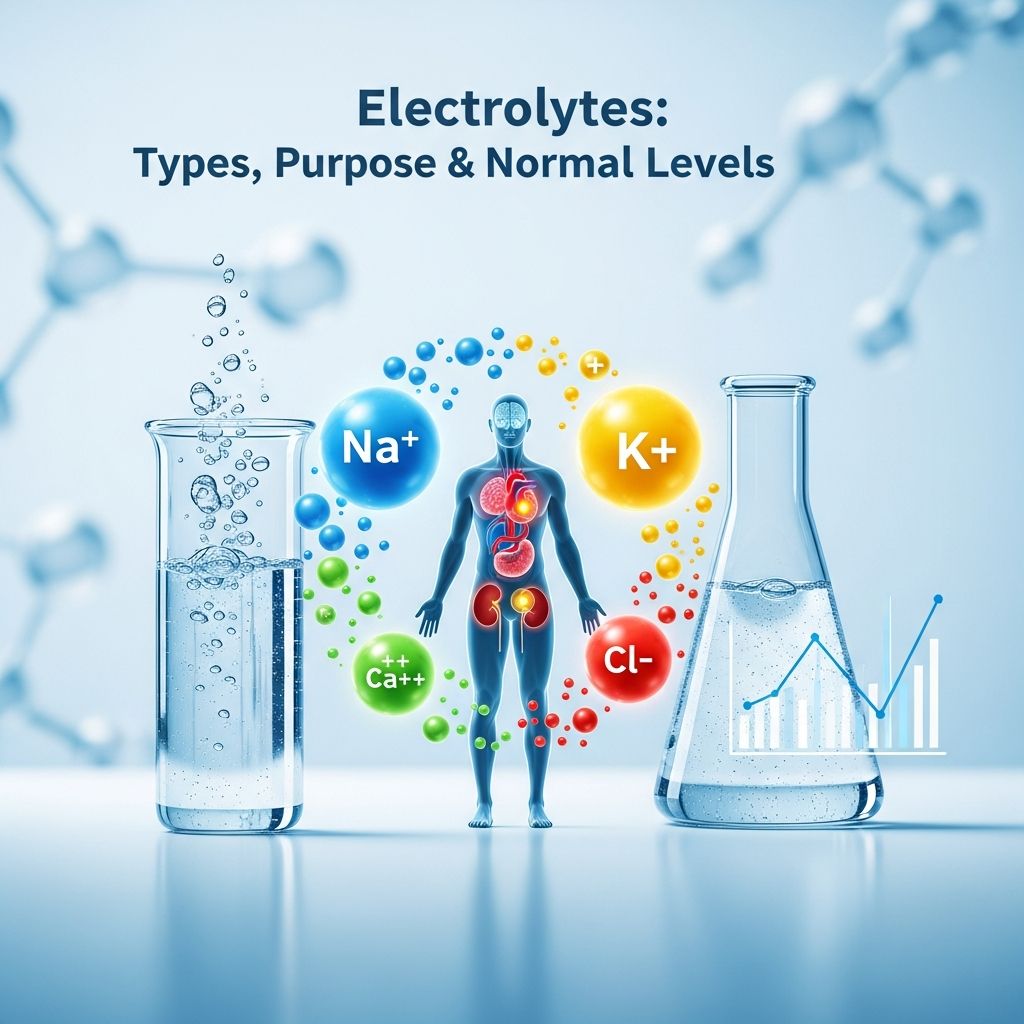
Understanding Electrolytes: What They Are and Why They Matter
Electrolytes are substances that carry a natural electrical charge when dissolved in water, and they play a fundamental role in maintaining your body’s most critical functions. These charged minerals are essential for regulating chemical reactions throughout your body, maintaining proper fluid balance, and ensuring that your heart, muscles, brain, and nerves function optimally. Without adequate electrolyte balance, your body cannot perform the basic physiological processes that keep you alive and healthy.
Your body contains both positive and negative electrolyte ions that work together in a carefully balanced system. This balance is maintained through complex interactions between your kidneys, hormones, and various organ systems. When electrolyte concentrations become too high or too low, significant health problems can develop, ranging from mild symptoms like muscle cramps to life-threatening conditions such as cardiac arrhythmias.
Key Types of Electrolytes and Their Functions
Your body relies on several major electrolytes to maintain health and proper functioning. Each electrolyte performs distinct and critical roles within your system:
Sodium (Na+)
Sodium is the most abundant electrolyte ion found in your body and plays a central role in maintaining proper fluid balance within your cells. It works in conjunction with other electrolytes to help your cells absorb essential nutrients and maintain appropriate water distribution across cell membranes. Sodium is particularly important for nerve signal transmission and muscle contraction. It’s also critical for regulating blood pressure and supporting cardiovascular function. When you sweat during exercise or exposure to heat, sodium is lost from your body, which is why sports drinks typically contain significant amounts of sodium to help rehydrate.
Potassium (K+)
Potassium is crucial for heart rhythm regulation, muscle function, and nerve signaling. It works in opposition to sodium to maintain the electrical balance necessary for proper cellular function. Potassium helps your heart beat at a regular rate and supports muscle contractions throughout your body. Adequate potassium levels are essential for preventing dangerous cardiac arrhythmias and maintaining overall cardiovascular health. Unlike sodium, potassium is found primarily inside cells rather than in extracellular fluids.
Calcium (Ca2+)
Calcium serves multiple critical functions beyond bone health. It’s essential for muscle contraction, nerve transmission, and blood clotting. Calcium also plays an important role in hormone secretion and enzyme function. Your body maintains precise calcium levels through complex hormonal regulation involving vitamin D, parathyroid hormone, and calcitonin.
Magnesium (Mg2+)
Magnesium is involved in over 300 enzymatic reactions in your body. It’s essential for muscle relaxation, nerve function, and energy production. Magnesium helps regulate calcium levels and supports healthy heart rhythm. It also plays an important role in maintaining normal blood sugar levels and supporting immune function.
Chloride (Cl−)
Chloride is a negative ion that works with sodium to maintain fluid balance and osmotic pressure. It’s also essential for producing stomach acid necessary for digestion. Chloride and sodium are the two main components of salt and work together to regulate your body’s fluid compartments.
Phosphorus (P)
Phosphorus works with calcium to support bone health and is essential for energy metabolism. It plays an important role in cell membrane structure and protein synthesis. Phosphorus also helps buffer blood pH to maintain proper acid-base balance.
Related Stories



How Your Body Regulates Electrolyte Balance
Water makes up more than half of your body’s weight, with blood and fluid in and around cells (called fluid compartments) holding most of this water. Your kidneys, liver, and other organs and tissues continually move electrolytes in and out of cells to adjust fluid levels within these compartments and maintain proper electrolyte concentrations. This process is highly regulated and requires constant monitoring by your body’s hormone systems, particularly aldosterone and antidiuretic hormone (ADH).
When electrolyte concentrations begin to change, your kidneys respond by either conserving or excreting these minerals through urine. Hormonal signals help coordinate this response to maintain homeostasis—the stable internal environment your body needs to function properly.
Normal Electrolyte Levels
Healthcare providers use specific reference ranges to determine whether your electrolyte levels are normal. These ranges can vary slightly between laboratories, but generally include:
Sodium: 135-145 mEq/L (or mmol/L)
Potassium: 3.5-5.0 mEq/L
Calcium: 8.5-10.2 mg/dL
Magnesium: 1.7-2.2 mg/dL
Chloride: 96-106 mEq/L
Phosphorus: 2.5-4.5 mg/dL
These ranges represent the concentrations at which your body’s systems function optimally. Even small deviations from these normal ranges can trigger symptoms and health problems, depending on the specific electrolyte involved and the severity of the imbalance.
Testing for Electrolyte Levels
An electrolyte panel is a blood test that measures your electrolyte levels and provides crucial information about your overall health. Healthcare providers often order an electrolyte panel if you’re experiencing symptoms of imbalance, have a chronic health condition, take certain medications, or are hospitalized. This simple blood test can detect imbalances before they cause serious problems.
Your provider may also order a basic metabolic panel (BMP) or comprehensive metabolic panel (CMP), which check for electrolytes as well as other substances in your blood, such as glucose, kidney function markers, and liver enzymes. These broader panels provide a more complete picture of your overall health status and can help identify underlying causes of electrolyte imbalances.
Follow-up tests may be necessary if initial results show abnormal electrolyte levels. These specialized tests can narrow down what’s causing the imbalance, as the specific cause determines the appropriate treatment approach.
Causes of Electrolyte Imbalances
Electrolyte imbalances can result from various conditions and circumstances. Common causes include:
Dehydration: Excessive fluid loss from sweating, vomiting, or diarrhea depletes electrolytes faster than water, creating an imbalance.
Kidney Disease: Your kidneys regulate electrolyte excretion and reabsorption, so kidney dysfunction directly affects electrolyte balance.
Hormonal Disorders: Conditions affecting hormones that regulate electrolyte balance, such as Cushing syndrome or adrenal insufficiency, can cause significant imbalances.
Medications: Certain medications can affect electrolyte levels, including diuretics, ACE inhibitors, and NSAIDs.
Heart, Liver, or Thyroid Disease: These conditions affect fluid and electrolyte regulation throughout your body.
Intense Exercise: Prolonged, intense physical activity can deplete electrolytes through sweat loss.
Poor Nutrition: Inadequate dietary intake of foods containing electrolytes can lead to deficiencies.
Symptoms of Electrolyte Imbalances
Symptoms of an electrolyte imbalance vary depending on the severity and which specific electrolyte is affected. A slight electrolyte imbalance may not cause noticeable changes, while moderate to severe imbalances can produce significant symptoms:
Common symptoms include: Muscle weakness or cramping, fatigue and lethargy, headaches, nausea and vomiting, irregular heartbeat or palpitations, dizziness or lightheadedness, excessive thirst, confusion or difficulty concentrating, and mood changes.
The specific symptoms depend on which electrolyte is out of balance. For example, low potassium often causes muscle weakness and cardiac arrhythmias, while low sodium can cause confusion and seizures. Severe imbalances can lead to life-threatening complications including seizures, cardiac arrhythmias, loss of consciousness, and even coma.
Treatment of Electrolyte Imbalances
Treatment depends on the specific electrolyte imbalance and its underlying cause. Some imbalances will correct without treatment once the underlying cause is addressed, while others require active intervention.
For mild dehydration: Your provider may recommend rehydrating with electrolyte drinks or an oral rehydration salt (ORS) solution. These solutions contain balanced amounts of sodium, potassium, glucose, and water to help your body absorb fluids more efficiently than water alone.
Medical treatments may include: Intravenous (IV) fluids with specific electrolyte concentrations, oral electrolyte supplements or medications, medication adjustments if certain drugs are causing the imbalance, and treatment of underlying medical conditions causing the imbalance.
In cases of severe imbalance, hospitalization may be necessary for continuous monitoring and careful adjustment of electrolyte levels. Aggressive correction of severe imbalances must be done carefully to avoid overcorrection, which can cause additional problems.
Complications of Severe Electrolyte Imbalances
A significant electrolyte imbalance (either too high or too low) can cause serious, life-threatening problems. These complications include cardiac arrhythmias, seizures, swelling of the brain (cerebral edema), muscle paralysis, and loss of consciousness. These severe complications underscore the importance of maintaining proper electrolyte balance and seeking medical attention for symptoms of imbalance.
Prevention and Maintenance
Proper hydration is one of the most effective ways to help your body maintain healthy electrolyte levels. It’s especially important to drink enough fluids if you experience prolonged diarrhea, vomiting, or sweating. During these times, electrolyte-containing beverages may be more beneficial than plain water alone, as they help replace both fluids and minerals lost from your body.
For most people, a balanced diet containing fruits, vegetables, dairy products, and lean proteins provides adequate electrolytes. However, athletes, people in hot climates, and those with certain medical conditions may need to be more intentional about electrolyte intake.
Frequently Asked Questions (FAQs)
Q: Can I drink too many electrolytes?
A: Yes, it’s possible to consume too many electrolytes. An imbalance can occur when electrolyte concentration becomes too high for your body and kidneys to regulate. While one or two electrolyte drinks may be sufficient to rebalance after depletion, consistently consuming excessive amounts can lead to negative health outcomes. Most people should limit electrolyte drinks to a maximum of 16 fluid ounces on a normal active day.
Q: Is salt an electrolyte?
A: Salt contains two electrolytes—sodium and chloride—that your body needs to function. These are the most abundant electrolytes in your body and play critical roles in fluid balance and cellular function. While salt has been vilified due to its association with high blood pressure in some people, it can provide essential electrolytes when you’ve been sweating heavily or experiencing electrolyte loss.
Q: When should I drink electrolyte beverages?
A: Consider reaching for an electrolyte drink when you’ve been sweating heavily during exercise, when you’re ill with vomiting or diarrhea, during intense physical activity lasting more than an hour, or when exposed to extreme heat. These situations deplete your body’s electrolyte reserves, and replenishing them will help you feel better almost immediately.
Q: What’s the difference between electrolyte drinks and water?
A: Water provides hydration but doesn’t replace electrolytes lost through sweating or illness. Electrolyte drinks contain balanced amounts of sodium, potassium, and other minerals along with water and carbohydrates, making them more effective for rehydration after significant electrolyte loss. However, for everyday hydration, water is typically adequate and shouldn’t be replaced entirely by electrolyte drinks.
Q: How do I know if I have an electrolyte imbalance?
A: Symptoms vary depending on which electrolyte is imbalanced and the severity, but may include muscle weakness, fatigue, headaches, nausea, or irregular heartbeat. The most reliable way to determine if you have an electrolyte imbalance is through a blood test ordered by your healthcare provider.
References
- Electrolyte Imbalance: Types, Symptoms, Causes & Treatment — Cleveland Clinic. 2024. https://my.clevelandclinic.org/health/symptoms/24019-electrolyte-imbalance
- Can Your Drink Too Many Electrolytes? — Cleveland Clinic Health. 2024. https://health.clevelandclinic.org/too-many-electrolytes
- Is Salt an Electrolyte? — Cleveland Clinic Health. 2024. https://health.clevelandclinic.org/is-salt-an-electrolyte
- Common electrolyte imbalance, uncommon cause — Cleveland Clinic Journal of Medicine. 2024. https://www.ccjm.org/content/92/1/13
- Rebalance, Replenish: 4 Sources of Electrolytes — Cleveland Clinic Health. 2024. https://health.clevelandclinic.org/best-electrolyte-sources
- Electrolytes: Types, Purpose & Normal Levels — Cleveland Clinic. 2024. https://my.clevelandclinic.org/health/diagnostics/21790-electrolytes
- Electrolyte 101: What You Need to Know About Sports Drinks — Cleveland Clinic Health Essentials Podcast. 2024. https://my.clevelandclinic.org/podcasts/health-essentials/electrolyte-101-what-you-need-to-know-about-sports-drinks-with-julia-zumpano-rd
Similar Articles








Read full bio of medha deb