Electromyography (EMG): Diagnostic Testing for Muscle and Nerve Function
Understanding EMG testing: How electrical muscle activity reveals nerve and muscle disorders.
What is Electromyography (EMG)?
Electromyography, commonly abbreviated as EMG, is a diagnostic test that measures the electrical activity of skeletal muscles—the muscles attached to bones that control voluntary movement. This minimally invasive procedure helps healthcare professionals assess the health and function of muscles and the nerves that control them. When muscles contract, they generate tiny electrical signals produced by specialized nerve cells called motor neurons, which stimulate muscle fibers to produce movement. By recording and analyzing these electrical patterns, clinicians can diagnose a wide range of neuromuscular disorders and determine whether muscle weakness or dysfunction stems from muscle disease or nerve damage.
EMG testing has become an essential tool in modern medicine for both clinical diagnosis and medical research. Physicians use EMG to evaluate patients presenting with symptoms of muscular or neurological conditions, while researchers employ the technology to study how specific diseases or treatments affect neuromuscular function. The test is considered safe with minimal risk, making it a valuable diagnostic option for patients across various age groups.
Why Your Doctor Might Recommend EMG Testing
Your healthcare provider may recommend an EMG test if you experience symptoms suggesting a muscle or nerve disorder. Common reasons for EMG testing include investigating unexplained weakness, abnormal sensations, or difficulty with motor control. The test helps differentiate diseases of the muscles from diseases of the peripheral nerves, which is crucial for accurate diagnosis and treatment planning.
Typical symptoms that warrant EMG evaluation include:
- Muscle weakness or stiffness
- Muscle wasting or atrophy
- Muscle twitching, cramping, or spasms
- Loss of fine motor control or coordination
- Difficulty speaking, chewing, or swallowing
- Persistent pain in the feet, legs, arms, or hands
- Numbness, tingling, or paralysis in the limbs
- Unexplained fatigue or muscle fatigue
Additionally, EMG can help diagnose specific conditions such as peripheral neuropathy (damage to peripheral nerves), ataxia (lack of voluntary muscle coordination), carpal tunnel syndrome, myasthenia gravis, and various forms of muscular dystrophy.
How EMG Testing Works
The Two Components of EMG/NCS Testing
Many EMG tests include two complementary components: electromyography and nerve conduction studies (NCS). Understanding how each part contributes to your diagnosis helps explain the complete picture of your neuromuscular health.
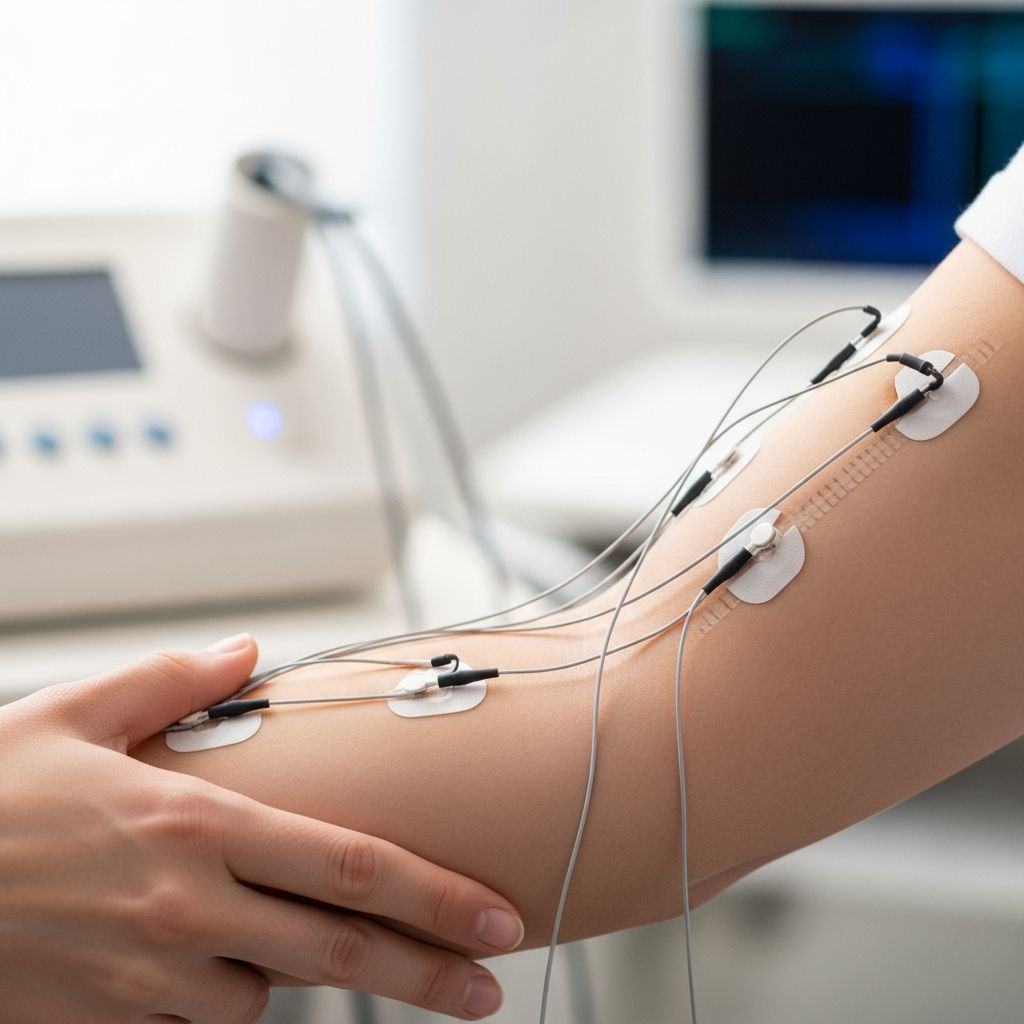
Nerve Conduction Studies (NCS): During this portion of the test, the technician applies small electric shocks to the skin overlying specific nerves to measure how quickly and effectively nerves transmit electrical signals. The strength of these shocks is comparable to a strong static electricity shock and is generally well-tolerated. Recording electrodes placed on the skin detect the nerve’s response to stimulation, providing information about nerve function and the speed of signal transmission.
Electromyography (EMG): The clinician inserts one or more thin needles, called electrodes, directly into the muscle being tested. These needles detect the electrical activity of the muscle both at rest and during muscle contraction. Unlike the surface electrodes used in NCS, needle electrodes provide more detailed information about individual muscle fiber activity.
The EMG Procedure
During the EMG portion of your test, a neurologist or trained technician will insert thin needle electrodes into the muscle tissue. The needles transmit electrical signals to a device called an oscilloscope, which displays the muscle’s electrical activity as wave-like patterns on a screen. Some testing facilities also use audio monitoring, which translates electrical signals into audible sounds—producing popping noises that increase in frequency and intensity as muscle contractions strengthen.
Related Stories



You will be asked to relax the muscle initially while the clinician records baseline electrical activity. Then, you’ll be instructed to gradually contract the muscle while signals continue recording. The clinician analyzes how the electrical patterns change in response to increasing levels of effort, observing whether the muscle responds appropriately or shows irregular activity patterns that might indicate nerve damage, muscle disease, or improper communication between nerves and muscles.
The number of muscles tested varies depending on your symptoms and clinical presentation. Some patients require testing of only one or two muscles, while others need evaluation of multiple muscle groups to reach a complete diagnosis.
Preparation for Your EMG Test
Before Your Test
Preparing properly for your EMG test helps ensure accurate results and a smoother testing experience. Your healthcare provider will give you specific pre-test instructions, but general preparation guidelines typically include:
- Wear loose, comfortable clothing that allows easy access to the areas being tested
- Avoid applying lotions, oils, or other topical products to the skin on the day of testing
- Bathe or shower before your test if possible
- Eat a light meal before arriving to prevent low blood sugar
- Avoid caffeine for several hours before testing, as it can affect muscle activity
- Inform your doctor about medications you take, particularly blood thinners or muscle relaxants
- Arrive early to complete any necessary paperwork
Special Considerations
If you have anxiety about needles or the testing procedure, discuss this with your healthcare provider before the test. Some patients benefit from relaxation techniques or learning more about what to expect. Knowing that the procedure is generally well-tolerated and lasts only a limited time can help reduce anxiety.
During the Test: What to Expect
Sensation and Comfort
Most patients describe the needle insertion as a brief, mild discomfort rather than significant pain. You may feel a slight pinch as the needle passes through the skin, followed by pressure as it reaches the muscle. During the NCS portion, the electrical shocks should not cause pain, though some people experience mild discomfort that typically resolves once the test concludes.
The needle electrode remains in place while you relax and then contract your muscle. You might hear the characteristic popping or crackling sounds from the audio monitor as your muscle activates, which provides real-time feedback about your muscle activity.
Test Duration
The total duration of your EMG test depends on how many muscles require testing and whether both NCS and EMG components are included. Most tests last between 30 to 60 minutes, though complex cases may require longer evaluation periods. The neurologist or technician will explain the testing process and answer questions before beginning.
Understanding Your EMG Results
Normal EMG Results
If your muscles are healthy, an EMG test should detect little to no electrical activity when the muscle is in a relaxed state. When you contract the muscle voluntarily or in response to nerve stimulation, the test detects a burst of electrical activity called a motor unit action potential. The pattern, frequency, and amplitude of these electrical signals provide information about muscle and nerve function.
Abnormal EMG Results
If the EMG detects unexpected electrical activity in a relaxed muscle, it may indicate several possible conditions:
- Nerve damage or peripheral neuropathy
- Muscle disease or myopathy
- Neuromuscular junction disorders
- Spinal cord disease
- Motor neuron disease
- Inflammation or infection of muscle tissue
Irregular or diminished electrical activity during voluntary muscle contraction may suggest weakness originating from nerve damage rather than primary muscle disease, helping your doctor pinpoint the source of your symptoms.
Interpreting Results in Clinical Context
Your healthcare providers will discuss EMG results in the context of your complete medical evaluation, including your symptoms, physical examination findings, medical history, and any other diagnostic tests. EMG results alone do not provide a diagnosis; rather, they contribute valuable information that, combined with other clinical data, helps establish an accurate diagnosis. Results are typically available when you meet with your physician following the test, allowing for detailed discussion and explanation of findings.
EMG and Other Diagnostic Tests
EMG is frequently used in combination with other diagnostic procedures to provide a comprehensive assessment of neuromuscular function. Nerve conduction studies are the most commonly paired test, providing complementary information about how nerves transmit electrical signals. Other tests that may accompany or supplement EMG include:
- Magnetic resonance imaging (MRI) of the spine or affected areas
- Blood tests to check for muscle enzymes or antibodies
- Imaging studies to assess muscle structure
- Genetic testing for hereditary neuromuscular conditions
This comprehensive approach ensures your healthcare team gathers all necessary information to accurately diagnose your condition and develop an appropriate treatment plan.
Safety and Risks of EMG Testing
EMG is a very safe procedure with minimal risk for most patients. Serious complications are extremely rare. Potential minor side effects may include slight bruising at needle insertion sites or temporary soreness in tested muscles, which typically resolve within a few days. The small electrical shocks used in nerve conduction studies are brief and generally well-tolerated without lasting effects.
However, inform your healthcare provider before testing if you:
- Take anticoagulant or blood thinner medications
- Have an active infection in the area to be tested
- Have a pacemaker or other implanted electrical device
- Are pregnant (though EMG is generally safe during pregnancy)
- Have severe anxiety about medical procedures
Clinical Applications and Conditions Diagnosed by EMG
EMG serves as a crucial diagnostic tool for numerous neuromuscular conditions. Clinicians use EMG to help diagnose and monitor conditions such as amyotrophic lateral sclerosis (ALS), myasthenia gravis, muscular dystrophy, Guillain-Barré syndrome, carpal tunnel syndrome, diabetic neuropathy, and various forms of myositis (muscle inflammation). The test is also valuable for monitoring disease progression and assessing treatment effectiveness over time.
In research settings, scientists use EMG to investigate how particular diseases or experimental treatments affect neuromuscular function, contributing to advances in our understanding of neurological and muscular disorders.
After Your EMG Test
Following your EMG test, you can typically resume normal activities immediately. Most patients experience no restrictions on daily activities after testing concludes. You may notice mild soreness or bruising at needle insertion sites, which is normal and usually resolves within a few days.
Contact your healthcare provider if you experience prolonged pain, significant bruising, signs of infection, or any concerns about your test results. Schedule a follow-up appointment to discuss your results in detail with your physician, who will explain what the findings mean for your diagnosis and outline next steps in your treatment plan.
Frequently Asked Questions About EMG
Q: Is EMG testing painful?
A: EMG testing causes minimal discomfort. Most patients describe only a brief, mild pinch as the needle enters the skin. The electrical shocks used in nerve conduction studies are comparable to static electricity and do not cause pain. Any discomfort experienced during the test typically resolves immediately after testing concludes.
Q: How long does an EMG test take?
A: Most EMG tests last between 30 to 60 minutes, depending on the number of muscles tested and whether both nerve conduction studies and electromyography are performed. Your healthcare provider can give you a more specific estimate based on your individual testing needs.
Q: When will I receive my EMG results?
A: EMG results are typically available when you meet with your physician following the test. Your doctor will discuss the findings in the context of your complete medical evaluation and explain what the results mean for your diagnosis and treatment plan.
Q: Can EMG be performed during pregnancy?
A: EMG is generally considered safe during pregnancy, though you should inform your healthcare provider of your pregnancy status before testing. Your physician will determine whether EMG is necessary and appropriate for your specific situation.
Q: What conditions can EMG diagnose?
A: EMG can help diagnose numerous neuromuscular conditions, including carpal tunnel syndrome, peripheral neuropathy, myasthenia gravis, muscular dystrophy, ALS, Guillain-Barré syndrome, and various forms of myositis. EMG results, combined with your medical history and other diagnostic tests, help establish an accurate diagnosis.
Q: Is EMG safe if I have a pacemaker?
A: Inform your healthcare provider if you have a pacemaker or other implanted electrical device before EMG testing. Your physician will determine whether EMG is safe for your specific device and circumstances.
Q: Can children undergo EMG testing?
A: Yes, children can undergo EMG testing, though special considerations may apply for very young children. Your healthcare provider will determine the appropriate testing approach based on your child’s age and ability to cooperate during the procedure.
References
- Snapshot: What is Electromyography (EMG)? — National Ataxia Foundation. 2024. https://www.ataxia.org/scasourceposts/snapshot-what-is-electromyography-emg/
- Electromyography (EMG) and Nerve Conduction Studies (NCS) — Johns Hopkins Myositis Center. 2024. https://www.hopkinsmyositis.org/unique/diagnosis-myositis/tests/emg-ncs/
- EMG Test: Purpose, Preparation, Procedure, and Results — Medical News Today. 2023. https://www.medicalnewstoday.com/articles/emg-test
- Electromyography: Muscle Testing, Nerve Signals & Diagnosis — Britannica Encyclopedia. 2024. https://www.britannica.com/science/electromyography
Similar Articles








Read full bio of Sneha Tete