Electron Beam Radiation for Cutaneous Lymphoma
Explore electron beam radiation therapy as an effective treatment for cutaneous lymphoma, offering skin-targeted relief with minimal deep tissue impact.
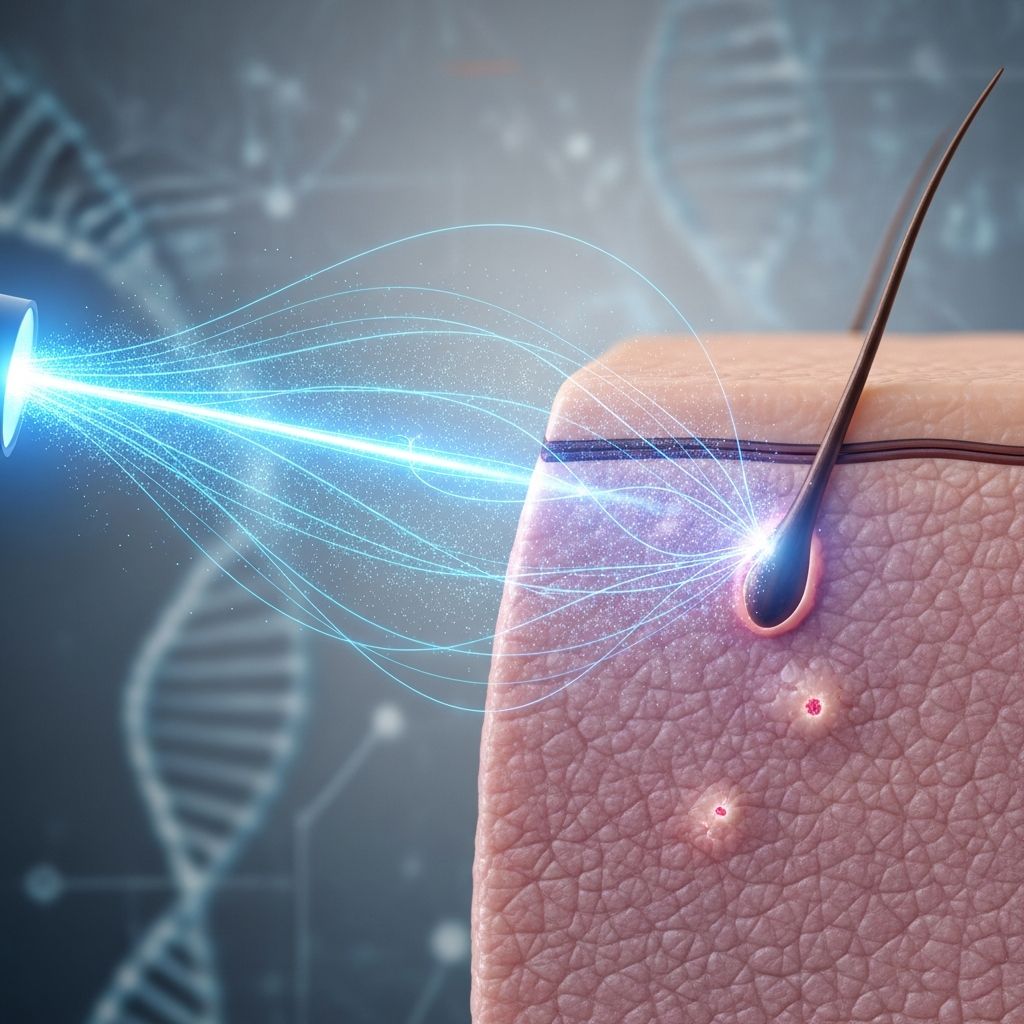
Electron beam radiation therapy, particularly
total skin electron beam therapy (TSEBT)
, is a specialized treatment forcutaneous T-cell lymphoma (CTCL)
, a rare non-Hodgkin lymphoma primarily affecting the skin. This therapy delivers low-energy electron radiation that penetrates only the superficial skin layers (1-2 cm), effectively targeting lymphoma cells while sparing deeper organs.What is cutaneous lymphoma?
Cutaneous lymphomas are a heterogeneous group of non-Hodgkin lymphomas originating in the skin. The most common subtype is
mycosis fungoides (MF)
, which presents with erythematous patches, plaques, tumors, or generalized erythroderma. Other variants include Sézary syndrome and primary cutaneous CD30+ lymphoproliferative disorders. Early-stage disease (IA-IIA) is often managed with skin-directed therapies, while advanced stages may require systemic treatments.Introduction to electron beam radiation therapy
Electron beam radiation uses high-energy electrons rather than photons (X-rays), allowing precise dosing to superficial tissues. In CTCL,
TSEBT
treats the entire skin surface, achieving high response rates (80-95% complete response in early stages). It is particularly effective for widespread patches and plaques unresponsive to topical therapies.Indications
TSEBT is indicated for:
- Early-stage MF (IA-IIA) with extensive skin involvement
- Treatment-refractory patches/plaques
- Erythrodermic MF (stage III)
- Palliative treatment in advanced disease
- Adjunct to systemic therapies
Low-dose TSEBT (10-12 Gy) is suitable for elderly patients or those unfit for standard 30-36 Gy regimens.
How electron beam radiation works
Electrons deposit maximum energy at shallow depths (Dmax 1-2 cm), ideal for skin lesions. Unlike photon therapy, which traverses the body and irradiates internal organs, electron beams stop abruptly, minimizing toxicity. TSEBT employs multiple fields or rotational platforms to ensure uniform skin coverage.
TSEBT techniques
Several methods achieve total skin irradiation:
- Stanford technique: Patient adopts 6 positions on a raised platform; dual angled beams (62°/90°) treat anterior/posterior surfaces.
- Rotational therapy: Patient stands on a rotating platform under the beam.
- Mini-field homogeneous: Uses smaller fields with motion for uniformity.
- Hypofractionated low-dose: 12 Gy in 4-12 fractions for palliation.
| Technique | Dose | Fractions | Duration |
|---|---|---|---|
| Standard TSEBT | 30-36 Gy | 20-40 | 8-10 weeks |
| Low-dose TSEBT | 10-12 Gy | 8-12 | 2-4 weeks |
| Hypofractionated | 12 Gy | 3-4 | 1 week |
Boost fields treat soles, perineum, scalp, and nails separately.
Treatment planning and delivery
A multidisciplinary team—including radiation oncologists, physicists, dermatologists, and therapists—designs the plan. CT simulation maps skin folds. Patients stand in paper gowns with tungsten eye shields, lip shields, and hand/foot protections. Daily sessions last 30-60 minutes, mostly for positioning.
Treatment occurs 2-4 days/week. Radiation physicists use in-vivo dosimetry to verify doses. Therapists monitor via video/intercom.
Dosimetry and quality assurance
Uniformity is ensured by:
- Large field sizes (up to 2×2 m)
- Energy degradation screens
- Patient-specific bolus for thickness variations
- Weekly TLD/TLD dosimetry checks
Related Stories



Skin dose heterogeneity should remain within ±10%.
Response rates and efficacy
TSEBT yields excellent outcomes:
- Early-stage MF: 90-100% complete response (CR); 5-year skin-specific survival ~90%.
- Advanced disease: 60-80% CR; median response duration 8-12 months.
- Low-dose regimens: 87-100% overall response; median progression-free survival 3-6 months.
Repeat TSEBT is feasible, with cumulative doses up to 60-80 Gy.
Side effects
Acute effects (weeks 3-6):
- Grade 2-3 erythema/desquamation (80-90%)
- Pruritus, xerosis
- Alopecia (temporary)
Chronic effects (>6 months):
- Telangiectasia, dyspigmentation
- Rare secondary skin cancers (1-5% at 10 years)
- No significant visceral toxicity
Low-dose regimens reduce grade 3+ toxicity to <10%.
Patient preparation and care
- Pre-treatment: Skin hydration, topical steroids, staging biopsies
- During: Emollients, aquaphor, sun avoidance
- Post: Moisturizers, infection surveillance, dermatology follow-up
Role in CTCL management
TSEBT complements:
- Topicals (mechlorethamine, retinoids)
- Phototherapy (PUVA/NB-UVB)
- Systemic (IFN, bexarotene, mogamulizumab)
- Novel agents (brentuximab vedotin)
In NCCN guidelines, TSEBT is category 1 for stage IB-IIB MF.
Special considerations
- Pregnancy: Contraindicated
- Prior radiation: Limit cumulative dose
- Obesity: Custom shielding
- COVID-era: Hypofractionation preferred
Outcomes and prognosis
Stage-adjusted 10-year survival:
| Stage | 5-yr Survival | 10-yr Survival |
|---|---|---|
| IA | 95-100% | 90-95% |
| IB | 85-90% | 75-85% |
| IIA | 75-85% | 65-75% |
| III | 50-60% | 40-50% |
TSEBT improves quality of life, enabling >80% patients to resume normal activities.
Frequently Asked Questions (FAQs)
Q: Is TSEBT curative?
A: Rarely curative but provides durable remissions (1-5+ years in early stages). Relapses typically occur on skin.
Q: How many treatments are needed?
A: Standard: 20-40 sessions over 8-10 weeks. Low-dose: 8-12 over 2-4 weeks. Hypofractionated: 3-4 over 1 week.
Q: Does it cause hair loss?
A: Yes, temporary total body alopecia during treatment, regrowth in 3-6 months.
Q: Can TSEBT be repeated?
A: Yes, multiple courses safe if cumulative dose monitored (<80 Gy).
Q: What is recovery like?
A: Acute skin reactions peak at 4-6 weeks, resolve by 3 months with supportive care.
Q: Is it available everywhere?
A: Requires specialized equipment; offered at comprehensive cancer centers.
Future directions
Ongoing research explores TSEBT combinations with PD-1 inhibitors, JAK inhibitors, and ultra-low-dose regimens. Improved dosimetry via IMRT/VMAT may enhance uniformity.
References
- Total Skin Electron Beam Therapy — MUSC Hollings Cancer Center. 2023. https://hollingscancercenter.musc.edu/patient-care/cancer-types/blood-cancer/total-skin-electron-beam-therapy
- Electron beam treatment for cutaneous T-cell lymphoma — PubMed (Jones G, et al.). 1995-09-01. https://pubmed.ncbi.nlm.nih.gov/8522484/
- Total Skin Electron Beam Therapy — OncoLink (Abramson Cancer Center). 2023. https://www.oncolink.org/cancer-treatment/radiation/types-of-radiation-therapy/total-skin-electron-beam-therapy
- Low dose hypofractionated total skin electron beam therapy — Practical Radiation Oncology (Jeans et al.). 2020. https://www.astro.org/ASTRO/media/ASTRO/Daily%20Practice/PDFs/COVID-Jeans-et-al(PRO).pdf
- Radiation Therapy – Local and TSEB — Cutaneous Lymphoma Foundation. 2023. https://www.clfoundation.org/radiation-therapy-local-and-tseb
Similar Articles








Read full bio of Sneha Tete