Elephantiasis Nostras Verrucosa: 7 Causes, Signs, Treatments
Understanding the rare, severe chronic lymphoedema causing skin thickening, fibrosis, and deformity in limbs.
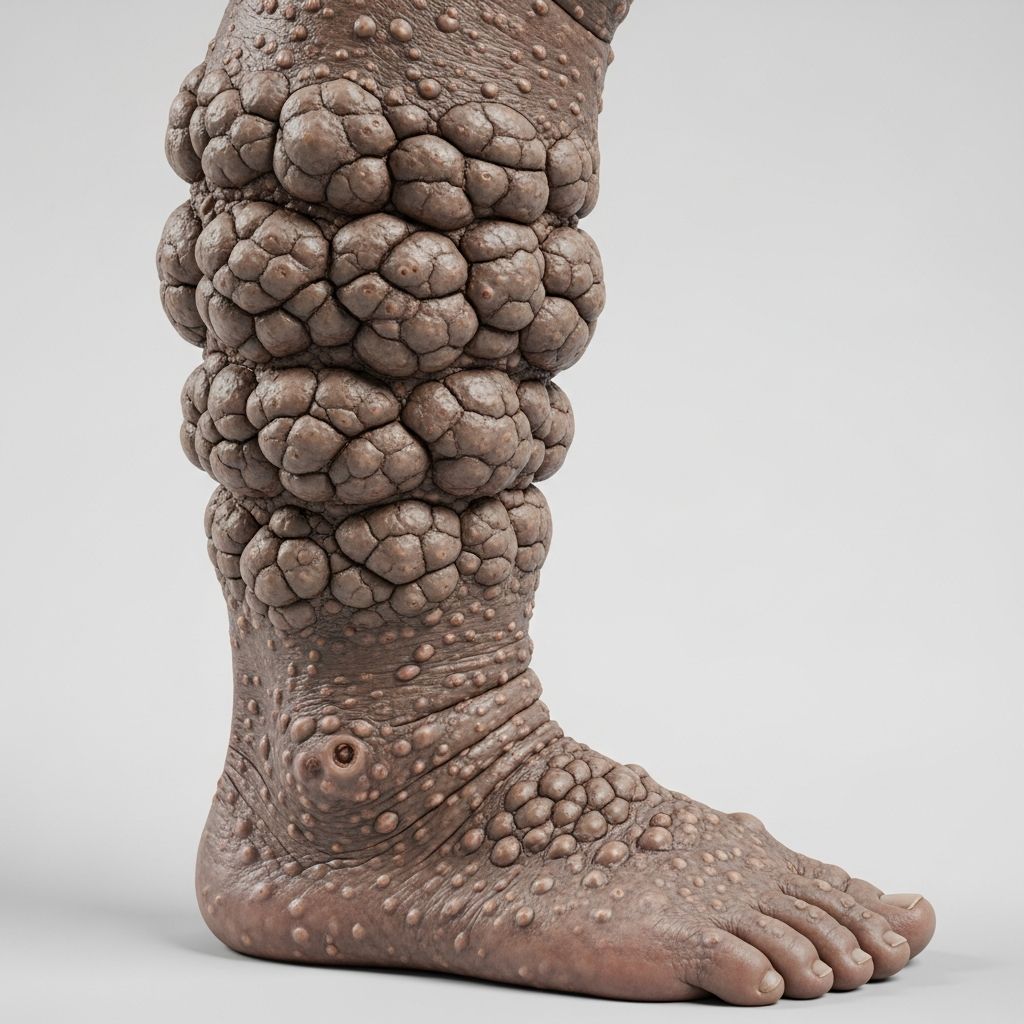
Elephantiasis nostras verrucosa (ENV) is a rare and severe manifestation of chronic lymphoedema, characterized by progressive cutaneous changes including non-pitting oedema, fibrosis, hyperkeratosis, and verrucous hypertrophy resembling an elephant’s skin. This condition primarily affects the lower limbs but can involve upper extremities or other areas, leading to significant disfigurement, recurrent infections, and impaired quality of life if untreated.
What is elephantiasis nostras verrucosa?
ENV represents the end-stage of prolonged nonfilarial chronic lymphoedema, where obstructed lymphatic drainage causes accumulation of protein-rich interstitial fluid. This triggers fibroblast proliferation, dermal fibrosis, and subcutaneous tissue hypertrophy, resulting in a woody, indurated texture with cobblestone-like or papillomatous surface changes. Unlike true elephantiasis from filarial parasites (e.g., Wuchereria bancrofti), ENV is non-infectious in origin and stems from various obstructive pathologies.
The term ‘nostras’ denotes its non-tropical, sporadic occurrence, affecting individuals of all ages, races, and sexes, though it is more common in those with predisposing risk factors. Progression leads to irreversible skin thickening, ulceration, and secondary bacterial colonization, perpetuating a vicious cycle of inflammation and lymphostasis.
Who gets elephantiasis nostras verrucosa?
ENV occurs sporadically without racial or sex predilection, manifesting in patients with underlying conditions impairing lymphatic flow. Key risk factors include:
- Obesity: Morbid obesity compresses lymphatic vessels, promoting stasis.
- Recurrent soft tissue infections: Cellulitis, erysipelas, or lymphangitis cause repeated lymphatic damage.
- Chronic venous insufficiency or deep vein thrombosis (DVT).
- Congestive heart failure or hypothyroidism.
- Malignancy: Especially lymphoma obstructing lymphatics.
- Iatrogenic factors: Radiation therapy, surgery, or trauma.
- Immobility: Prolonged bed rest exacerbates stasis.
In darker skin types (Fitzpatrick VI), chronic inflammation may cause striking white plaques from impaired melanogenesis.
Causes of elephantiasis nostras verrucosa
ENV arises from chronic lymphostasis, where lymphatic obstruction leads to protein leakage into tissues. This induces:
- Fibroblast activation: Protein accumulation stimulates collagen deposition and fibrosis.
- Vascular compromise: Reduced oxygen tension impairs skin immunity, fostering infections.
- Progressive obstruction: Fibrosed lymphatics worsen drainage, creating a cycle.
Common etiologies mirror risk factors: recurrent infections damage channels; obesity mechanically impairs flow; venous disease causes secondary lymphoedema. In one case, bilateral lower limb thrombi and lymphedema confirmed via MRI led to ENV diagnosis.
Clinical features of elephantiasis nostras verrucosa
ENV evolves through stages:
- Early: Persistent pitting oedema.
- Intermediate: Non-pitting oedema, peau d’orange texture, firm induration.
- Advanced: Verrucous plaques, hyperkeratotic papules, cobblestone appearance, woody hardening.
Affected areas show malodorous, discolored skin with hemosiderin staining, positive Kaposi-Stemmer sign (inability to pinch skin at toe base), and preserved pulses unless complicated by arterial disease. Complications include lymphorrhea, ulceration, secondary infections, poor healing, and disability. Limbs develop massive girth, restricting mobility and causing deformity.
Diagnosis of elephantiasis nostras verrucosa
Diagnosis is primarily clinical, based on history of chronic oedema, recurrent infections, and characteristic morphology excluding filariasis or pretibial myxoedema. Key diagnostics:
| Test | Purpose |
|---|---|
| Lymphoscintigraphy | Confirms lymphatic dysfunction. |
| Doppler ultrasound | Rules out DVT/venous insufficiency. |
| MRI | Visualizes subcutaneous oedema/fibrosis. |
| Biopsy (rare) | Excludes malignancy/fibrosis mimics. |
Related Stories



Stemmer sign positivity supports lymphedema. Differential includes lipoedema, filariasis, Stewart-Treves syndrome.
Treatment of elephantiasis nostras verrucosa
No cure exists; management targets underlying causes, halts progression, and palliates symptoms. Multidisciplinary approach essential.
Conservative measures
- Compression therapy: Multilayer bandages/stockings reduce oedema; most effective non-surgical option.
- Elevation and exercise: Promote drainage.
- Hygiene: Emollients, keratolytics control hyperkeratosis/malodor.
- Weight loss: Critical in obesity-related cases.
Medical therapy
- Antibiotics: For active infections/cellulitis.
- Diuretics: Limited role; adjunctive with compression.
- Retinoids/benzopyrones: May soften fibrosis.
Surgical interventions
For severe deformity:
- Debridement/excision: Removes verrucous tissue; risks scarring/infection.
- CO2 laser ablation: Effective for cosmesis/symptoms per case reports.
- Lymphatic surgery: Rarely, reconstructive bypass.
One integrative case used compression, manual therapy, and retinoids successfully. Poor compliance worsens prognosis, as in a fatal DVT/ENV case.
Prevention of elephantiasis nostras verrucosa
Early lymphoedema intervention prevents ENV:
- Maintain hygiene, moisturize skin.
- Use compression garments prophylactically.
- Manual lymphatic drainage/massage.
- Weight management/exercise.
- Treat infections/venous disease promptly.
Patient education reduces recurrence risk.
Outlook for elephantiasis nostras verrucosa
ENV causes progressive deformity, infections, and reduced mobility/quality of life. Early treatment halts progression; advanced cases risk ulceration, sepsis, disability. Mortality links to comorbidities (e.g., heart failure, non-compliance). Cosmetic/symptomatic improvement possible with aggressive therapy.
Frequently Asked Questions
What causes elephantiasis nostras verrucosa?
Chronic lymphostasis from obesity, infections, venous disease, or malignancy leads to fibrosis and verrucous changes.
Is elephantiasis nostras verrucosa curable?
No cure, but conservative treatments like compression control progression and symptoms.
How is ENV diagnosed?
Clinically via history, exam (Stemmer sign), imaging; biopsy rarely needed.
Can surgery help ENV?
Yes, debridement or laser ablation improves appearance in select cases.
How to prevent ENV?
Early lymphoedema management: compression, weight loss, hygiene.
References
- Elephantiasis Nostras Verrucosa (ENV) — DermNet NZ. 2023. https://dermnetnz.org/topics/elephantiasis-nostras-verrucosa
- Elephantiasis nostras verrucosa: Swelling with verrucose… — NIH/PMC. 2012-10-01. https://pmc.ncbi.nlm.nih.gov/articles/PMC3470531/
- An integrative therapeutic approach to elephantiasis nostras verrucosa — Spandidos Publications. 2022. https://www.spandidos-publications.com/10.3892/etm.2022.11218
- Elephantiasis Nostras Verrucosa — Consultant360. 2023. https://www.consultant360.com/articles/elephantiasis-nostras-verrucosa
- Elephantiasis nostras verrucosa: A rare case of thyroid dermopathy — IJDVL. 2023. https://ijdvl.com/elephantiasis-nostras-verrucosa-a-rare-case-of-thyroid-dermopathy/
- Elephantiasis nostras verrucosa — VisualDx. 2023. https://www.visualdx.com/visualdx/diagnosis/elephantiasis+nostras+verrucosa?diagnosisId=51488&moduleId=101
Similar Articles








Read full bio of medha deb