Eletriptan for Migraine: Relpax Treatment Guide
Complete guide to eletriptan (Relpax) for acute migraine treatment and symptom relief.
Migraine headaches are severe, debilitating neurological disorders characterized by intense throbbing pain, often accompanied by nausea, vomiting, and heightened sensitivity to light and sound. For individuals suffering from moderate-to-severe migraine attacks, eletriptan (marketed as Relpax) has emerged as an effective first-line treatment option. This comprehensive guide explores how eletriptan works, its efficacy, proper usage, potential side effects, and important safety considerations for patients and healthcare providers.
What is Eletriptan?
Eletriptan is a prescription medication belonging to a class of drugs called selective serotonin receptor agonists, commonly known as triptans. It is specifically designed to treat acute migraine headaches with or without aura in adults. Unlike general pain relievers such as acetaminophen or ibuprofen, eletriptan works through specific mechanisms targeting the neurological basis of migraines rather than providing generic pain relief.
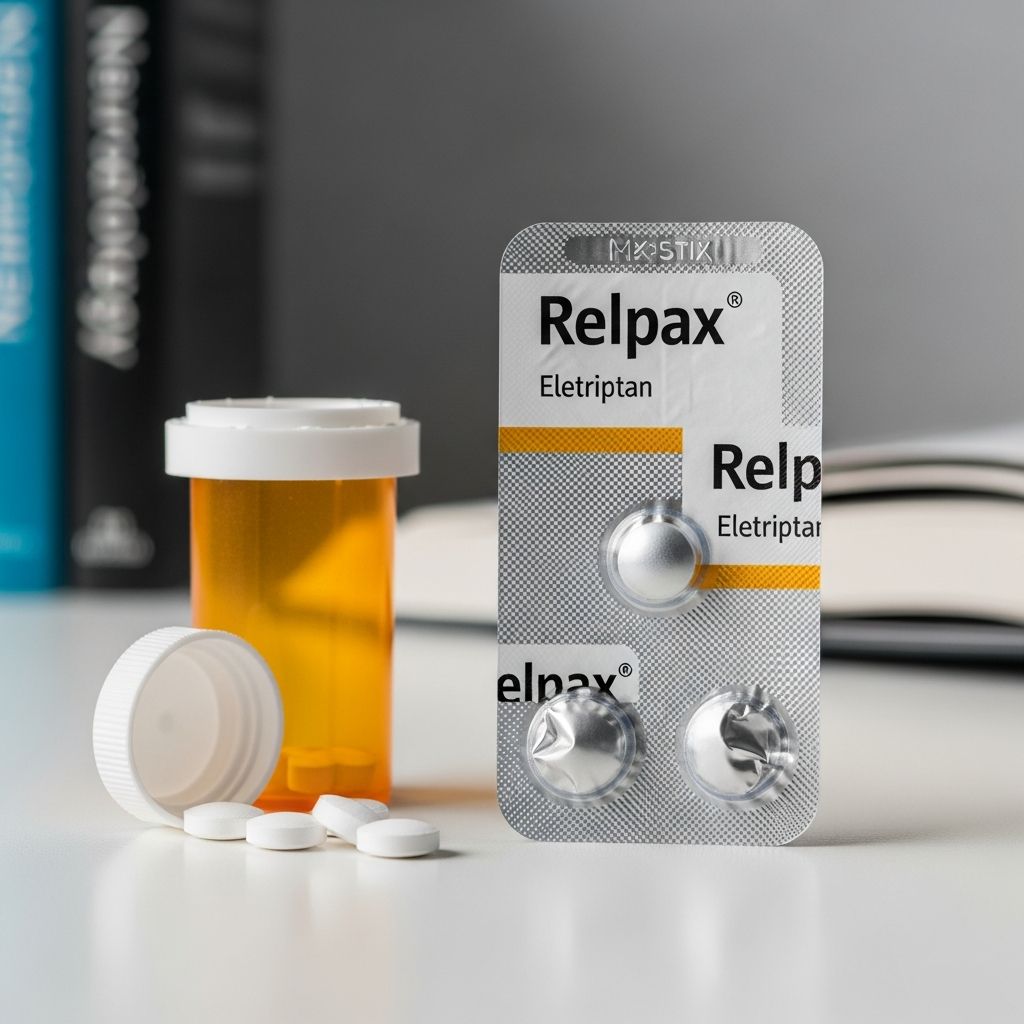
The medication is available in tablet form under the brand name Relpax and comes in several dosage strengths. Eletriptan is not intended for migraine prevention, nor is it effective for other types of headaches such as cluster headaches or tension headaches.
How Does Eletriptan Work?
Eletriptan works through multiple mechanisms of action within the brain and surrounding tissues. The drug operates through three primary pathways:
- Vasoconstriction: Eletriptan narrows dilated blood vessels in the meninges (the membrane surrounding the brain), reducing abnormal blood vessel expansion associated with migraines.
- Neurotransmitter Inhibition: The medication inhibits the release of vasoactive neuropeptides from perivascular trigeminal sensory neurons, preventing the release of pain-causing substances.
- Pain Signal Blocking: Eletriptan reduces pain signal transmission in the trigeminal dorsal horn, effectively decreasing the brain’s perception of migraine pain.
By blocking pain signals and narrowing blood vessels, eletriptan stops the cascade of events that produces migraine symptoms including pain, nausea, and sensitivity to light and sound.
Clinical Efficacy and Effectiveness
Eletriptan has demonstrated consistent and significant clinical efficacy in treating acute migraine attacks with a favorable safety profile. Multiple clinical trials have established its effectiveness compared to placebo and other triptans.
Efficacy Against Placebo
In patients experiencing moderate headache severity, eletriptan 40 mg demonstrated a 2-hour headache-free rate of 68% compared to only 25% with placebo. This represents a substantial improvement in pain relief, with the majority of patients experiencing complete pain freedom within two hours of administration.
Comparison with Other Triptans
Recent meta-analysis of 74 clinical trials showed eletriptan 40 mg to have superiority compared with all other triptans for at least one of the primary efficacy outcomes measured. Eletriptan demonstrated the highest probability of patients being pain-free both at 2 hours and at 24 hours post-administration. Among triptans, eletriptan shows efficacy comparable to sumatriptan injections, zolmitriptan, and rizatriptan, while maintaining excellent tolerability.
Additional Symptom Relief
Beyond pain relief, eletriptan effectively reduces migraine-associated symptoms including nausea, vomiting, photophobia (sensitivity to light), and phonophobia (sensitivity to sound). Many patients find their headaches disappear completely, while others experience substantial pain reduction allowing them to resume normal activities.
Related Stories



Dosage and Administration
Proper administration of eletriptan is critical for optimal effectiveness and safety.
Standard Dosing
Eletriptan is commercially available in 40 mg and 80 mg tablet strengths. The recommended dosing schedule is:
- Initial dose: 20 or 40 mg taken as a single dose at the first sign of migraine headache
- Repeat dosing: If migraine symptoms return after initial improvement, a second dose may be taken at least 2 hours after the first dose
- Maximum daily dose: Do not exceed 80 mg in any 24-hour period
Timing of Administration
For optimal results, eletriptan should be taken at the first sign of migraine headache pain. Even if warning signals of an approaching migraine (aura) occur, patients should wait until actual headache pain begins before taking the medication. The drug typically becomes effective nearly 30 minutes after administration.
Failed Response Protocol
If symptoms do not improve after the first dose, patients should not take a second tablet immediately but should contact their doctor before taking additional medication. A headache unresponsive to eletriptan may indicate a different underlying condition requiring alternative treatment approaches.
Effectiveness in Clinical Practice
The effectiveness of eletriptan has been evaluated using several key parameters in clinical trials, including pain-free response after 2 hours, headache response, sustained pain-free response, and headache recurrence rates. Complete response—defined as headache disappearing after 2 hours with no recurrence in the following 24 hours—represents the treatment outcome most valued by patients.
When treatment is initiated early in the migraine attack, patients receiving eletriptan show decreased rescue-medication use and sustained symptom relief. Approximately 15-40% of patients who experience inefficacy with initial eletriptan administration may benefit from an additional dose.
Side Effects and Safety Profile
While eletriptan is generally well-tolerated, all medications carry potential risks that patients should understand.
Serious Adverse Events
Eletriptan has caused serious side effects in some individuals, particularly those with heart or blood vessel disease. Patients with cardiovascular risk factors should discuss both the risks and benefits of eletriptan therapy with their healthcare provider before use.
Medication Overuse Headache
One significant concern with frequent eletriptan use is the development of medication-induced headache or “rebound headache.” When patients take triptans too frequently, headaches may paradoxically worsen or increase in frequency. This represents an important consideration for patients taking doses more than 10 days per month, as chronic triptan use can lead to medication overuse headache rather than relief.
Serotonin Syndrome
Patients should recognize symptoms of serotonin syndrome, a potentially serious condition that can occur when eletriptan is combined with other serotoninergic medications. Symptoms requiring immediate medical attention include agitation, confusion, rapid heart rate, high blood pressure, dilated pupils, muscle rigidity, and loss of consciousness.
General Tolerability
Eletriptan demonstrates a good tolerability profile, with severe and serious adverse events being uncommon. The incidence of adverse events may actually decrease over time with continued use. This favorable safety profile makes eletriptan particularly suitable for patients requiring frequent migraine treatment.
Important Safety Considerations
Several important safety factors should guide eletriptan use:
- Contraindications: Eletriptan should not be used in patients with ischemic cardiac, cerebrovascular, or peripheral vascular diseases, or during pregnancy.
- Drug Interactions: Although eletriptan undergoes hepatic metabolism via CYP3A4, clinically relevant interactions with first- and second-line migraine prophylactic therapies are uncommon, with notable exceptions including ergot derivatives and cafergot products.
- Careful Consideration: Coprescription with potent CYP3A4 inhibitors and other serotoninergic medications should be carefully considered and discussed with healthcare providers.
- Cost-Effectiveness: Among triptans, eletriptan demonstrates favorable cost-effectiveness compared to other drugs in its class.
Eletriptan for Specific Patient Populations
Adults
Eletriptan is indicated for acute migraine treatment in adults and has been extensively studied in this population with proven efficacy and safety.
Patients with Cardiovascular Risk Factors
Eletriptan is considered the triptan of choice for patients with cardiovascular risk factors who do not have coronary artery disease. Its safety profile in this population has been well-established through clinical experience and research.
Children
The use and dosage of eletriptan in children must be determined by a physician and should not be self-administered without clear medical guidance.
Comparison Table: Eletriptan vs Other Triptans
| Medication | 2-Hour Pain-Free Rate | Headache Recurrence | Key Advantage |
|---|---|---|---|
| Eletriptan 40 mg | 68% (vs 25% placebo) | Lower recurrence | Highest probability of sustained pain-free response |
| Sumatriptan (injection) | Similar to eletriptan | Variable | Rapid onset when injected |
| Zolmitriptan | Similar to eletriptan | Variable | Nasal spray option available |
| Rizatriptan | Similar to eletriptan | Variable | Orally disintegrating tablet option |
Managing Migraine with Eletriptan
Successful migraine management with eletriptan involves more than simply taking medication at headache onset. A comprehensive approach includes:
- Early intervention: Taking eletriptan as soon as migraine pain begins maximizes effectiveness
- Frequency monitoring: Tracking how often you use eletriptan to prevent medication overuse headache development
- Preventive measures: Some patients benefit from concurrent anti-inflammatory medications such as diclofenac or tolfenamic acid in the 24-48 hours following migraine resolution to prevent headache recurrence
- Medical consultation: Regular follow-up with healthcare providers to assess treatment effectiveness and safety
When to Seek Medical Attention
Patients should contact their healthcare provider if:
- A migraine headache is unlike their typical migraine pattern
- Eletriptan fails to provide relief after the first dose
- Migraine headaches worsen despite treatment
- Symptoms of serotonin syndrome develop
- Migraine frequency increases, suggesting possible medication overuse headache
- New or concerning side effects emerge during treatment
Frequently Asked Questions
Q: Can eletriptan prevent migraines from occurring?
A: No. Eletriptan is designed to treat acute migraine attacks after they begin, not to prevent migraines from occurring or reduce the total number of headaches you experience. For migraine prevention, your doctor may recommend other medications taken regularly.
Q: How quickly does eletriptan work?
A: Eletriptan typically becomes effective nearly 30 minutes after taking the medication, with most patients experiencing significant pain relief within 2 hours.
Q: What should I do if my headache returns after eletriptan use?
A: If your symptoms improve but return after 2 hours or longer, you may take a second tablet, ensuring at least 2 hours have passed since the first dose and that you do not exceed 80 mg in 24 hours.
Q: Is eletriptan safe for people with heart conditions?
A: Eletriptan is considered safe for patients with cardiovascular risk factors who do not have coronary artery disease. However, patients with heart or blood vessel disease should discuss risks and benefits with their doctor before using this medication.
Q: What is medication overuse headache and how can I prevent it?
A: Medication overuse headache occurs when triptans like eletriptan are used too frequently, paradoxically worsening headaches. Limiting triptan use to fewer than 10 days per month helps prevent this complication. Discuss appropriate usage patterns with your healthcare provider.
Q: Can eletriptan be taken with other medications?
A: While eletriptan has few clinically relevant interactions with common migraine medications, it should not be combined with ergot derivatives or cafergot products. Always inform your doctor of all medications you take, especially other serotoninergic drugs.
Q: Why doesn’t eletriptan work for my cluster headaches?
A: Eletriptan is specifically approved only for acute migraine treatment and is not effective for cluster headaches or other headache types. Different conditions require different treatments, so discuss alternative options with your healthcare provider.
References
- Eletriptan in the management of acute migraine — PubMed Central / National Center for Biotechnology Information. 2016-11-21. https://pmc.ncbi.nlm.nih.gov/articles/PMC4994780/
- Eletriptan: MedlinePlus Drug Information — U.S. National Library of Medicine. 2025. https://medlineplus.gov/druginfo/meds/a603029.html
- Eletriptan (oral route) – Side effects & dosage — Mayo Clinic. 2024. https://www.mayoclinic.org/drugs-supplements/eletriptan-oral-route/description/drg-20063635
- RELPAX (eletriptan HBr) – Indication and Safety Information — Pfizer Inc. 2024. https://www.relpax.com/en
- Patient Information: Eletriptan hydrobromide Tablets — Pfizer Labeling. 2024. https://labeling.pfizer.com/showlabeling.aspx?id=9427§ion=PPI
- Migraine Treatment and Relief (Triptans) — Patient.info. 2024. https://patient.info/brain-nerves/migraine-leaflet/migraine-treatment-medication-and-prevention
- Eletriptan Tablets — Cleveland Clinic. 2024. https://my.clevelandclinic.org/health/drugs/18805-eletriptan-tablets
- Eletriptan — Memorial Sloan Kettering Cancer Center. 2024. https://www.mskcc.org/cancer-care/patient-education/medications/adult/eletriptan
Similar Articles








Read full bio of Sneha Tete