ELISA Test: Purpose, Procedure, Results & What to Expect
Understanding ELISA: A comprehensive guide to enzyme-linked immunosorbent assay testing.
What Is ELISA?
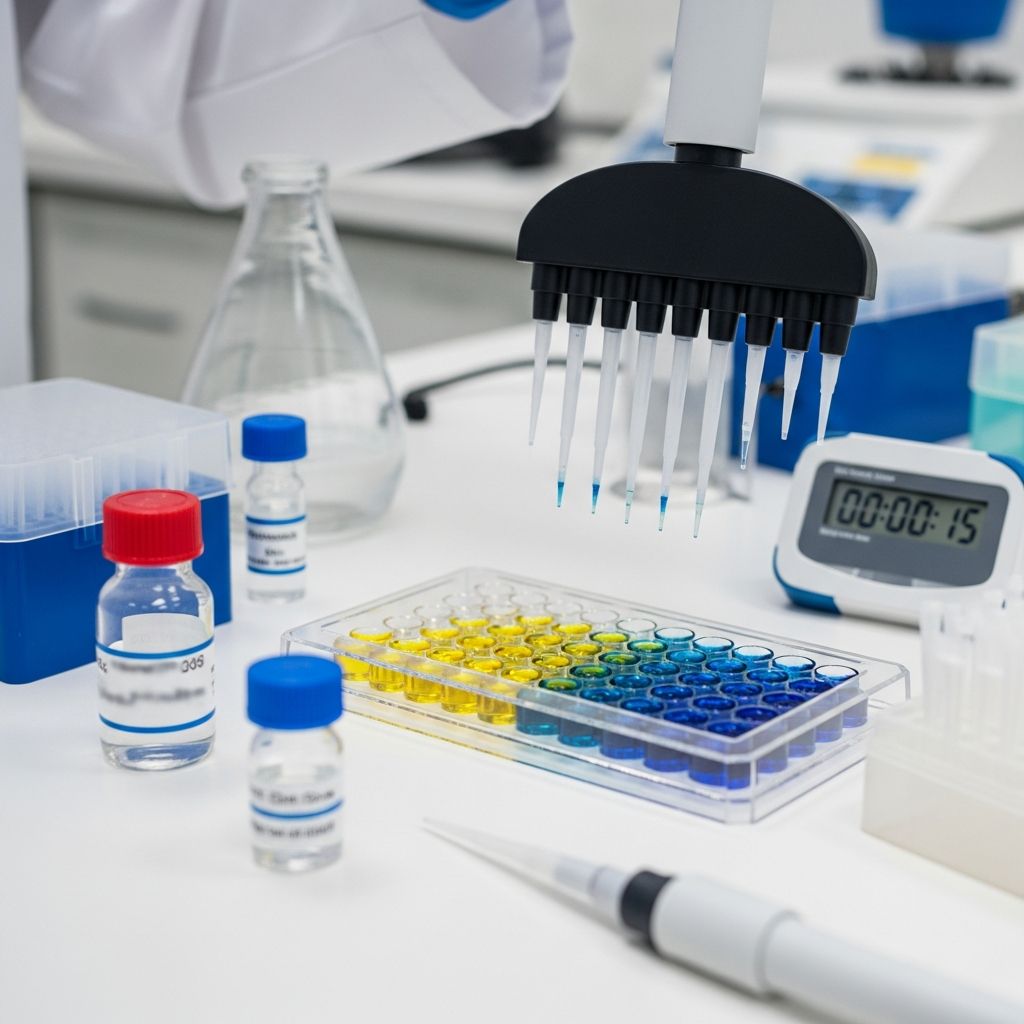
ELISA stands for “enzyme-linked immunosorbent assay,” a laboratory technique commonly referred to as an EIA test. This testing method detects and measures specific antibodies, antigens, proteins, and hormones present in bodily fluid samples. ELISA has become a cornerstone of modern diagnostics, playing a critical role in identifying various medical conditions ranging from infectious diseases to hormonal imbalances.
The versatility of ELISA lies in its ability to work with multiple sample types. Laboratory scientists can perform ELISA testing on blood, plasma, urine, saliva, and cerebrospinal fluid (CSF). The sensitivity and specificity of this technique have made it the gold standard among immunoassays, earning the confidence of healthcare providers and researchers worldwide.
How ELISA Works: The Step-by-Step Process
Understanding the ELISA procedure helps demystify what happens when your sample arrives at the laboratory. The process involves several carefully orchestrated steps designed to detect the presence and quantity of target substances.
Sample Preparation and Initial Setup
When you provide a blood sample or other bodily fluid, the laboratory scientist prepares it for testing by placing it in a specialized tube or microplate. The microplate typically contains multiple wells, each designed to hold a small amount of your sample. This setup allows for simultaneous testing of multiple samples or multiple targets within a single sample.
Antigen-Antibody Binding
The scientist adds your bodily fluid sample to the tube or plate containing pre-coated antibodies. These antibodies are specifically designed to capture the target antigen you’re being tested for. If your sample contains the antibody or antigen being sought, it will bind to the coating antibody in the well. For example, if testing for HIV, any HIV antibodies present in your blood sample will attach to the HIV antigens already present in the well. If your sample doesn’t contain the target antibody, nothing binds, and the well remains empty of this interaction.
Enzyme-Linked Detection
This step gives ELISA its distinctive name and function. The laboratory scientist adds a secondary antibody that has been linked to an enzyme. This “enzyme-linked” antibody recognizes and binds to any antibodies already attached to the antigen. The enzyme serves as a catalyst, speeding up chemical reactions that will produce a visible signal. This is the crucial component that transforms molecular detection into something measurable.
Color Reaction and Measurement
In the final step, the scientist adds a substrate—a substance that reacts with the enzyme. If antibodies are present and the enzyme is bound to them, a color reaction occurs. The intensity of this color change is directly proportional to the amount of antibody present in your sample. If no antibodies are present, no color change happens, indicating a negative result. The color intensity can be measured using spectrophotometry, allowing laboratory technicians to quantify results precisely.
Medical Applications and Diagnostic Uses
ELISA’s broad applicability makes it invaluable across numerous medical specialties. The test can diagnose conditions caused by bacterial infections, viral infections, and fungal pathogens, as well as identify endocrine conditions and autoimmune disorders.
Related Stories



Infectious Disease Diagnosis
One of the most well-known applications of ELISA is in diagnosing HIV infection. Healthcare providers also use ELISA to confirm Lyme disease, a bacterial infection transmitted by tick bites. For Lyme disease diagnosis, the CDC recommends a two-tiered testing approach, with ELISA serving as the sensitive initial screening test, followed by Western blot confirmation for positive results. The sensitivity and specificity of ELISA testing have proven particularly effective for early detection of Lyme disease when compared to other methodologies.
Pregnancy Confirmation
ELISA can detect human chorionic gonadotropin (HCG), the hormone produced during pregnancy. This application demonstrates the test’s ability to measure hormone levels accurately, making it useful for confirming pregnancy in clinical settings.
Endocrine Disorder Detection
Laboratory scientists use ELISA to diagnose thyroid disease and other endocrine conditions by measuring hormone levels. The test’s ability to quantify hormone concentrations allows physicians to assess whether glandular function falls within normal ranges.
Additional Clinical Applications
Beyond infectious diseases and hormones, ELISA serves several other critical functions in modern medicine:
- Detecting and measuring autoantibodies (such as those found in Type 1 diabetes)
- Screening blood donations for viral infections to ensure transfusion safety
- Identifying tumor markers to support cancer diagnosis and monitoring
- Detecting allergic sensitization
- Screening for non-medical drugs like amphetamines and cocaine
- Tracking disease outbreaks in communities
- Confirming vaccination status
Understanding Your ELISA Test Results
ELISA test results typically fall into one of three categories, though the specific interpretation depends on what condition is being tested and the laboratory that processed your sample.
Result Categories
Most ELISA tests return either positive or negative results. A positive result indicates that the target antibody or antigen was detected in your sample. A negative result means the target substance was not found. Some tests may also return an invalid result, which typically indicates a problem with the test itself rather than a true negative or positive finding. Invalid results usually require retesting.
Quantitative Results
Because ELISA measures the intensity of color change, which correlates with antibody concentration, the test provides quantitative information. This means your results show not just whether an antibody is present, but how much of it exists in your sample. This quantitative capability allows physicians to monitor disease progression or treatment effectiveness over time.
What Results Don’t Mean
It’s crucial to understand that an abnormal ELISA result is not a final diagnosis. Even if you receive a positive result, this doesn’t automatically confirm you have a serious medical condition. Healthcare providers typically use ELISA as a screening tool rather than a definitive diagnostic test. An abnormal result may indicate the need for additional confirmatory testing.
Next Steps After Abnormal Results
If you receive an abnormal ELISA result, your healthcare provider will discuss the findings with you and determine appropriate follow-up steps. They may order confirmatory tests, perform additional laboratory work, or conduct imaging studies depending on your clinical presentation. Together with your provider, you’ll decide on the most appropriate course of action based on your individual circumstances.
ELISA vs. Other Immunoassays
While ELISA stands as the gold standard for immunoassays, other testing methods exist for specific applications. Understanding how ELISA compares to similar tests can help you appreciate why it remains so widely used.
| Characteristic | ELISA | ELISpot | Western Blot |
|---|---|---|---|
| Primary Use | Measures total antibodies or antigens in sample | Detects individual cytokine-secreting cells | Confirms positive ELISA results |
| Detection Method | Color reaction in wells | Spot formation on membrane | Protein band visualization |
| Time to Results | 2-4 hours | 24-48 hours | Several days |
| Sample Volume | Small (microliters) | Moderate | Larger |
| Cost | Low to moderate | Moderate to high | Moderate |
Advantages of ELISA Testing
ELISA has remained the gold standard of immunoassays for several compelling reasons that make it the preferred choice for many laboratory settings.
- High Sensitivity and Specificity: ELISA can detect even small quantities of target substances, reducing false negatives while maintaining low false positive rates.
- Quantitative Data: Unlike simple yes-or-no tests, ELISA provides quantitative information about antibody or antigen concentration.
- Versatility: The test works with multiple sample types and can detect numerous different substances.
- Cost-Effectiveness: Compared to more complex testing methods, ELISA is relatively affordable and accessible.
- Speed: Results typically return within hours rather than days, allowing for quicker clinical decision-making.
- Reproducibility: ELISA procedures are standardized and highly reproducible across different laboratories.
- Automation Capability: Modern ELISA can be partially or fully automated, increasing throughput and consistency.
Limitations and Considerations
While ELISA is highly valuable, healthcare providers recognize certain limitations that influence its use. The test may have false-positive rates in certain conditions, particularly when screening large populations. Some ELISA tests, such as those for Hepatitis C screening, have historically shown unacceptably high false-positive rates in some populations, necessitating confirmatory testing. Additionally, ELISA cannot distinguish between current and past infection in all cases, as antibodies may persist long after infection resolves. The window period following initial infection but before antibody development represents another limitation, particularly for acute infections.
Frequently Asked Questions
Q: How long does it take to get ELISA test results?
A: Most ELISA test results return within 2 to 4 hours, though some laboratories may require up to 24 hours depending on their workload and specific testing requirements. Urgent or stat tests may be prioritized for faster turnaround.
Q: Is ELISA testing painful?
A: ELISA itself is not painful. However, if ELISA requires a blood sample, you may experience minor discomfort during the needle stick. Most people describe this as a quick pinch. Other sample types like urine or saliva involve no discomfort whatsoever.
Q: Can ELISA test results be wrong?
A: While ELISA is highly accurate, false positives and false negatives can occur, though they’re relatively rare. This is why healthcare providers often order confirmatory tests for positive results. The quality of your sample and proper laboratory technique are critical to accurate results.
Q: What should I do if I get a positive ELISA result?
A: Don’t panic. A positive ELISA result is not a final diagnosis. Contact your healthcare provider to discuss the results. They will likely order confirmatory testing and may conduct additional evaluation based on your symptoms and medical history. Your provider will guide you through the next appropriate steps.
Q: Is special preparation needed before ELISA testing?
A: Preparation depends on the specific test being performed. For blood-based ELISA tests, you may need to fast beforehand. For urine or saliva samples, minimal preparation is usually required. Always follow your healthcare provider’s specific instructions for the test you’re having done.
Q: How reliable is ELISA for detecting HIV?
A: ELISA for HIV is highly reliable but has a window period of approximately 18-45 days after infection before antibodies develop sufficiently for detection. Healthcare providers typically recommend repeat testing if initial results are negative but clinical suspicion remains high. Fourth-generation tests that detect both antibodies and antigens have improved detection during the window period.
Q: Can ELISA distinguish between IgG and IgM antibodies?
A: Yes. Specialized ELISA tests can distinguish between IgM (early infection) and IgG (past infection or immunity) antibodies. This distinction helps healthcare providers determine whether an infection is acute or chronic and assess immune status.
Conclusion
ELISA remains one of the most important and widely used laboratory techniques in modern medicine. Its ability to detect and quantify antibodies, antigens, proteins, and hormones makes it invaluable for diagnosing infectious diseases, endocrine disorders, autoimmune conditions, and many other medical problems. Understanding how ELISA works and what your results mean empowers you to engage more effectively with your healthcare provider. Remember that ELISA typically serves as a screening or diagnostic tool rather than a definitive final diagnosis. If you receive an abnormal result, work closely with your healthcare provider to determine the appropriate next steps and don’t hesitate to ask questions about your testing and results.
References
- ELISA: What It Is, Purpose, Procedure & Results — Cleveland Clinic. 2024. https://my.clevelandclinic.org/health/articles/24990-elisa
- Appropriate laboratory testing in Lyme disease — Cleveland Clinic Journal of Medicine, 86(11). 2019. https://www.ccjm.org/content/86/11/751
- Enzyme-linked immunosorbent assay (ELISA) — Britannica. 2024. https://www.britannica.com/science/enzyme-linked-immunosorbent-assay
- Immunoassays: Spotlight On The ELISpot Technique — Medix Biochemica. 2023. https://articles.medixbiochemica.com/immunoassays-spotlight-on-the-elispot-technique
- Use of a whole-cell ELISA to detect additional antibodies in setting of suspected heparin-induced thrombocytopenia — PubMed Central, National Center for Biotechnology Information. 2019. https://pmc.ncbi.nlm.nih.gov/articles/PMC6629490/
Similar Articles








Read full bio of medha deb