Embolism: Warning Signs, Symptoms & Treatment
Understand embolism causes, symptoms, diagnosis, and treatment options for better health outcomes.
What Is an Embolism?
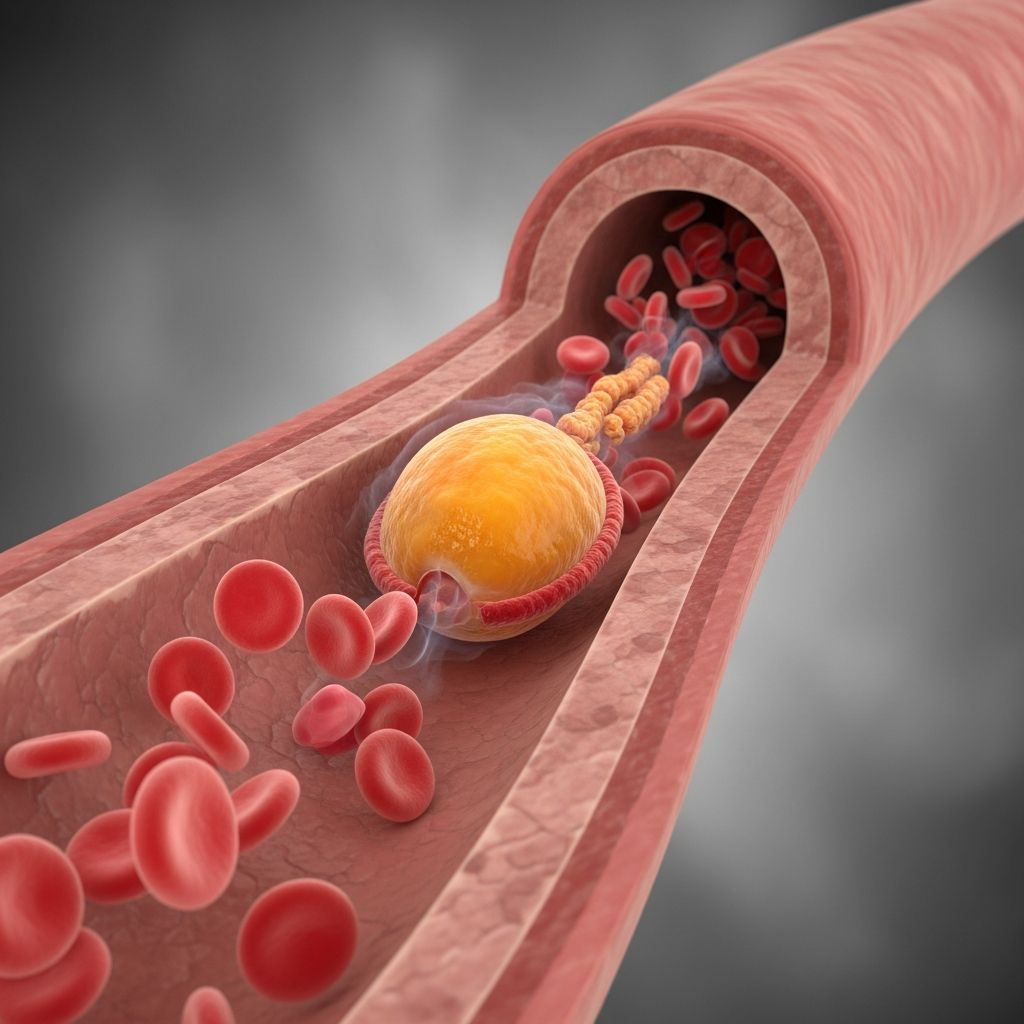
An embolism is an obstacle or blockage in a blood vessel that can seriously compromise blood flow and oxygen delivery throughout your body. Unlike a thrombus, which forms in place within a blood vessel, an embolism typically originates elsewhere in your circulatory system. It begins as a blood clot or other material that breaks loose, travels through your bloodstream, and becomes lodged in a blood vessel, creating a dangerous obstruction.
The material causing an embolism can vary. While blood clots are the most common culprits, embolisms can also be caused by air bubbles, fat deposits, tumor fragments, or other foreign materials that enter the circulatory system. The severity of an embolism depends on several factors, including the size of the blockage, the location where it lodges, and how quickly blood flow is restored.
Types of Embolism
Different types of embolisms occur based on what material is blocking the blood vessel and where the blockage develops. Understanding these distinctions helps healthcare providers determine the appropriate treatment approach and assess the urgency of intervention.
Pulmonary Embolism
A pulmonary embolism (PE) occurs when a blood clot travels to and lodges in the arteries of your lungs, creating a blockage that disrupts blood flow and oxygen exchange. This is one of the most serious types of embolism and represents a medical emergency requiring immediate attention. The clot typically originates in the legs as a deep vein thrombosis (DVT) before breaking off and traveling to the lungs.
Arterial Embolism
An arterial embolism happens when a blood clot or other material blocks an artery, which carries oxygen-rich blood away from the heart. These embolisms can occur in arteries throughout the body, including those supplying the brain, heart, limbs, or other vital organs. Arterial embolisms often cause sudden, severe symptoms due to the critical nature of arterial blood supply.
Venous Embolism
A venous embolism involves a blockage in veins, which carry blood back to the heart. While generally less immediately life-threatening than arterial embolisms, venous embolisms can still cause significant complications, including pulmonary embolism if the clot travels to the lungs.
Warning Signs and Symptoms
The symptoms of an embolism vary depending on the type, size, and location of the blockage. Some people may not experience any symptoms, while others develop severe, life-threatening complications. Recognizing these warning signs is crucial for seeking prompt medical attention.
Symptoms of Pulmonary Embolism
A pulmonary embolism can present with sudden symptoms that may include shortness of breath, chest pain (particularly pain that worsens when taking a deep breath), a rapid or irregular heartbeat, and lightheadedness or fainting. Some patients experience a cough, and in severe cases, may cough up blood. These symptoms can develop suddenly and warrant emergency medical evaluation.
Related Stories



Symptoms of Arterial Embolism
Arterial embolisms typically cause sudden pain and weakness in the affected limb, cold skin, numbness, or tingling sensations. If an arterial embolism affects the brain, it may cause stroke symptoms including facial drooping, arm weakness, or speech difficulties. Arterial embolisms in the heart can cause chest pain and shortness of breath.
Symptoms of Venous Embolism
Venous embolisms may cause swelling, pain, redness, and warmth in the affected area, typically in the legs. Calf pain or swelling is a common presentation of deep vein thrombosis that may precede a pulmonary embolism.
Risk Factors for Embolism
Understanding your risk factors helps you and your healthcare provider take preventive measures. Several conditions and situations increase your likelihood of developing an embolism:
Immobility: Prolonged bed rest, long flights, or extended periods of sitting increase blood clot formation risk. Surgery: Surgical procedures, particularly orthopedic surgeries like hip or knee replacement, significantly increase embolism risk. Cancer: Active cancer and certain cancer treatments substantially increase the risk of venous thromboembolism. Heart Disease: Conditions affecting heart function can predispose you to clot formation. Pregnancy and Postpartum Period: Hormonal changes and increased clotting factors during pregnancy and the postpartum period elevate embolism risk. Oral Contraceptives and Hormone Therapy: These medications can increase clotting risk. Smoking: Tobacco use damages blood vessel linings and increases clot formation. Obesity: Excess weight increases inflammation and clotting risk. Previous Blood Clots: A history of embolism or DVT significantly increases recurrence risk. Inherited Clotting Disorders: Genetic conditions affecting blood coagulation increase embolism susceptibility.
Diagnosis of Embolism
Diagnosing an embolism involves a combination of clinical evaluation and diagnostic tests. Your healthcare provider will consider your symptoms, medical history, and risk factors before ordering appropriate tests.
Imaging Tests
Several imaging modalities help identify embolisms. Computed tomography pulmonary angiography (CTPA) is often the gold standard for diagnosing pulmonary embolism, using contrast-enhanced imaging to visualize blood clots in the lungs. Ultrasound, particularly venous duplex ultrasound, can detect deep vein thrombosis in the legs. CT angiography or magnetic resonance angiography may be used for arterial embolisms. Chest X-rays provide supplementary information about lung and heart status.
Blood Tests
D-dimer testing measures a blood protein that increases when clots form. While not specific for embolism, elevated D-dimer levels in patients with clinical suspicion warrant further investigation. Additional blood work assesses bleeding and clotting function.
Electrocardiography
An electrocardiogram (ECG) may show characteristic patterns associated with pulmonary embolism, though findings can be nonspecific. In some cases, the classic S1Q3T3 pattern (large S wave in lead 1, Q wave and inverted T wave in lead 3) suggests massive pulmonary embolism.
Echocardiography
Transthoracic echocardiography can assess right ventricular function and detect signs of right heart strain, which occurs when pulmonary embolism increases afterload on the right ventricle.
Treatment Options
The goal of embolism treatment is to restore blood flow by removing or dissolving the blockage. Treatment approaches vary based on embolism type, severity, and patient factors.
Anticoagulant Medications
Anticoagulants, commonly called blood thinners, are the first-line treatment for most embolisms. These medications prevent existing clots from growing and reduce the risk of new clot formation. Common anticoagulants include heparin (administered intravenously or subcutaneously), low-molecular-weight heparin (LMWH), fondaparinux, and direct oral anticoagulants (DOACs) such as apixaban, dabigatran, edoxaban, and rivaroxaban. Warfarin, a vitamin K antagonist, represents another anticoagulant option.
Thrombolytic Therapy
Thrombolytic medications, often called clot busters, actively dissolve blood clots. These include tissue plasminogen activator (tPA) and other fibrinolytic agents. Thrombolytics are administered in emergency departments or intensive care units where patients can be closely monitored. These medications are typically reserved for high-risk situations such as hemodynamic instability, low blood pressure, or massive pulmonary embolism because they carry increased bleeding risks compared to anticoagulation alone.
Catheter-Directed Interventions
Catheter-directed therapies have emerged as effective options for embolism management. In catheter-directed thrombolysis, a thin tube is guided through blood vessels to the site of the clot, where thrombolytic medication is delivered directly or ultrasound assistance accelerates clot dissolution. This approach allows lower medication doses compared to systemic thrombolysis, potentially reducing bleeding complications while effectively reversing right ventricular dysfunction in intermediate-risk pulmonary embolism cases.
Mechanical Thrombectomy
This percutaneous intervention involves using a specialized catheter device to physically remove the blood clot. The catheter retrieves the clot material directly from the blood vessel, restoring blood flow without requiring systemic thrombolysis.
Surgical Embolectomy
In emergency situations where other treatments have failed or are contraindicated, surgical removal of the embolus may be necessary. Pulmonary embolectomy involves surgically removing a blood clot from the pulmonary arteries. This procedure is typically reserved for massive pulmonary embolism in hemodynamically unstable patients or those in cardiac arrest.
Extracorporeal Membrane Oxygenation (ECMO)
For patients with massive pulmonary embolism and hemodynamic collapse, ECMO provides life support by mechanically pumping blood and oxygenating it outside the body. This allows time for definitive clot management while maintaining vital organ perfusion. ECMO serves as a bridge therapy, typically used for 5 to 10 days while the underlying embolism is treated.
Supportive Care
Additional supportive measures include oxygen therapy to maintain adequate blood oxygen levels, pain management, and in severe cases, mechanical ventilation. Patients may require ICU admission for continuous monitoring and management of hemodynamic complications.
Managing Complications
Embolisms can cause serious complications requiring specialized management. Right ventricular failure secondary to massive pulmonary embolism represents one of the most serious complications, with inpatient mortality reaching 42.1% in high-risk patients with hemodynamic collapse. Multidisciplinary team approaches combining medical management, interventional procedures, and in refractory cases, mechanical circulatory support have demonstrated improved outcomes with lower mortality rates and shorter hospital stays.
Chronic thromboembolic pulmonary hypertension (CTEPH) can develop as a long-term complication when pulmonary emboli recur or resolve incompletely. Patients developing this condition require referral to specialized pulmonary hypertension centers for advanced management.
Recovery and Prognosis
Recovery from an embolism depends on several factors including the size and severity of the blockage, the location of the embolism, your overall health status, and how well your heart can pump blood. With appropriate treatment, most patients begin feeling better within a week. However, complete resolution of a pulmonary embolism can take months or even years.
Your long-term outlook depends on early diagnosis, prompt treatment initiation, and adherence to prescribed anticoagulation therapy. Untreated embolisms can be life-threatening, making prompt medical evaluation essential when symptoms develop.
Prevention Strategies
Preventing embolism involves reducing your personal risk factors and taking appropriate preventive measures. Maintain regular physical activity to promote healthy circulation. Avoid prolonged immobility; if long travel is necessary, take frequent breaks to move around and perform leg exercises. Stay well-hydrated, maintain a healthy weight, avoid smoking, and manage chronic conditions like heart disease and diabetes. If you have had previous blood clots, follow your healthcare provider’s recommendations regarding anticoagulation duration and preventive measures. After surgery, follow post-operative instructions regarding activity, leg exercises, and any prescribed blood thinners or compression stockings.
When to Seek Emergency Care
Seek immediate emergency care if you experience sudden shortness of breath, severe chest pain, rapid or irregular heartbeat, fainting, sudden leg swelling or pain, or signs of stroke. These symptoms may indicate a life-threatening embolism requiring emergency intervention.
Frequently Asked Questions
Q: What is the difference between an embolism and a thrombus?
A: A thrombus is a blood clot that forms in place within a blood vessel, while an embolism is a blockage caused by material (typically a blood clot) that travels through the bloodstream and lodges in a vessel elsewhere in the body.
Q: How long does embolism treatment take?
A: Initial treatment may take days to weeks, but complete resolution can take months or years. Your healthcare provider will determine the appropriate duration of anticoagulation therapy based on your specific situation and embolism type.
Q: Can an embolism occur without symptoms?
A: Yes, some people with embolisms may not experience symptoms, particularly with smaller clots. This is why risk factor assessment and preventive measures are important even in asymptomatic individuals at high risk.
Q: Are all embolisms treated with blood thinners?
A: Most embolisms are initially treated with anticoagulants. However, some high-risk cases may require thrombolytic therapy, catheter-directed interventions, or surgical removal depending on severity and clinical presentation.
Q: What are the side effects of embolism medications?
A: The primary concern with anticoagulants and thrombolytics is bleeding risk. Your healthcare provider will monitor you closely and adjust doses to balance clot prevention with bleeding safety. Other side effects vary by medication and should be discussed with your provider.
Q: How can I reduce my embolism risk?
A: Maintain physical activity, avoid prolonged immobility, stay hydrated, maintain healthy weight, avoid smoking, manage chronic diseases, and follow your healthcare provider’s recommendations regarding preventive measures if you have risk factors.
Q: What happens if embolism treatment fails?
A: If standard treatments are ineffective, your healthcare team may escalate to advanced interventions including catheter-directed procedures, surgical embolectomy, or mechanical circulatory support with ECMO to maintain vital organ perfusion while definitive treatment is pursued.
References
- Managing right ventricular failure in the setting of pulmonary embolism — Cleveland Clinic Journal of Medicine. 2023. https://www.ccjm.org/content/92/5/301
- Embolism: Warning Signs & Symptoms — Cleveland Clinic. 2024. https://my.clevelandclinic.org/health/diseases/embolism
- Pulmonary Embolism: Symptoms, Causes & Treatment — Cleveland Clinic. 2024. https://my.clevelandclinic.org/health/diseases/17400-pulmonary-embolism
- Management of venous thromboembolism in patients with active cancer — Cleveland Clinic Journal of Medicine. 2024. https://www.ccjm.org/content/91/2/109
- Managing VTE Risk in Patients with Cancer — Cleveland Clinic Consult QD. 2024. https://consultqd.clevelandclinic.org/managing-the-risks-of-venous-thromboembolisms-in-patients-with-cancer
- Blood Clots: What They Are and What They Do — Cleveland Clinic. 2024. https://my.clevelandclinic.org/health/body/17675-blood-clots
Similar Articles








Read full bio of medha deb