Dry AMD Treatments: Expert Guide To New Options 2025
Discover the latest breakthroughs in dry age-related macular degeneration therapies, from FDA-approved drugs to innovative implants and laser methods.
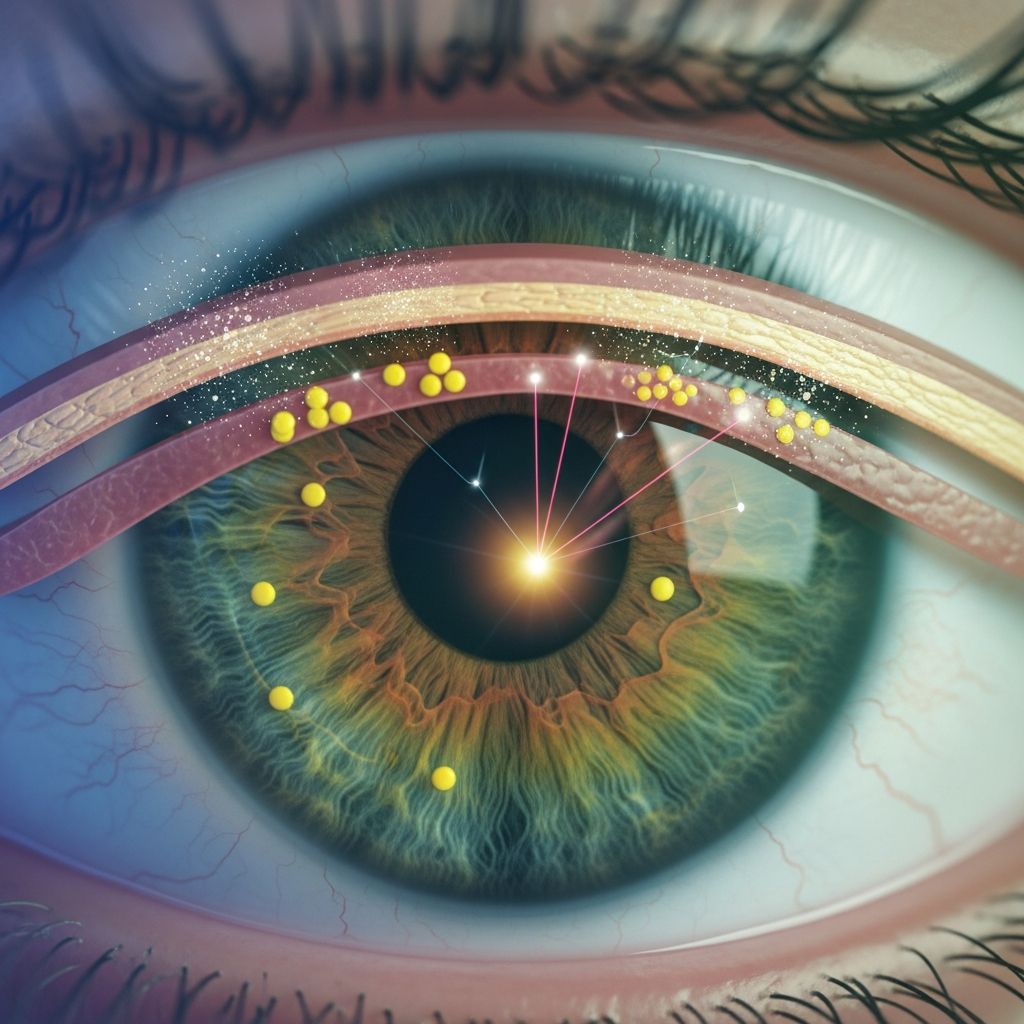
Age-related macular degeneration (AMD) remains a leading cause of vision loss among older adults, with the dry form affecting millions worldwide by gradually damaging central vision. Unlike wet AMD, which involves abnormal blood vessel growth, dry AMD progresses through drusen buildup and retinal cell atrophy, often culminating in geographic atrophy (GA). Recent years have brought transformative options, shifting from no approved therapies to multiple FDA-approved drugs and devices, alongside cutting-edge trials for gene therapy, implants, and laser-based interventions.
Understanding Dry AMD and Its Impact
Dry AMD starts subtly with small yellow deposits called drusen under the retina, impairing the macula’s ability to provide sharp central vision needed for reading or recognizing faces. Risk factors include advanced age, genetics, and smoking. Progression to late-stage GA destroys photoreceptors, leaving patients legally blind in the center of their visual field. Around 20 million Americans over 40 live with AMD, mostly the dry type, highlighting the urgent need for effective interventions.
FDA-Approved Complement Inhibitors: A Game Changer
The first major breakthrough arrived in 2023 with complement inhibitors targeting the immune system’s overactivity, which contributes to retinal cell death in GA. Pegcetacoplan (Syfovre), developed by Apellis Pharmaceuticals, inhibits C3 and C3b proteins in the complement cascade, slowing GA lesion growth. Administered via intravitreal injections every 25 to 60 days, it marked the first treatment for atrophic dry AMD.
Following closely, avacincaptad pegol (Izervay) from Astellas was also FDA-approved, blocking C5 in the complement pathway. Clinical trials like OAKS and DERBY demonstrated reduced GA progression, with patients gaining months of preserved vision. These drugs require regular injections but represent a vital first step, with real-world data confirming efficacy despite risks like retinal vasculitis.
| Treatment | Target | Dosing Frequency | Approval Year |
|---|---|---|---|
| Pegcetacoplan (Syfovre) | C3/C3b | Monthly or bimonthly | 2023 |
| Avacincaptad pegol (Izervay) | C5 | Monthly | 2023 |
Non-Invasive Light Therapy: Photobiomodulation
Building on pharmacological advances, photobiomodulation (PBM) offers a needle-free alternative. The FDA cleared the Valeda Light Delivery System in 2024 for early dry AMD. This device emits red and near-infrared light to energize retinal mitochondria, boosting cellular energy production and reducing inflammation. The LIGHTSITE III trial (NCT04065490) enrolled 100 patients aged 50+ with moderate vision impairment, showing significant best-corrected visual acuity (BCVA) gains sustained over 24 months.
- Mechanism: Stimulates cytochrome c oxidase in mitochondria, enhancing ATP output and antioxidant defenses.
- Benefits: Office-based, 9-minute sessions, 3-5 times weekly initially, then maintenance.
- Outcomes: Stabilized or improved vision in most participants, with minimal side effects.
PBM slows drusen accumulation and photoreceptor loss, ideal for intermediate dry AMD before GA sets in.
Laser Innovations: Heat Shock and Autophagy Activation
Researchers at Aalto University have pioneered a laser therapy using near-infrared light to precisely heat retinal tissue, activating heat shock proteins and autophagy—the cell’s recycling process discovered by Nobel laureate Yoshinori Ohsumi. This combats oxidative stress and protein aggregation central to dry AMD pathogenesis. Tested successfully in mice and pigs, human phase 1 safety trials began in Finland in spring 2026.
The method monitors temperature to avoid damage above 45°C, triggering protective cellular responses that clear drusen-like deposits. Repetitive sessions may be needed as effects wane after days. A startup, Maculaser, aims for clinic availability within three years, potentially as an outpatient procedure.
Related Stories



Gene Therapy: Long-Term Anti-VEGF for Both Forms
Gene therapy addresses frequent injections plaguing wet AMD while showing promise for dry. Candidates like RGX-314 and ADVM-022 deliver genes for sustained anti-VEGF production, curbing neovascularization. For dry AMD, HMR59 and GT005 target GA by modulating inflammation and complement factors.
One-time subretinal or intravitreal delivery via viral vectors could provide years of therapy. Phase 2/3 trials report vision stabilization, with fewer retreats needed. Challenges include immune responses, but durability offers substantial patient relief.
Retinal Implants and Bionic Vision: Restoring Sight in Late Stages
For advanced GA where photoreceptors are lost, bionic implants bypass damaged cells. The PRIMA System, a 2mm photovoltaic chip surgically placed under the retina, converts projected light into signals stimulating remaining neurons. In a European trial at Moorfields Eye Hospital, 84.4% of 38 patients regained reading ability, averaging five lines on eye charts.
Performed in under two hours by vitreoretinal surgeons, PRIMA pairs with glasses projecting images onto the implant. USC is testing stem cell-derived implants for similar restoration. These neuroprosthetics herald a new era for profoundly vision-impaired patients.
- PRIMA: Wireless, no external power; enables word/number recognition.
- Stem cell implants: Regenerate retinal layers; early trials ongoing.
Sustained-Release Implants and Combination Approaches
Sustained-release devices like drug-eluting implants dispense anti-VEGF or complement inhibitors over months, minimizing visits. Faricimab (Vabysmo), approved for wet AMD, offers dual Ang-2/VEGF inhibition with 16-week durability in 59% of patients.
Combinations, such as anti-VEGF with complement blockers, are in trials to tackle both AMD forms comprehensively. WNT pathway agonists and cell therapies further enrich the pipeline.
Clinical Trial Landscape and Patient Considerations
Ongoing trials span phases, from safety (e.g., Aalto laser) to efficacy (gene therapies). Patients should monitor AREDS2 supplements for early AMD, quit smoking, and pursue regular retinal imaging like OCT. Risks vary: injections carry infection/endophthalmitis (rare), while implants involve surgical recovery.
| Treatment Type | Stage of Development | Key Trials |
|---|---|---|
| Complement Inhibitors | Approved | OAKS, DERBY |
| Photobiomodulation | Approved | LIGHTSITE III |
| Laser Heat Therapy | Phase 1 (2026) | Aalto University |
| Gene Therapy | Phase 2/3 | RGX-314, GT005 |
| Retinal Implants | Trials/Approval Pending | PRIMA, USC Stem Cells |
Frequently Asked Questions (FAQs)
What is the first approved treatment for dry AMD GA?
Pegcetacoplan (Syfovre) in 2023, followed by Izervay, both slowing atrophy via complement inhibition.
Is light therapy safe for home use?
Valeda requires professional administration initially; it’s non-invasive with strong safety data.
When will laser therapy from Finland be available?
Optimistic timeline: 3 years post-2026 trials, via Maculaser startup.
Can gene therapy cure dry AMD?
Not a cure, but it aims for long-term disease modification, reducing treatment burden.
Who qualifies for retinal implants like PRIMA?
Late-stage dry AMD patients with GA and no central vision; surgical candidates.
Future Outlook: A Multifaceted Arsenal
By 2026, dry AMD management evolves rapidly, blending drugs, devices, and biologics. Early detection via Amsler grid self-tests and ophthalmologist visits remains crucial. These innovations promise not just to halt progression but to reclaim functional vision, dramatically improving quality of life for millions.
References
- New dry macular degeneration treatment the first to halt… — EurekAlert! (Aalto University). 2026-01-29. https://www.eurekalert.org/news-releases/1103996
- Age-related macular degeneration – Upcoming therapies — PMC (PubMed Central). 2024. https://pmc.ncbi.nlm.nih.gov/articles/PMC11834902
- 6 Promising New Treatments for Macular Degeneration (2025) — Midwest Low Vision. 2025. https://midwestlowvision.com/6-promising-new-treatments-for-macular-degeneration-you-should-know-about-2025/
- A new treatment round-up for AMD and GA — Optometry Times. 2024. https://www.optometrytimes.com/view/a-new-treatment-round-up-for-amd-and-ga
- Revolutionary implant allows patients with dry AMD to read again — Macular Society. 2025-10. https://www.macularsociety.org/about/media/news/2025/october/revolutionary-implant-allows-patients-with-dry-amd-to-read-again/
- New Drug For Macular Degeneration | Latest Breakthroughs — RVAF. 2024. https://rvaf.com/new-drug-for-macular-degeneration/
Similar Articles








Read full bio of medha deb