Emerging Infectious Diseases: Threats, Prevention, and Response
Understanding emerging infectious diseases: causes, global threats, and public health response strategies.
Understanding Emerging Infectious Diseases
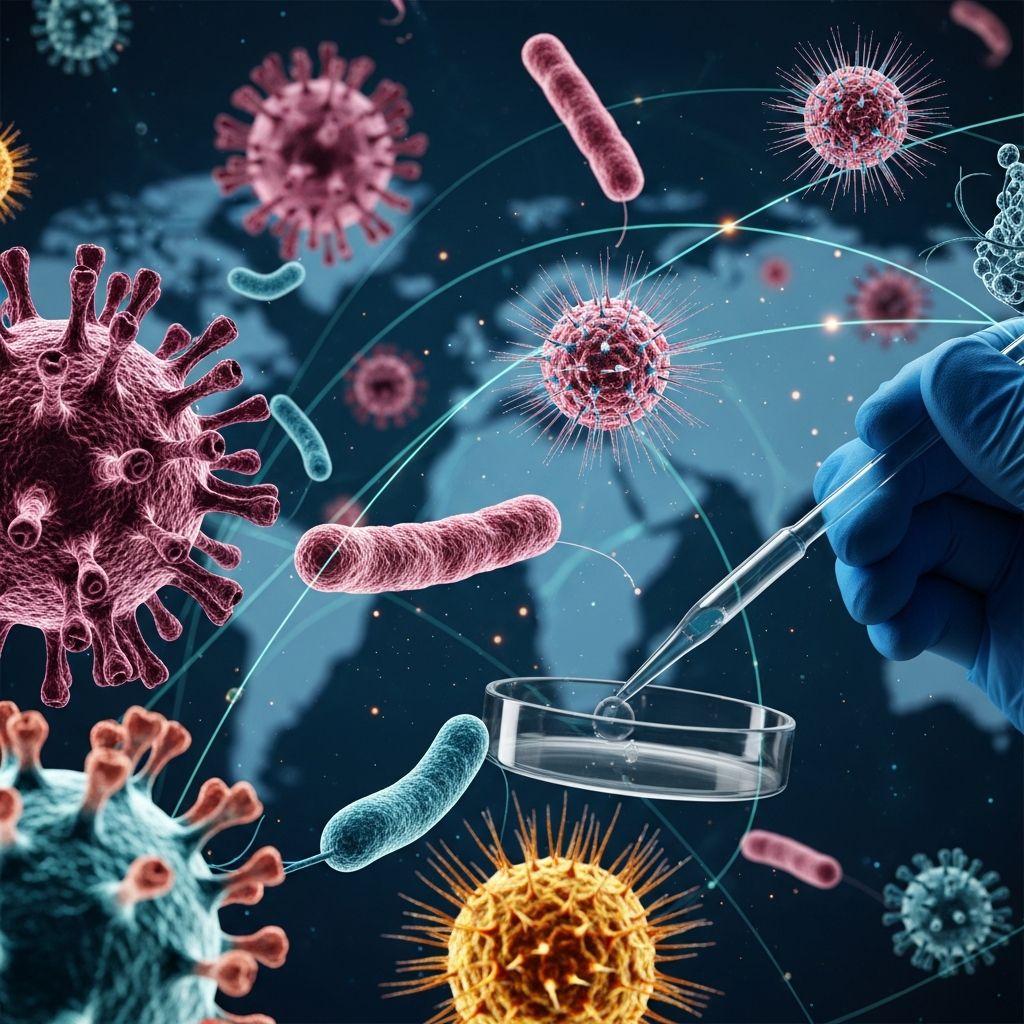
Emerging infectious diseases represent a significant and evolving challenge to global public health systems. These are diseases caused by newly identified pathogens or known pathogens that have recently spread to new geographic areas, populations, or species. The emergence and re-emergence of infectious diseases is driven by complex interactions between microbial agents, human behavior, environmental factors, and healthcare systems worldwide. Understanding these diseases is essential for healthcare professionals, public health officials, and the general population to prepare for and respond to potential outbreaks.
An emerging infectious disease can take several forms. It may be a newly identified disease caused by a known pathogen, such as Group A Streptococcus and toxic shock syndrome. Alternatively, it could be a newly identified disease caused by a previously unknown pathogen, exemplified by HIV. Some emerging diseases result from mutations in known pathogens that increase their virulence or infectivity, such as the Escherichia coli O157:H7 strain that causes hemolytic uremic syndrome. Others are previously unrecognized infections appearing in areas where habitat changes have occurred, such as Lyme borreliosis following deforestation.
Factors Contributing to Emerging Infectious Diseases
Multiple interconnected factors contribute to the emergence and spread of infectious diseases globally. Understanding these factors is crucial for implementing effective prevention and control measures.
Microbial Factors
At the core of emerging infectious diseases are the microorganisms themselves. Pathogens continuously evolve through various mechanisms, including mutation, reassortment, and recombination. Key microbial factors that drive disease emergence include:
– Increase in virulence (severity of disease)- Increase in infectivity (transmissibility between hosts)- Adaptation to new host species- Development of antimicrobial resistance- Changes in strain variation- Mutation and reassortment, particularly evident in influenza and monkeypox viruses
Environmental and Human Factors
Environmental changes and human activities significantly contribute to disease emergence. Human encroachment into previously unexplored or underdeveloped regions has led to changes in demographic migrations of humans, vectors, and pathogens. This alters the ecology and adaptive ability of vectors and pathogens, potentially releasing previously unidentified pathogens and creating greater numbers of illness than previously reported. Deforestation, urbanization, climate change, and land-use modifications create conditions favorable for pathogen transmission.
Healthcare System Factors
Modern medical technology and healthcare practices can inadvertently create conditions for disease emergence. Some infectious diseases have emerged due to advances in medical technology that allow pathogens to establish infections in immunocompromised patients. Additionally, nosocomial and iatrogenic routes of infection (infections acquired in healthcare settings or resulting from medical procedures) contribute to disease spread.
Major Global Health Threats
The World Health Organization has identified multiple threats to global health that require urgent attention and coordinated responses. These threats encompass both infectious and non-infectious diseases that impact populations worldwide.
Antimicrobial Resistance
Antimicrobial resistance represents one of the most pressing threats to global health security. The development of antibiotic-resistant pathogens, such as drug-resistant tuberculosis, undermines our ability to treat common infections effectively. This threat requires ongoing research into new antimicrobials and strategies to overcome resistance mechanisms.
Vector-Borne Diseases
Vector-borne pathogens responsible for dengue, Zika, and Chikungunya have demonstrated rapid geographical spread in recent years, causing dramatic increases in disease burden. Dengue, Zika, Chikungunya, and malaria represent significant threats to North America and other regions globally, with mosquito and tick-borne illnesses continuing to expand into previously unaffected areas. Chikungunya has resulted in over 2.5 million cases and is well established throughout the Americas.
Related Stories



Influenza and Respiratory Pathogens
The potential for a global influenza pandemic remains a significant concern. Additionally, Middle East Respiratory Syndrome (MERS) coronavirus and other respiratory pathogens represent ongoing threats requiring surveillance and preparedness.
High-Consequence Pathogens
Pathogens such as Ebola virus, Zika virus, Nipah virus, MERS-CoV, and SARS-CoV-2 (COVID-19) pose substantial threats to global health. These pathogens have demonstrated the capacity to cause rapid international spread and significant morbidity and mortality.
Categories of Priority Pathogens
Public health and biodefense efforts categorize emerging pathogens based on their threat level and strategic importance. Priority pathogens include:
Hemorrhagic Fever Viruses
Nipah and Hendra viruses, tickborne hemorrhagic fever viruses, and various bunyaviruses represent significant concerns. Severe Fever with Thrombocytopenia Syndrome virus (SFTSV) and Heartland virus have emerged as notable threats. Flaviviruses including Omsk hemorrhagic fever virus, Alkhurma virus, Kyasanur Forest virus, and various tickborne encephalitis complex viruses also require ongoing monitoring.
Bacterial and Prion Diseases
Drug-resistant tuberculosis, influenza virus, rabies virus, and prion diseases represent additional priority pathogens. These agents have demonstrated their capacity to cause significant disease burden globally.
Emerging Viral Threats
Recent additions to the list of emerging infectious diseases and pathogens requiring surveillance include anaplasmosis, BK virus, Bordetella pertussis, Borrelia mayonii and miyamotoi, Enterovirus 68, Hepatitis C and E, Leptospirosis, Mucormycosis, Poliovirus, and Rubeola (measles).
Recent Emerging Disease Trends
Global surveillance systems have documented several important trends in emerging infectious diseases. Coccidioidomycosis continues to affect populations in the southwestern United States. Murray Valley and Japanese encephalitis persist as threats in Southeast Asia. Tickborne diseases in the United States and tickborne encephalitis in the United Kingdom and Slovakia demonstrate the geographical expansion of these pathogens. Tick-associated alpha-gal syndrome (a meat allergy) has emerged as a novel concern in the United States. Additionally, Chikungunya has recently spread to Paraguay, expanding its presence in South America.
Prevention and Control Strategies
Effective prevention and control of emerging infectious diseases requires a comprehensive, multi-faceted approach involving multiple sectors and stakeholders.
Surveillance and Early Detection
Robust disease surveillance systems are essential for early detection of emerging pathogens. International travel monitoring, particularly among business travelers, military personnel, and tourists returning from endemic regions, helps identify potential outbreak situations. Enhanced awareness of international travel patterns allows healthcare providers to better recognize and diagnose emerging diseases in their patients.
Research and Development
Ongoing research into therapeutic approaches that target resistance mechanisms is crucial. This includes modification of existing antimicrobials to overcome emergent resistance and development of broad-spectrum antimicrobials applicable to both naturally occurring and engineered threats. Immunological research advancing understanding of host defenses, including adjuvants, innate immunity, adaptive immunity, and mucosal immunity, supports biodefense efforts.
Collaborative Efforts
Combating emerging infectious diseases requires collaborative efforts including basic sciences, clinicians from medical and veterinary disciplines, epidemiologists, and public health officials. This interdisciplinary approach ensures comprehensive understanding and response to emerging threats.
Vaccine Development and Immunization
Vaccine hesitancy remains a significant barrier to disease control. Ensuring adequate vaccination coverage and addressing vaccine confidence issues are essential components of prevention strategy.
Emerging Infectious Diseases in Specific Populations
Certain populations face particular vulnerability to emerging infectious diseases. Fragile and vulnerable settings, including disaster-affected areas and refugee populations, experience disproportionate disease burden due to compromised healthcare infrastructure, overcrowding, and limited access to preventive measures. Weak primary healthcare systems in some regions reduce the capacity for early detection and response to emerging pathogens.
The Role of Healthcare Institutions
Major medical institutions and academic centers play critical roles in addressing emerging infectious diseases through research, clinical care, education, and policy development. Specialized infectious disease fellowship programs train healthcare professionals in the recognition, diagnosis, and management of emerging pathogens. Research centers focused on health security advance policies and practices addressing the global rise in emerging infectious diseases and pandemic preparedness.
Frequently Asked Questions (FAQs)
Q: What defines an emerging infectious disease?
A: An emerging infectious disease is one caused by a newly identified pathogen, a known pathogen spreading to new geographic areas or populations, or an old pathogen showing increased virulence or transmissibility due to genetic changes.
Q: Why are emerging infectious diseases becoming more common?
A: Multiple factors contribute to increased emergence including human encroachment into new environments, climate change, urbanization, global travel, antimicrobial resistance development, and ecological disruption that brings humans into contact with wildlife pathogens.
Q: How can individuals protect themselves from emerging infectious diseases?
A: Protection strategies include maintaining current vaccinations, practicing good hygiene (handwashing, respiratory etiquette), using insect repellents in areas with vector-borne diseases, avoiding contact with wildlife, and seeking prompt medical attention for symptoms of illness.
Q: What is the role of international collaboration in disease control?
A: International collaboration enables rapid information sharing, coordinated surveillance, joint research efforts, and harmonized response strategies to contain outbreaks before they become pandemics.
Q: How does antimicrobial resistance develop and why is it concerning?
A: Antimicrobial resistance develops through natural selection when pathogens exposed to antimicrobials survive and reproduce. It is concerning because it renders previously effective treatments ineffective, complicating treatment of infections and increasing mortality rates.
Q: What should I do if I suspect I have an emerging infectious disease?
A: Seek medical attention promptly and inform your healthcare provider about any recent travel, potential exposures, or unusual symptoms. Early diagnosis and treatment can prevent complications and help contain disease spread.
References
- Emerging and Re-Emerging Diseases — Johns Hopkins University School of Public Health. October 27, 2023. https://publichealth.jhu.edu/sites/default/files/2023-10/emerging-diseases-marcoem-conference-presentation-10-27-23-final-2.pdf
- Emerging Infectious Diseases – Overview — National Center for Biotechnology Information, U.S. National Library of Medicine. https://pmc.ncbi.nlm.nih.gov/articles/PMC7094620/
- Johns Hopkins Center for Health Security — Johns Hopkins University. https://centerforhealthsecurity.org
Similar Articles








Read full bio of Sneha Tete