Empyema: Causes, Symptoms, Diagnosis & Treatment
Complete guide to empyema: understanding pleural infection, risk factors, and treatment options.
What Is Empyema?
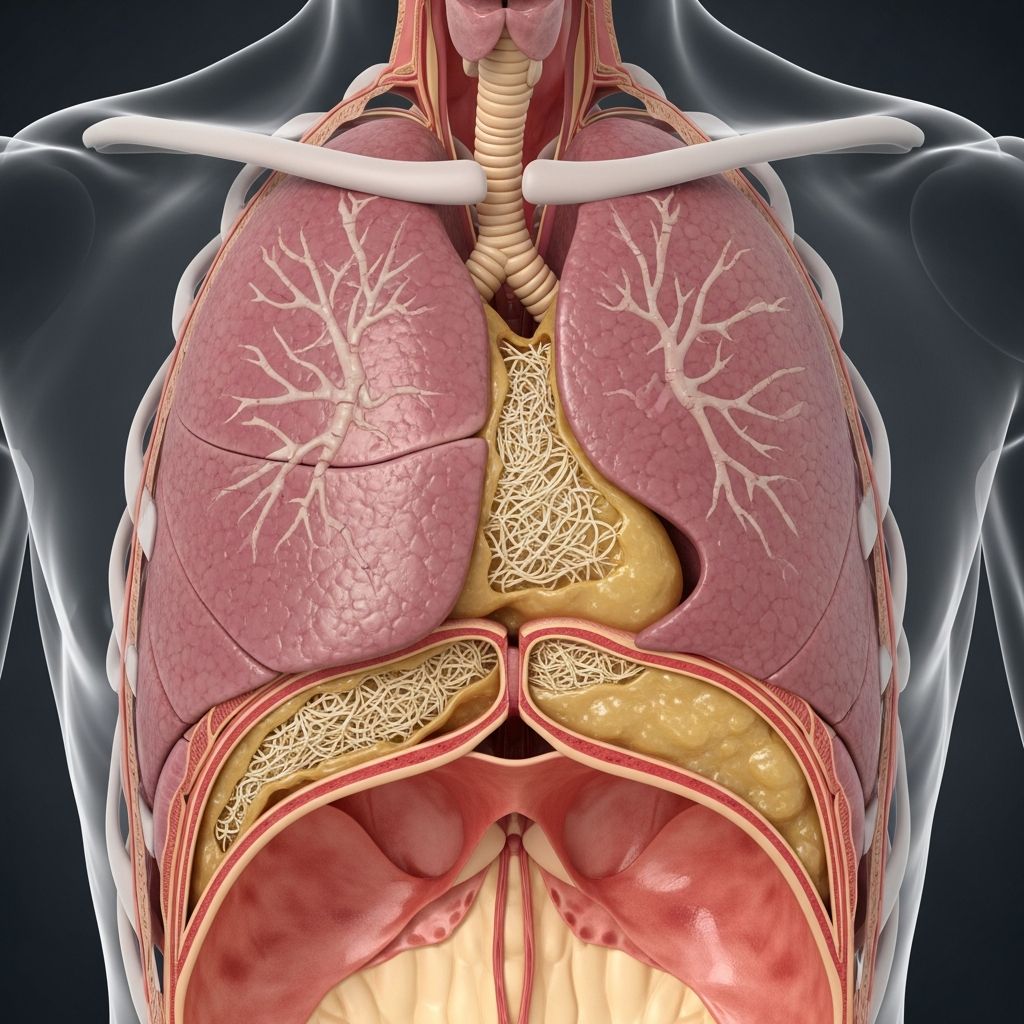
Empyema, also known as pleural infection or pyothorax, is a serious medical condition characterized by the accumulation of pus in the pleural space—the cavity between the lung and the inner surface of the chest wall. This condition represents a progression beyond simple pleural effusion (fluid accumulation) and constitutes a life-threatening infection requiring prompt medical attention. When bacteria invade the pleural space, they trigger an inflammatory response that leads to the production of purulent (pus-filled) fluid, which can severely compromise lung function and overall respiratory health.
The condition typically develops as a complication of bacterial pneumonia, though it can also arise following chest trauma, surgical procedures, or other underlying infections. Understanding empyema is crucial because early recognition and aggressive treatment are essential for favorable patient outcomes and prevention of serious complications.
Causes and Risk Factors
Empyema results from bacterial infection spreading to the pleural cavity, with pneumonia being responsible for approximately 60% of cases. The most common pathway involves aspiration of organisms from the oropharynx, leading to pneumonia in the dependent lung lobes, which, if untreated, progresses to parapneumonic effusion and ultimately empyema.
Common Bacterial Pathogens
Several bacteria are frequently implicated in empyema development:
– Streptococcus pneumoniae– Streptococcus mitis– Staphylococcus aureus– Various anaerobic bacteria
Risk Factors for Empyema Development
Certain conditions and circumstances increase the likelihood of developing empyema:
– Recent or concurrent bacterial pneumonia- Thoracic surgery or trauma- Esophageal perforation- Immunocompromised status- Lung abscess- Severe tuberculosis- Fungal infections (rare but associated with higher mortality)
Stages of Empyema Development
Empyema progresses through distinct pathophysiologic stages, each with characteristic features and clinical implications.
Stage I: Exudative Stage
The initial phase involves rapid fluid accumulation in the pleural space. Pleural fluid during this stage is typically culture and Gram stain negative, with glucose levels exceeding 60 mg/dL and lactate dehydrogenase (LDH) levels less than 3 times the upper limit of normal for serum. Proinflammatory mediators including tumor necrosis factor-alpha (TNF-α), interleukin 6 (IL-6), and IL-8 drive the inflammatory response. Early symptoms mimic pneumonia, with fever, cough, and pleuritic chest pain being common complaints.
Stage II: Fibrinopurulent Stage
As infection progresses, neutrophil counts increase and fibrin deposits accumulate, leading to loculated fluid pockets within the pleural space. During this stage, patients experience worsening chest pain, increased dyspnea, and productive cough with purulent sputum. Fever becomes more pronounced, and constitutional symptoms including malaise, fatigue, and night sweats emerge. This stage represents a critical period where the infection becomes increasingly organized and difficult to treat without intervention.
Stage III: Organizing Stage
In chronic or untreated empyema, fibrous septa form within the pleural cavity, encasing the lung and restricting its expansion. This stage is marked by persistent symptoms including marked weight loss, cachexia, and chronic pain. Chronic empyema leads to further respiratory compromise with severe dyspnea and decreased exercise tolerance. Without treatment, the gelatinous material transforms into scar tissue on the lung, resembling the peel of an orange, potentially causing permanent disability.
Symptoms and Clinical Presentation
Empyema symptoms vary depending on the stage of disease progression and individual factors. Early recognition is essential for timely intervention.
Common Symptoms Include
Related Stories



– Deep, dull pleuritic chest pain- Fever and chills- Productive cough- Shortness of breath (dyspnea)- Malaise and fatigue- Night sweats- Weakness- Rapid heartbeat
As the condition progresses, patients may experience worsening dyspnea, weight loss, and in severe cases, respiratory distress requiring mechanical ventilation support.
Diagnosis of Empyema
Accurate diagnosis requires a combination of clinical assessment, imaging studies, and pleural fluid analysis.
Clinical Evaluation
A thorough patient history documenting recent infections, surgical procedures, or trauma is essential. Physical examination may reveal decreased breath sounds, dullness to percussion, or other signs of pleural effusion. Given that empyema typically arises as a pneumonia complication occurring in about 60% of cases, awareness of preceding respiratory infection is crucial for diagnostic consideration.
Imaging Studies
Chest X-rays typically demonstrate pleural effusion, often appearing as opacification on the affected side. However, imaging alone cannot distinguish empyema from uncomplicated pleural effusion. Ultrasound and computed tomography (CT) provide better characterization of fluid loculation and may show septations or thickened pleural membranes suggestive of organized infection. Ultrasound guidance also facilitates diagnostic thoracentesis.
Pleural Fluid Analysis
Thoracentesis with pleural fluid analysis is critical for diagnosis. Fluid obtained should be sent for:
– Cell count and differential- Gram stain and culture- Glucose and LDH levels- pH measurement- Protein levels- Lactate measurement
The presence of frank pus, positive cultures, or organisms on Gram stain confirms empyema diagnosis. Pleural fluid pH less than 7.0, glucose less than 60 mg/dL, and elevated LDH suggest complicated parapneumonic effusion or empyema.
Treatment Approaches
Successful empyema management requires a multimodal approach combining antimicrobial therapy, drainage procedures, and sometimes surgical intervention.
Antimicrobial Therapy
Prompt initiation of broad-spectrum antibiotics is essential while awaiting culture results. Antibiotic selection should target the most likely pathogens, including coverage for Streptococcus pneumoniae, Staphylococcus aureus, and anaerobic bacteria. Therapy is subsequently adjusted based on culture and sensitivity results. Extended courses of antibiotics, often lasting 3-4 weeks, are typically required for optimal outcomes.
Pleural Drainage
Drainage of purulent fluid is essential and often accomplished through:
– Simple thoracentesis (for diagnostic and therapeutic purposes)- Chest tube placement (for ongoing drainage)- Image-guided catheter placement for loculated collections
The exudative stage may sometimes respond to antibiotics alone, but progression to fibrinopurulent or organizing stages typically necessitates drainage procedures. Early drainage prevents progression to complicated stages and improves clinical outcomes.
Surgical Intervention
Approximately 20% of empyema cases require surgical intervention. Indications for surgery include:
– Inadequate response to medical management and drainage- Thick pleural peel restricting lung expansion- Organized or chronic empyema- Empyema necessitans (rare condition with chest wall extension)
Video-assisted thoracoscopic surgery (VATS) or open thoracotomy with pleural decortication may be necessary to remove the thick fibrous peel and allow lung re-expansion. Surgical timing is important—too early intervention may increase complications, while delayed surgery in unresponsive cases prolongs recovery.
Complications of Empyema
Without prompt and appropriate treatment, empyema can lead to serious, potentially life-threatening complications.
Pleural Fibrosis and Fibrothorax
Chronic empyema causes pleural tissue thickening and fibrosis, resulting in fibrothorax where the pleural space becomes thickened and scarred. This restricts lung expansion, causes restrictive lung disease, and results in persistent dyspnea, reduced exercise tolerance, and diminished quality of life. Fibrothorax may require surgical decortication to release the lung from its fibrous encasement.
Septicemia
If infection spreads to the bloodstream, it can cause septicemia, a serious and potentially life-threatening systemic condition. Septicemia manifests with high fever, rapid heartbeat, hypotension, and confusion, requiring immediate intensive care intervention.
Lung Abscess
A lung abscess, characterized as a pus-filled cavity within lung tissue, may develop as empyema progresses. Abscesses cause symptoms such as coughing up pus or blood, chest pain, and difficulty breathing, requiring additional treatment strategies.
Respiratory Failure
In severe, untreated cases, empyema can progress to respiratory failure where the lungs cannot adequately oxygenate blood or remove carbon dioxide. This condition manifests with severe shortness of breath, rapid breathing, and cyanosis (bluish coloration of skin, lips, or fingernails). Respiratory failure may require mechanical ventilation and carries a poor prognosis.
Disseminated Infection
Uncontrolled bacterial infection can spread to other body parts, causing serious infections such as meningitis, endocarditis, or other systemic infections. These complications significantly increase morbidity and mortality.
Empyema Necessitans
In very rare cases, infection extends through the chest wall, causing a palpable mass in this rare condition known as empyema necessitans. This condition causes severe pain and typically requires extensive surgical treatment.
Prognosis and Outcomes
Empyema carries a generally poor prognosis if not treated promptly and aggressively. Although most patients recover with appropriate treatment, outcomes remain challenging, with approximately 20% requiring surgery and a 1-year mortality rate nearing 20%. Frail, older adults, and immunocompromised individuals have a 1.5-fold increase in adverse outcomes, highlighting the importance of early, individualized intervention for these vulnerable groups.
The average hospital stay for empyema is approximately 19 days due to the need for prolonged drainage, antibiotics, and sometimes surgical intervention. Prolonged recovery impacts functional outcomes, especially in older individuals. Empyema risks recurrence and long-term complications, including chronic fibrothorax and restrictive lung disease, particularly in cases of insufficient drainage or persistent infection.
Prevention Strategies
While empyema cannot always be prevented, certain measures reduce the risk of developing this serious condition:
– Prompt recognition and treatment of pneumonia with appropriate antibiotics- Vaccination against Streptococcus pneumoniae and influenza- Proper wound care following chest surgery or trauma- Management of underlying conditions that increase infection risk- Avoiding aspiration risks through proper swallowing and positioning- Immunization in high-risk populations
Frequently Asked Questions
What is the difference between pleural effusion and empyema?
Pleural effusion is a collection of fluid in the pleural space that may be sterile or infected. Empyema specifically refers to infected fluid containing pus and bacteria. Empyema is a more serious condition requiring aggressive treatment with antibiotics and often drainage procedures, whereas uncomplicated effusions may resolve with treatment of the underlying cause.
Can empyema be cured?
Yes, empyema can be cured with prompt diagnosis and appropriate treatment combining antibiotics, drainage, and sometimes surgery. However, untreated or inadequately managed empyema can lead to serious complications and permanent lung damage. Early intervention significantly improves cure rates and outcomes.
How long does empyema treatment take?
Treatment duration varies depending on disease stage and response to therapy. Antibiotic courses typically last 3-4 weeks, and hospital stays average approximately 19 days. Some patients require extended recovery periods, particularly those requiring surgical intervention. Older individuals and those with comorbidities may need longer recovery times.
What are the long-term effects of empyema?
Long-term effects may include pleural fibrosis, fibrothorax, restrictive lung disease, chronic cough, reduced exercise tolerance, and decreased quality of life. Some patients develop permanent lung damage requiring ongoing respiratory support or activity modifications. Surgical decortication may be needed to improve lung function in severe cases.
Is empyema contagious?
Empyema itself is not contagious. However, the underlying bacterial infections causing empyema may be transmissible. Patients with empyema should follow standard infection control precautions if hospitalized, particularly for respiratory infections that preceded empyema development.
References
- Understanding Empyema: Causes, Diagnosis, and Treatment — London Chest Specialist. 2023-07-21. https://londonchestspecialist.co.uk/understanding-empyema-diagnosis-and-treatment/
- Thoracic Empyema — StatPearls, National Center for Biotechnology Information (NCBI), U.S. National Library of Medicine. 2024. https://www.ncbi.nlm.nih.gov/books/NBK544279/
- Empyema: Diagnosis & Disease Information — Pulmonology Advisor. https://www.pulmonologyadvisor.com/ddi/empyema/
- Empyema and Lung Infection — Brigham and Women’s Hospital. https://www.brighamandwomens.org/lung-center/diseases-and-conditions/empyema-and-lung-infection
Similar Articles








Read full bio of medha deb