Empyema: Causes, Symptoms, Diagnosis & Treatment
Understanding empyema: Learn about pus infection in pleural space, symptoms, diagnosis methods, and effective treatment options.
What Is Empyema?
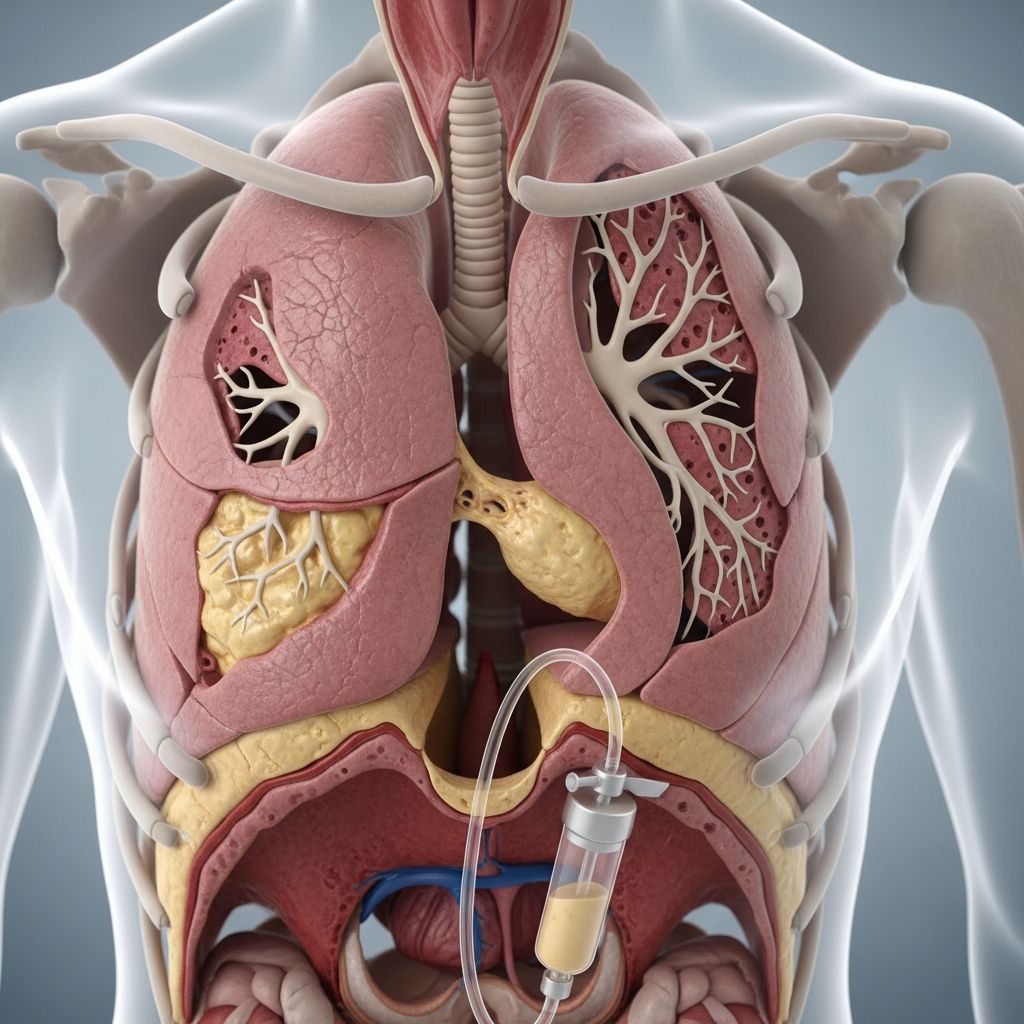
Empyema is a serious medical condition characterized by the accumulation of pus in the pleural space, which is the area between your lungs and the inner chest wall. This fluid collection represents an active bacterial infection within this normally sterile compartment. The pleural space typically contains a small amount of serous fluid that allows your lungs to move smoothly during breathing. When bacteria invade this space, the body’s immune response causes pus to accumulate, leading to empyema.
This condition is considered a medical emergency that requires prompt diagnosis and treatment. Without appropriate intervention, empyema can lead to serious complications including respiratory failure, sepsis, and long-term lung damage. The average hospital stay for empyema is approximately 19 days due to the need for prolonged drainage, antibiotics, and sometimes surgical intervention.
Common Causes of Empyema
Understanding the underlying causes of empyema is essential for prevention and early detection. The most common causes include:
Pneumonia remains the leading cause of empyema, occurring in approximately 5-10% of pneumonia cases. When pneumonia-causing bacteria penetrate the pleural space, they can trigger an infection. Pneumonia typically develops first, and empyema may follow as a complication weeks later.
Thoracic Surgery and surgical procedures on the chest can inadvertently introduce bacteria into the pleural space or create an environment conducive to infection.
Tuberculosis represents another significant cause, particularly in certain geographic regions with higher TB prevalence. Mycobacterium tuberculosis can seed the pleural space, causing chronic empyema.
Esophageal Rupture can allow oral bacteria to contaminate the pleural space, leading to rapidly progressive empyema with mixed anaerobic and aerobic organisms.
Trauma and Penetrating Injuries to the chest can introduce bacteria directly into the pleural space or create conditions for subsequent infection.
Subphrenic Abscess and other intra-abdominal infections may track upward through the diaphragm, causing empyema.
Timeline of Empyema Development
Empyema typically develops approximately four to six weeks after bacteria enter your lungs. This delayed presentation is important for clinical recognition, as patients may initially present with pneumonia symptoms that progress to more severe manifestations.
Recognizing Symptoms of Empyema
The symptoms of empyema vary depending on the stage of disease progression and the organisms involved. Early recognition of these symptoms is crucial for timely intervention.
Early-Stage Symptoms often mimic pneumonia, including persistent fever, productive cough, and pleuritic chest pain that worsens with deep breathing. Patients may experience mild dyspnea and describe their chest discomfort as a deep, dull ache.
Progressive Symptoms become more pronounced as infection advances, including worsening chest pain, increased shortness of breath, productive cough with purulent sputum, and more pronounced fever. Constitutional symptoms such as malaise, fatigue, and night sweats commonly develop. Patients may notice weight loss and decreased exercise tolerance.
Related Stories



Chronic Empyema Symptoms in untreated cases include marked weight loss, cachexia, chronic pain, severe dyspnea, and significantly decreased exercise tolerance. These symptoms reflect the organizing phase where fibrous tissue encases the lung, restricting its normal function.
Is Empyema Contagious?
Empyema itself is not contagious because it is a localized infection within your pleural space. However, many of the underlying infections that cause empyema are contagious, especially pneumonia and tuberculosis. If you have empyema secondary to contagious pneumonia or tuberculosis, you can transmit the underlying infection to others through respiratory droplets.
Diagnostic Approaches for Empyema
A comprehensive diagnostic evaluation is essential to confirm empyema and guide treatment decisions. Healthcare providers employ multiple diagnostic modalities to establish the diagnosis accurately.
Medical History and Physical Examination form the foundation of diagnosis. Your healthcare provider will inquire about recent respiratory infections, fever, cough duration, chest pain, and shortness of breath. During physical examination, several findings may suggest empyema:
- Decreased breath sounds over areas with large fluid collections
- Dullness to percussion over the fluid accumulation
- Decreased or absent tactile fremitus
- Crackles or bronchial breath sounds at the periphery of fluid collection
- Signs of systemic toxicity including fever and tachycardia
Imaging Studies provide critical visualization of pleural pathology. Chest X-rays typically show opacification in the lung base, but computed tomography (CT) with intravenous contrast remains the most definitive imaging study for empyema. CT provides detailed visualization of pleural thickening, loculations, and enhancement of the pleurae—hallmark features of empyema. The “split pleura” sign, characterized by thickened visceral and parietal pleurae separated by fluid greater than 30 mm, is a highly specific finding suggesting complicated parapneumonic effusion or empyema requiring drainage. CT is particularly useful for distinguishing empyema from lung abscess and evaluating disease extent.
Thoracentesis and Pleural Fluid Analysis remain definitive diagnostic procedures. During thoracentesis, a needle is inserted into the pleural space to obtain fluid for analysis. Laboratory evaluation includes:
- Appearance assessment (grossly purulent fluid strongly suggests empyema)
- pH measurement (typically less than 7.2 in empyema)
- Glucose level (usually less than 60 mg/dL)
- Lactate dehydrogenase (LDH) elevated above 1000 IU/L
- Leukocyte count with differential (neutrophilic predominance indicates acute inflammation)
- Gram staining for immediate organism identification
- Pleural fluid culture using blood culture bottles for improved yield
Blood Tests help assess systemic infection severity, including complete blood count showing leukocytosis and blood cultures to identify causative organisms.
Treatment Options for Empyema
Treatment of empyema involves a combination of medical and surgical interventions aimed at eradicating infection, achieving adequate drainage, and restoring lung function. Early and aggressive management is critical for improving outcomes.
Antibiotic Therapy is the cornerstone of empyema treatment. Broad-spectrum antibiotics are initiated empirically based on likely pathogens, then adjusted based on culture results. Common pathogens include Streptococcus species, Staphylococcus aureus, and anaerobes. Prolonged antibiotic courses spanning several weeks are typically required.
Drainage Procedures are often necessary to remove accumulated pus. In early stages, a provider may perform thoracentesis, using a thin needle to withdraw pus. If larger volumes require drainage or if the condition progresses, tube thoracostomy (chest tube placement) becomes necessary. A chest tube allows continuous drainage and can remain in place for extended periods.
Intrapleural Enzyme Therapy (IET) represents an advanced adjunctive approach for complicated cases. This therapy involves administering fibrinolytic agents such as tPA and enzymatic agents like DNase directly into the pleural space. tPA dissolves fibrin clots and reduces septations, while DNase targets extracellular DNA in pus, lowering fluid viscosity. This combination enhances fluid drainage, improves pleural clearance, and minimizes the need for surgical intervention.
Video-Assisted Thoracoscopic Surgery (VATS) may be performed for loculated empyema not responding to initial drainage and antibiotic therapy. This minimally invasive surgical approach allows direct visualization and drainage of loculated collections.
Thoracotomy with Decortication is reserved for cases with uncontrolled sepsis or progression to the fibroproliferative phase. This open surgical procedure involves removal of the restrictive fibrous peel encasing the lung, allowing re-expansion and restoration of normal respiratory function.
Differentiating Empyema from Lung Abscess
Empyema and lung abscess are distinct conditions that may present with overlapping clinical and radiographic findings but require different management approaches. A lung abscess is an abnormal growth of dead tissue and pus within the lung itself, whereas empyema is pus outside the lung within the pleural space. Lung abscesses do not move with position changes, while empyema fluid shifts with gravity. CT imaging helps distinguish between these conditions, and the management differs significantly—lung abscess typically requires prolonged antibiotics and sometimes surgical drainage, while empyema requires pleural drainage and antibiotics.
Prognosis and Recovery
With appropriate treatment, empyema can be cured. However, the prognosis depends on several factors including the stage at diagnosis, causative organism, presence of loculations, and overall patient health status. Early diagnosis and aggressive management significantly improve outcomes and reduce the risk of long-term pulmonary complications.
When to Seek Medical Attention
You should talk to a healthcare provider immediately if you experience trouble breathing or other symptoms affecting your chest, including persistent fever with cough, pleuritic chest pain, or persistent dyspnea following pneumonia. Early evaluation and diagnosis enable providers to determine the cause and implement the most effective treatment promptly.
Frequently Asked Questions About Empyema
Q: How long does empyema treatment typically take?
A: The average hospital stay for empyema is approximately 19 days, but total treatment duration may extend several weeks to months depending on the stage at diagnosis, organism involved, and response to therapy. Some patients require prolonged outpatient antibiotic therapy and follow-up imaging.
Q: Can empyema be treated with antibiotics alone?
A: In early, uncomplicated stages, antibiotics alone may suffice. However, most cases of empyema require drainage of the pleural fluid through thoracentesis, chest tube placement, or surgical intervention in addition to antibiotics for optimal outcomes.
Q: What happens if empyema is left untreated?
A: Untreated empyema can progress to severe complications including sepsis, respiratory failure, chronic restrictive lung disease from fibrosis, and death. The organizing stage can develop where fibrous tissue encases the lung, permanently restricting its function.
Q: Is there a vaccine to prevent empyema?
A: While there is no specific empyema vaccine, pneumonia vaccines (pneumococcal and influenza vaccines) can help prevent pneumonia, which is the most common cause of empyema, thereby reducing your risk.
Q: Can empyema recur after treatment?
A: Recurrence is possible if the underlying infection is not completely eradicated or if there are complications with drainage. Proper antibiotic selection based on culture results and complete drainage of loculated fluid minimize recurrence risk.
Q: What is the success rate of chest tube drainage for empyema?
A: Approximately 70-80% of empyema cases respond to antibiotics combined with chest tube drainage. Cases not responding to this approach may require intrapleural enzyme therapy or surgical intervention like VATS or decortication.
References
- Thoracic Empyema — StatPearls, National Center for Biotechnology Information. 2024. https://www.ncbi.nlm.nih.gov/books/NBK544279/
- Empyema: Causes, Symptoms, Diagnosis & Treatment — Cleveland Clinic. 2024. https://my.clevelandclinic.org/health/diseases/24269-empyema
- Which Patients with a Parapneumonic Effusion Need a Chest Tube? — Cleveland Clinic Journal of Medicine. 2018. https://www.ccjm.org/content/85/8/609
- Thoracostomy: Purpose, Procedure & Risks — Cleveland Clinic. 2024. https://my.clevelandclinic.org/health/treatments/25035-thoracostomy
- Pleural Effusions: Evaluation and Management — Cleveland Clinic Journal of Medicine. 2005. https://www.ccjm.org/content/ccjom/72/10/854.full.pdf
Similar Articles








Read full bio of Sneha Tete