Enalapril – an ACE Inhibitor (Innovace, Innozide)
Enalapril treats high blood pressure and heart failure by relaxing blood vessels and reducing fluid retention effectively.
About enalapril
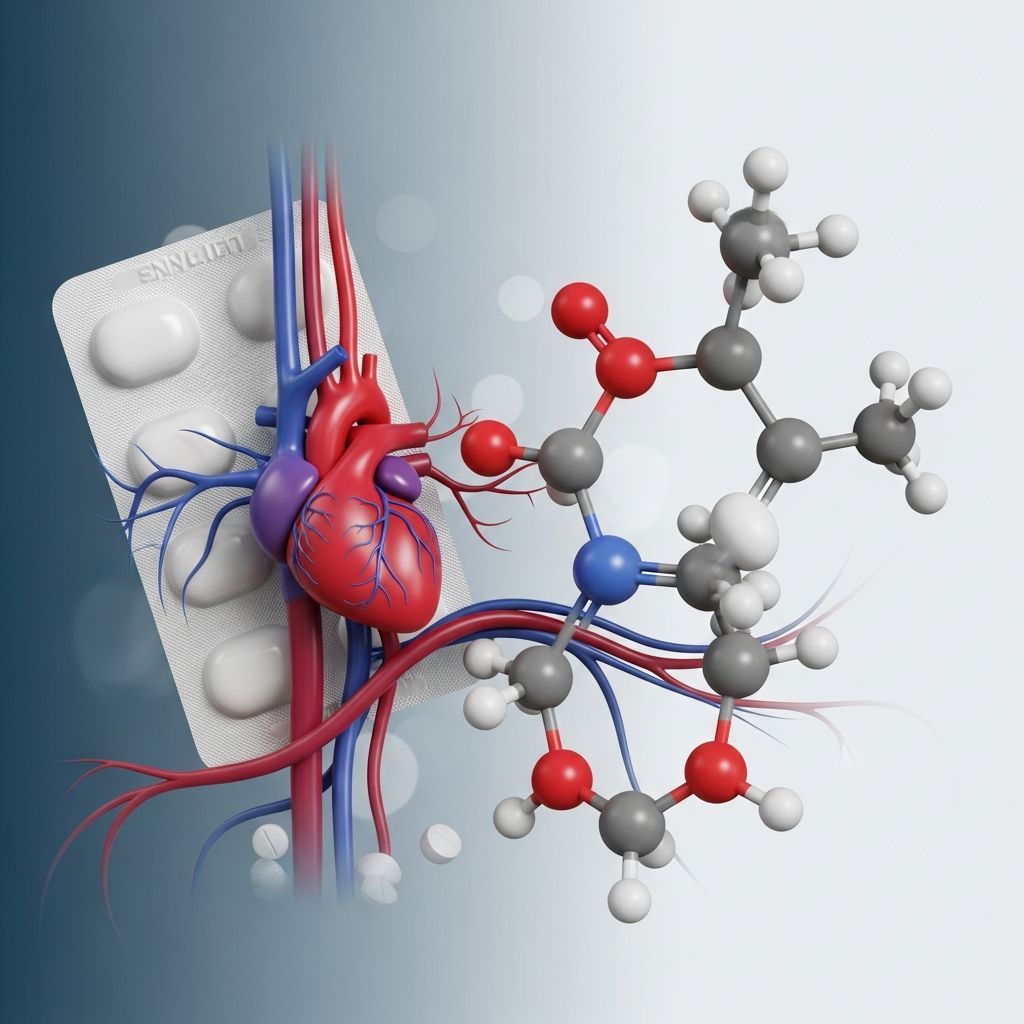
Enalapril is a widely used medication classified as an angiotensin-converting enzyme (ACE) inhibitor. It is primarily prescribed to manage high blood pressure (hypertension) and heart failure. Brand names include Innovace® for enalapril alone and Innozide® for the combination with hydrochlorothiazide. Enalapril maleate has been approved by the US Food and Drug Administration (FDA) for treating heart failure, chronic hypertension, and asymptomatic left ventricular dysfunction.
| Type of medicine | An angiotensin-converting enzyme (ACE) inhibitor |
|---|---|
| Used for | High blood pressure; heart failure |
| Also called | Innovace®; Combination brands: Innozide® (contains enalapril with hydrochlorothiazide) |
| Available as | Tablets |
Enalapril works by preventing the formation of angiotensin II, a hormone that causes blood vessels to narrow. By inhibiting ACE, enalapril promotes blood vessel relaxation (vasodilation) and reduces the kidneys’ reabsorption of water, thereby lowering blood pressure and easing the heart’s workload. In heart failure, where the heart pumps inefficiently leading to fluid buildup, enalapril reduces circulating fluid volume and provides cardioprotective effects, slowing disease progression.
The active metabolite, enalaprilat, is formed after hepatic biotransformation of the prodrug enalapril. This metabolite competitively inhibits ACE, decreasing angiotensin II levels, increasing renin, and reducing aldosterone secretion, which collectively lowers peripheral resistance without raising cardiac oxygen demand.
Key facts
- Enalapril typically lowers blood pressure within hours, but full effects may take weeks.
- It is part of guideline-directed therapy for heart failure with reduced ejection fraction (HFrEF) <40%, per AHA/ACC/HFSA 2022 guidelines.
- For diabetic patients with hypertension and albuminuria (ACR 30-299 mg/g or 300 mg/g), ACE inhibitors like enalapril are recommended.
- Dry cough is the most common side effect, affecting up to 20% of users, often resolving upon discontinuation.
- Not recommended during pregnancy due to fetal risks; alternatives should be considered in breastfeeding.
How to take enalapril
Enalapril tablets should be swallowed whole with water, with or without food. Dosage varies by condition:
- Hypertension: Start with 5 mg once daily, titrate to 10-40 mg/day in 1-2 doses. Maximum 40 mg/day.
- Heart failure: Initial 2.5 mg once/twice daily, increase gradually to 20 mg twice daily as tolerated.
- Asymptomatic LV dysfunction: 2.5 mg twice daily, up to 20 mg twice daily.
- In renal impairment (eGFR <30 mL/min), start lower (e.g., 2.5 mg) and monitor closely.
Do not stop suddenly without medical advice, as blood pressure may rebound. Regular blood tests monitor kidney function, electrolytes, and blood counts. If a dose is missed, take it as soon as remembered unless near the next dose; do not double up.
Getting the most from your treatment
Treatment is usually long-term. Lifestyle measures enhance effectiveness:
- Follow a low-salt diet to reduce fluid retention.
- Exercise regularly (e.g., 30 minutes daily walking), but consult your doctor first.
- Avoid excessive alcohol, which can lower blood pressure further.
- Monitor blood pressure at home if advised.
- Attend all check-ups for dose adjustments and side effect monitoring.
In heart failure, enalapril combines with diuretics, beta-blockers, or other therapies for optimal management.
Common questions
How long does enalapril take to work?
Blood pressure drops within 1 hour, peaks at 4-6 hours, lasting 24 hours. Full antihypertensive effect in 2-4 weeks.
Can I drink alcohol while taking enalapril?
Related Stories



Limit alcohol; it may enhance hypotension and dizziness.
Are there alternatives if I get a cough?
Switch to an angiotensin receptor blocker (ARB) like losartan.
Who can and cannot take enalapril
Enalapril suits most adults and children over 6 years (dose-adjusted), but avoid or use cautiously in:
- Pregnancy (especially 2nd/3rd trimester: risk of fetal kidney damage).
- History of angioedema with ACE inhibitors.
- Severe renal artery stenosis or bilateral renal artery stenosis.
- Hyperkalemia or on potassium supplements/spironolactone without monitoring.
- Aortic/mitral stenosis or outflow obstruction.
Pregnancy and breastfeeding
Enalapril is contraindicated in pregnancy due to risks of oligohydramnios, fetal renal failure, and skull hypoplasia. Use alternatives like labetalol. Trace amounts pass into breast milk; generally avoid, especially in preterm infants. Weigh benefits vs. risks with physician.
Using enalapril with other medicines and herbal supplements
Inform your doctor of all medications. Key interactions:
| Drug Class | Interaction | Advice |
|---|---|---|
| Diuretics (e.g., hydrochlorothiazide) | Increased hypotension risk | Monitor; Innozide combines safely |
| Potassium-sparing diuretics/ supplements | Hyperkalemia | Avoid or monitor potassium |
| NSAIDs (ibuprofen) | Reduced efficacy; renal risk | Use sparingly |
| Lithium | Increased lithium toxicity | Monitor levels |
| mTOR inhibitors (e.g., everolimus) | Increased angioedema | Avoid combination |
| Sacubitril/valsartan | Angioedema risk | Wait 36 hours between |
Avoid aliskiren in diabetes (hyperkalemia, renal failure risk). Herbal supplements like St. John’s wort may reduce efficacy; discuss all.
Common side effects
Most side effects are mild and transient. Cough occurs in 5-20% due to bradykinin accumulation.
| Side Effect | How to Manage |
|---|---|
| Dry cough | Speak to doctor; may switch to ARB |
| Dizziness, headache | Get up slowly; avoid driving if affected |
| Tummy pain, diarrhoea | Simple foods; avoid spicy/fatty meals |
| Low mood, rash, taste changes | Consult doctor if persistent |
Serious side effects
Seek immediate help for:
- Angioedema (swelling of face, lips, tongue; higher risk in African-Americans).
- Severe hypotension, fainting.
- Signs of infection (e.g., sore throat, fever: neutropenia risk).
- Yellowing skin/eyes (hepatic issues), dark urine.
- Swelling ankles/feet (heart failure worsening).
Hyperkalemia symptoms: muscle weakness, irregular heartbeat. Renal impairment: reduced urine, fatigue.
Other side effects – who to speak to
Report persistent issues to your doctor. Blood tests may show elevated creatinine/potassium, requiring dose adjustment. Rare: anaphylaxis, cholestatic jaundice, neutropenia.
How and when to take enalapril – detailed dosage
(Expanded from earlier section) Always follow prescribed regimen. For elderly/renal patients, start low. Tablets: 2.5mg, 5mg, 10mg, 20mg.
Important information
- Tell surgeons/dentists about enalapril pre-procedure (anesthesia risk).
- Avoid if undergoing desensitization or LDL apheresis.
- Monitor during first-dose (hypotension risk, especially with diuretics).
- Protect from heat; store below 25°C.
Frequently Asked Questions (FAQs)
Q: What if I forget a dose?
Take as soon as possible unless near next dose. Do not double.
Q: Can enalapril cause weight gain?
No, but fluid retention in heart failure may mimic it; monitor.
Q: Is enalapril safe for kidneys?
Protects diabetic nephropathy but monitor function; avoid in severe impairment.
Q: How does enalapril compare to other ACE inhibitors?
Similar efficacy; choice based on side effects, cost, formulations.
Q: Can children take enalapril?
Yes, from 1 month for hypertension/heart failure; weight-based dosing.
References
- Enalapril – StatPearls — Pravin Shukle; Amanda Morris. 2023-08-14. https://www.ncbi.nlm.nih.gov/books/NBK557708/
- Enalapril: Uses, Interactions, Mechanism of Action — DrugBank Online. 2024-01-01. https://go.drugbank.com/drugs/DB00584
- Enalapril – an ACE inhibitor (Innovace, Innozide) — Patient.info. 2023-11-20. https://patient.info/medicine/enalapril-an-ace-inhibitor-innovace-innozide
- ACE Inhibitors and ARBs — National Kidney Foundation. 2023-05-15. https://www.kidney.org/kidney-topics/ace-inhibitors-and-arbs
- Angiotensin-converting enzyme (ACE) inhibitors — Mayo Clinic. 2024-02-10. https://www.mayoclinic.org/diseases-conditions/high-blood-pressure/in-depth/ace-inhibitors/art-20047480
Similar Articles








Read full bio of Sneha Tete